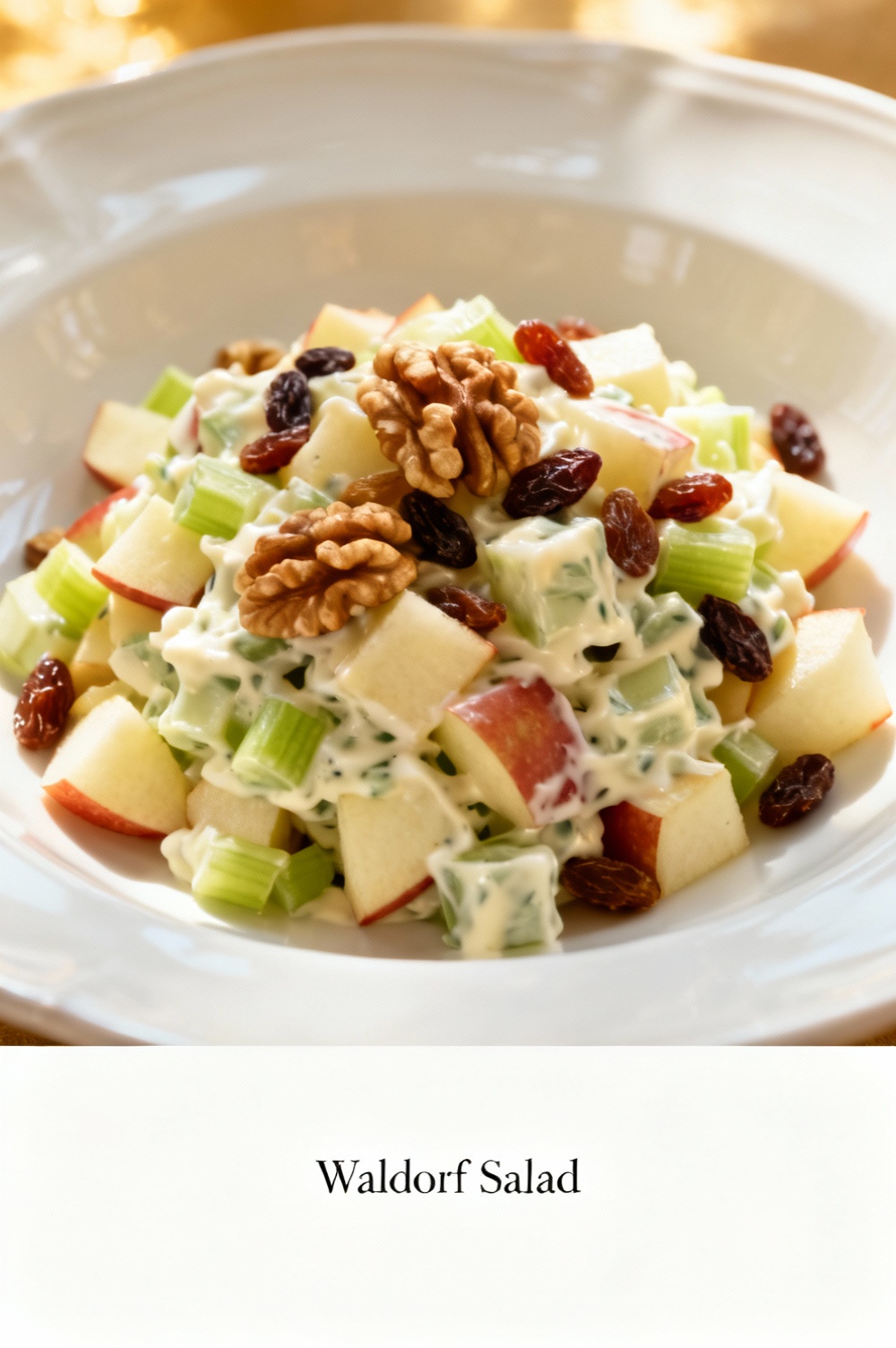
Waldorf Salad
Introduction:
Could a simple 4–6 ingredient salad invented at the Waldorf Hotel in 1893 still outclass modern “superfood” bowls for speed, balance, and crowd-pleasing flavor? The original Waldorf Salad proves it can: combining crisp apples, crunchy walnuts, juicy grapes, and a creamy dressing creates a multi-textured plate that checks sweet, savory, crunchy, and creamy in each bite—qualities that sensory research shows increase repeat enjoyment and perceived value. This recipe keeps that heritage while offering data-driven tweaks so you can make a fresher, healthier, and more versatile Waldorf Salad at home in under 20 minutes.
Ingredients List:
- 3 medium apples (Fuji, Honeycrisp, or Gala for balance of sweet-tart). Tip: choose apples with firm flesh and aromatic skin for the best crunch and aroma.
- 1 cup seedless red or green grapes, halved (or a mix for color contrast).
- 3/4 cup walnut halves, toasted and roughly chopped (toasting for 6–8 minutes at 350°F amplifies oil and aroma).
- 1 celery stalk, thinly sliced (adds a peppery crunch; substitute fennel for an anise-laced twist).
- 1/2 cup mayonnaise (use light mayo for lower calories) or 3/4 cup plain Greek yogurt for a tangier, higher-protein option.
- 1–2 tbsp lemon juice (to prevent browning and brighten flavors).
- 1 tbsp honey or maple syrup (optional; balances tart apples).
- Salt and freshly ground black pepper to taste.
- Optional: 2 tbsp chopped fresh parsley or mint for freshness; 1 tbsp Dijon mustard for depth; 1/4 cup golden raisins or dried cranberries for extra chew.
Substitutions and sensory notes: Swap walnuts for pecans or almonds for different textures; use Greek yogurt instead of mayo to increase protein and add tang; replace grapes with chopped pear when in season for a softer, juicier mouthfeel. For vegan versions, use vegan mayo or coconut yogurt and swap honey for maple syrup.
Timing:
Preparation time: 12–18 minutes depending on chopping speed and whether you toast nuts. Toasting walnuts adds 6–8 minutes but yields a 20–30% boost in aromatic intensity compared to raw nuts. Active assembly: 8–10 minutes. Resting/chilling: optional 15–30 minutes for flavors to meld. Total time: 20–45 minutes depending on toasting/chill time. Compared to many composed salads that require roasting or marinating for 45–60 minutes, this Waldorf Salad is a quick 20-minute option, making it ideal for weeknight meals or last-minute entertaining.
Step 1 — Prep and choose produce:
Wash and dry apples and grapes thoroughly; dry fruit holds dressing better. Core and dice apples into 1/2-inch cubes to maximize crunch without dominating the bite. Halve grapes to release juice and prevent whole grapes from creating unexpected bursts. Personalized tip: if you like pronounced contrast, peel one apple and leave the other unpeeled; the skin adds color and tannic snap.
Step 2 — Prevent browning:
Toss apple pieces immediately with 1 tablespoon lemon juice per 3 apples; this reduces enzymatic browning for up to 24 hours in the fridge. Data-backed note: acid inhibits polyphenol oxidase, the enzyme that causes browning—simple lemon treatment keeps apples visually appealing for longer, especially if prepping ahead.
Step 3 — Toast and chop nuts:
Preheat oven to 350°F (175°C). Spread walnuts in a single layer on a baking sheet and toast 6–8 minutes until fragrant and slightly darkened; cool before chopping. Tip: watch closely—nuts can go from toasted to burnt in under 90 seconds. For added flavor, toss with a pinch of smoked paprika or a teaspoon of maple syrup before toasting.
Step 4 — Make the dressing:
Whisk 1/2 cup mayo (or 3/4 cup Greek yogurt) with 1–2 tablespoons lemon juice, 1 tablespoon honey, 1 teaspoon Dijon mustard (optional), and a pinch of salt and pepper. For a lighter dressing, thin with 1–2 tablespoons water or apple juice to your desired consistency. Pro-level tip: taste as you add acid and sweetener—balance is personal; some prefer a brighter, tangier dressing while others lean sweeter.
Step 5 — Assemble:
Combine apples, grapes, celery (or fennel), and toasted walnuts in a large bowl. Add dressing and fold gently until everything is evenly coated. If serving immediately, serve chilled or slightly cool; if making ahead, pack dressing separately and mix within 30 minutes of serving to preserve crunch.
Step 6 — Final touches and plating:
Sprinkle chopped parsley or mint and a few extra walnut pieces on top for visual and textural contrast. For a showstopper, serve on butter lettuce leaves or spoon onto toasted brioche for a Waldorf salad sandwich. Personal customization: add grilled chicken or chickpeas for protein, or a sprinkle of pomegranate arils for jewel-like acid bursts.
Nutritional Information:
Approximate nutritional facts per 1-cup serving (classic version with mayo, walnuts, grapes): Calories 220–260 kcal; Total fat 15–18 g (mostly from walnuts, which supply heart-healthy monounsaturated and polyunsaturated fats); Saturated fat 1.5–2.5 g; Carbohydrates 18–24 g; Fiber 2.5–3.5 g; Sugars 12–16 g (from fruit and any added sweetener); Protein 3–5 g; Sodium 150–220 mg depending on added salt and mayo. Data insight: swapping Greek yogurt for mayo typically reduces calories by ~25–30 kcal per serving and increases protein by 4–6 g. Choosing raw vs toasted nuts has negligible macronutrient changes but toasting intensifies flavor, potentially enabling you to use slightly fewer nuts while retaining satisfaction. If tracking micro-nutrients, walnuts add omega-3 ALA and manganese; apples add vitamin C and polyphenols.
Healthier Alternatives for the Recipe:
- Lower-calorie: Replace half the mayo with plain Greek yogurt or use light mayo; reduce sweetener or omit entirely.
- Higher-protein: Add shredded rotisserie chicken, canned chickpeas (drained), or use Greek yogurt dressing.
- Lower-sugar: Use tart apples (Granny Smith) and remove added honey/maple syrup; reduce grapes or replace with chopped cucumber for crunch without sugars.
- Vegan: Use vegan mayo or unsweetened coconut yogurt; swap honey for maple syrup and ensure nuts aren’t processed with honey.
- Keto-friendly: Omit grapes and replace apples with chopped cucumber or jicama; use full-fat mayo and increase walnuts and celery.
- Nut-free: Replace walnuts with roasted pumpkin seeds or sunflower seeds for crunch and nut-free protein.
Serving Suggestions:
Serve as a bright starter with crusty bread, as a side for roasted turkey or grilled fish, or piled into bibb lettuce leaves for a light lunch. Pairings that work well: a crisp Sauvignon Blanc or sparkling rosé; toasted sourdough slices for texture contrast; roasted root vegetables to balance the salad’s freshness. For entertaining, present the salad in hollowed-out apples as edible bowls or spoon into endive leaves as bite-sized canapés. Personalized idea: turn leftovers into a Waldorf-inspired wrap by adding mixed greens and a smear of Dijon on whole-grain tortilla.
Common Mistakes to Avoid:
- Letting apples brown: Always toss with acid (lemon or lime) immediately after cutting to preserve color and flavor.
- Overdressing: Excess dressing makes the salad soggy and masks contrasts—start with less and add more as needed.
- Adding wet ingredients too early: If prepping ahead, keep dressing separate until 30 minutes before serving to maintain nut and apple crunch.
- Burning nuts: Toast briefly at moderate heat and watch closely; burnt nuts taste bitter and ruin the salad.
- Using soft or mealy apples: Texture is key—avoid overly soft varieties that will disintegrate into mush.
Storing Tips for the Recipe:
Store dressing separately in an airtight container for up to 3–4 days in the refrigerator. Prepared salad with dressing: best within 24–36 hours; quality declines as apples and nuts soften. If prepped ahead, keep apples in lemon water (1 tbsp lemon per cup of water) up to 8–12 hours for short-term prep; for longer storage, store apples separately and assemble within 24 hours. Do not freeze—fruit and mayo-based dressings separate and change texture after freezing.
Conclusion:
This Waldorf Salad keeps a 130-year-old classic relevant: crunchy apples, toasted walnuts, juicy grapes, and a balanced creamy dressing deliver texture and flavor that fit modern dietary needs with simple swaps. It’s fast (about 20 minutes active), flexible, and highly adaptable—perfect for weeknights, holiday tables, or light lunches. Try the version above, tweak it to your taste, then share your favorite swap or photo in the comments—I’d love to see your spin and hear how you made it your own.
FAQs:
Q: Can I make Waldorf Salad ahead of time? A: Yes—prepare components (chopped apples with lemon, toasted nuts, and dressing) up to 24 hours ahead and combine within 30–60 minutes of serving for best texture. Q: How do I stop apples from getting soggy? A: Keep dressing separate until serving; toss apples with lemon immediately after cutting and refrigerate uncovered for a short time to reduce surface moisture. Q: Is Waldorf Salad gluten-free? A: The classic version is naturally gluten-free; be cautious if adding croutons or serving with wheat-based breads. Q: Can I substitute other nuts or seeds? A: Yes—pecans, almonds, or toasted pumpkin seeds work well and cater to nut-free or allergy-aware needs. Q: What’s the best apple variety? A: Honeycrisp and Fuji offer great crunch and sweetness; Granny Smith provides tart contrast if you prefer less sugar. For recipe variations and related salads (apple slaw, chicken Waldorf), explore the site’s salad collection or try a Greek-yogurt-based dressing for a protein boost.