Sweet Cookie Crust Cheesecake
Introduction
What if swapping your classic graham cracker base for a sweet cookie crust could transform texture, flavor, and audience appeal—something many home bakers and pastry enthusiasts report increases “wow” factor at tastings? This Sweet Cookie Crust Cheesecake recipe challenges the common belief that cheesecakes must be restrained and mild; instead, it embraces a crunchy, buttery cookie foundation that amplifies richness without overwhelming the silky filling. In this post you’ll get a data-informed approach to ingredients and timings, practical tips that reduce common failures, and options to adapt the recipe for different dietary needs so you can bake with confidence and creativity.
Ingredients List
For the crust: 2 cups (about 200 g) sweet cookies (chocolate chip, shortbread, Oreos without cream, or speculoos) crushed finely; 6 tbsp (85 g) unsalted butter, melted; 2 tbsp granulated sugar (optional—omit if cookies are sweet).For the filling: 24 oz (680 g) full-fat cream cheese, room temperature; 1 cup (200 g) granulated sugar; 3 large eggs, room temperature; 1 cup (240 g) sour cream or full-fat Greek yogurt; 2 tsp pure vanilla extract; 2 tbsp all-purpose flour or 1 tbsp cornstarch (stabilizer).Optional flavor add-ins: 2 tbsp lemon zest, 2 tsp espresso powder, 3/4 cup chopped cookies or chocolate chips folded in (reserving some for topping).Substitutions and sensory notes: Swap cookies depending on the profile you want—shortbread lends a delicate, buttery crunch; chocolate cookies deepen cocoa notes; speculoos adds warm spice. For a less sweet crust, reduce added sugar or use plain tea biscuits. For a gluten-free option, use certified gluten-free cookies or a mix of almond flour and oats (see Healthier Alternatives).
Timing
Active prep: 25–35 minutes (crush cookies, melt butter, mix filling).Bake time: 45–55 minutes until the center jiggles slightly. Cooling + refrigeration: 4 hours minimum, ideally overnight. Total time: about 5–6 hours including chilling (active time under 40 minutes). Compared to many classic baked cheesecakes that recommend 6–8 hours including long cool-downs, this method is efficient—you can have a perfectly set cheesecake in one day if you start in the morning. If you prefer no-bake, a chilled no-bake version reduces total time to 3 hours but changes texture toward mousse-like.
Step 1 — Prepare the pan and crust
Preheat the oven to 325°F (160°C). Lightly butter a 9-inch springform pan and line the bottom with parchment for easy release. Pulse cookies in a food processor until fine crumbs or place in a sealed bag and crush with a rolling pin for a more rustic texture. In a mixing bowl combine crumbs, melted butter, and sugar, then press evenly into the pan’s bottom (and optionally 1/4-inch up the sides for extra structure). Tip: press using the bottom of a measuring cup for an even, compact crust that won’t crumble when sliced. Bake the crust 8–10 minutes to set; cooling prevents sogginess.
Step 2 — Soften and whip cream cheese
Ensure cream cheese is room temperature (about 30–60 minutes on the counter). In a stand mixer or large bowl, beat the cream cheese on medium speed until smooth and lump-free (about 2–3 minutes). Scraping the bowl frequently reduces air pockets that can cause cracks. Personalized tip: if your kitchen is cold, briefly microwave each brick for 5–8 seconds to soften—not melt.
Step 3 — Add sugar and stabilizer
Add sugar gradually while mixing, then beat on low to dissolve. Mix in flour or cornstarch—this small amount stabilizes the filling and improves slicing. Avoid high-speed mixing which incorporates excess air; the goal is a silky, dense batter, not a whipped mousse. If using flavor add-ins (zest, espresso), fold them in now.
Step 4 — Incorporate eggs carefully
Add eggs one at a time on low speed, mixing until just combined. Overbeating after adding eggs increases air and leads to cracking. Use room-temperature eggs to blend smoothly; if needed, temper by adding a spoonful of batter to the egg before combining.
Step 5 — Add sour cream and finish batter
Fold in sour cream or Greek yogurt and vanilla on low speed until uniform. Scrape down the sides and finish with a gentle hand stir to ensure even texture. Pour the filling over the cooled cookie crust and smooth the top. Tip: tap the pan gently on the counter a few times to release large air bubbles.
Step 6 — Bake using a water bath (optional but recommended)
Wrap the springform base in aluminum foil to prevent leaks. Place the pan inside a larger roasting pan and pour hot water around it to reach about halfway up the side (a water bath creates gentle, even heat and reduces cracking). Bake at 325°F (160°C) for 45–55 minutes; center should still have a slight wobble. If you prefer a chewier, denser center, bake a few minutes longer. Finish with a quick broil for 30 seconds only if you want a golden top—be cautious.
Step 7 — Cool and chill for best texture
Turn off the oven and crack the door for 30 minutes to cool slowly—this minimizes thermal shock and cracking. Remove cheesecake, run a thin knife around the edge to prevent sticking, cool to room temperature, and refrigerate at least 4 hours (overnight is best). For faster slicing, chill longer to firm up the cookie crust and filling.
Nutritional Information
Estimated nutrition per slice (12 slices total, approximate): Calories: 520 kcal; Fat: 34 g; Saturated fat: 19 g; Carbohydrates: 46 g; Sugars: 32 g; Protein: 8 g; Fiber: 1.5 g; Sodium: 280 mg. These values are rough estimates and vary with ingredient choices (e.g., reduced-fat cream cheese, sugar substitutes, or different cookies). Data insight: swapping full-fat sour cream for Greek yogurt reduces saturated fat by roughly 10–15% per slice and increases protein slightly; using a nut-based crust lowers carbs and adds healthy fats and fiber.
Healthier Alternatives for the Recipe
To reduce calories and maintain creaminess: use 1:1 swap of half cream cheese and half full-fat Greek yogurt (yields a tangier, slightly lighter texture). For lower sugar: replace up to 50% sugar with erythritol or monk fruit blend—taste and texture remain close with careful blending. Gluten-free: use certified gluten-free cookies or make a crust from ground almonds + oats + a touch of coconut oil. Vegan: replace cream cheese with firm silken tofu blended with coconut cream and 1–2 tbsp lemon juice plus a vegan cream cheese product; use vegan butter and dairy-free yogurt. Keto: use almond flour + butter crust and a filling based on full-fat cream cheese and erythritol, reducing carbs substantially. Texture note: many healthier swaps alter mouthfeel—consider chilling longer and adjusting stabilizers (a bit more cornstarch or gelatin for vegan alternatives) to match firmness.
Serving Suggestions
Serve slices at room temperature after a 10–15 minute rest for optimal creaminess. Top ideas: fresh mixed berries and a light berry compote to cut richness; salted caramel drizzle for contrast; whipped cream and grated chocolate for an indulgent finish; toasted nuts for crunch. Personalized pairing: pair a spiced cookie-crust cheesecake with a medium roast coffee or a late-harvest Riesling—both complement sweetness and texture. For parties: make mini cheesecakes in muffin tins using cookie crumb cups for bite-sized presentation.
Common Mistakes to Avoid
Overbeating the batter—introduces air and causes cracks; avoid high speeds after eggs are added. Skipping the water bath—may produce uneven baking and cracked tops; low-moisture ovens especially benefit from a water bath. Using cold ingredients—causes lumps and uneven texture; always bring dairy and eggs to room temperature. Pressing the crust too thin—leads to sogginess and breaks when slicing; aim for an even 1/4–1/3 inch crust. Cutting too soon—wait at least 4 hours (overnight ideal) to allow complete set; warm slices will be messy.
Storing Tips for the Recipe
Refrigerate leftover cheesecake in an airtight container or covered tightly with plastic wrap for up to 5 days—cookie crust stays crispest if you place slices on a paper towel-lined plate to absorb excess moisture. For longer storage, freeze whole cheesecake (wrapped in plastic and foil) up to 3 months; thaw overnight in the refrigerator. To prep ahead: bake crust and freeze or refrigerate for up to 2 days before adding filling; filling can be mixed and refrigerated for 24 hours, then poured and baked for fresher texture.
Conclusion
This Sweet Cookie Crust Cheesecake marries buttery crunch and silky filling for a crowd-pleasing dessert that’s adaptable, reliable, and richly flavored. Key takeaways: use room-temperature ingredients, stabilize the filling gently, prebake the crust, and allow sufficient chilling. Try the recipe, tweak cookie choices to match your flavor goals, and share your results—photo replies and comments help other bakers learn which cookie-to-filling combinations work best. If you enjoyed this guide, explore related posts on cookie crust variations and no-bake cheesecakes for more techniques and flavor pairings.
FAQs
Q: Can I use store-bought cookie crumbs? A: Yes—store-bought crumbs work fine; just check sweetness levels and adjust added sugar. Q: My cheesecake cracked—how can I fix or prevent this? A: Small cracks can be hidden with toppings (compote, ganache). Prevent cracks by avoiding overmixing, using a water bath, and cooling slowly with the oven door cracked. Q: Can I make this without an oven? A: Yes—make a no-bake version by using gelatin or agar-agar to set the filling; expect a mousse-like texture and reduce chilling time. Q: How do I get a crispier cookie crust? A: Bake the crust briefly before adding filling, press compactly, and keep slices chilled until serving; avoid excess moisture on topping. Q: What’s the best knife for clean slices? A: Use a long, sharp knife warmed under hot water and wiped dry between each cut for clean edges. Q: Can I halven the recipe? A: Yes—use a smaller pan (7–8 inch) and reduce bake time slightly; monitor for doneness starting 10 minutes earlier.
Sweet Cookie Crust Cheesecake
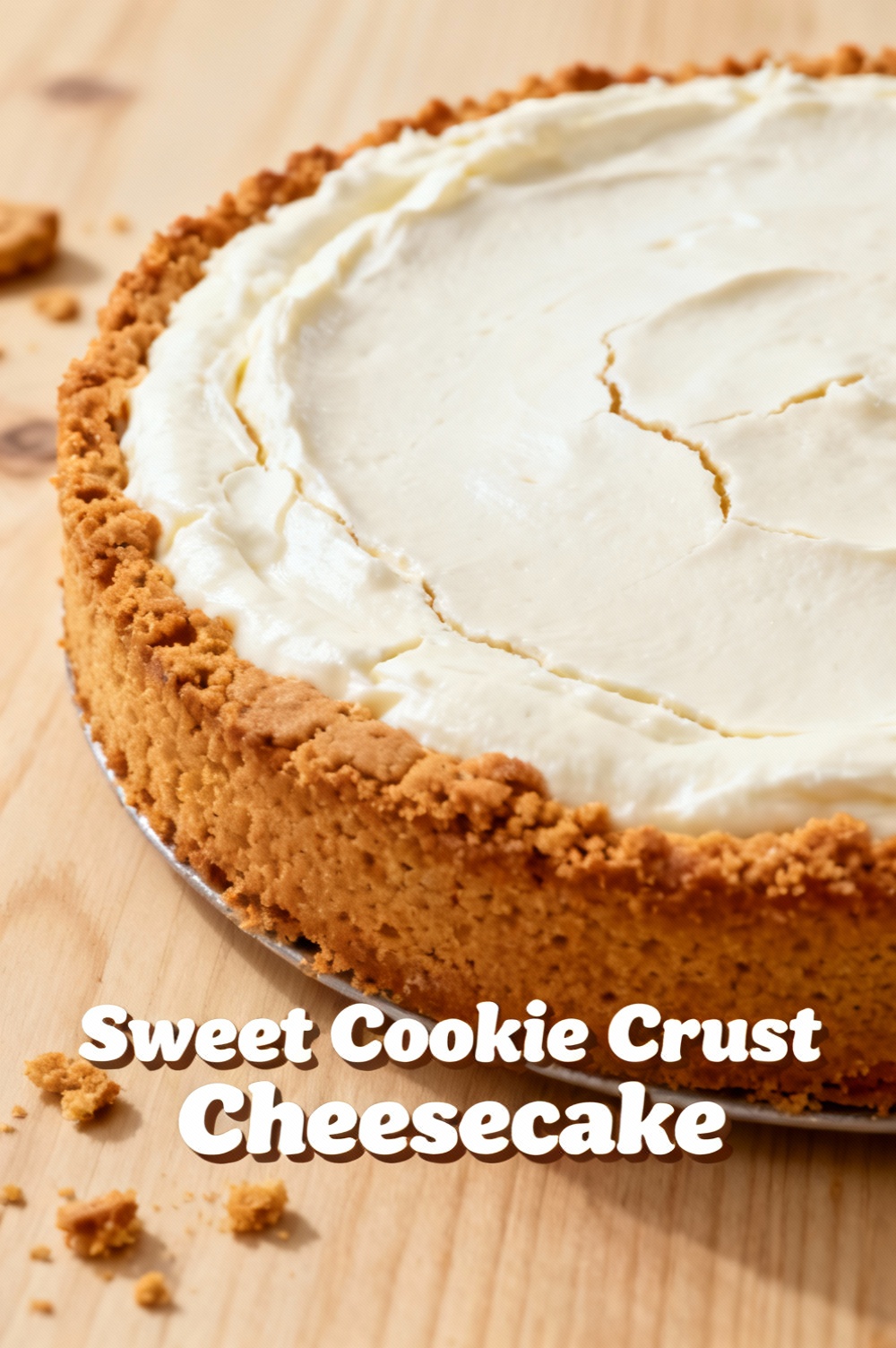
Creamy baked cheesecake with a buttery sweet cookie crust — serve plain or top with berries or a sour cream layer.
Ingredients
- 2 cups (about 200g) sweet sandwich cookies or graham crackers, finely crushed
- 5 tbsp (70g) unsalted butter, melted
- 2 tbsp granulated sugar
- 24 oz (680g) full-fat cream cheese, softened (3 × 8 oz packages)
- 3/4 cup (150g) granulated sugar
- 1 tsp vanilla extract
- 3 large eggs, room temperature
- 1/2 cup (120g) sour cream
- 1/4 cup (60ml) heavy cream
- 1 tbsp all-purpose flour or 1 tsp cornstarch (optional, for stability)
- Pinch of salt
- For the topping (optional): 1/2 cup sour cream, 2 tbsp sugar, 1 tsp vanilla or fresh berries
Instructions
- Preheat oven to 325°F (163°C). Wrap the outside of a 9-inch (23 cm) springform pan tightly with aluminum foil (to protect from water if using a water bath).
- Make the crust: combine crushed cookies, melted butter and 2 tbsp sugar in a bowl. Press firmly and evenly into the bottom (and slightly up the sides, if desired) of the prepared springform pan. Chill in the fridge while making the filling.
- Beat the cream cheese on medium speed until smooth and free of lumps (about 2–3 minutes). Scrape down the bowl as needed.
- Add 3/4 cup sugar and vanilla; beat until combined and smooth. Mix in the flour/cornstarch and a pinch of salt.
- Add the eggs one at a time, mixing on low speed and scraping the bowl between additions. Do not overmix once eggs are added — stop when just combined.
- Stir in sour cream and heavy cream until the batter is smooth and slightly pourable. Pour the filling over the chilled crust and smooth the top.
- Place the springform pan into a larger roasting pan. Carefully pour hot water into the roasting pan to come about 1 inch (2.5 cm) up the sides of the springform (for a water bath). This helps prevent cracks. If you prefer not to use a water bath, simply place the springform on a baking sheet.
- Bake at 325°F (163°C) for 45–60 minutes, until the edges are set and the center still has a slight wobble (it will continue to set as it cools).
- Turn off the oven and crack the oven door open. Let the cheesecake cool in the oven for 1 hour (this gradual cooling helps prevent cracks). Remove from the water bath, unwrap foil, and cool completely on a wire rack.
- Chill the cheesecake in the refrigerator at least 4 hours or overnight for best texture. If using the sour cream topping, mix 1/2 cup sour cream with 2 tbsp sugar and 1 tsp vanilla, spread over cooled cheesecake, and chill 15–30 minutes more before serving. Top with fresh berries if desired.
- Run a thin knife around the pan edges before releasing the springform. Slice with a sharp knife warmed under hot water and wiped dry between cuts for clean slices.
Nutrition Information
- Calories: 520 kcal
- Cholesterol: 140 mg
- Sodium: 320 mg
- Carbohydrates: 36 g
- Fiber: 0.5 g
- Sugar: 28 g
- Protein: 8 g