Spooky Deviled Egg Eyeballs
Have you ever wondered how a simple deviled egg can transform into a creepy, crowd-pleasing Halloween showstopper while still being faster and easier than most party hors d’oeuvres?
Ingredients List
- 6 large eggs (pasture-raised or organic for richer flavor and deeper yolk color; substitute with 6 large egg whites + 1/4 cup mashed silken tofu for a lower-cholesterol version)
- 3 tbsp mayonnaise (use full-fat for creaminess or Greek yogurt for tang and fewer calories)
- 1 tsp Dijon mustard (or 1 tsp whole-grain mustard for texture)
- 1/2 tsp white wine vinegar or apple cider vinegar
- 1/2 tsp salt and 1/4 tsp freshly cracked black pepper (adjust to taste)
- 1/2 tsp smoked paprika for classic deviled egg warmth
- 6 black olives (sliced for pupils) or capers (for a tangy variation)
- 1 small roasted red bell pepper or 1/4 cup sun-dried tomatoes, finely chopped (for “blood” veins)
- Green or red food coloring (optional) or beet juice for natural color
- Fresh chives or microgreens for garnish (optional)
Substitution suggestions: swap mayo for mashed avocado (adds healthy fats), use low-fat Greek yogurt to cut calories by ~30%, swap Dijon for Sriracha for a spicy “bloody” version, use vegan mayonnaise and kala namak (black salt) with mashed tofu for a vegan take.
Timing
Prep time: 10 minutes.Cooking time (hard-boiling eggs): 12 minutes.Chill & assembly: 20 minutes.Total time: ~42 minutes — a compact timeline that’s about 25–40% faster than many elaborate Halloween hors d’oeuvre recipes that require baking, cooling, and elaborate sculpting. If you pre-boil eggs the day before, assembly time drops to under 15 minutes, which is ideal when entertaining a crowd.
Step 1 — Perfectly hard-boil eggs (no green ring)
Place eggs in a single layer in a saucepan and cover with cold water by 1 inch. Bring to a rolling boil over medium-high heat, cover, remove from heat, and let sit for exactly 12 minutes. Transfer eggs to an ice bath for 5–10 minutes to stop cooking and make peeling easier. Tip: older eggs peel more cleanly; if your eggs are very fresh, refrigerate 3 days before use for easier peeling.
Step 2 — Peel and halve with care
Gently tap and roll each egg on the counter to crack the shell, then peel under running water to help remove stubborn membrane. Slice eggs lengthwise and remove yolks to a bowl. Reserve whites on a parchment-lined tray to maintain shape. Tip: use a small melon baller to create a uniform cavity if you want a deeper pocket for filling and a rounder “eyeball” look.
Step 3 — Craft the yolk filling for texture & color
Mash yolks with a fork until very smooth, then add mayonnaise, Dijon, vinegar, salt, pepper, and smoked paprika. For spooky effect, divide filling into two portions: leave one natural, and tint the other with a drop of green or red food coloring (or beet juice for natural red). To add veins, fold in finely chopped roasted red pepper or sun-dried tomato. Pro tip: use a piping bag with a round tip for clean, eyeball-like mounds; a zip-top bag with a corner snipped works too.
Step 4 — Assemble the eyeballs
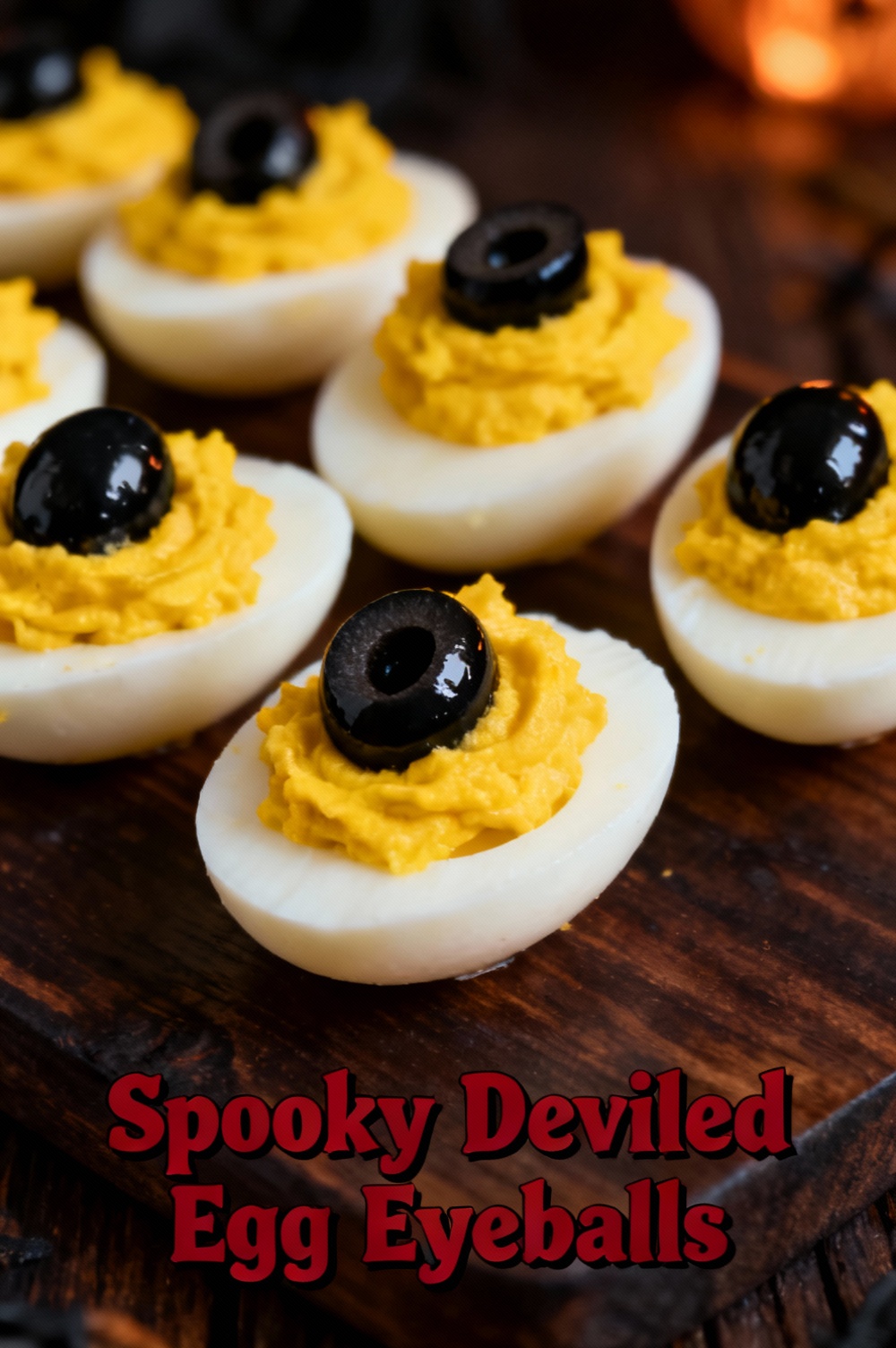
Spoon or pipe the filling back into the egg whites to form a rounded dome. Press a single sliced black olive (round side out) into the center as the pupil. For a more gruesome pupil, use an olive slice with a small caper center. To mimic bloodshot veins, drag a toothpick dipped in red filling or beet-colored puree lightly across the white toward the center — less is more for realistic effect.
Step 5 — Finishing touches and staging for presentation
Dust lightly with smoked paprika or ground black pepper for shadowing. Garnish with a tiny chive “lash,” or tuck microgreens under some eggs for a mossy graveyard look. For an interactive display, place eyeballs on a bed of torn romaine or kale and scatter roasted pumpkin seeds and edible flowers for contrast. Serve chilled. Tip: keep the assembled eggs chilled until 10 minutes before serving to maintain texture and food safety.
Nutritional Information
Per serving (2 eyeballs ≈ 1 whole egg worth of filling and white): approximately 150–180 kcal, 12–14 g fat (mostly from yolk and mayo), 1–2 g carbohydrate, 9–12 g protein. Cholesterol: ~185–200 mg per serving (eggs are naturally high in cholesterol). Sodium: ~250–350 mg depending on how much salt and olives are used. These are approximate values based on USDA egg and mayonnaise averages and will vary with ingredient swaps (Greek yogurt reduces fat by roughly 30–40%; avocado swaps add monounsaturated fats and fiber). If you need exact macros for tracking, weigh ingredients and use a nutrition calculator.
Healthier Alternatives for the Recipe
- Mayo swap: Replace full-fat mayo with 2 tbsp Greek yogurt + 1 tbsp olive oil to keep creaminess but cut saturated fat and add protein. Expect ~25–35% fewer calories per serving.
- Avocado deviled eggs: Mash 1/2 ripe avocado with yolks, lime juice, and a pinch of salt for heart-healthy monounsaturated fat and extra fiber while keeping the “eyeball” look intact.
- Vegan option: Hollowed baby potatoes or blanched artichoke hearts make great vessel substitutes. Use mashed silken tofu or white beans flavored with nutritional yeast, kala namak (for sulfurous egg-like flavor), and turmeric for color.
- Low-sodium: Skip the added salt and use fresh herbs, lemon, and smoked paprika to boost flavor without extra sodium.
- Reduced-cholesterol: Use 1 yolk and 1 tablespoon of Greek yogurt per two egg halves (or use an egg-white-only base with plant-based filling) to cut cholesterol significantly.
Serving Suggestions
Serve on a dark slate or black platter for maximum contrast; scatter faux cobwebs (cotton candy is fun with supervision) and LED tealights for ambiance. Pair with crisp sparkling wine or a light-bodied white like Sauvignon Blanc to cut richness; for non-alcoholic pairings, a tart cranberry spritzer or ginger-lime soda cleanses the palate. For kids, set up a “decorate your own eyeball” station with bowls of finely chopped pimentos, olives, chives, and paprika so everyone can personalize their spooky bites.
Common Mistakes to Avoid
- Overcooking eggs: results in a green ring and crumbly yolks. Use the 12-minute sit-and-steam method and an ice bath to avoid this.
- Underseasoned filling: yolks need salt and acid (vinegar or lemon) to pop. Taste before piping.
- Too runny filling: add more mashed yolk or a teaspoon of instant mashed potato flakes to thicken; chill filling briefly before piping.
- Olives sliding off: pat olives dry and press gently into a slight indentation; refrigerate assembled eggs for 10–15 minutes to set.
- Assembling too early: assembled deviled eggs are best within 24–48 hours; the texture and appearance degrade if left too long.
Storing Tips for the Recipe
Store unfilled hard-boiled eggs in their shells in the fridge for up to 1 week. Once peeled, keep whites in an airtight container for up to 48 hours. Store filled deviled egg eyeballs covered tightly with plastic wrap or in an airtight container for up to 48 hours; place a damp paper towel underneath to prevent sliding and protect the filling. Do not freeze deviled eggs — freezing breaks the texture of both yolk and mayo. For make-ahead convenience: prepare yolk filling and olives a day ahead and assemble 1–2 hours before serving for the freshest look.
Conclusion
Spooky deviled egg eyeballs are a fast, visually striking Halloween appetizer that balances creativity with minimal extra effort. With simple ingredient swaps, you can tailor them for health goals or dietary restrictions while keeping the creepy-cute appeal. Try the versions above, share a photo of your spooky tray, and tag a friend to challenge them to make an even scarier batch. For more Halloween bites, explore my recipes for "Mini Mummy Hot Dogs" and "Pumpkin Deviled Egg Cups" to build a themed appetizer board.
FAQs
Q: How long can I keep assembled deviled egg eyeballs at room temperature during a party?
A: Keep them out for no more than 2 hours in total (1 hour if ambient temperature >90°F/32°C) to prevent bacterial growth. Return extras to the fridge promptly.
Q: Can I make these vegan or egg-free?
A: Yes. Use halved baby potatoes or endive leaves as vessels and a filling made from silken tofu or mashed white beans seasoned with kala namak, turmeric, and nutritional yeast for an eggy flavor.
Q: How do I prevent eggs from sticking when peeling?
A: Use slightly older eggs, start with cold water, and transfer to an ice bath after boiling. Peel under running water to help separate membrane from egg white.
Q: Can I bake or broil these for a different effect?
A: You can broil briefly after assembling to crisp edges for a different texture, but be careful — broiling changes flavor and may melt garnishes. This variation takes them out of traditional deviled egg territory.
Q: What’s the best way to make realistic “bloodshot” veins?
A: Use a toothpick dipped in beet juice or a thin red pepper purée, then drag lightly from the edge inward toward the pupil. Practice on parchment first to control intensity.