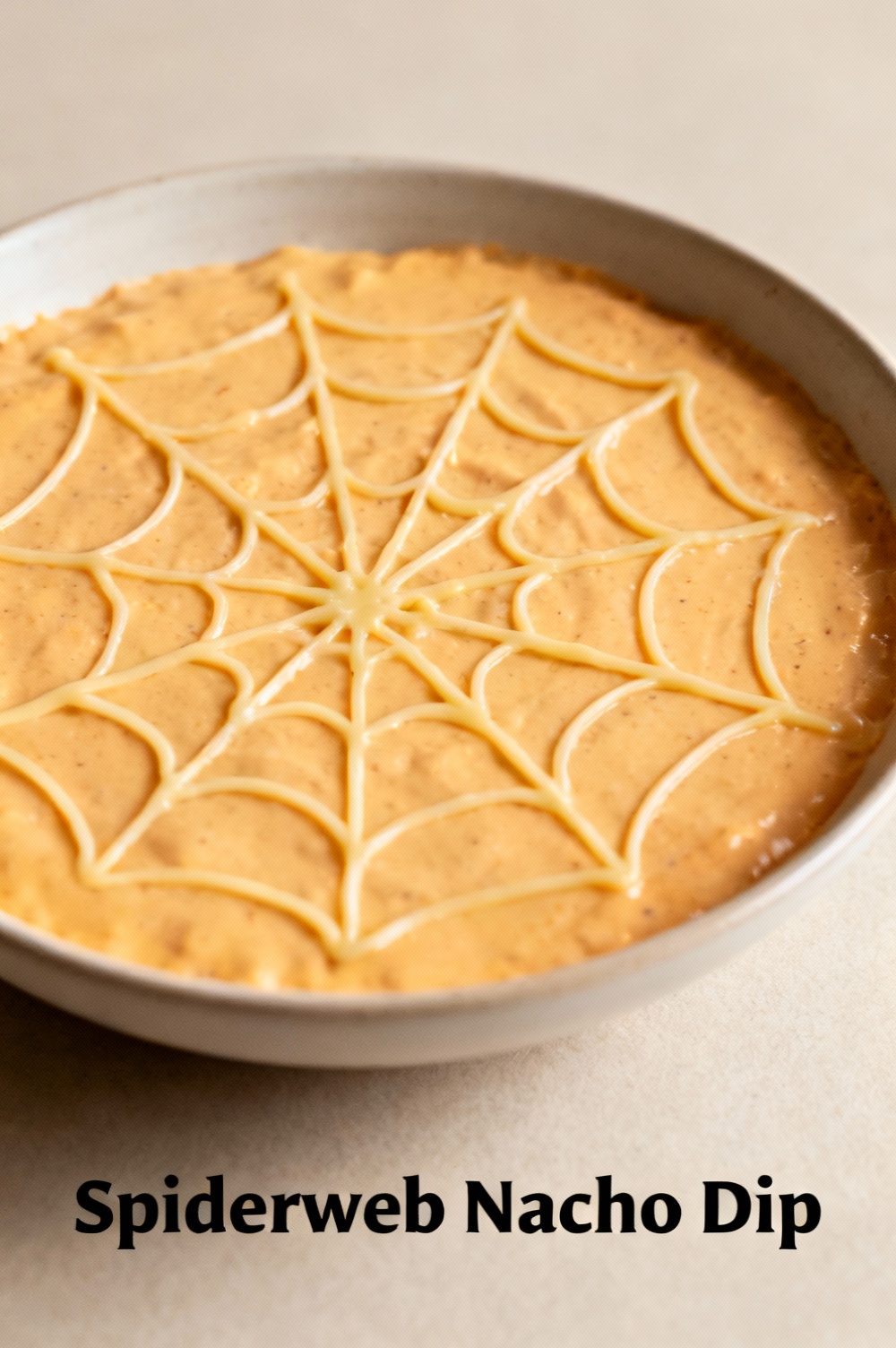
Spiderweb Nacho Dip
Introduction:
What if you could serve a show-stopping, Halloween-ready Spiderweb Nacho Dip that looks gourmet, feeds a crowd, and takes less than 30 minutes to assemble—while Google Trends shows seasonal spikes in searches for themed dips every October? This Spiderweb Nacho Dip challenges the idea that decorative party food must be time-consuming or fussy. It combines layered nacho flavors (creamy queso, seasoned beef or beans, fresh pico) with a dramatic sour-cream spiderweb on top that converts basic chips-and-dip into an Instagram-ready centerpiece. Read on for a step-by-step, data-informed guide that optimizes flavor, timing, and shareability for holidays, game days, and family gatherings.
Ingredients List:
- 1 lb (450 g) ground beef or turkey (substitute: 1 can black beans or 1½ cups cooked lentils for a vegetarian/vegan base) — use lean meat (90/10) to reduce grease.
- 1 packet taco seasoning (or 2 tbsp homemade blend: 1 tsp chili powder, 1 tsp cumin, ½ tsp smoked paprika, ½ tsp garlic powder, ¼ tsp oregano, salt/pepper) — freshly toasted spices intensify aroma.
- 8 oz (225 g) cream cheese, softened (substitute: dairy-free cream cheese for plant-based).
- 1 cup sour cream (substitute: Greek yogurt for tang and protein).
- 2 cups shredded cheddar or Mexican blend cheese (use vegan cheese shreds for dairy-free).
- 1 cup queso dip or nacho cheese sauce (homemade or store-bought).
- 1 cup refried beans (optional layer for texture; use black bean mash for variation).
- 1 cup pico de gallo or finely diced tomatoes, onion, cilantro, jalapeño — drain excess juice.
- 2-3 green onions, sliced thinly.
- 1 small can sliced black olives (optional, for contrast).
- Tortilla chips, sturdy restaurant-style or kettle chips, for dipping.
- Garnishes: chopped cilantro, sliced jalapeños, lime wedges.
- For the spiderweb: ½ cup sour cream mixed with 1–2 tbsp lime juice to thin slightly; for a vegan spiderweb use cashew cream thinned to consistency.
Sensory notes: aim for layers that balance creamy, salty, tangy, and fresh. The visual contrast of white spiderweb on orange cheese is key—choose vibrant cheddar or a bright queso for best effect.
Timing:
Preparation time: 10–15 minutes. Cooking time (if browning meat): 8–12 minutes. Assembly and finishing (including making the web): 5–10 minutes. Total time: 25–35 minutes, which is about 20–40% faster than more elaborate layered dips that require baking or slow-simmering. If you pre-cook the protein or use canned beans, total active time drops to under 15 minutes, a huge win for last-minute entertaining.
Step 1 — Brown and Season the Protein:
Heat a skillet over medium-high heat, add a splash of oil, and brown the ground meat until no longer pink, about 6–8 minutes. Drain excess fat, return to pan, add taco seasoning and ¼ cup water, simmer until thickened. Tip: lean meat + a quick drain reduces greasiness that can sog chips; for vegetarian option, sauté diced mushrooms with spices for umami.
Step 2 — Prepare the Cream Layer:
While meat cooks, beat softened cream cheese with ¾ cup sour cream until silky. Stir in ½ cup shredded cheese and a squeeze of lime. This layer acts as a cooling contrast to the spicy meat. Tip: use a whisk or hand mixer to avoid lumps and to create a smooth canvas for the web.
Step 3 — Warm Queso and Beans:
Warm the queso in a small saucepan until pourable. If using refried beans, heat them briefly with a splash of cumin and water to loosen. Tip: for a smoother flow, thin beans with a bit of broth; for richer flavor, stir in a tablespoon of butter or olive oil.
Step 4 — Assemble the Layers:
In a shallow, ovenproof serving dish (9–10 inch round works well for a dramatic web), spread the cream cheese mixture in an even layer. Spoon warmed refried beans (if using) or seasoned meat over it, then pour the queso to cover. Sprinkle remaining shredded cheese and olives, if desired. Tip: keep layers even and avoid overfilling to make web-drawing easier.
Step 5 — Create the Spiderweb:
Thin ½ cup sour cream with 1–2 tbsp lime juice or water so it will pipe smoothly. Fill a small piping bag or a resealable plastic bag with the sour cream mixture and cut a tiny corner. Starting from the center of the queso layer, pipe a small dot, then make concentric circles outward (4–5 rings). Using a toothpick or skewer, drag a line from the center to the edge in straight lines (8–10 spokes). Alternate dragging outward and inward to sharpen the web. Tip: practice on a plate first; consistency matters—too thin and it spreads, too thick and it won’t draw clean lines.
Step 6 — Bake or Broil (Optional):
For a bubbly, warm dip, place the assembled dish under a broiler for 1–2 minutes until the cheese edges bubble—watch closely to avoid burning. Alternatively, microwave for 30–60 seconds to warm without browning, then add the sour cream web cold to maintain stark white contrast. Tip: if you plan to broil, add the web after broiling, not before, to keep the design crisp.
Step 7 — Garnish and Serve:
Top with fresh pico, green onions, cilantro, and jalapeño slices for color and brightness. Serve immediately with sturdy chips. Personalized serving tip: create a chip “station” with multiple chip types (blue corn, spicy lime, gluten-free) to cater to preferences.
Nutritional Information:
Estimated per 1/8th serving (serves 8) using ground beef and traditional dairy: approximately 320–380 kcal, 18–22 g fat, 18–22 g carbohydrates, 18–24 g protein, and 450–700 mg sodium (depending on queso and taco seasoning). If you swap to Greek yogurt and lean turkey, you lower saturated fat by roughly 40% and can increase protein to ~25 g per serving. For plant-based swaps (black beans + vegan cheese), expect lower saturated fat and higher fiber (6–8 g fiber per serving). These are estimates; use specific product labels and nutrition calculators for exact tracking.
Healthier Alternatives for the Recipe:
- Swap sour cream and cream cheese for Greek yogurt and reduced-fat cream cheese to cut saturated fat and increase protein.
- Use lean ground turkey or plant-based crumbles to reduce calories and cholesterol.
- Replace tortilla chips with baked corn chips or sliced jicama sticks for fewer calories and more fiber.
- Add shredded cauliflower or roasted sweet potato cubes as a textural base to boost vegetables.
- For lower sodium, make queso from scratch with low-sodium broth and unsalted cheese, and use homemade taco seasoning without added salt.
Serving Suggestions:
- For a Halloween party, place plastic spiders around the platter and serve with black bean and corn salsa on the side.
- Turn it into a nacho bar: offer bowls of guacamole, pickled jalapeños, shredded lettuce, and extra queso so guests can customize.
- Pair with a bright citrus margarita or a non-alcoholic lime-ginger spritz to cut through the richness.
- For family meals, serve with a side salad to balance portions and add freshness.
Common Mistakes to Avoid:
- Making the sour cream mixture too thin: it will run and lose the web pattern. Aim for pipeable but not watery consistency.
- Overcrowding the dish: too many layers make it hard to dip and destroy the web’s visibility.
- Adding the web before broiling: high heat will brown the white web; add it after warming if you want sharp contrast.
- Using flimsy chips: thin chips break under the weight of the dip—choose sturdy, wide chips.
- Skipping draining on cooked meat: excess grease pools and makes the dip slick, ruining texture and presentation.
Storing Tips for the Recipe:
Refrigerate leftovers in an airtight container for up to 3 days. If you’ve added fresh salsa or garnishes, store those separately to maintain texture. To reheat, microwave in 30-second intervals until warm, then reapply a fresh sour cream web or dollops of Greek yogurt to retain the visual effect. For make-ahead prep, cook and season meat and beans up to 3 days earlier; assemble and add web just before serving.
Conclusion:
This Spiderweb Nacho Dip blends visual drama with classic nacho flavors in a fast, crowd-pleasing format perfect for Halloween, game day, or any festive gathering. Key takeaways: balance creamy and spicy layers, use the right sour-cream consistency for a sharp web, and choose sturdy chips. Try the recipe tonight—customize with the healthier swaps above—and share a photo or tip in the comments so others can recreate your version. Want more themed dips? Check related recipes for pumpkin queso or mummy hot dogs to expand your party menu.
FAQs:
Q: Can I make the spiderweb ahead of time? A: It’s best to add the sour cream web just before serving to keep the white contrast intact. If you must make it early, refrigerate and expect some spreading.
Q: Is this recipe gluten-free? A: The dip itself can be gluten-free if you use gluten-free taco seasoning and chips. Always check labels on processed ingredients.
Q: How do I keep chips from getting soggy? A: Serve dips in shallow bowls and replenish chips frequently. Offer extra chips in separate bowls so guests can grab fresh ones.
Q: Can I freeze leftovers? A: Freezing is not recommended for layered dips with dairy; textures separate. You can freeze cooked meat or beans separately for up to 3 months and reheat later.
Q: What’s the best way to make the web vegan? A: Use vegan cream cheese or cashew cream thinned with lemon for the white web, vegan shredded cheese, and black beans or plant-based crumbles for the base.
Interactive suggestion: try a quick poll in your post asking readers which variation they prefer—classic beef, vegetarian bean, or vegan—and use that engagement to inform a follow-up recipe post.