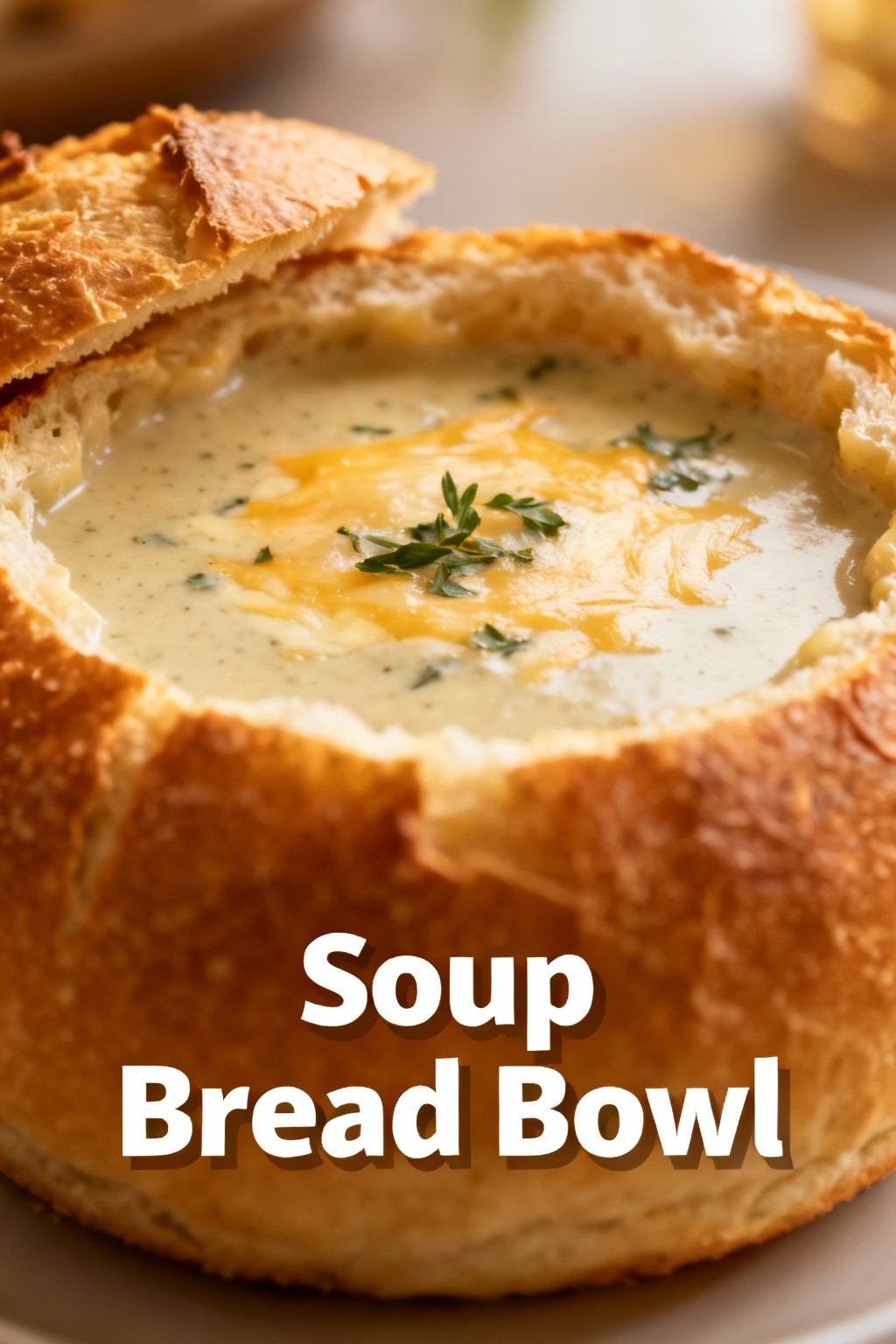
Soup Bread Bowl
Introduction
Did you know research on multisensory dining suggests edible containers—like soup bread bowls—can heighten perceived flavor and satisfaction compared with standard bowls? If you’ve ever eaten soup from a crusty, warm bread bowl you know the experience feels different: the aroma, the texture contrast, and the ritual of tearing into the bread all add layers of enjoyment that science calls sensory amplification. This recipe-driven guide demystifies how to make a perfect soup bread bowl combo at home, balancing flavor, structure, and efficiency so you get maximum comfort with minimum fuss.
Ingredients List
For the bread bowls (makes 4 medium bowls): 1 1/2 cups (360 ml) lukewarm water, 2 1/4 teaspoons (1 packet) active dry yeast, 1 tablespoon granulated sugar, 3 1/2 to 4 cups (420–480 g) bread flour (sub: all-purpose + 1/4 cup vital wheat gluten), 2 teaspoons fine sea salt, 2 tablespoons olive oil, an egg wash (1 egg beaten with 1 tbsp water) for a glossy crust. For the soup (creamy tomato basil, serves 4): 2 tablespoons olive oil or butter, 1 medium yellow onion (finely diced), 2 cloves garlic (minced), 1 carrot (grated), 1 can (28 oz/800 g) crushed tomatoes, 2 cups low-sodium vegetable or chicken stock, 1/2 cup heavy cream or full-fat coconut milk (sub: cashew cream for nutty richness), 1 teaspoon sugar (balances acidity), handful fresh basil leaves, salt and black pepper to taste, optional parmesan or nutritional yeast for finishing. Sensory-enhancing garnishes: torn basil, a drizzle of extra-virgin olive oil, red pepper flakes, toasted seeds for crunch. If you prefer a sturdier bowl, choose a high-hydration sourdough boule or a demi-baguette-sized loaf; for gluten-free options, make a dense gluten-free boule or use a hollowed-out roasted squash as an alternative edible vessel.
Timing
Active prep: 30–40 minutes. Rise and bake time: 60–75 minutes. Total time: roughly 90–115 minutes depending on proofing speed and oven performance—about the same time it takes many homemade artisan bread projects and considerably faster than multi-day sourdough methods. If you’re short on time, use store-bought crusty rolls or partially bake the bowls ahead to cut active evening prep to under 20 minutes.
Step 1: Make the dough
In a large bowl combine lukewarm water, sugar, and yeast; let sit 5–7 minutes until foamy. Stir in olive oil, then add 3 1/2 cups flour and salt. Mix until shaggy, then knead 8–10 minutes by hand (or 5–6 minutes in a stand mixer) until the dough is smooth and slightly tacky. Tip: a slightly tacky dough produces a chewy interior and crisp crust; if it’s sticky, dust sparingly with flour—too much flour yields a dense bowl.
Step 2: Bulk rise and shape
Place dough in an oiled bowl, cover, and let rise in a warm spot until doubled (about 45–60 minutes). Divide into four equal pieces; shape each into a tight round boule. Place on a parchment-lined baking sheet or in a cast-iron skillet to encourage an oven spring and crisp bottom. Let rest 20–30 minutes for a second rise. Personalization tip: for chewier bowls, incorporate 10–20% whole wheat flour or replace part of the water with mashed roasted garlic for flavor.
Step 3: Score and bake
Preheat oven to 425°F (220°C) with a baking stone or heavy-duty sheet inside. Brush loaves with egg wash, score with a sharp blade to control expansion, and bake 20–30 minutes until deep golden and hollow-sounding when tapped. For extra-crisp crust, introduce steam by placing a shallow pan with hot water on the oven floor during the first 10 minutes. Cooling tip: let loaves cool 10–15 minutes so the structure firms before cutting.
Step 4: Hollow the bowls
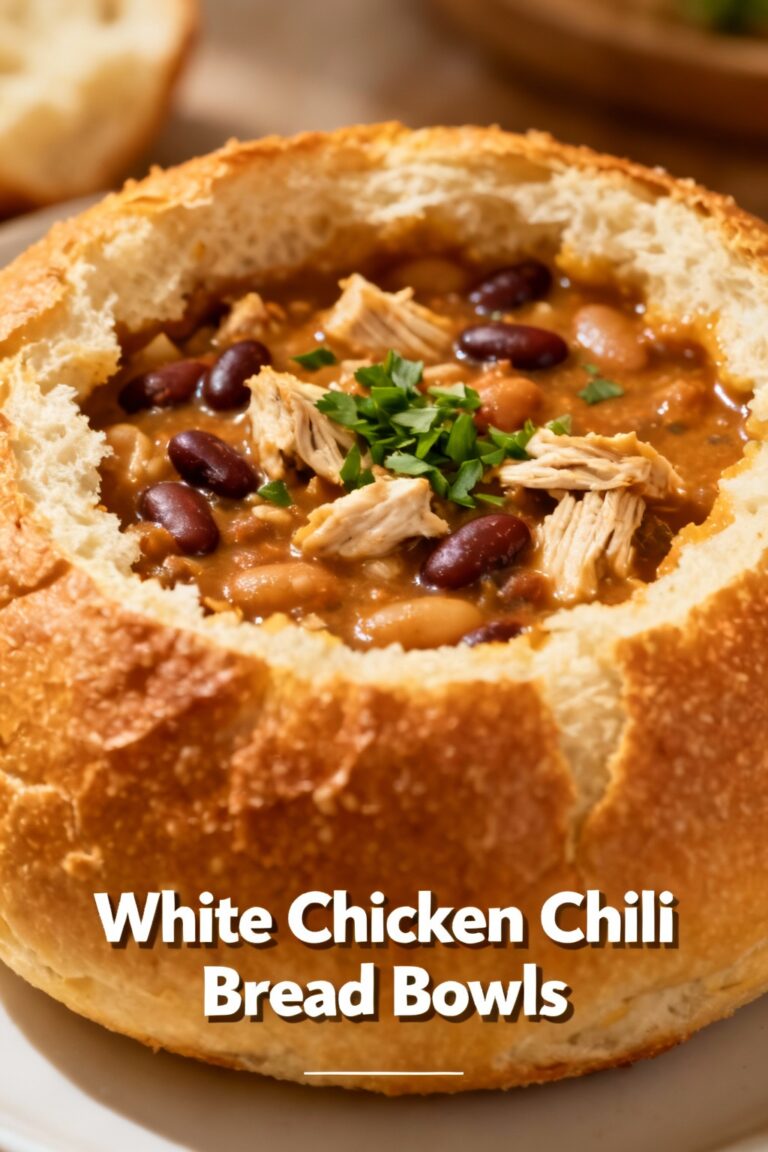
Cut a circle from the top of each loaf like a lid and reserve. Gently scoop out the soft crumb, leaving a 1/2–3/4-inch thick wall so the bowl holds hot liquid without collapsing. Save the removed bread for croutons or breadcrumbs. For a sturdier inner seal, brush the cavity with a little melted butter and briefly toast under a broiler—this caramelizes the interior and resists sogginess.
Step 5: Make the soup
Heat oil or butter in a saucepan over medium heat. Sauté onion until translucent, add garlic and carrot, cook until soft. Add crushed tomatoes, stock, sugar, and simmer 15–20 minutes. For a silky finish, use an immersion blender or puree in batches, then stir in cream and basil. Season to taste. Tip: reduce the soup slightly to intensify flavor and ensure it won’t thin the bread too quickly.
Step 6: Assemble and serve
Ladle hot soup into each hollowed bread bowl, top with basil, a drizzle of oil, and optional parmesan. Serve immediately with the reserved lid on the side for tearing and dipping. For a dramatic presentation, place bowls on small plates with a sprinkle of coarse salt and cracked pepper.
Nutritional Information
Estimated per serving (1 medium bread bowl + ~2 cups creamy tomato soup): Calories ~650–750 kcal; Fat 22–30 g (saturated fat dependent on cream); Carbohydrates 80–95 g; Protein 18–22 g; Fiber 6–8 g; Sodium 700–1,100 mg (varies with stock and added salt). Data insight: swapping heavy cream for a plant-based alternative can lower saturated fat by 40–60% per serving, and using low-sodium stock can reduce total sodium by up to 30–50%, making the dish more heart-healthy without sacrificing texture.
Healthier Alternatives for the Recipe
– Lower-fat: Replace heavy cream with evaporated skim milk or cashew cream for a creamy mouthfeel with less saturated fat.
– Lower-carb / gluten-free: Serve soup in roasted kabocha or bell pepper halves instead of bread, or prepare gluten-free bread bowls using a blend of brown rice, tapioca, and xanthan gum.
– Higher-protein: Stir in cooked shredded chicken, white beans, or a scoop of plain Greek yogurt (off heat) to boost protein by 10–20 g per serving.
– Reduced-sodium: Use homemade stock and omit added salt until the end; taste and adjust. Personalization: add roasted chickpeas or seeds on top for texture and extra nutrients.
Serving Suggestions
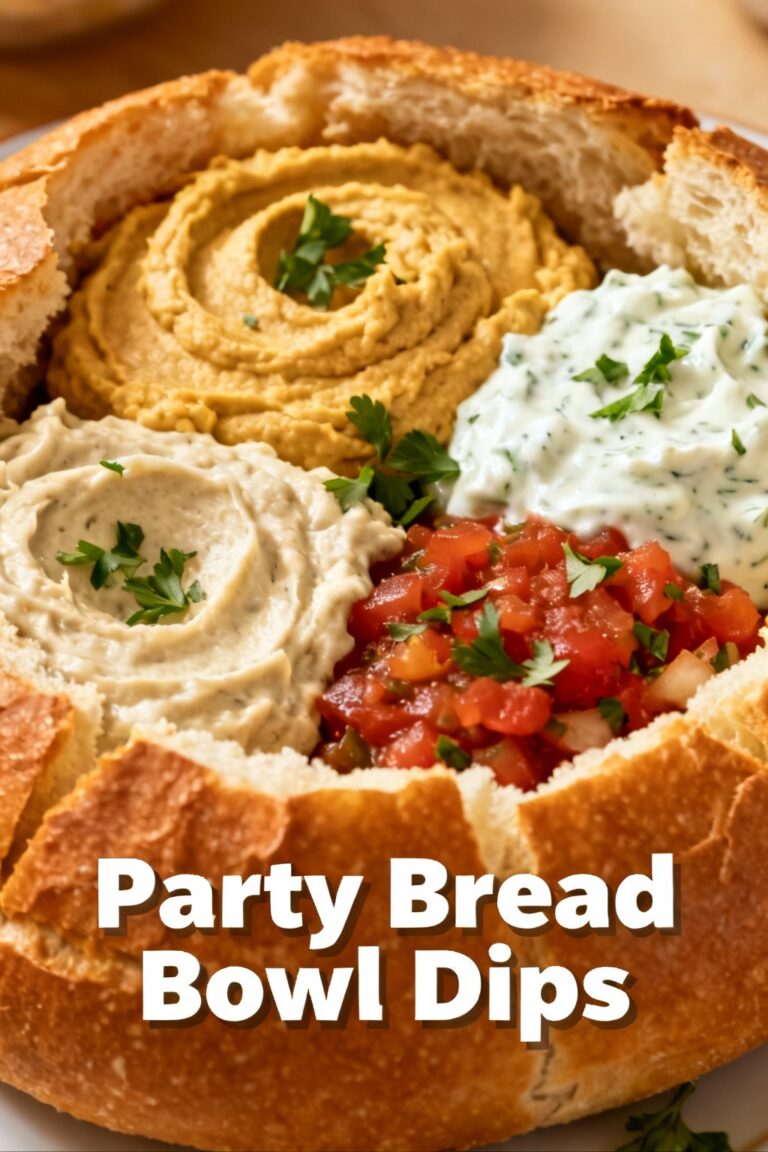
Pair your soup bread bowl with crisp green salads (arugula with lemon vinaigrette cuts through creaminess), pickled vegetables for acidity, or a small charcuterie board for a cozy group meal. For a family-style twist, serve a variety of soups—clam chowder, mushroom barley, roasted squash—and label bowls so guests can sample. Seasonal tip: in summer, make a chilled cucumber-yogurt soup and serve in lightly toasted whole-grain bowls. For entertaining, place the filled bread bowls on a wooden plank and invite guests to scoop and share; it’s highly Instagrammable and enhances perceived value.
Common Mistakes to Avoid
– Hollowing too thin: leaving walls under 1/2 inch invites leaks and sogginess; keep at least a 1/2–3/4-inch thickness.
– Overfilling with very hot, thin soups: thin broths penetrate bread faster—thicken slightly or ladle in just before serving.
– Skipping the rest: cutting into hot bread too soon makes it tear; allow 10–15 minutes cooling to stabilize crumb.
– Using overly moist fillings: heavy vegetables or watery stews will collapse the bowl faster—reduce liquid or drain excess. Data-backed tip: foods with higher viscosity retain structural integrity in edible vessels for longer periods, so slightly thicker soups prolong a pleasant eating window.
Storing Tips for the Recipe
Leftover soup: cool quickly and store in airtight containers in the fridge for up to 4 days or freeze up to 3 months. Bread bowls: if you expect leftovers, par-bake the bowls and freeze wrapped for up to 3 months; reheat in a hot oven (350°F/175°C) to restore crust before filling. Reheating assembled bowls is not recommended for long-term storage—the bread softens fastest; instead, reheat soup separately and fill fresh or re-crisped bowls just before eating.
Conclusion
A soup bread bowl is more than a novelty—it’s a sensory-optimized meal that combines texture, aroma, and comfort. With a few technique-focused steps (proper dough hydration, adequate wall thickness, and slightly thickened soup) you can deliver a memorable, shareable dinner in about 90–115 minutes. Try the recipe once, then experiment with different soups, grains, and dietary swaps to make it your signature comfort dish. If you make it, snap a photo, tag your favorite food community, and share what substitution worked best for you—your feedback helps refine the next iteration.
FAQs
Q: Can I use store-bought bread?
A: Yes—choose a crusty round loaf or demi-baguette and toast the interior lightly before filling. This saves time and still yields great texture.
Q: How long will a filled bread bowl hold soup before becoming soggy?
A: With a properly toasted interior and a thicker soup, expect 15–25 minutes of optimal texture; thinner broths will shorten that window.
Q: Are bread bowls freezer-friendly?
A: Par-baked or fully baked and cooled bowls freeze well for up to 3 months. Thaw and reheat in the oven to revive crust before filling.
Q: Can I make this vegan?
A: Absolutely—use olive oil instead of butter, coconut or cashew cream instead of dairy cream, and ensure any stock is vegetable-based.
Q: What soups work best?
A: Creamy chowders, roasted tomato, broccoli-cheddar (use vegan cheeze for plant-based), and thick stews are ideal because their viscosity preserves the bread structure longer.
Explore related posts for more ideas: "Sourdough Boule Basics," "Creamy Tomato Soup Variations," or "Gluten-Free Edible Bowls" to customize further and level up your soup bread bowl game.