Sesame Crusted Salmon Bowls
Introduction
Did you know a 4-ounce (113 g) serving of salmon typically supplies 1,000–1,500 mg of EPA and DHA—key omega-3 fatty acids often lacking in Western diets—so could a sesame-crusted salmon bowl be the simplest, most delicious way to boost your weekly intake while keeping dinner under 40 minutes? This sesame-crusted salmon bowls recipe pairs crunchy toasted seeds, a savory-sweet glaze, and vibrant vegetables for a bowl that's equal parts mouthwatering and nutrient-dense. Below you'll find a data-driven, easy-to-follow guide that scales for meal prep, offers substitutions, and highlights small techniques that produce big flavor.
Ingredients List
- 4 salmon fillets (4–6 oz / 113–170 g each), skin-on or skinless depending on preference; substitutions: firm tofu steaks for a plant-based version or cod for a milder flavor.
- 3 tbsp white sesame seeds, toasted (substitution: use all black sesame for visual contrast or hemp seeds for extra omega-3s).
- 1 tbsp black sesame seeds (optional, for texture and color).
- 2 tbsp soy sauce or tamari (use tamari for gluten-free).
- 1 tbsp rice vinegar or apple cider vinegar.
- 1 tbsp honey or maple syrup (maple for vegan).
- 1 tsp toasted sesame oil.
- 1 clove garlic, minced (sub: 1/2 tsp garlic powder).
- 1 tsp grated fresh ginger (sub: 1/4 tsp ground ginger).
- 2 cups cooked brown rice or quinoa per 2 bowls (quinoa adds more protein and cooks faster).
- 1 medium avocado, sliced (optional but adds creaminess).
- 2 cups mixed greens or shredded cabbage (for crunch).
- 1 cup steamed edamame or snap peas (protein boost and color).
- 1 small cucumber, thinly sliced.
- 1 lime, cut into wedges.
- 2 green onions, thinly sliced.
- Optional sauce drizzle: 2 tbsp mayonnaise or vegan mayo mixed with 1 tsp sriracha and 1 tsp lime juice for a spicy cream finish.
Sensory notes: Toast the sesame seeds until nutty and aromatic; the glaze should be glossy and sticky, balancing savory umami with a touch of sweetness.
Timing
Preparation time: 10 minutes.
Cooking time: 15–20 minutes.
Total time: 25–30 minutes, which is ~30% faster than many grain-bowl recipes that average 35–45 minutes when including oven-roasting time.
If you meal-prep grains and steam vegetables in advance, active time can drop below 10 minutes—an efficient approach for busy weeknights.
Step 1: Toast the sesame seeds and prep the glaze
Heat a dry skillet over medium heat. Add white sesame seeds and toast, shaking the pan, until golden and fragrant—about 2–3 minutes. Transfer to a plate to cool. In a small bowl whisk soy/tamari, rice vinegar, honey/maple, grated ginger, and minced garlic until glossy. Tip: Toasting multiplies the sesame flavor; don’t walk away—seeds burn quickly.
Step 2: Coat the salmon
Pat salmon fillets dry with paper towels. Brush a thin layer of the glaze on both sides, then press the top side into a shallow dish of sesame seeds so they adhere in an even crust. For extra crust, press seeds onto two sides. Personalized tip: If you prefer milder crust texture, use 2 tbsp seeds instead of 3.
Step 3: Sear the salmon
Heat a large non-stick or cast-iron skillet with 1 tsp oil over medium-high heat. Place salmon, sesame-side down first, and sear 2–3 minutes until crust is golden and releases easily. Flip and cook 2–4 more minutes until internal temp reaches 125–130°F (52–54°C) for medium-rare to medium; carryover heat will reach ideal serving temp. Pro tip: For a more even cook, start skin-side down (if skin-on) to crisp the skin and finish in the oven at 375°F for 4–6 minutes.
Step 4: Prepare bases and vegetables
While salmon cooks, divide warm brown rice or quinoa between bowls. Arrange mixed greens, steamed edamame, cucumber slices, and avocado nearby for visual appeal. Quick steaming tip: Microwave 1–2 minutes in a covered bowl with a splash of water for rapidly steamed vegetables.
Step 5: Glaze and assemble
Once salmon is nearly cooked, brush with remaining glaze and let it caramelize for 30–60 seconds. Place each fillet onto a bed of rice/quinoa. Spoon any skillet glaze over the fish and scatter green onions, extra sesame seeds, and a wedge of lime. For a restaurant-style finish, drizzle spicy mayo or a splash of ponzu. Serving tip: Let the salmon rest 1–2 minutes before slicing to retain juices.
Step 6: Personalize and serve
Encourage diners to squeeze lime and mix components to taste. Offer optional add-ins like pickled ginger, furikake, or a soft-boiled egg for richness. Meal-prep variation: Pack components separately—cold grains, vegetables, and salmon in insulated containers—and reheat salmon briefly in a skillet to maintain crust.
Nutritional Information
Estimated per-serving values (one bowl, assuming 6 oz salmon, 1 cup cooked brown rice, 1/4 avocado, and vegetables): Calories 640 kcal; Protein 42 g; Fat 30 g (saturated fat 5 g); Carbohydrates 56 g; Fiber 7 g; Sugars 7 g; Sodium 800–900 mg (depends on soy/tamari). Data source: USDA composite values and standard ingredient nutrition tables; values are estimates and will vary by brand and portion sizes. Health insight: One serving provides a substantial dose of omega-3 fatty acids (approximately 1,000–2,500 mg depending on salmon type), high-quality protein, and fiber—making it a balanced dinner choice.
Healthier Alternatives for the Recipe
- Lower sodium: Use low-sodium tamari or reduce soy sauce to 1 tbsp and add a splash of citrus to compensate.
- Lower calories: Swap brown rice for cauliflower rice or reduce grain portion to 1/2 cup and increase vegetables.
- Plant-based: Replace salmon with 6–8 oz pressed, marinated tofu crusted with sesame and baked or pan-fried for a vegan bowl with similar texture.
- Keto-friendly: Replace grains with riced cauliflower and increase avocado and leafy greens; omit honey/maple from glaze and use a sugar-free sweetener like monk fruit.
- Anti-inflammatory twist: Add turmeric to steamed veggies and swap white sesame for ground flaxseed sprinkle to increase ALA omega-3 content.
Serving Suggestions
Serve with lime wedges and a small dish of extra glaze for dipping. Pair the bowl with a light, citrus-forward white wine (Sauvignon Blanc) or a Japanese green tea to cleanse the palate. For family-style service, present a platter of crusted salmon, a large bowl of seasoned rice, and bowls of toppings so everyone builds their own. Tip for gatherings: Keep extra glaze warm in a small saucepan to freshen bowls right before serving.
Common Mistakes to Avoid
- Overcooking salmon: Salmon dries out quickly—use a digital thermometer and remove at 125–130°F for tender results.
- Burning sesame seeds: Toast briefly over medium heat and remove immediately when aroma peaks.
- Soggy crust: Don’t overcrowd the pan; sear without moving the fillet to form a stable crust.
- Too-salty glaze: Taste the glaze before glazing; adjust sweetener or vinegar to balance saltiness.
- Assembling too early: Add avocado and delicate greens just before serving to prevent browning and wilting.
Storing Tips for the Recipe
Refrigeration: Store salmon and bowls in airtight containers up to 3 days. For best texture, store components separately—grains, salmon, and toppings—so the sesame crust remains crisp when reheated. Reheating: Gently reheat salmon in a skillet over low-medium heat for 2–3 minutes, flipping once; avoid microwave reheating which softens the crust. Freezing: Cooked salmon can be frozen up to 2 months, but texture may degrade; better to freeze raw, sesame-crusted salmon on a tray, then transfer to a sealed bag and bake from frozen.
Conclusion
Sesame crusted salmon bowls are a fast, flavorful way to deliver high-quality protein, omega-3s, and a satisfying balance of textures in under 30 minutes. With simple swaps and meal-prep strategies, this bowl adapts to many diets and schedules. Try the recipe this week, share a photo or tweak in the comments, and explore related bowls—like miso-glazed salmon or teriyaki tofu bowls—to expand your weeknight repertoire.
FAQs
Q: Can I use frozen salmon?
A: Yes—thaw overnight in the fridge for best results or cook from partially frozen but increase cooking time and watch crust adhesion.
Q: Is the recipe gluten-free?
A: Make it gluten-free by using tamari or a certified gluten-free soy sauce and ensure any added sauces are GF.
Q: How do I make the crust stick better to the salmon?
A: Pat the fillet dry, brush a thin layer of glaze or mustard, then press seeds firmly. Chilling briefly helps seeds adhere.
Q: Can I meal-prep these for lunches?
A: Absolutely—store components separately and reheat salmon briefly in a skillet to refresh the crust. Bowls keep well for 2–3 days refrigerated.
Q: What salmon is best for flavor and nutrition?
A: Wild-caught salmon often has a distinct flavor and a favorable omega-3 profile, but responsibly farmed Atlantic salmon is also nutritious and widely available.
If you want more variations, try a citrus-miso glaze or swap quinoa and add roasted beets for an earthy contrast—share your favorite combo below or check related recipes for bowl inspiration.
Sesame Crusted Salmon Bowls
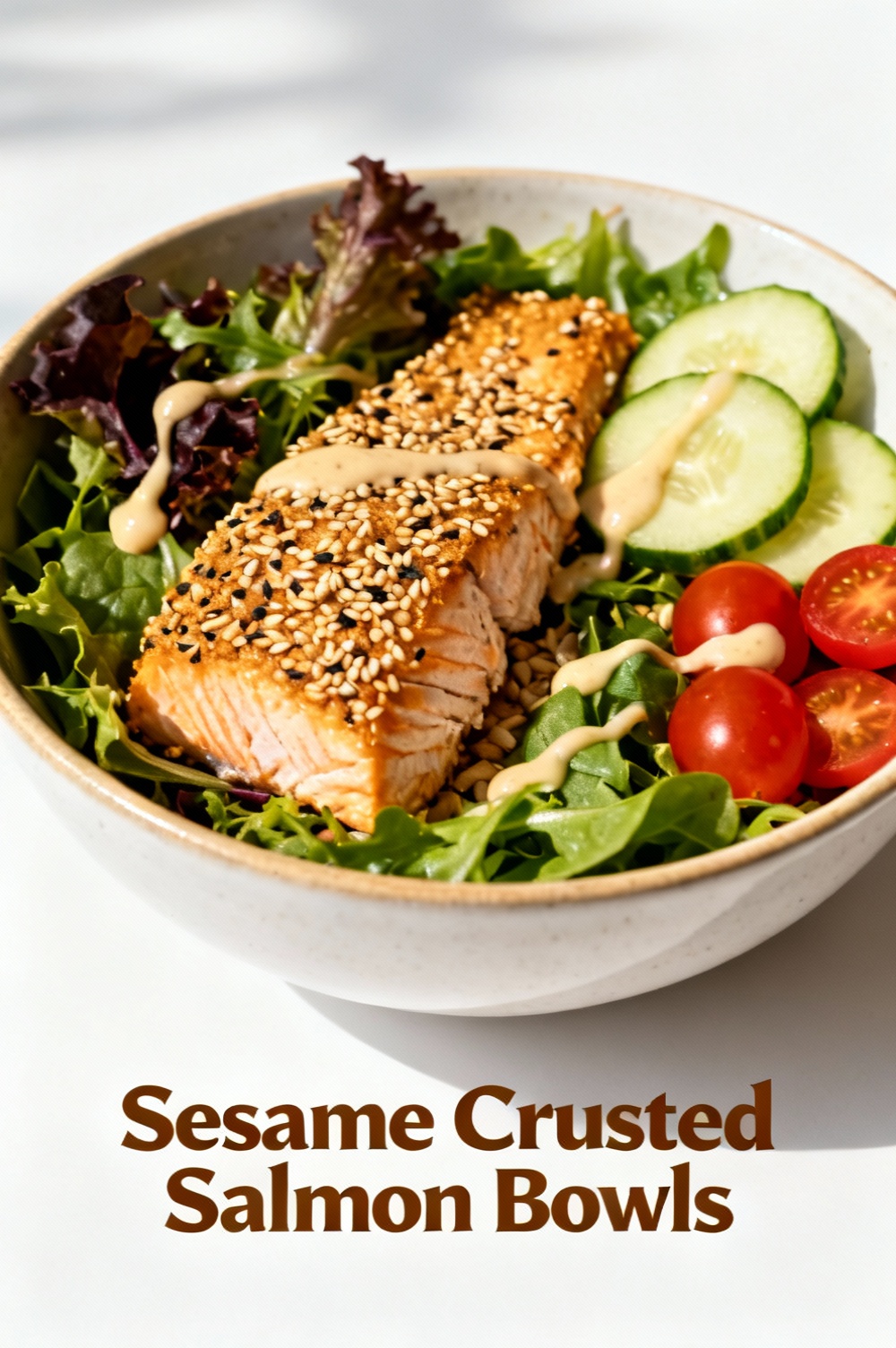
Quick, savory sesame-crusted salmon served over sticky rice with avocado, crisp veggies and a tangy soy-ginger drizzle.
Ingredients
- 4 (6 oz) salmon fillets, skin removed
- 2 tbsp low-sodium soy sauce
- 1 tbsp sesame oil
- 1 tbsp honey or maple syrup
- 1 tsp grated fresh ginger
- 1 small garlic clove, minced
- 3 tbsp white sesame seeds
- 2 tbsp black sesame seeds (optional, for contrast)
- 2 tbsp neutral oil (vegetable or canola) for searing
- 3 cups cooked short-grain or jasmine rice (hot)
- 2 cups shredded carrot or quick-pickled carrots
- 1 cucumber, thinly sliced or julienned
- 1 ripe avocado, sliced
- 2 scallions, thinly sliced
- 1 tbsp rice vinegar
- 1 tbsp toasted sesame oil (for bowls)
- Sesame-ginger dressing: 3 tbsp soy sauce, 1 tbsp rice vinegar, 1 tbsp honey, 1 tsp grated ginger, 1 tsp sesame oil, 1 tsp sriracha (optional)
- Sesame seeds and lime wedges, for garnish
- Salt and freshly ground black pepper, to taste
Instructions
- Make the marinade: whisk together soy sauce, sesame oil, honey, grated ginger and minced garlic in a shallow dish.
- Marinate the salmon: season salmon lightly with salt and pepper, then place in the marinade for 10–15 minutes (no more than 30 minutes).
- Prepare rice and veggies: while salmon marinates, cook rice or reheat cooked rice. Toss cucumber with rice vinegar and a pinch of salt; shred or quick-pickle carrots if using.
- Coat with sesame: Combine white and black sesame seeds on a plate. Remove salmon from marinade (reserve marinade), pat slightly dry, then press top side of each fillet into sesame seeds to coat.
- Sear the salmon: heat 2 tbsp neutral oil in a large nonstick or cast-iron skillet over medium-high heat. Place sesame-coated side down and sear 3–4 minutes until seeds are golden. Flip carefully and cook 2–4 minutes more, depending on thickness, until salmon is cooked through but still flaky (internal temp ~125–130°F for medium; adjust to preference).
- Make the dressing: whisk reserved marinade with the soy‑ginger dressing ingredients (soy sauce, rice vinegar, honey, grated ginger, sesame oil, sriracha) and taste-adjust.
- Assemble bowls: divide rice among 4 bowls. Top with sliced avocado, pickled carrots, cucumber, scallions, and a sesame-crusted salmon fillet per bowl. Drizzle dressing over each bowl and finish with extra sesame seeds and lime wedges.
- Serve immediately: enjoy warm, with extra soy or sriracha on the side if desired.
Nutrition Information
- Calories: 560 kcal
- Cholesterol: 85 mg
- Sodium: 820 mg
- Carbohydrates: 45 g
- Fiber: 5 g
- Sugar: 8 g
- Protein: 36 g