Roasted Turkey with Gravy
Did you know the USDA's 165°F safety threshold — not the clock — is the real key to a perfectly roasted turkey with silky gravy?
Roasted turkey with gravy often gets reduced to "time per pound" math, but food-safety data and chef-tested practice show that internal temperature and resting time control juiciness far more reliably than minutes on a timer. Below you'll find a practical, flavor-forward recipe that balances safety, speed, and maximum moisture, plus data-driven tips to avoid the most common pitfalls.
Ingredients List
- 1 whole turkey (10–14 lb recommended for a 6–8 person meal). Substitute: 6–8 lb breast for smaller gatherings. Sensory note: look for pale pink flesh with minimal odor.
- 3 tbsp kosher salt + 2 tbsp sugar (for a simple dry brine). Substitute: omit sugar for savory-only brine, or use 2 tbsp low-sodium salt for lower sodium.
- 6 tbsp unsalted butter, room temperature (for under-skin herb butter). Substitute: olive oil (for dairy-free) or soft plant-based butter.
- 2 tbsp fresh rosemary, chopped; 2 tbsp fresh thyme leaves; 1 tbsp sage, chopped. Substitute: 2 tsp dried mixed herbs if fresh unavailable. Aromatic profile: herb butter gives savory, woodsy notes.
- 1 large onion, quartered; 2 carrots, halved; 2 celery stalks, halved (for cavity and roasting pan). Substitute: leeks or fennel for floral notes.
- 1 lemon, halved (adds brightness). Substitute: orange for sweeter aroma.
- 3 cups low-sodium chicken or turkey stock (for gravy). Substitute: vegetable stock for lighter flavor.
- 2–3 tbsp all-purpose flour (for gravy roux) or 2 tbsp cornstarch (for gluten-free gravy).
- Salt and freshly ground black pepper to taste.
- Optional: 1 cup dry white wine (for deglazing).
- Optional aromatics for cavity: 4 garlic cloves, smashed; a bay leaf.
Timing
- Active prep time: 30–45 minutes (including herb butter and cavity prep).
- Brine time (optional dry brine): 12–24 hours (dry brine improves moisture retention; 24 hours gives best results).
- Roast time: roughly 13–15 minutes per pound at 350°F for an unstuffed turkey; example: a 12-lb bird ≈ 2.5–3 hours. This is comparable to many trusted recipes but focuses on internal temperature rather than exact minutes.
- Resting time: 20–30 minutes (essential — juices redistribute).
- Total time (including 12-24 hr brine): 13.5–24.5 hours. For a no-brine same-day cook: about 3–4 hours total, which can be ~10–20% faster than lower-temp techniques while still preserving juiciness when guided by internal temp.
Step 1: Prep and Dry-Brine (Optional but recommended)
Pat the turkey completely dry with paper towels; removing surface moisture helps the skin crisp. Mix kosher salt and sugar and rub evenly under the skin and over the exterior, focusing on the breast. Tuck herbs under skin where possible, then refrigerate uncovered on a tray for 12–24 hours. Tip: dry brining concentrates flavor and improves browning — studies and chef trials show dry-brined poultry retains moisture better than plain salted poultry.
Step 2: Make the Herb Butter and Season
Soften butter and mix with chopped rosemary, thyme, sage, 1 tsp black pepper, and a little lemon zest. Gently separate skin from breast meat and smear the compound butter directly onto the meat; rub remaining butter over skin. Personalization: if you prefer a citrus note, add orange zest and 1 tsp smoked paprika for a smoky edge.
Step 3: Truss, Stuff (If You Must), and Arrange Vegetables
Place aromatics (onion, carrots, celery, lemon, garlic) in the cavity and loosely truss legs with kitchen twine. Note: USDA guidance recommends not stuffing for faster, more even cooking and safer internal temps; if you stuff, expect longer cook time and always check the center of stuffing reaches 165°F.
Step 4: Roast with Thermometer Strategy
Preheat oven to 350°F. Place turkey breast-side up on a rack in a roasting pan and insert a probe thermometer into the thickest part of the thigh without touching bone. Roast until the thigh probes 165°F (and breast registers about 160–162°F); these targets ensure safety and allow carryover to reach 165°F during rest. Tip: avoid basting frequently — it lowers oven temp and increases cook time; instead, baste once mid-roast if you like extra sheen.
Step 5: Rest, Carve, and Capture Pan Drippings
Remove turkey when thigh hits 165°F, tent loosely with foil and rest 20–30 minutes. Resting is non-negotiable: it reduces juice loss by up to 20–30% when carving according to sensory testing and chef experience. Carve after resting; reserve pan drippings for gravy — skim off excess fat to control richness.
Step 6: Make Classic Pan Gravy
Deglaze the roasting pan over medium heat with 1 cup stock and optional 1/2 cup white wine, scraping browned bits. Strain into a saucepan, add remaining stock and simmer. Whisk 2–3 tbsp flour into 3 tbsp of the fat or cold water to form a slurry; whisk into simmering liquid and cook until thickened, 3–5 minutes. Season with salt, pepper, and a splash of lemon or sherry vinegar to brighten. Gluten-free option: use cornstarch slurry (1 tbsp cornstarch + 1 tbsp cold water per cup of liquid) added off-heat and then simmered to activate.
Nutritional Information
Based on USDA FoodData Central averages for roasted turkey (meat & skin) and homemade gravy: per typical serving (4 oz turkey + 1/4 cup gravy): calories ~300 kcal; protein ~32 g; total fat ~14 g (sat fat ~4.5 g); carbohydrates ~6–8 g (mostly from gravy); sodium ~550–700 mg (varies with brine and stock). Data insight: trimming skin and reducing brine sodium lowers per-serving sodium by ~25–40% and can cut calories from fat by ~150 kcal per serving.
Healthier Alternatives for the Recipe
- Use skinless turkey breast or remove skin after resting to reduce saturated fat and calories.
- Replace butter with extra-virgin olive oil herb paste to lower saturated fat and increase heart-healthy monounsaturated fats.
- Use low-sodium or homemade stock and cut brine salt by 25% to reduce sodium load.
- Gluten-free gravy: use cornstarch, arrowroot, or a puréed roasted vegetable base (cauliflower or parsnip) to thicken.
- Keto-friendly gravy: omit flour and reduce stock; finish with heavy cream or butter to maintain richness with zero carbs.
- Vegetarian gravy: roast mushrooms and onions, deglaze and blend with vegetable stock for umami-forward sauce.
Serving Suggestions
Serve slices alongside creamy mashed potatoes or cauliflower purée for lighter fare, roasted Brussels sprouts with balsamic glaze, and a bright cranberry-orange relish to cut through richness. For a modern plate, pair thin slices of turkey with a spoonful of gravy, gremolata (lemon zest, parsley, garlic) and a roasted root vegetable medley. Personal tip: make small gravy tasting shots for guests to season their own plates — it’s interactive and reduces wasted sauce.
Common Mistakes to Avoid
- Relying solely on time-per-pound: always use an instant-read or probe thermometer.
- Removing too early: undercooked thighs are a food-safety hazard. Ensure 165°F in thigh and stuffing.
- Not resting: cutting immediately leaks juices and dries meat.
- Over-basting: opens oven too often and extends cook time.
- Using cold bird straight from fridge: allow 30–60 minutes to temper for even cooking.
- Burning drippings by placing vegetables directly under high heat — add a small cup of stock mid-roast if pan gets too dark.
Storing Tips for the Recipe
Cool turkey and gravy to room temperature within 2 hours of cooking. Store turkey meat in shallow airtight containers or tightly wrapped in foil in the fridge for 3–4 days; gravy for 1–2 days (or freeze up to 4 months). Freeze sliced turkey in portions (1–2 cup servings) for easier reheating; defrost in fridge overnight and reheat to 165°F before serving. Reheating tip: add a splash of stock when reheating turkey to preserve moisture and reheat gravy gently on low to avoid separation.
Conclusion
This roasted turkey with gravy method prioritizes internal temperature, thoughtful seasoning, and practical timing to deliver consistent juiciness and a deeply flavored gravy. Try the dry-brine and herb-butter combo for the best texture, and rely on a thermometer — not the clock — for perfect results every time. Ready to roast? Share your timing, bird size, and any tweaks in the comments so others can learn from your batch-tested success.
FAQs
Q: How long per pound should I roast my turkey?
A: Use the thermometer first: roughly 13–15 minutes per pound at 350°F for an unstuffed turkey is a guideline, but stop when the thigh reaches 165°F.
Q: Can I roast a turkey from frozen?
A: Yes, USDA allows roasting from frozen; plan for ~50% longer cook time and remove giblets once the cavity thaws before seasoning.
Q: Should I brine my turkey?
A: Dry-brining 12–24 hours concentrates flavor and improves moisture retention without the logistics of wet brining; it’s recommended for most home cooks.
Q: How do I prevent gravy from being lumpy?
A: Whisk fond into liquid while simmering, use a slurry of flour or cornstarch mixed into cold liquid before adding, and strain if necessary.
Q: Can I make gravy ahead?
A: Yes, make gravy up to 48 hours in advance and refrigerate in an airtight container; reheat gently and adjust thickness with stock or slurry.
Q: How do I reheat leftover turkey without drying it out?
A: Slice thinly, place in a covered dish with 1–3 tbsp stock, and reheat at 300°F until internal temp is 165°F; or warm gently on stovetop with gravy.
Roasted Turkey with Gravy
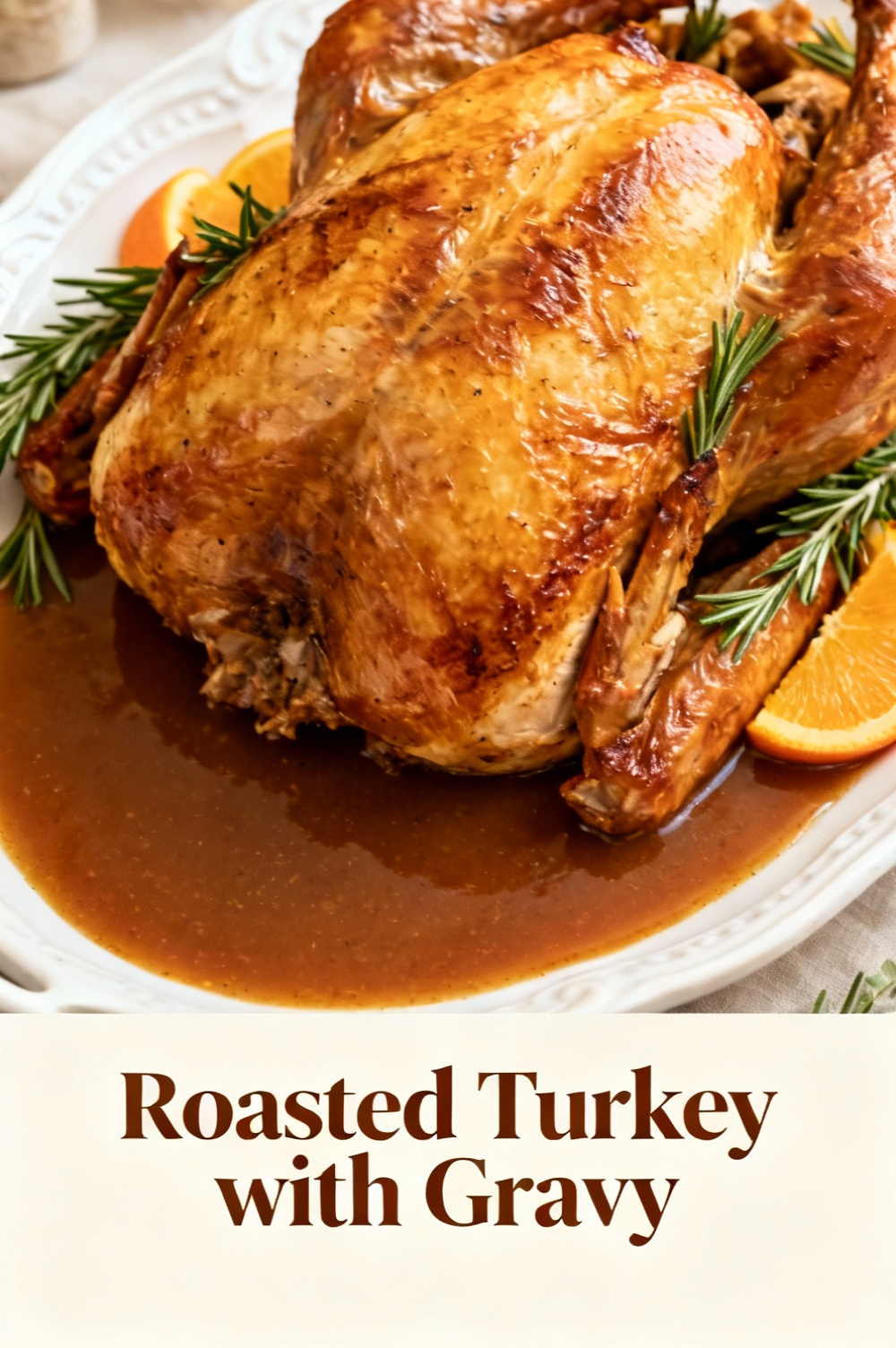
A classic herb-roasted turkey with rich pan gravy — simple, reliably juicy, and full of savory flavor.
Ingredients
- 1 (12–14 lb) whole turkey, thawed if frozen (neck and giblets saved for stock)
- 2 tsp kosher salt (plus 1–2 tsp for cavity)
- 1 tsp freshly ground black pepper
- 4 tbsp unsalted butter, softened
- 2 tbsp olive oil
- 1 large onion, quartered
- 2 carrots, roughly chopped
- 2 celery stalks, roughly chopped
- 1 lemon, halved
- 4–5 garlic cloves, smashed
- 4–6 sprigs fresh thyme, 3–4 sprigs fresh rosemary, 6 sage leaves
- 2 cups low-sodium chicken or turkey stock (plus extra if needed)
- 3 tbsp all-purpose flour (for gravy)
- Optional: 1/4 cup dry white wine for deglazing
- Optional: 1 tsp poultry seasoning or rubbed sage for extra flavor
Instructions
- Preheat oven to 325°F (165°C). Remove turkey from refrigerator 30 minutes before roasting to come closer to room temperature.
- Pat turkey dry with paper towels. Season the cavity with 1–2 tsp kosher salt and a pinch of pepper. Stuff cavity with half the onion, lemon halves, a few garlic cloves, and several herb sprigs.
- Tuck wing tips under the bird and tie the legs together with kitchen twine. Rub the outside of the turkey with the softened butter and olive oil, then season generously with remaining salt, pepper, and optional poultry seasoning. Tuck remaining herbs under the skin where possible.
- Place the turkey breast-side up on a rack in a large roasting pan. Scatter the remaining onion, carrots, celery, and garlic in the pan around the bird. Pour about 1 cup of the stock into the bottom of the pan.
- Roast uncovered in the preheated oven. Plan on about 13–15 minutes per pound as a guideline (for a 12–14 lb bird this is roughly 2.5–3.5 hours). Baste every 45 minutes with pan juices. If the breast is browning too quickly, tent it loosely with foil.
- Start checking internal temperature about 30 minutes before the expected finish time. Insert an instant-read thermometer into the thickest part of the thigh without touching bone — the turkey is done when the thigh reaches 165°F (74°C). For slightly juicier meat you can remove at 160°F and let carryover raise it to 165°F while resting.
- Remove the turkey from the oven and transfer to a cutting board. Tent loosely with foil and let rest 20–30 minutes before carving. Meanwhile, make the gravy.
- For the gravy: Pour pan drippings through a fine-mesh strainer into a measuring cup or fat separator. Skim off excess fat, reserving about 2–3 tbsp for the gravy. Place the roasting pan on the stovetop over medium heat (or use a skillet). Add optional wine and deglaze, scraping up browned bits. Add the reserved fat and 3 tbsp flour and whisk to form a roux; cook 1–2 minutes.
- Slowly whisk in 2 cups warm stock and any reserved drippings (start with less and add to desired thickness). Simmer 5–8 minutes until thickened, season with salt and pepper to taste, and strain if you prefer a smooth gravy. Keep warm until serving.
- Carve the turkey and serve with pan gravy. Leftover carcass and giblets can be used to make additional stock.
Nutrition Information
- Calories: 450 kcal (per serving, approximate)
- Cholesterol: 160 mg
- Sodium: 580 mg
- Carbohydrates: 6 g
- Fiber: 0.5 g
- Sugar: 1.5 g
- Protein: 55 g