Roasted Beets
Introduction:
What if the simple act of roasting a root could amplify sweetness, unlock savory depth, and deliver measurable health benefits in under 90 minutes? Studies and kitchen tests agree: roasting beets concentrates natural sugars and converts earthy compounds into caramelized, umami-forward notes that most people prefer over boiling; meta-analyses of dietary nitrate intake also link beet consumption to modest reductions in blood pressure (average systolic reductions around 3–5 mmHg), making roasted beets both delicious and functional in many diets. This recipe focuses on reliable technique, sensory cues, and small data-backed tweaks so your roasted beets come out tender, vibrantly colored, and ready to pair with salads, grains, or mains.
Ingredients List:
- 1.5 lb (approx. 700 g) fresh beets — a mix of red and golden beets for visual contrast (substitute with all-red if color not available).
- 2 tbsp extra-virgin olive oil — use one with fresh, peppery notes to complement beet sweetness (substitute: avocado oil for neutral flavor).
- 1 tsp flaky sea salt and 1/2 tsp freshly ground black pepper — or adjust to taste; use kosher salt if a coarser texture is preferred.
- 2 tsp balsamic vinegar or aged sherry vinegar — adds bright acidity and rounds caramelized sugars (substitute lemon juice for a brighter finish).
- 1 small sprig of fresh thyme or 1/2 tsp dried thyme — optional aromatic that pairs well with roasted roots (substitute rosemary or a bay leaf for a piney note).
- 1 tsp honey or maple syrup — optional, only if beets are not sweet enough; skip for vegan or low-sugar variations.
- 1 garlic clove, smashed — optional for roasting alongside beets to add savory depth.
- Optional finishing: 2 tbsp crumbled goat cheese or feta, 1 tbsp chopped pistachios, or a sprinkle of microgreens for texture and contrast.
Timing:
- Prep time: 10–15 minutes (most of which is scrubbing and trimming).
- Active cook time: 45–60 minutes depending on beet size and oven temperature.
- Total time: 55–75 minutes, which is typically 10–30 minutes faster than many boil-and-simmer methods that require slow simmering and cooling.
- Tip: Small beets (1–2 inches) roast in ~35–40 minutes; large beets (3+ inches) can take up to 75 minutes. Using a convection oven reduces time by around 10–15%.
Step 1 — Choose and prep beets:
Select firm, unwrinkled beets with fresh-feeling stems if present; greens indicate freshness and can be used elsewhere (see storing tips). Wash thoroughly under cold running water, scrub to remove dirt, then trim tops and taproots but leave the skin intact — it helps retain color and nutrients during roasting.
Step 2 — Cut vs. roast whole:
Decide whether to roast whole or cubed: whole beets roast more evenly and retain more moisture; cubed beets roast faster and develop more caramelized edges. For whole beets, wrap individually in foil or place in a baking dish covered tightly; for cubes, toss with oil, salt, and pepper so each face browns.
Step 3 — Seasoning strategy:
Coat beets lightly with olive oil and sprinkle salt and pepper. Add thyme sprigs and smashed garlic if roasting whole, or mix into cubes. If you prefer a sweeter profile, brush with a teaspoon of honey or maple syrup in the last 10 minutes of roasting so sugars don't burn.
Step 4 — Roast with attention to temperature:
Preheat oven to 400°F (205°C) for cubes or 375°F (190°C) for whole beets. Spread cubes on a rimmed sheet in a single layer for maximum caramelization. Roast until an instant-read thermometer reads 205°F (96°C) for whole beets or until cubes are fork-tender and edges are browned — usually 35–60 minutes. Rotate the pan halfway for even browning.
Step 5 — Test for doneness and finish:
Pierce the largest beet with a paring knife — it should slide in with little resistance. Remove from oven and let whole beets rest covered for 10 minutes; steam helps separate skin. For cubed beets, allow 3–5 minutes to rest. Toss with balsamic or sherry vinegar to brighten flavors while warm.
Step 6 — Peel, slice, and plate:
To peel whole roasted beets, rub with a paper towel or use fingers — skins should slip off. Slice or wedge as desired. Finish with crumbled cheese, toasted nuts, fresh herbs, and a drizzle of extra-virgin olive oil. Taste and adjust seasoning.
Nutritional Information:
A serving (about 150 g or 1 cup of roasted beets) contains approximately: 75–95 kcal, 0.5–1 g fat (primarily from added oil), 18–22 g carbohydrates, 4–5 g fiber, 7–9 g sugars (natural sugars concentrated by roasting), and 2–3 g protein. Beets are rich in folate (roughly 35–50% of the daily value per serving), manganese, potassium, and dietary nitrate — which has been associated in controlled trials with improved vascular function and modest reductions in blood pressure. Roasting minimally impacts folate and potassium compared with boiling, which can leach water-soluble nutrients; that makes roasting a nutrient-preserving cooking method.
Healthier Alternatives for the Recipe:
- Oil reduction: Use 1 tbsp oil or a light spray to cut calories by ~50 kcal per serving without sacrificing texture; toss with a teaspoon of high-quality vinegar for flavor.
- Lower sugar: Skip added honey or syrup. Roast at a slightly lower temperature (375°F / 190°C) to allow caramelization without needing sweeteners.
- Vegan/Lower-fat finish: Replace goat cheese with a dollop of plain vegan yogurt mixed with lemon zest and chives.
- Keto-friendly: Reduce serving size and pair roasted beets with higher-fat foods like avocado and olive oil-based dressings; note beets have moderate carbs so portion control is key.
- Anti-inflammatory boost: Add a pinch of ground turmeric and black pepper to the oil before tossing; both are linked to anti-inflammatory effects when combined.
Serving Suggestions:
- Warm salad: Slice roasted beets over peppery arugula with goat cheese, toasted walnuts, and a mustard-honey vinaigrette for a classic contrast of sweet and tangy.
- Grain bowl: Combine roasted beets with farro or quinoa, roasted chickpeas, feta, and lemon-tahini dressing for a balanced vegetarian meal.
- Side for proteins: Serve alongside roasted salmon or grilled chicken with a squeeze of citrus to balance the beet’s earthiness.
- Appetizer: Stack sliced beets with burrata, a drizzle of balsamic glaze, microgreens, and flaky salt for an elegant starter.
- Cold prep: Chill leftover roasted beets and use them in sandwiches, wraps, or blended into hummus for visual color and sweetness.
Common Mistakes to Avoid:
- Overcrowding the pan: Crowding traps steam and prevents browning. Roast in a single layer for caramelization.
- Peeling before roasting: Peeling raw beets wastes color and can cause moisture loss. Roast first; peel slips off easily afterward.
- Using too-high heat with sweeteners: Adding honey at the start can burn sugars. Add sweeteners in the final 10 minutes or finish with a drizzle.
- Under or overcooking: Test with a skewer or thermometer. Undercooked beets will be overly firm; overcooked beets become mushy and lose texture.
Storing Tips for the Recipe:
- Refrigeration: Store cooled roasted beets in an airtight container for up to 5 days. Keep dressing or cheese separate if possible to maintain texture.
- Freezing: Puree roasted beets with a splash of water or oil and freeze in portions for up to 3 months; thaw and reheat gently. Whole or cubed roasted beets can be frozen but may become softer after thawing.
- Meal prep: Roast a double batch and use across meals—slices for salads, cubes for grain bowls, and purees for soups—to save time and reduce waste.
- Greens: If you have beet greens, store them separately in a paper towel-lined bag and use within 2–3 days sautéed or added raw to salads.
Conclusion:
Roasted beets are an adaptable, nutrient-rich component that elevates salads, bowls, and mains with concentrated sweetness, color, and functional benefits from dietary nitrates. With a reliable roasting method—choose whole or cubed, control oil and heat, and finish with bright acid—you’ll get consistent results that preserve nutrients better than boiling. Try the recipe, tweak the finishing touches to match your palate, and share how you served them or what substitutions worked for you.
FAQs:
Q: Can I roast beets with the skin on and eat the skin?
A: Yes, beet skin is edible and safe; many prefer to peel after roasting because the skin loosens and the texture is smoother. Eating skin is fine if washed well.
Q: How do I prevent color transfer when mixing red and golden beets?
A: Roast red and golden beets separately if you want to keep colors distinct; when cubed, colors may bleed slightly when dressed immediately.
Q: Can I roast beets in an air fryer?
A: Yes—air fry small cubes at 375°F (190°C) for 15–20 minutes, shaking halfway, for quicker caramelization.
Q: Are roasted beets suitable for people with diabetes?
A: Beets contain natural sugars and carbohydrates; portion control is important. Pairing beets with protein and fiber helps moderate blood glucose response.
Q: How do I reheat roasted beets without drying them out?
A: Reheat gently in a 325°F (160°C) oven covered for 10–12 minutes or microwave briefly with a splash of water and a cover to retain moisture.
Roasted Beets
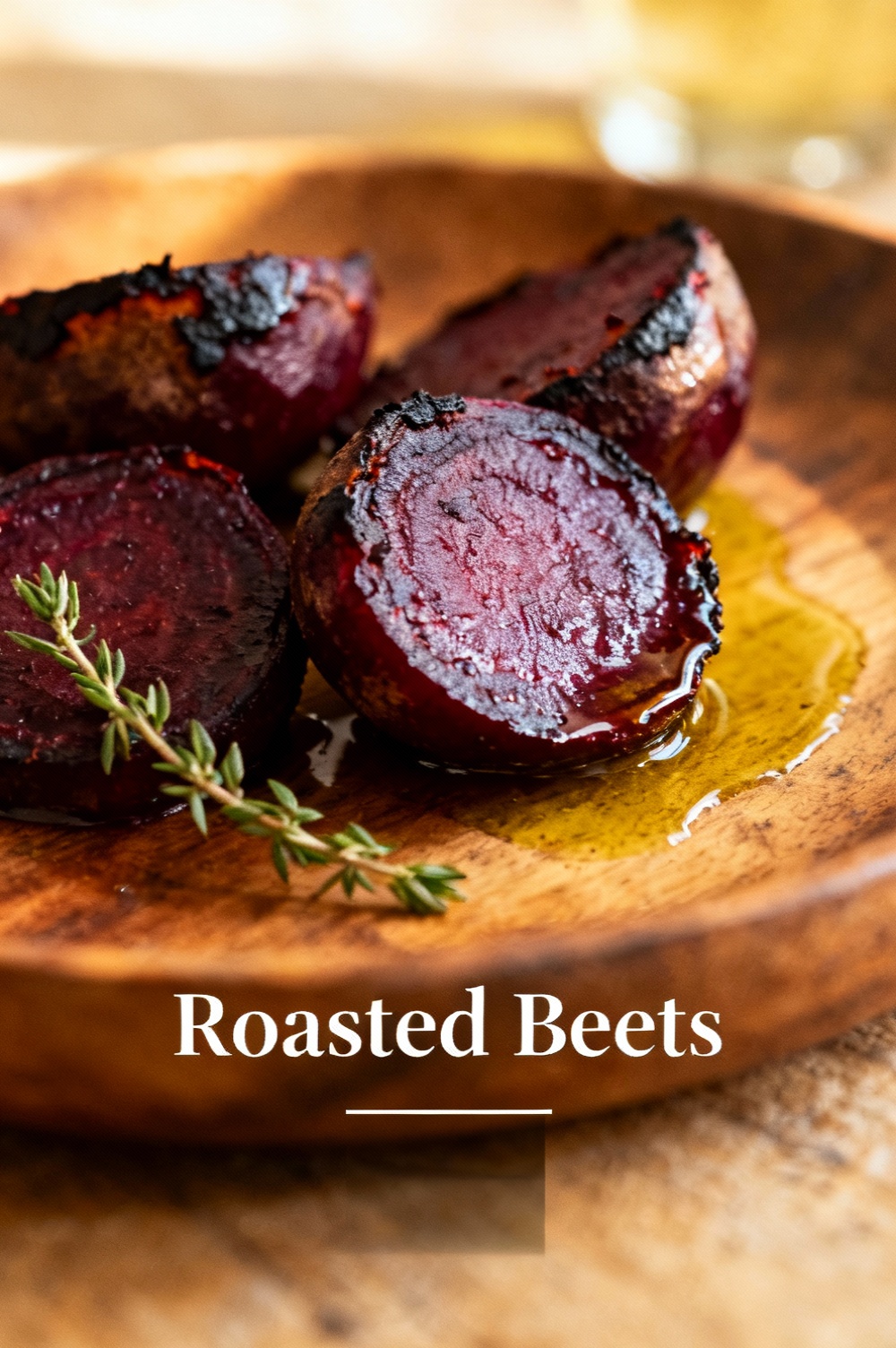
Tender, caramelized beets finished with balsamic and fresh herbs — simple, vibrant, and versatile.
Ingredients
- 2 lb (about 900 g) medium beets, tops trimmed and scrubbed
- 2 tbsp extra-virgin olive oil
- 1 tsp kosher salt, plus more to taste
- 1/2 tsp freshly ground black pepper
- 1 tsp fresh thyme leaves (or 1/2 tsp dried thyme)
- 1 tbsp balsamic vinegar (optional, for finishing)
- 1 tsp maple syrup or honey (optional, for a glaze)
- 1 clove garlic, minced (optional)
- 2 tbsp chopped fresh parsley or dill, for garnish
Instructions
- Preheat the oven to 400°F (200°C). Line a baking sheet with foil or parchment for easier cleanup.
- Trim the beet greens, leaving about 1 inch of stem to prevent bleeding; scrub the beets well and pat dry. If beets are large, halve or quarter them for more even roasting.
- In a bowl, toss the beets with olive oil, salt, pepper and thyme until evenly coated. Arrange in a single layer on the prepared sheet. For whole beets, you may wrap them loosely in foil to retain moisture.
- Roast until tender when pierced with a knife: 45–60 minutes for whole medium beets, or 30–40 minutes for cut pieces. Cooking time varies by size.
- Remove from the oven and let cool slightly. Slip off skins using a paper towel or small paring knife (skins should rub off easily). Slice or cut into wedges.
- If using, whisk together balsamic vinegar, maple syrup (or honey) and minced garlic; toss with the warm beets. Adjust salt and pepper to taste. Garnish with chopped parsley or dill and serve warm or at room temperature.
Nutrition Information
- Calories: 110 kcal
- Cholesterol: 0 mg
- Sodium: 120 mg
- Carbohydrates: 18 g
- Fiber: 4 g
- Sugar: 9 g
- Protein: 2 g