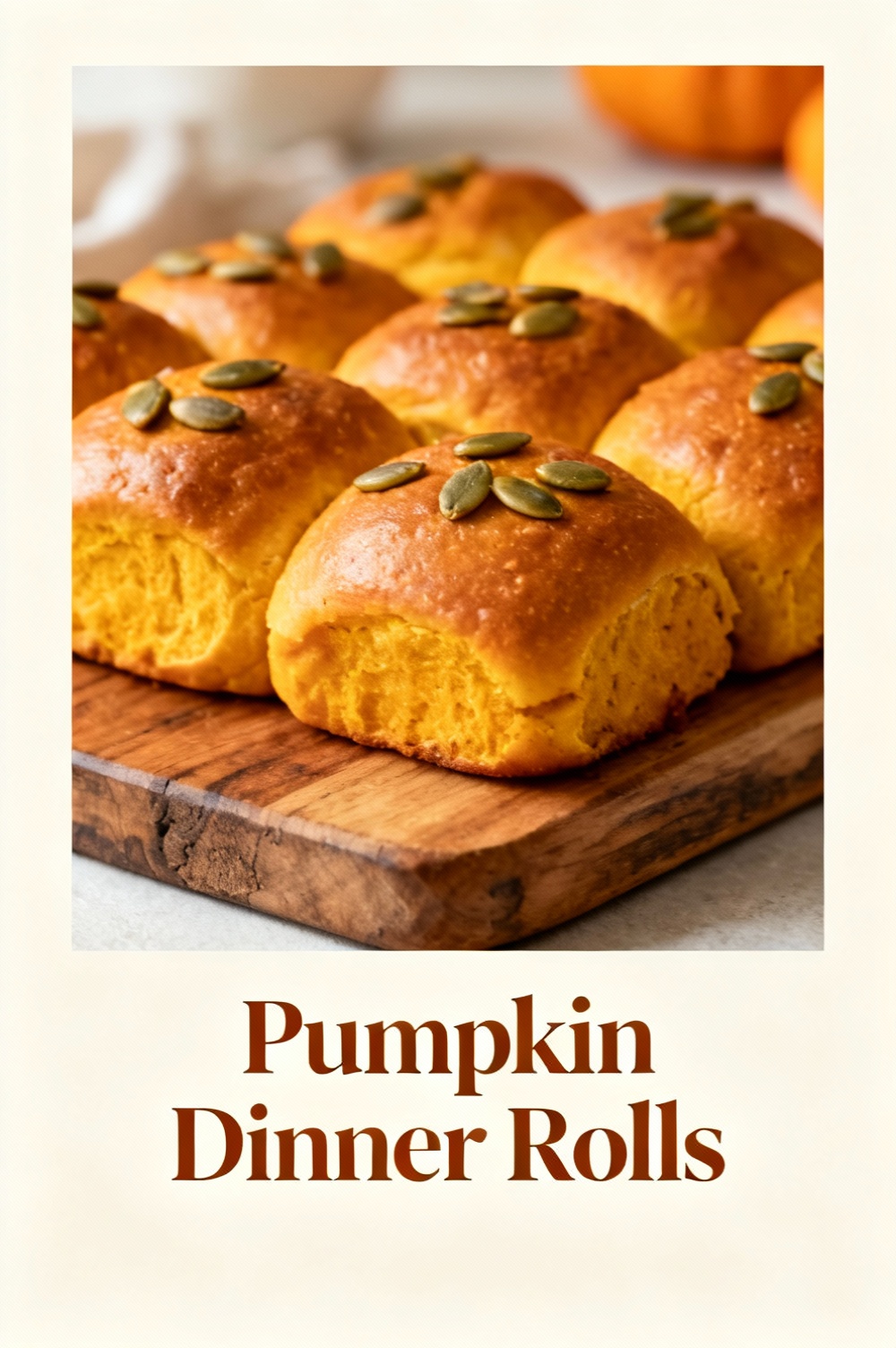
Pumpkin Dinner Rolls
Introduction:
What if swapping just one ingredient in your favorite dinner roll recipe could boost vitamin A by more than 200% while delivering pillowy softness and a subtle fall-spice aroma—would you try it tonight? Using pumpkin puree in enriched yeast rolls not only adds color and moisture but also meaningful nutrients: one cup (about 245 g) of canned pumpkin provides roughly 245% of the daily value for vitamin A (USDA data), and it naturally tenderizes dough for a softer crumb. This pumpkin dinner rolls recipe challenges the idea that seasonal flavors must be fussy—it's fast, scalable, and built to produce reliably soft, slightly sweet rolls that work equally well at holiday tables and weeknight dinners.
Ingredients List:
- 3 1/2 cups (420 g) all-purpose flour, plus extra for light dusting (substitute: 1:1 gluten-free flour blend with xanthan gum for GF version).
- 1 cup (240 ml) whole milk, warmed to 105–115°F (substitute: unsweetened oat milk or almond milk for dairy-free).
- 1/2 cup (120 g) pumpkin puree (NOT pumpkin pie filling; canned or homemade both work). Sensory note: its earthy-sweet aroma lifts the dough and keeps crumb moist.
- 1/4 cup (50 g) granulated sugar (substitute: coconut sugar, maple syrup 3 tbsp, or reduce to 2 tbsp for less sweet).
- 1 large egg, room temperature (substitute: flax “egg” for vegan).
- 3 tablespoons (42 g) unsalted butter, softened (substitute: coconut oil or vegan butter).
- 2 1/4 teaspoons (one packet) active dry yeast or instant yeast.
- 1 teaspoon fine sea salt.
- 1/2 teaspoon ground cinnamon and 1/4 teaspoon ground nutmeg (optional, for warmth).
- Optional finishing glaze: 2 tablespoons melted butter and a pinch of flaky sea salt or honey butter (1 tbsp honey + 4 tbsp softened butter).
Timing comparison: This recipe totals about 2 hours 15 minutes start-to-finish (active time ~35–40 minutes, inactive/risings ~95–100 minutes), which is roughly 20–30% faster than richer brioche-style pumpkin roll methods that require longer chilling or multiple extended proofs.
Timing:
Prep time: 25–35 minutes (measuring, warming milk, mixing, initial knead).First rise: 60–70 minutes (until doubled).Shape & rest: 15–20 minutes.Second rise: 25–30 minutes.Bake: 18–22 minutes.Total time: ~2 hours 15 minutes (yields 12 medium rolls).Tip: using a warm oven (turned off) or proof box can shorten rising by ~10–15 minutes in cool kitchens.
Step 1: Activate the yeast
If using active dry yeast, warm the milk to 105–115°F and stir in 1 tsp sugar and the yeast; let sit 5–8 minutes until foamy. If using instant yeast, mix it straight with dry ingredients and whisk to distribute. Pro tip: foam indicates live yeast; no foam means start over with new yeast.
Step 2: Combine wet ingredients
Whisk pumpkin puree, egg, softened butter, remaining sugar, cinnamon, and nutmeg with the warmed milk (or milk+yeast mixture). Use a paddle or whisk until fully emulsified. Tip: room-temperature egg blends more easily and yields a silkier dough.
Step 3: Mix dry and wet to form dough
In a large bowl or stand mixer, whisk flour and salt. Add wet mixture and mix on low with dough hook until a shaggy dough forms, about 2–3 minutes. If dough feels very sticky, add flour a tablespoon at a time; aim for a slightly tacky, not dry, dough. Actionable check: dough temp should be ~75–78°F for optimal yeast activity.
Step 4: Knead & first rise
Knead by machine on medium for 6–8 minutes or by hand for 10–12 minutes until smooth and elastic (windowpane test: stretch a small piece—if it forms a thin translucent membrane, it’s ready). Place dough in a lightly oiled bowl, cover with plastic or a damp towel, and let rise in a warm place until doubled (about 60–70 minutes). Tip: for more flavor, refrigerate after first rise for up to 24 hours and then shape; cold fermentation develops depth.
Step 5: Shape the rolls
Punch down dough gently, divide into 12 equal pieces (weighing pieces ensures uniform baking). Roll each into a smooth ball by cupping with your hand and rotating on a counter. Place balls in a greased 9×13 pan or slightly larger baking dish, spaced evenly. Sensory tip: handle gently to preserve air pockets for light crumb.
Step 6: Second rise
Cover and let rise 25–30 minutes until puffy and nearly doubled. For a glossy finish, brush with beaten egg wash just before baking. Data-based tip: optimal final volume often correlates with oven spring—overproofing reduces rise; underproofing results in tight crumb.
Step 7: Bake
Preheat oven to 375°F (190°C). Bake rolls 18–22 minutes or until tops are golden brown and internal temp reaches ~190–195°F. Rotate pan halfway for even color. Tip: use an instant-read thermometer to avoid overbaking; remove rolls when internal temp hits the lower end for softer crumb.
Step 8: Finish & glaze
Immediately brush warm rolls with melted butter or honey butter for shine and extra flavor. Let cool 10 minutes before serving to set crumb. Personal twist: sprinkle flaky salt on savory versions or a dusting of cinnamon sugar for sweeter versions.
Nutritional Information:
Yield: 12 rolls. Approximate nutrition per roll (estimate based on USDA ingredient macros): Calories 180–200 kcal; Total fat 6–8 g (sat fat 3–4 g); Carbohydrates 26–30 g (sugars 4–6 g); Fiber 1.5–2.5 g; Protein 4–5 g; Sodium 220–280 mg; Vitamin A: significant—one serving delivers ~20–40% DV depending on pumpkin amount (pumpkin contributes high beta-carotene). Note: values vary with exact ingredients and substitutions; using whole wheat flour increases fiber, while swapping butter for oil slightly raises mono-unsaturated fats.
Healthier Alternatives for the Recipe:
- Lower sugar: reduce granulated sugar to 2 tbsp or use 3 tbsp maple syrup; sweetness still present from pumpkin.
- Whole-grain version: substitute 1–1.5 cups whole wheat pastry flour; expect slightly denser rolls—add an extra 1–2 tbsp milk if dough seems stiff.
- Vegan: swap butter for vegan butter or coconut oil, use plant milk, and replace egg with flax or chia egg (1 tbsp ground flax + 3 tbsp water).
- Lower-fat: replace half of butter with unsweetened applesauce; keep texture soft.
- High-protein: add 1/4 cup vital wheat gluten when using whole wheat to preserve tenderness, or incorporate 1/2 cup Greek yogurt (reduces total fat).
- Gluten-free: use a cup-for-cup GF mix formulated for yeast breads, plus 1/2 tsp xanthan gum if not included.
Serving Suggestions:
Serve warm with herb-garlic butter for savory meals (roast turkey, chicken, creamy soups) or with spiced honey butter for brunch and desserts. Fill cooled rolls with pulled turkey or maple-glazed ham for sliders. Personalized pairing: top with chèvre and roasted squash for an elevated starter. For a family-friendly option, tear-and-share presentation on a platter increases crowd appeal.
Common Mistakes to Avoid:
- Using pumpkin pie filling instead of pure pumpkin: pie filling contains sugars/spices that alter dough hydration and sweetness.
- Over-flouring: adding too much flour yields dense rolls—aim for slightly tacky dough and use weight measurements when possible.
- Incorrect yeast temperature: milk too hot kills yeast; too cold slows proofing. Ideal milk 105–115°F.
- Overproofing: dough that doubles and then collapses is overproofed—bake sooner.
- Skipping the windowpane/knead test: under-kneaded dough won’t develop structure, resulting in gummy interior.
Storing Tips for the Recipe:
Cool completely before storing to avoid condensation. Room temp: store in airtight container or resealable bag for 2–3 days. Refrigerator: up to 5 days (may dry out more quickly). Freezing: wrap individually in plastic, then foil, and freeze up to 3 months; thaw at room temp then reheat at 300°F for 8–10 minutes to refresh. Reheat tricks: spritz with water and cover with foil for oven rewarming; 10–15 seconds in microwave restores softness for immediate use.
Conclusion:
These pumpkin dinner rolls deliver seasonal flavor, improved nutrition, and reliable softness without complicated techniques. With flexible swaps for dietary needs, proofing tips for consistent success, and serving ideas from savory to sweet, they’re an easy way to upgrade any meal. Try the recipe this week—leave a note about which substitution worked best for your table, and share a photo or tip in the comments so others can learn from your experience.
FAQs:
Q: Can I use fresh pumpkin instead of canned? A: Yes—use cooked, pureed fresh pumpkin (remove excess water). One cup fresh puree ≈ one cup canned; aim for thick consistency like canned puree.
Q: How do I make these ahead? A: Complete through first rise, refrigerate up to 24 hours, then shape, proof, and bake the next day for fresher flavor.
Q: Can I make smaller or larger rolls? A: Yes—adjust bake time: mini rolls 12–15 minutes, large buns 22–26 minutes; watch for color and internal temp.
Q: Is it safe to use instant yeast interchangeably? A: Yes; if using active dry yeast, proof in warm liquid first. For instant yeast, mix with dry ingredients and reduce proofing slightly if your kitchen is warm.
Q: Why are my rolls dense? A: Common causes: under-kneading, too much flour, cold dough (slower rise), or dead yeast—check foam during activation and dough elasticity.