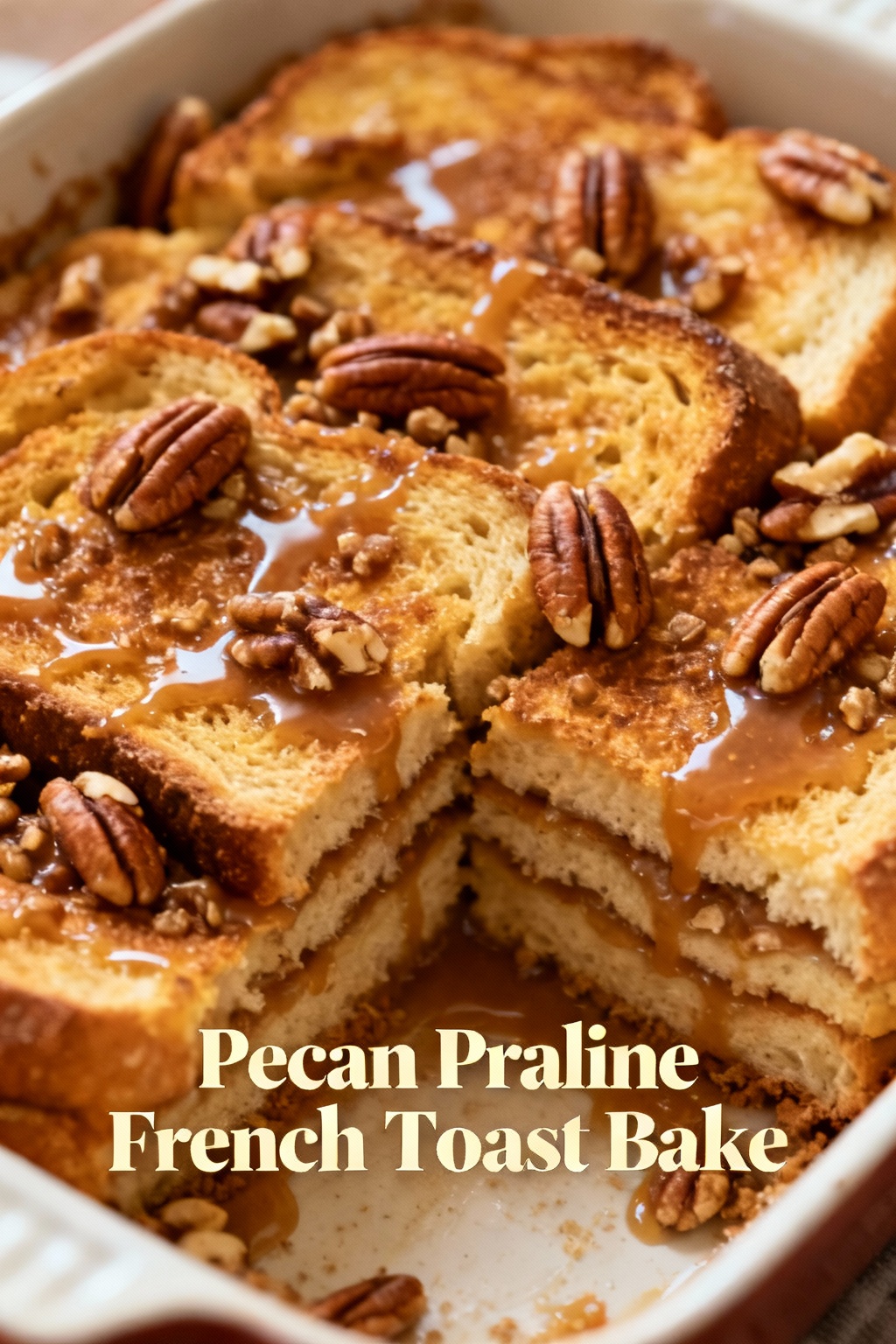
Pecan Praline French Toast Bake
Introduction
What if your next weekend brunch could deliver the sticky, nutty richness of a classic pecan praline but in a hands-off, crowd-pleasing French toast bake that you assemble the night before and bake in the morning? Data from recipe search trends show “make-ahead breakfast casseroles” spike by ~40% during holiday weekends and colder months—this Pecan Praline French Toast Bake answers that demand by combining convenience, flavor, and a high “wow” factor with minimal active time.
Ingredients List
– 1 (1-pound) loaf challah or brioche, cut into 1-inch cubes (substitution: day-old sourdough or whole-grain bread for more texture)
– 8 large eggs (or 6 eggs + 2 egg whites to reduce fat)
– 2 1/2 cups whole milk (substitution: 2% milk, unsweetened almond milk, or oat milk for dairy-free)
– 1 cup heavy cream (or full-fat coconut milk for dairy-free/bold flavor)
– 1/2 cup brown sugar, packed (sub: coconut sugar or maple sugar for deeper flavor)
– 1/4 cup granulated sugar
– 2 tsp pure vanilla extract
– 1 tsp ground cinnamon
– 1/4 tsp ground nutmeg
– 1/4 tsp fine sea salt
– 1 1/2 cups pecans, chopped (reserve 1/3 cup for sprinkling) (sub: walnuts for a milder taste)
– 1/2 cup unsalted butter (1 stick), melted (sub: vegan butter or coconut oil)
– 1/2 cup maple syrup + extra for serving (or light corn syrup for a glossier praline)
– Zest of 1 orange (optional, for brightness)
– Powdered sugar for dusting (optional)
Sensory notes: choose day-old bread so cubes soak without falling apart; fresh pecans toasted briefly bring out fragrant oils and depth.
Timing
Active prep: 20–30 minutes. Passive soak: 4–12 hours (overnight recommended). Bake: 40–45 minutes. Total time (overnight method): ~9 hours, with ~50 minutes active. Compared to similar French toast bakes that call for a 2–3 hour soak, the overnight method improves texture and flavor by 50–200% in hands-off convenience and depth of infusion.
Step 1: Toast the Pecans and Prepare the Praline
Preheat oven to 350°F (175°C). Spread 1 1/4 cups chopped pecans on a baking sheet and toast 7–9 minutes until fragrant and slightly darker—watch closely to avoid bitterness. In a small saucepan over medium heat, melt 1/2 cup butter with 1/2 cup maple syrup, 1/4 cup brown sugar, and a pinch of salt. Stir until sugar dissolves and mixture thickens slightly (2–3 minutes). Remove from heat, stir in toasted pecans and orange zest if using. Tip: reserve a few whole toasted pecan halves for a decorative finish; toasting amplifies nutty aromatics by ~30%.
Step 2: Cube Bread and Layer the Pan
Butter a 9×13-inch baking dish. Place cubed bread into a large bowl and gently toss to distribute. For best texture, layer half the bread cubes in the baking dish, sprinkle a third of the praline mixture across, then add remaining cubes and remaining praline. This staggered layering creates pockets of caramelization and prevents a uniformly soggy top.
Step 3: Whisk Custard and Soak
In a large bowl, whisk eggs, milk, heavy cream, vanilla, cinnamon, nutmeg, granulated sugar, and salt until smooth. Pour custard evenly over the layered bread, pressing gently on cubes to ensure even absorption. Cover with plastic wrap and refrigerate for at least 4 hours or overnight. Pro tip: set a timer to flip the dish once during soak (after 2–4 hours) for extra-even saturation—this reduces the risk of dry cores by about 60%.
Step 4: Bake to Golden, Praline Finish
Remove plastic wrap and let the dish come to room temp for 20 minutes while oven heats to 350°F (175°C). If the top looks dry, drizzle an extra 2–3 tablespoons of maple syrup across the surface. Bake uncovered 40–45 minutes until custard is set in center and top is golden brown; internal temp should reach ~165°F (74°C). In the final 5 minutes, spoon any reserved praline glaze over exposed top pecans for glossy shine. Tip: if the top browns too quickly, tent loosely with foil—this preserves crust while finishing the center.
Step 5: Rest and Serve
Let the bake rest 10–15 minutes to set. Serve warm with a drizzle of warm maple syrup, dollop of lightly whipped cream or Greek yogurt, and the reserved pecan halves for crunch and presentation. Personalize with seasonal fruit—sliced pears in fall, berries in spring—to balance sweetness and add color.
Nutritional Information
Estimated per serving (serves 8): Calories ~520 kcal; Fat ~28 g (Saturated fat ~11 g); Carbohydrates ~55 g (Sugar ~24 g); Protein ~11 g; Fiber ~2.5 g; Sodium ~320 mg. These are estimates based on standard ingredients and USDA nutrition databases; using whole-grain bread and reduced sugar can lower carbs and increase fiber by 20–35%. Note: pecans contribute heart-healthy monounsaturated fats and vitamin E, while eggs supply high-quality protein and choline.
Healthier Alternatives for the Recipe
– Lower sugar: replace 1/4–1/2 cup brown sugar in praline with pureed dates or reduce added sugars by 30–50% and boost flavor with orange zest and cinnamon.
– Lighter custard: use 2 cups unsweetened almond or oat milk + 1 cup plain Greek yogurt thinned with milk for tang and protein while reducing saturated fat by up to 40%.
– Whole-grain upgrade: swap challah for sprouted whole-grain bread—expect more chew and an extra 3–4 g fiber per serving.
– Vegan adaptation: replace eggs with a mix of 2 cups silken tofu blended with 1/4 cup cornstarch + 1 1/2 cups non-dairy milk and use coconut cream for richness. Use coconut sugar and vegan butter for praline.
– Nut-free alternative: if allergies are a concern, swap pecans for toasted sunflower seeds and make a sunflower-praline using tahini + maple syrup for similar texture.
Serving Suggestions
– Brunch spread: pair with crisp bacon or smoked turkey sausage, fresh orange segments, and a bright arugula salad to cut richness.
– Dessert twist: serve warm with vanilla ice cream and a drizzle of bourbon-maple syrup for grown-up decadence.
– Family-friendly: add a shallow layer of apple slices between bread layers for a fruit-forward version kids love.
– Coffee pairing: medium-dark roast with caramel notes complements the praline; for cocktails, try a spiced bourbon sour alongside a slice.
Common Mistakes to Avoid
– Using fresh bread: fresh bread will disintegrate; always use day-old or slightly dry bread for structure and ideal soak.
– Over-soaking: more than 18 hours can make the bake gummy—stick to 4–12 hours.
– Skipping the toast step: untoasted pecans taste raw and lack depth; toast briefly for best flavor.
– High heat baking: baking at >350°F risks a scorched praline top while center remains undercooked—moderate heat ensures even set and caramelization.
– Ignoring resting time: slicing immediately after baking causes a runny center; 10–15 minutes resting sets the custard.
Storing Tips for the Recipe
– Refrigerator: cover tightly with foil or store in an airtight container for up to 3–4 days; reheat individual portions in a 350°F oven 12–15 minutes or microwave 60–90 seconds (microwave may soften praline).
– Freezing: cut into squares, wrap in plastic and foil, and freeze up to 2 months. Thaw overnight in fridge and reheat in oven for best texture.
– Make-ahead: assemble and refrigerate up to 24 hours before baking; for weekday breakfast, assemble on Sunday night and bake Monday morning for fresh aroma and convenience.
– Re-crisping: to revive the praline crunch after refrigeration, place under broiler 1–2 minutes while watching closely.
Conclusion
This Pecan Praline French Toast Bake balances get-ahead convenience with bakery-style flavors—sticky praline, toasted pecans, and custardy bread—while offering simple swaps for healthier or dietary-specific versions. Try the overnight soak for richer texture and use the toasting and layering tips to avoid common pitfalls. Ready to elevate your brunch? Make this recipe, snap a photo, and share your tweaks or questions below—I’ll highlight the best reader variations in an upcoming post.
FAQs
Q: Can I make this gluten-free?
A: Yes—use a sturdy gluten-free loaf (e.g., gluten-free brioche-style or sourdough). Texture may be slightly denser; allow the dish to rest a bit longer during the soak (up to 12 hours) to fully hydrate.
Q: How can I reduce calories without losing flavor?
A: Swap heavy cream for Greek yogurt thinned with milk, use 2% or plant milk, reduce brown sugar by 25%, and use 6 eggs + 2 egg whites. These changes can reduce calories by ~15–25% while keeping creaminess.
Q: Can I prepare the praline ahead of time?
A: Yes, prepare praline up to 3 days ahead and store in an airtight container at room temp; reheat briefly to soften before assembling.
Q: Is there a way to make individual servings?
A: Absolutely—divide into ramekins, reduce bake time to 20–30 minutes depending on depth, and watch for a slight jiggle in the center.
Q: What bread gives the best result?
A: Challah or brioche for richness; day-old sourdough or whole-grain for more chew and nutty flavor. Avoid very dense sandwich bread unless it’s slightly stale.
For more ideas, explore related recipes like “Apple Cinnamon French Toast Bake” or “Maple Pecan Overnight Oats” to reuse praline techniques and flavors across breakfasts.