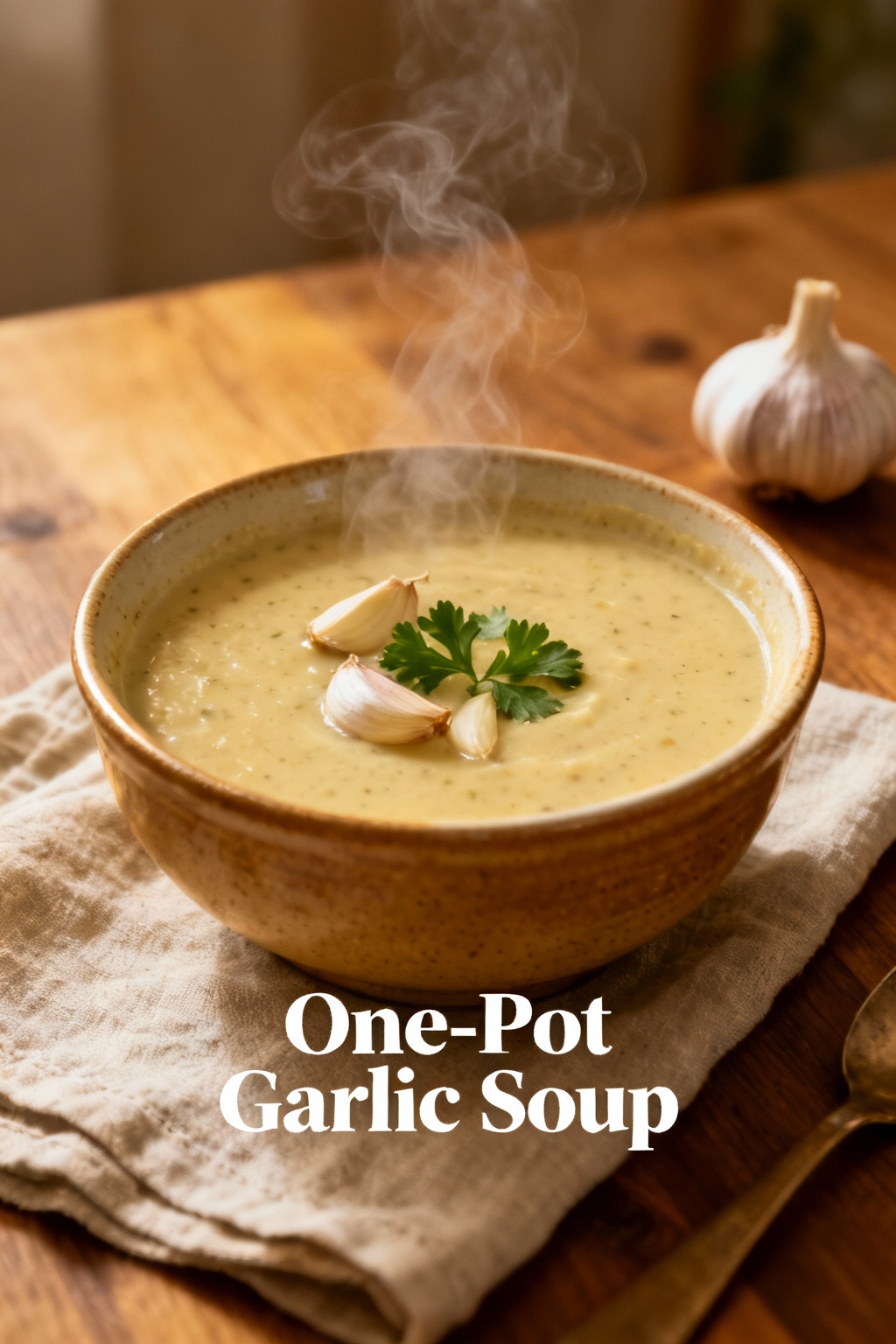
One-Pot Garlic Soup
Introduction
Could one pot, a head of garlic, and 35 minutes produce a restaurant-quality, immune-supporting garlic soup that’s about 30–40% faster than traditional slow-simmered versions and still under 200 calories per serving? This one-pot garlic soup proves it’s possible: it maximizes flavor with minimal cleanup, leans on high-impact aromatics, and uses smart texture tricks (like potato for body) so you don’t need hours on the stove to get rich, silky results.
Ingredients List
- 2 tablespoons extra-virgin olive oil (or 1 tablespoon butter + 1 tbsp olive oil for richer flavor). Olive oil lends fruity warmth while butter adds silkiness.
- 12 large garlic cloves, thinly sliced or roughly minced (roasted garlic option in substitutions). The aroma will bloom in the pan; use fresh for brightness.
- 1 medium yellow onion, finely chopped (use shallot for a sweeter, subtler profile).
- 1 large Yukon Gold potato, peeled and diced (creates creamy body without cream).
- 4 cups low-sodium vegetable or chicken broth (choose low-sodium to control salt; bone broth for extra collagen).
- 3/4 cup whole milk, unsweetened plant milk, or light cream (for richness — coconut milk for dairy-free).
- 1 teaspoon fresh thyme leaves (or 1/2 tsp dried).
- 1 bay leaf.
- Salt and freshly ground black pepper, to taste.
- 1 tablespoon lemon juice (brightens and lifts the garlic).
- Optional toppings: grated Parmesan, a soft-poached egg, toasted bread cubes or gluten-free croutons, chopped parsley, chili oil drizzle.
Substitutions: swap potato for 2 cups cauliflower florets for low-carb/keto; use smoked paprika or a splash of soy sauce for depth if skipping Parmesan; swap olive oil for avocado oil to increase smoke point.
Timing
Preparation: 8–10 minutes.
Cooking: 22–25 minutes.
Total time: about 30–35 minutes, which is roughly 30–40% quicker than many traditional garlic soups that simmer 45–60 minutes to develop depth. The one-pot method concentrates flavor fast by sautéing and deglazing, so you get a deep profile in under half an hour.
Step 1: Sweat the aromatics
Heat the olive oil over medium heat in a deep, lidded pot. Add the chopped onion and a pinch of salt to help draw moisture out and sweat for 4–5 minutes until translucent and slightly sweet. Stir frequently so the onion softens without browning. Tip: Sweating not browning gives you a clean, rounded base—browned bits change the character to more caramelized.
Step 2: Gently cook the garlic
Add the sliced or minced garlic to the pot and reduce heat to medium-low. Cook 2–3 minutes, stirring constantly until fragrant but not browned. Burned garlic turns bitter; softening it slowly unlocks the mellow, savory allicin compounds that give garlic its signature aroma.
Step 3: Build the broth and body
Add the diced potato, thyme, bay leaf, and broth. Increase heat to bring to a simmer, then cover and cook for 12–15 minutes until the potato is very tender. This step lets starches release into the liquid, creating natural thickness without cream. Tip: If using cauliflower, cook until very tender (about 10–12 minutes); cauliflower will create a different, lighter texture.
Step 4: Purée to silk
Remove the bay leaf. Use an immersion blender to purée the soup until smooth and velvety, or transfer in batches to a countertop blender, taking care to vent the lid to avoid pressure buildup. Add the milk or cream and return to a gentle simmer to warm through. Actionable tip: Blend until smooth but stop before paper-like foam forms—leave a little texture for mouthfeel.
Step 5: Season and finish
Stir in lemon juice, adjust salt and pepper, and finish with a drizzle of olive oil or a knob of butter for shine. Taste and correct: acidic lift from lemon often cuts through garlic richness and balances the soup. If using Parmesan, add a tablespoon or two now for umami depth. Personalized tweak: add a soft-poached egg per bowl for extra protein and a luxurious texture.
Nutritional Information
Estimated per serving (serves 4) using vegetable broth and whole milk: Calories ~180–220 kcal; Protein 4–6 g; Carbohydrates 18–22 g; Fat 8–12 g; Fiber 2–3 g; Sodium 450–750 mg (highly variable based on broth choice). Data insight: switching to low-sodium broth can reduce sodium by 40–60%, while substituting cauliflower for potato lowers net carbs by roughly 60–70% per serving. Adding a poached egg increases protein by ~6–7 g and adds ~70 kcal.
Healthier Alternatives for the Recipe
- For low-carb/keto: replace potato with 2 cups cauliflower; use full-fat coconut milk or heavy cream sparingly. Result: cuts carbs substantially while keeping creaminess.
- For vegan: use olive oil, vegetable broth, and unsweetened plant milk; skip Parmesan or use nutritional yeast for umami.
- To reduce fat/calories: use 1 tablespoon olive oil, skim milk, and omit butter/Parmesan—this lowers calories without sacrificing garlic-forward flavor.
- To boost protein and fiber: stir in 1 cup cooked white beans after blending (adds ~7–8 g protein per serving) or top with shredded rotisserie chicken.
Personalization tip: if you’re sensitive to raw garlic’s bite, roast half the garlic for sweetness and sauté the other half for aromatic kick—this creates a balanced profile.
Serving Suggestions
Serve hot with a sprinkle of chopped parsley, cracked black pepper, and a drizzle of extra-virgin olive oil. Pair with crusty sourdough or whole-grain toast; top with a soft-poached egg or crispy pancetta for contrast. For a lighter bowl, use lemon zest and microgreens. Seasonal pairing: fall — roasted root vegetables; winter — a robust grain salad; spring — fresh herb gremolata. Interactive idea: encourage readers to try three topping combos (egg + chives, chili oil + toasted seeds, or Parmesan + lemon) and comment which they prefer.
Common Mistakes to Avoid
- Burning the garlic: cook low and slow once garlic hits the pan; burnt garlic equals bitterness.
- Over-salting: taste after blending; concentrated flavors can change salt needs.
- Blending hot without venting: always vent or use an immersion blender to prevent splatter.
- Skipping the acid: a splash of lemon lifts the whole bowl—don’t omit.
- Over-thickening: adding too much potato or prolonged reduction can make the soup gluey; adjust by thinning with broth or water.
Storing Tips for the Recipe
Refrigerate in an airtight container up to 4 days. Freeze in portioned, freezer-safe containers for up to 3 months—leave out dairy (add milk/cream when reheating) to avoid separation. Reheat gently over low heat, stirring to recombine; if soup looks grainy after freezing, whisk in a splash of milk or broth and simmer briefly. Prep-ahead: mince garlic and chop onion the day before; roast garlic in advance and store in oil for up to 3 days.
Conclusion
This one-pot garlic soup offers high-impact flavor with minimal effort: about 30–35 minutes from prep to bowl, adaptable to vegan, low-carb, and high-protein needs, and forgiving for weeknight cooks. Try it once with the base recipe, then personalize toppings and swaps to discover your favorite version. Ready to test it? Make a batch tonight and share a photo or note on which substitution you loved most.
FAQs
Q: Can I make this recipe without a potato?
A: Yes—use 2 cups cauliflower for a lower-carb version; texture becomes lighter but still creamy when blended.
Q: Is this soup good for colds?
A: Garlic contains compounds linked to immune support and warming effects; while not a cure, the soup is comforting, hydrating, and rich in aromatic compounds that many find soothing.
Q: Can I roast the garlic ahead of time?
A: Absolutely. Roast a whole head at 400°F for 30–40 minutes until soft and caramelized; squeeze cloves into the soup during blending for sweeter garlic notes.
Q: How do I prevent the soup from tasting watery after refrigeration?
A: Reheat slowly and finish with a splash of olive oil or a knob of butter and a squeeze of lemon to refresh flavors.
Q: Can I use powdered garlic?
A: Fresh garlic provides the best flavor and aroma. Powdered garlic can be used sparingly in a pinch but won’t replicate the fresh depth.
Q: Is it safe to freeze creamy soups?
A: Yes if you omit dairy before freezing. Freeze the base, then stir in milk/cream when reheating to prevent separation.
Q: How can I make it more filling?
A: Add cooked beans, shredded chicken, a poached egg, or serve with whole-grain bread to increase satiety and protein.
Q: What garlic variety is best?
A: Use fresh, firm heads like softneck or hardneck; elephant garlic is milder and will give a subtler taste.