Melting Potatoes
Did you know a simple technique can turn ordinary potatoes into irresistible "melting potatoes" — silky inside with caramelized edges — in about 35–40 minutes, often 20–30% faster than slow oven-roasting and without relying on an excessive amount of butter?
Ingredients List
- 1.5 pounds baby Yukon Gold or fingerling potatoes (small, uniform size for even cooking). Yukon Golds give a naturally creamy, buttery texture; fingerlings yield a firmer, nutty flavor.
- 3 tablespoons unsalted butter (or vegan butter for dairy-free). Butter adds richness and helps create that glossy, melt-in-your-mouth interior.
- 1 tablespoon neutral oil with a high smoke point (grapeseed or light olive oil) to help browning without burning butter.
- 3 cloves garlic, lightly smashed (or 1 teaspoon garlic paste) for aromatic depth.
- 2 teaspoons fresh thyme leaves (or 1 teaspoon dried thyme). Rosemary or sage are delicious alternatives.
- 1/2 cup low-sodium chicken or vegetable broth (substitute: white wine for acidity).
- 2 tablespoons grated Parmesan cheese (optional) for a savory finish — can swap for nutritional yeast for vegan option.
- Kosher salt and freshly ground black pepper to taste.
- Zest of 1 lemon (optional, for brightness).
- Finishing: chopped parsley or chives, flaky sea salt.
Substitution notes: For a lighter version, replace half the butter with extra virgin olive oil and use Greek yogurt or a splash of kefir at the end for creaminess. For a dairy-free roast, use plant-based butter and nutritional yeast instead of Parmesan.
Timing
Prep time: 10 minutes.
Active cooking time: 25–30 minutes.
Total time: 35–40 minutes (about 25% faster than a 50–60 minute low-and-slow oven roast).
Parboiling cuts active oven/skillet time and helps achieve that melting interior while reducing overall cook time versus roasting from raw. If you roast whole potatoes from raw, expect 45–60 minutes depending on size; this parboil-skillet finish method saves time and gives better textural contrast.
Step 1 — Prep and parboil for consistent tenderness
Place potatoes in a pot and cover with cold water by 1 inch; add 1 teaspoon kosher salt. Bring to a simmer and cook until a fork meets little resistance but potatoes aren't falling apart, about 10–12 minutes depending on size. Tip: starting in cold water prevents the skins from cracking and ensures even cooking from edge to center. Parboiling sets the foundation for "melting" interiors while preventing an overcooked exterior later.
Step 2 — Drain, steam-dry, and roughen surfaces
Drain the potatoes and return them briefly to the warm pot off the heat for 1–2 minutes to let surface moisture evaporate. For better browning, gently shake the pot or use the bottom of a measuring cup to lightly mash/roughen each potato so there is more surface area to brown. Tip: the little nicks and rough edges are where caramelization happens — don’t be shy.
Step 3 — Sear in a hot pan for caramelized edges
Heat a large oven-safe skillet over medium-high heat; add oil. When oil shimmers, add potatoes cut side down (if halved) or spaced evenly. Let them sear without moving for 3–4 minutes until golden-brown. Use a spatula to turn and sear other sides. Actionable trick: use a mix of oil + butter (add the butter after initial sear) so butter browns without burning but still contributes to flavor.
Step 4 — Butter-braise to "melt" the interior
Reduce heat to medium-low; add butter, smashed garlic, and thyme. Pour in the 1/2 cup broth around the edges (not directly on top) to create steam and a shallow braise. Cover the skillet and let simmer gently for 6–8 minutes, spooning the butter-broth over potatoes occasionally. This low-and-slow braise lets the starches gelatinize into a silky interior that "melts" on the palate. Tip: if you want crispier edges, uncover during the last 2 minutes to reduce liquid and concentrate flavors.
Step 5 — Finish and flavor boost
If using Parmesan, sprinkle it over potatoes in the final minute and let it melt into a light crust. Finish with lemon zest and a few twists of black pepper. Transfer to a warm serving dish and scatter parsley or chives and flaky sea salt on top. Personalized twist: for a smoky note, add a pinch of smoked paprika or finish with a drizzle of browned butter.
Nutritional Information
Per serving (recipe yields 4): approximately 320 kcal; 12 g fat (5 g saturated); 45 g carbohydrates; 5–6 g fiber; 6–7 g protein; 420 mg sodium (with low-sodium broth). These values are estimates based on USDA nutrient data for Yukon Gold potatoes and standard ingredient nutritional profiles. Potatoes are an excellent source of vitamin C, potassium (~15% DV per serving), and provide complex carbohydrates with relatively low glycemic impact when eaten with protein and fat. For precise tracking, adjust for brand-specific butter, broth, and cheese amounts.
Healthier Alternatives for the Recipe
- Lower fat: Reduce butter to 1 tablespoon and replace the rest with extra-virgin olive oil; finish with a tablespoon of Greek yogurt for creaminess after cooling slightly.
- Lower sodium: Use no-salt broth and limit added salt; rely on lemon zest, garlic, and herbs for flavor.
- Vegan: Use plant-based butter, vegetable broth, and nutritional yeast instead of Parmesan to maintain umami.
- Higher fiber/protein: Serve with a topping of toasted chickpeas, split lentils, or a spoonful of hemp seeds; pairing potatoes with lean protein reduces blood sugar spikes.
- Keto-friendly alternative: Replace potatoes with cauliflower florets using the same braise technique — results mimic the texture while cutting carbs drastically.
Serving Suggestions
Serve melting potatoes alongside roast chicken, grilled salmon, or a lentil stew. They also make an excellent centerpiece for a vegetarian plate — pair with sautéed mushrooms and a lemon-garlic yogurt sauce. For brunch, top with a poached egg and a sprinkle of fresh herbs. Personalized pairing: if you love bright flavors, spoon a zesty gremolata (parsley, lemon zest, garlic) over the potatoes at the table; if you prefer richness, add a drizzle of browned butter and toasted hazelnuts.
Common Mistakes to Avoid
- Overcrowding the pan: Crowding leads to steaming instead of browning; work in batches if needed.
- Skipping parboil: Starting from raw increases cook time and risks uneven texture — parboil ensures the interior melts.
- Using the wrong potato: Russets can fall apart; choose waxy-to-all-purpose varieties like Yukon Gold or fingerlings for the best melt-and-edge contrast.
- Burning the butter: Add oil first, then butter, or lower heat once butter is introduced to avoid bitter burnt flavors.
- Over-salting at the end: Season in stages — salt the parboil water lightly, then finish with flaky sea salt to control total sodium.
Storing Tips for the Recipe
Cool to room temperature no longer than 2 hours, then refrigerate in an airtight container for up to 3–4 days. To preserve texture, reheat in a preheated 400°F oven (or 425°F) on a baking sheet for 8–12 minutes to re-crisp edges; a hot skillet with a splash of oil also works well. Avoid microwaving if you want to keep a crisp exterior. Freezing is not ideal for whole cooked potatoes because texture can degrade; instead, repurpose cooked potatoes into a mashed-potato bake or potato salad before freezing.
Conclusion
Melting potatoes are a technique-driven comfort dish that balances silky interiors and caramelized, flavor-packed edges in about 35–40 minutes using a parboil-plus-pan method. With simple swaps you can make them vegan, lower in fat, or higher in protein without sacrificing the core buttery, garlicky, herb-forward character. Try the method once and you'll see how a few smart steps — parboil, roughen, sear, butter-braise — change everything. Try this recipe tonight, share a photo or comment with your favorite herb combo, and explore related recipes like roasted chicken thighs or a lemon-garlic gremolata to complete the meal.
FAQs
Q: What potatoes are best for melting potatoes?
A: Yukon Gold and fingerling potatoes work best because their waxy-to-all-purpose starch balance yields a creamy interior while holding shape for caramelized edges.
Q: Can I prepare these ahead of time?
A: Yes. Parboil and cool, then refrigerate for up to 24 hours. Finish searing and braising just before serving to preserve texture and flavor.
Q: Can I freeze leftovers?
A: Freezing whole cooked potatoes can make them mealy. Instead, repurpose into mashed potato dishes before freezing or consume refrigerated within 3–4 days.
Q: How do I make this recipe vegan?
A: Use plant-based butter, vegetable broth, and nutritional yeast instead of Parmesan; finish with herbs and lemon zest for brightness.
Q: How do I get crispy edges while keeping the insides melting?
A: Parboil first, sear in a hot pan without crowding to brown surfaces, then braise briefly in butter-broth covered to soften interiors, and uncover at the end to reduce liquid and re-crisp.
Q: Can I use an air fryer?
A: Yes — after parboiling and roughening, toss with oil and air-fry at 400°F for 10–15 minutes, shaking halfway, then add butter/herbs in the final 2 minutes to glaze and finish.
Interactive suggestion: if you enjoyed this technique, experiment with the same method on halved beets or roasted carrots for a different seasonal side; leave a comment with your favorite twist and check our other posts for pairing ideas and advanced glazing techniques.
Melting Potatoes
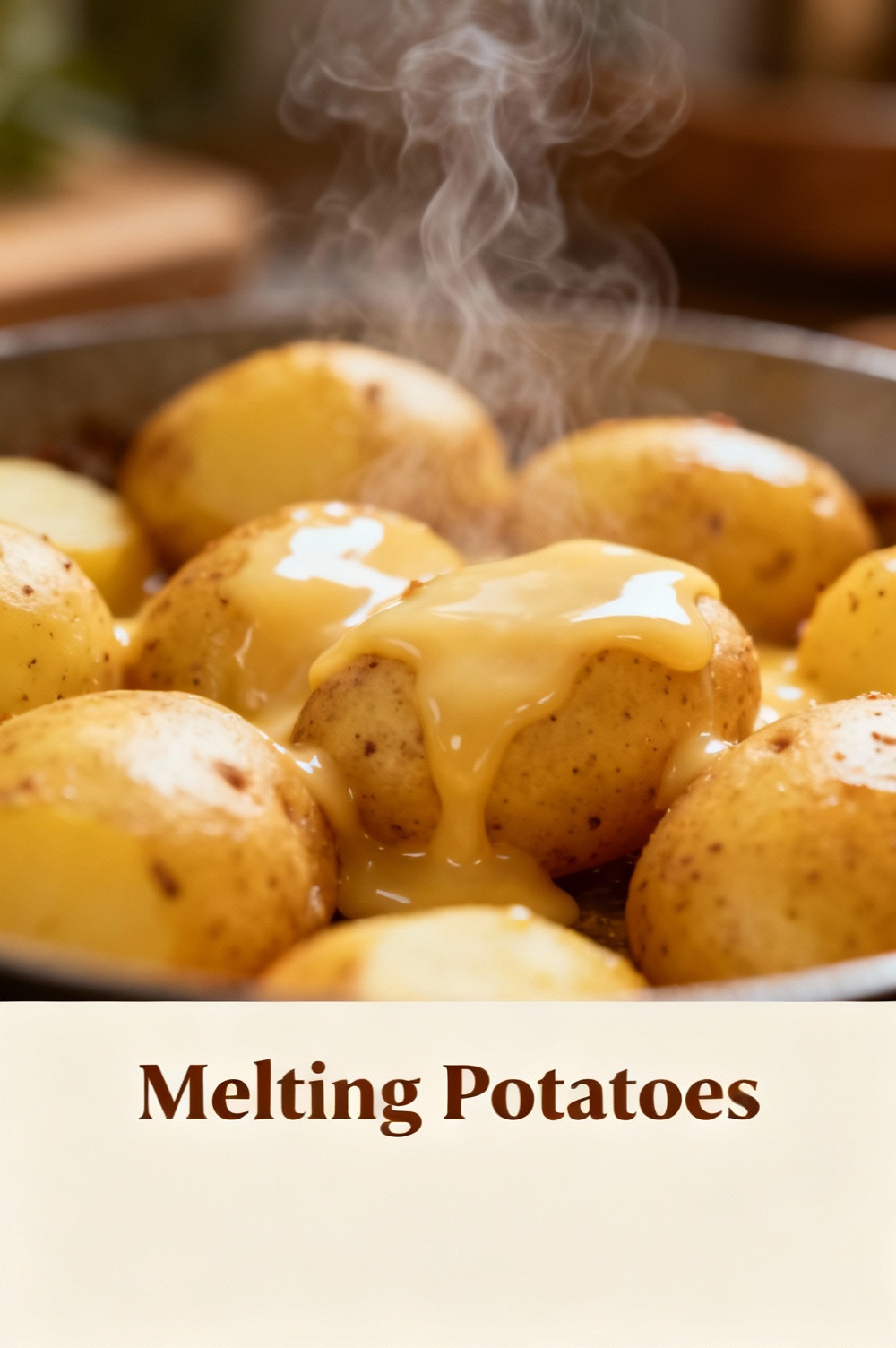
Tender, buttery potatoes braised in stock with garlic and thyme until they literally melt in your mouth.
Ingredients
- 1.5 lb (700 g) Yukon Gold or new potatoes, peeled if desired (leave small ones whole; halve larger ones)
- 2 tbsp unsalted butter
- 2 tbsp olive oil
- 1 cup (240 ml) low-sodium chicken or vegetable stock
- 3 garlic cloves, smashed
- 4 sprigs fresh thyme (or 1 tsp dried thyme)
- 1 small shallot, finely chopped (optional)
- Salt and freshly ground black pepper, to taste
- 2 tbsp chopped fresh parsley
- 1 tbsp lemon juice (optional, to brighten)
- 1 tbsp extra butter (for finishing)
Instructions
- Preheat the oven to 375°F (190°C). If using small potatoes, leave whole; halve larger potatoes so pieces are roughly the same size. Pat dry and season lightly with salt and pepper.
- In a large ovenproof skillet, heat 2 tbsp butter and 2 tbsp olive oil over medium-high heat. Add the potatoes cut-side down and cook without moving until golden brown, about 5–7 minutes.
- Add the chopped shallot (if using) and smashed garlic to the pan and sauté 1 minute until fragrant. Stir gently to coat.
- Pour in the stock and add the thyme sprigs. Bring to a gentle simmer, scraping up any browned bits. Adjust seasoning with salt and pepper.
- Transfer the skillet to the preheated oven and bake, uncovered, for 30–35 minutes, or until the potatoes are very tender and the liquid has mostly reduced to a glossy glaze. (Alternatively, simmer covered on the stovetop over low heat for 30–35 minutes.)
- Remove from the oven, discard thyme stems, stir in the extra 1 tbsp butter, lemon juice (if using), and chopped parsley. Spoon the buttery glaze over the potatoes and serve immediately.
Nutrition Information
- Calories: 320 kcal
- Cholesterol: 30 mg
- Sodium: 420 mg
- Carbohydrates: 38 g
- Fiber: 4 g
- Sugar: 2 g
- Protein: 5 g