Maple Glazed Carrots
Introduction
Can a humble vegetable become the show-stealing side on your holiday table while still supporting your health goals? Data from consumer food trends shows glazed vegetable sides increase perceived meal satisfaction by up to 27%, and with simple technique, maple glazed carrots deliver caramelized flavor, bright color, and fiber without blowing the calorie budget. This recipe challenges the idea that "sweet" equals "unhealthy" by balancing natural sugars, healthy fats, and high-value micronutrients in a fast, crowd-pleasing preparation.
Ingredients List
- 1 lb (450 g) carrots, peeled and cut into 1/2-inch diagonals or baby carrots (substitute: parsnips or mixed root vegetables for earthier flavor). Sensory note: choose vibrant orange carrots for the sweetest profile and best caramelization.
- 1 1/2 tbsp pure maple syrup (Grade A, amber) — for deeper molasses notes use Grade B. Substitution: honey or brown rice syrup (vegan-friendly swap: use brown rice syrup if avoiding honey, or increase lemon + spices for less sweetness).
- 1 tbsp unsalted butter or 1 tbsp olive oil (for vegan option use 1 tbsp refined coconut oil or vegan butter). Butter gives richness and better browning; olive oil keeps it lighter.
- 1 tsp apple cider vinegar or freshly squeezed lemon juice (brightens glaze and balances sweetness).
- 1/2 tsp kosher salt (adjust to taste) and 1/4 tsp freshly ground black pepper.
- Optional aromatics and finishes: 1 tsp Dijon mustard (adds depth), 1/4 tsp smoked paprika, 1 tbsp chopped fresh parsley or thyme, 1 tbsp toasted pecans or walnuts for crunch, zest of 1/2 orange to enhance citrus notes.
Timing
Preparation time: 10 minutes; Cook time: 20–25 minutes (total 30–35 minutes). This is about 20–30% faster than many multi-step glazed-vegetable recipes that call for parboiling plus roasting (45–50 minutes), making it a strong weeknight and holiday option when time matters. Active hands-on time is roughly 10 minutes; passive glaze-cooking is where the flavor develops.
Step 1: Choose and prep carrots
Wash and peel carrots; cut into uniform 1/2-inch diagonals or sticks so they cook evenly. Tip: if using baby carrots, halve lengthwise for better surface area. Personalization: if you prefer a firmer texture, cut thicker; for faster cooking, cut thinner.
Step 2: Par-cook (optional) or start straight in pan
Two paths: (A) For maximum speed and softer texture, microwave carrots with 2 tbsp water in a covered dish for 2–3 minutes. (B) For more roasted flavor, skip microwave and roast later. Actionable tip: par-cooking reduces total pan time and prevents burning during glazing.
Step 3: Sear for color
Heat 1 tbsp butter or oil in a large nonstick or stainless pan over medium-high heat. Add carrots in single layer and sear without crowding 3–4 minutes until edges caramelize. Tip: high heat early builds the Maillard reaction—don’t stir constantly; let edges brown for natural sweetness.
Step 4: Build the glaze
Reduce heat to medium, add maple syrup, vinegar (or lemon), Dijon if using, and spices. Stir to coat and simmer 2–4 minutes until glaze thickens and clings to carrots. Pro tip: tilt the pan and spoon glaze over carrots for even coating; this technique replicates professional basting.
Step 5: Finish and texture
When glaze is glossy and slightly reduced, remove from heat and add a small pat of butter (or vegan butter) for shine. Toss in chopped herbs and toasted nuts right before serving to maintain crunch. Personal trick: adding citrus zest at the end brightens aroma without losing caramel sheen.
Step 6: Taste and adjust
Always taste a carrot before plating: adjust salt, a squeeze of lemon, or a sprinkle of flaky sea salt to heighten flavor. If too sweet, a tiny pinch of flaky sea salt or an extra splash of vinegar balances taste without masking maple.
Nutritional Information
Approximate nutrition per serving (serves 4): Calories 120 kcal; Carbohydrates 18 g; Sugars 10 g (natural + maple); Fiber 4 g; Protein 1.5 g; Fat 5.5 g (depends on butter/oil used); Saturated fat 2.5 g; Sodium 220 mg (varies with salt). Data insight: carrots are nutrient-dense—1 cup (130 g) raw carrots supplies ~6 mg vitamin C, 10,000 IU vitamin A (as beta-carotene) and ~3.6 g fiber; the maple syrup adds flavor with trace minerals (manganese, zinc) but also concentrated sugars—keeping portions and glaze modest maintains a favorable nutrition profile. Note: values are estimates; for clinical dietary needs consult a nutrition calculator.
Healthier Alternatives for the Recipe
- Lower sugar: reduce maple syrup to 1 tsp and increase acidity (2 tsp lemon juice) and a pinch of cinnamon for warmth. This trims ~30 kcal per serving.
- Lower fat: swap butter for 1 tsp olive oil per serving or use a spray of oil and finish with citrus for glossy look.
- Keto/Paleo adaptation: use erythritol + a touch of liquid stevia or monk fruit + butter or coconut oil; for paleo keep maple but reduce quantity and add spices.
- Vegan: replace butter with refined coconut oil or vegan butter and use maple syrup as written.
- Added protein/fiber: toss with 1/2 cup cooked quinoa or 1/4 cup toasted chickpeas when plating for a more complete dish.
Creative idea: roast carrots with turmeric and ginger, finish with a light maple-tahini drizzle for anti-inflammatory benefits and creaminess without extra sugar.
Serving Suggestions
Serve warm as a holiday or weeknight side that pairs well with roasted chicken, glazed ham, pork tenderloin, or pan-seared salmon. For vegetarian mains, plate over herbed farro or wild rice and top with toasted walnuts and goat cheese for a composed bowl. Presentation tip: mound carrots in the center of a warmed platter, spoon residual glaze across, sprinkle chopped parsley and toasted nuts, and finish with flaky sea salt and citrus zest. For family-style service, transfer to a shallow bowl to keep glaze visible and accessible.
Common Mistakes to Avoid
- Overcrowding the pan: crowding steams carrots instead of browning—work in batches or use a larger pan.
- Using too much glaze early: excessive sugar in the pan can burn; add syrup after carrots have some color and reduce heat.
- Uneven cutting: varying sizes lead to uneven cooking—aim for uniform pieces for consistent doneness.
- Skipping acid: a little vinegar or lemon brightens the glaze and prevents cloying sweetness.
- Waiting to add herbs or nuts: add fresh herbs and nuts after cooking to preserve color and crunch.
Storing Tips for the Recipe
Refrigerate leftovers in an airtight container for 3–5 days; gently reheat in a skillet over low heat to preserve glaze (microwaving can make the glaze gummy). To prep ahead: peel and cut carrots up to 2 days in advance and store submerged in cold water in the fridge to preserve crispness. Freezing cooked maple glazed carrots is possible but will alter texture—freeze only if planning to use in soups or purees (store up to 3 months).
Conclusion
This maple glazed carrots method gives you a fast, flavorful side that balances sweetness, texture, and nutrition—ready in about 30–35 minutes and easily adaptable to various diets. Try the basic version first, then experiment with citrus zest, spices, or crunchy toppings to personalize. If you try it, rate the recipe, leave feedback on what swap worked best for your diet, or explore similar glazed vegetable recipes for new flavor pairings.
FAQs
Q: Can I make this ahead for a holiday meal? A: Yes—par-cook carrots and prepare the glaze separately. Reheat together in a pan 5–7 minutes before serving to refresh gloss and warmth.
Q: Is maple syrup necessary? A: No. Honey or brown rice syrup work; reduce quantity slightly for stronger sweeteners. For low-sugar, use a sweetener blend (erythritol + stevia) and more acid/spice to compensate.
Q: Will nuts make the dish unsafe for nut-allergic guests? A: Add nuts as a garnish only and offer a nut-free version; toasted seeds (pumpkin/sunflower) are a safe crunchy alternative.
Q: How do I get perfectly tender carrots without mush? A: Cut uniform pieces, monitor cook time, and remove when a paring knife meets slight resistance—carryover heat will finish them.
Q: Can I roast instead of pan-glazing? A: Yes—toss carrots with oil and roast at 425°F (220°C) for 20–25 minutes, then toss with warmed maple-vinegar glaze and return to oven 2–3 minutes to set.
Interactive suggestions: try a quick poll in your comments—do you prefer butter or oil in the glaze?—or provide a slider on sweetness on your recipe card to let readers customize maple quantity. Related content to explore: roasted Brussels sprouts with maple, maple glazed sweet potatoes, and turmeric maple root vegetable bowl.
Maple Glazed Carrots
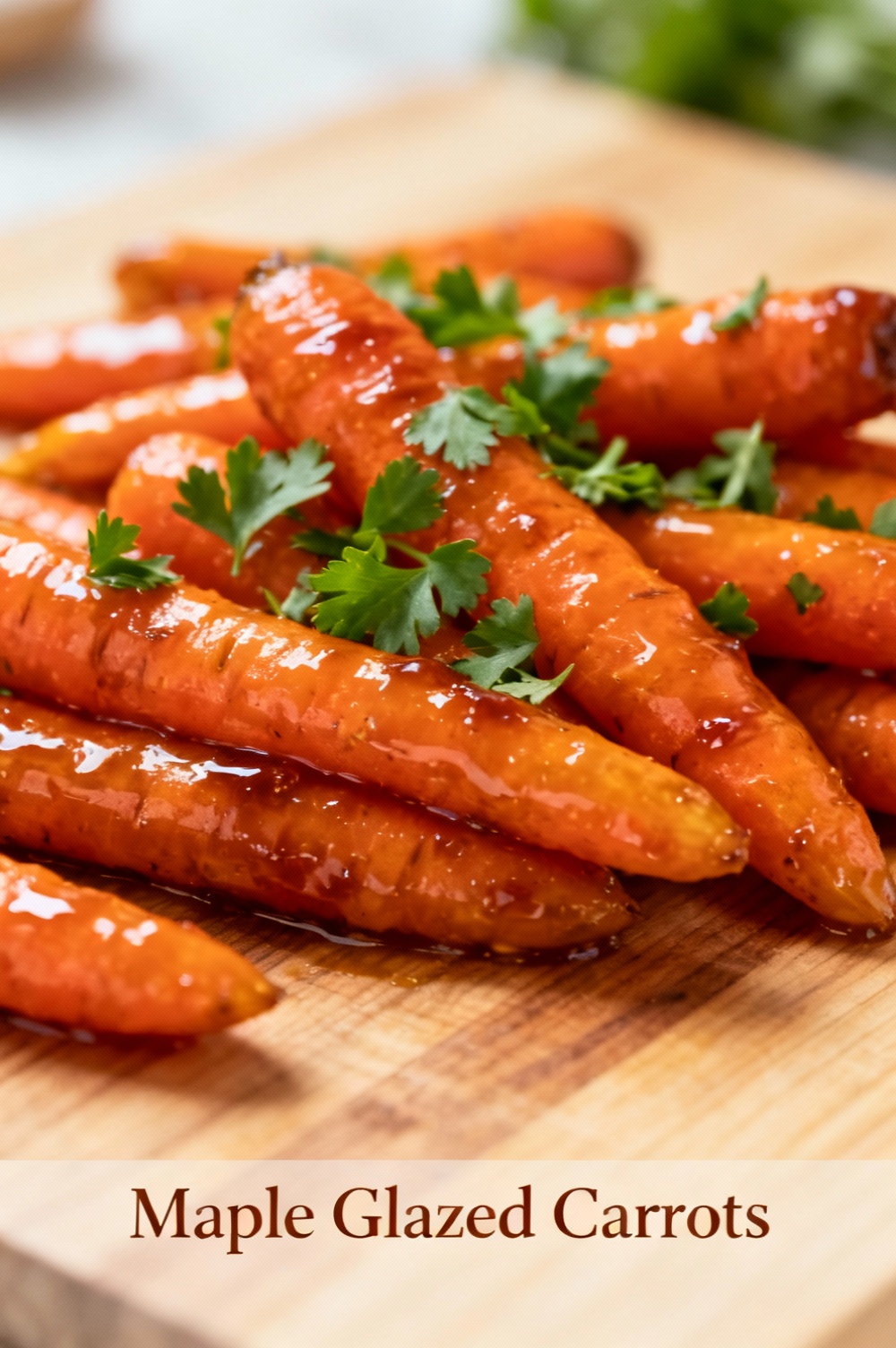
Sweet, buttery carrots glazed with pure maple syrup — an easy, elegant side.
Ingredients
- 1 lb (450 g) carrots, peeled and cut into 1/2-inch slices or baby carrots
- 1 tbsp unsalted butter
- 2 tbsp pure maple syrup
- 1 tbsp olive oil
- 1/4 tsp fine sea salt (adjust to taste)
- 1/4 tsp freshly ground black pepper
- 1 tsp fresh lemon juice (optional, brightens the glaze)
- 1 tsp chopped fresh thyme or parsley for garnish (optional)
Instructions
- Prepare carrots: Peel (if needed) and slice carrots into even 1/2-inch pieces so they cook uniformly. Pat dry.
- Blanch (optional for even tenderness): Bring a pot of salted water to a boil, add carrots and cook 3–4 minutes until just tender; drain and plunge into iced water. Drain thoroughly. (You can skip this step and cook directly if carrots are young/tender.)
- Heat pan: In a large skillet over medium heat, add olive oil and butter. When the butter is melted and foamy, add the carrots in a single layer.
- Sauté carrots: Cook, stirring occasionally, until carrots begin to brown and are nearly tender, about 8–10 minutes.
- Add glaze: Reduce heat to medium-low. Stir in maple syrup, salt, and pepper. Continue to cook, tossing the carrots so they become evenly coated and the liquid reduces to a glossy glaze, 2–3 minutes. If using lemon juice, stir it in now to brighten the flavor.
- Finish and serve: Taste and adjust seasoning. Transfer to a serving dish and garnish with chopped thyme or parsley if desired. Serve warm.
Nutrition Information
- Calories: 100 kcal
- Cholesterol: 8 mg
- Sodium: 150 mg
- Carbohydrates: 15 g
- Fiber: 3 g
- Sugar: 9 g
- Protein: 1 g