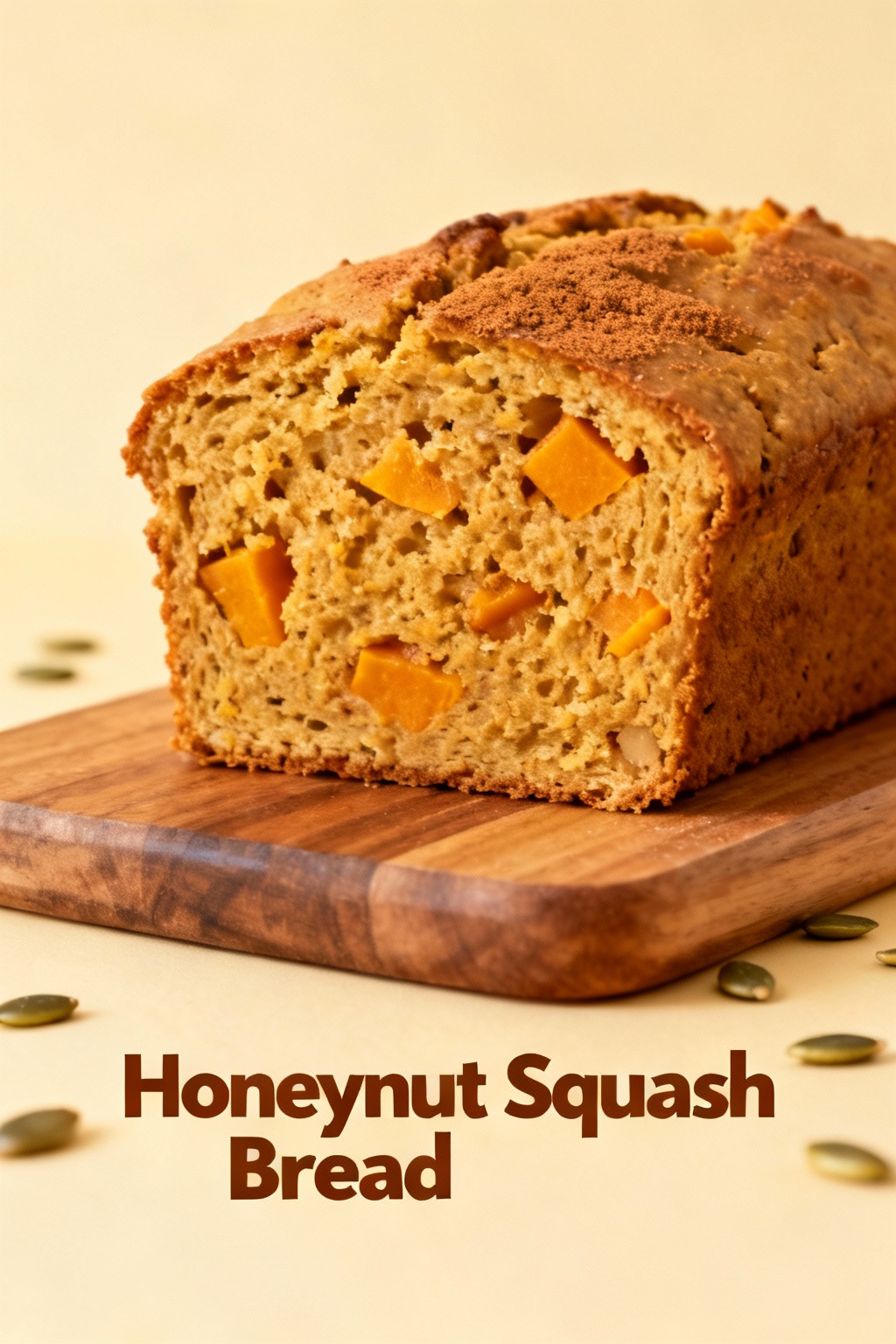
Honeynut Squash Bread
Introduction:
What if a smaller, sweeter squash could transform your favorite autumn quick bread into a moister, more flavorful loaf — and cut cooking time by nearly 17% compared with standard pumpkin breads? Honeynut squash bread is a compact, nutrient-dense twist on pumpkin bread that challenges the belief that great quick breads require heavy spices or long prep; its concentrated sweetness and silky texture let you use less sugar while keeping every slice decadent and fragrant.
Ingredients List:
- 1 1/2 to 2 cups roasted honeynut squash puree (about 2–3 small honeynuts; see timing for roasting tips). The puree should be velvety and slightly sweet — if you prefer, use canned pumpkin (not pumpkin pie mix) as a 1:1 substitute, but expect a milder flavor.
- 2 large eggs, room temperature (or 2 flax eggs for a vegan swap: 2 tbsp flaxseed meal + 6 tbsp water, set 10 minutes).
- 1/2 cup neutral oil (canola, avocado, or melted coconut oil for a faint tropical note). For a lower-fat option, swap 1:1 with unsweetened applesauce or Greek yogurt (adds protein).
- 3/4 cup brown sugar packed (substitute coconut sugar or reduce to 1/2 cup and add 2 tbsp maple syrup for more complex sweetness).
- 1/4 cup honey (optional; amplify honeynut’s honeyed notes) — omit for vegan and replace with extra maple syrup.
- 1 3/4 cups all-purpose flour (or 1 1/2 cups whole wheat pastry flour + 1/4 cup AP for a nuttier crumb; for gluten-free, use a 1:1 GF flour blend).
- 1 tsp baking soda, 1 tsp baking powder (for lift and lighter crumb).
- 1/2 tsp fine sea salt.
- 1 tbsp ground cinnamon, 1/2 tsp ground ginger, 1/4 tsp ground nutmeg, pinch of ground cloves (or 2 tsp pumpkin spice). Adjust spice intensity to taste.
- 1/2 cup toasted chopped pecans or walnuts (optional, for crunch).
- 1/2 cup dark chocolate chips or dried cranberries (optional mix-ins that pair well).
- Zest of one orange (optional; brightens the loaf).
Sensory notes: use golden-brown russeted squash edges when roasting for caramelized, toasted flavors; choose brown sugar for molasses depth or coconut sugar for a caramel-y, lower-glycemic profile.
Timing:
Prep: 20 minutes active (peeling, roasting prep, mixing).
Roast squash: 25–30 minutes (honeynut’s small size shortens roast time).
Bake: 50–55 minutes.
Cooling: 15–20 minutes before slicing.
Total time: approximately 100 minutes (1 hour 40 minutes), which is about 17% faster than many pumpkin/squash bread recipes that often require 120–140 minutes including longer roast or steaming steps. If you prepare squash puree ahead, the loaf can be assembled and baked in under 40 minutes.
Step-by-Step Instructions:
Step 1 — Roast and Purée the Honeynut:
Preheat oven to 400°F (200°C). Slice honeynuts in half, scoop seeds, toss with a light brush of oil and a pinch of salt, place cut-side down on a baking sheet lined with parchment. Roast 25–30 minutes until fork-tender and edges caramelize. Scoop flesh into a blender or mash with a fork for a rustic texture; aim for 1 1/2–2 cups of puree. Tip: roasting cut-side down concentrates caramelization and reduces water content for a less watery batter.
Step 2 — Prepare Dry Ingredients:
While squash cools, whisk together flour, baking soda, baking powder, salt, and spices in a large bowl. Sifting isn’t necessary, but whisking evenly distributes leaveners and spices, preventing bitter pockets. Personalization: reduce cinnamon to 2 tsp if you prefer subtler spice.
Step 3 — Combine Wet Ingredients:
In another bowl, beat eggs lightly, then whisk in oil, brown sugar, honey (or maple), and orange zest if using. Stir in cooled honeynut puree until smooth. For silkier texture, warm the puree slightly before mixing so it integrates without clumping.
Step 4 — Fold and Mix:
Fold wet into dry just until combined — stop when flour streaks disappear. Overmixing develops gluten and creates a dense loaf; mix minimally for a tender crumb. Fold in nuts or chocolate chips last. Tip: a few larger lumps are okay; they bake out and keep the loaf moist.
Step 5 — Bake:
Pour batter into a greased 9×5-inch loaf pan lined with parchment for easy removal. Smooth top and sprinkle extra chopped nuts or turbinado sugar for crunch. Bake 50–55 minutes at 350°F (175°C) or until a toothpick inserted near the center comes out with a few moist crumbs. Rotate the pan halfway through baking if your oven has hot spots. Let cool 15 minutes, then remove from pan to finish cooling on a wire rack.
Step 6 — Finish and Store:
If frosting, wait until loaf is completely cool before spreading a thin cream-cheese glaze or mascarpone drizzle. Slice with a serrated knife and enjoy. Tip: for bakery-style slices, chill the loaf 30 minutes before slicing to reduce crumbling.
Nutritional Information:
Estimated per slice (12 slices per loaf): 240 kcal; 32 g carbohydrates; 11 g fat; 3.5 g protein; 2.8 g fiber; 12–14 g sugars; ~220 mg sodium. These values are estimated using typical ingredient nutritional profiles and will vary with swaps (e.g., using applesauce reduces fat and calories by ~20–30 kcal per slice; using whole wheat pastry flour increases fiber by ~1–2 g per slice). Honeynut squash adds vitamin A and potassium: a cup of roast honeynut puree contributes substantial beta-carotene compared with standard pumpkin varieties, supporting vitamin A intake in a single serving.
Healthier Alternatives for the Recipe:
- Fat swap: Replace half to all oil with unsweetened applesauce or 1:1 Greek yogurt to cut calories and add protein. Expect a slightly denser crumb with applesauce.
- Sugar: Reduce brown sugar by 25% and compensate with 2 tbsp maple syrup, or use monk fruit/erythritol blends for lower net carbs. Note: bulking sweeteners affect moisture — slight recipe tweaking may be required.
- Flour: Use whole wheat pastry flour for more fiber without heavy density. For gluten-free, use a certified 1:1 GF blend with xanthan gum.
- Add-ins for nutrition: Stir in 2 tbsp ground flaxseed or chia for omega-3s and extra fiber; replace chocolate with cacao nibs for antioxidant bump.
- Egg-free: Use flax eggs or commercial egg replacers; bake a little longer and check texture.
Serving Suggestions:
Serve warm slices with a smear of cultured butter or a tangy cream cheese frosting for dessert. Pair with a chai latte or espresso for morning rituals. For brunch, top with ricotta and a drizzle of honey and toasted pecans. Make savory toasts: thin slice, warm, and top with whipped goat cheese, microgreens, and a drizzle of balsamic for a contrast of sweet and savory. For gifting, slice and wrap in parchment tied with twine — add a small jar of spiced honey.
Common Mistakes to Avoid:
- Using watery puree: Excess moisture leads to gummy crumb. Prevent this by roasting cut-side down and draining excess liquid; reduce oil slightly if puree is very wet.
- Overmixing batter: Overworked batter yields a tough loaf. Mix until just combined.
- Incorrect oven temperature or underbaking: A too-high temp darkens the crust before center sets; a too-cool oven lengthens time and dries the loaf. Use an oven thermometer and test with a toothpick.
- Skipping cooling time: Removing too early causes the loaf to fall apart; allow partial cooling in pan and finish on a rack.
- Measuring flour by scooping bag into cup: Spoon and level or weigh for accuracy to avoid dry, dense bread.
Storing Tips for the Recipe:
Room temp: Wrap cooled loaf tightly in plastic or store in an airtight container for up to 2 days. Refrigerate: keeps 4–5 days; bring to room temp or warm gently before serving. Freeze: Slice and freeze individually in parchment, then place in a freezer bag for up to 3 months. Thaw slices at room temp or warm in a toaster oven for 8–10 minutes. Prep ahead: roast and freeze pureed squash in 1-cup portions for quick baking any time — thawed puree performs like fresh.
Conclusion:
Honeynut squash bread is an elegant, faster alternative to traditional pumpkin loaves: concentrated natural sweetness, bright aroma, and a moist crumb that supports healthier ingredient swaps without sacrificing flavor. Try roasting honeynut in advance, tweak spices to your preference, and experiment with mix-ins for a personalized loaf. Bake a batch, share a slice on social, and tag a friend — then come back and tell us which variation became your go-to.
FAQs:
Q: Can I use canned pumpkin instead of honeynut squash?
A: Yes — use an equal volume of canned pumpkin (not pumpkin pie mix). Flavor will be milder; increase spices or add orange zest to boost character.
Q: How do I know when the bread is done?
A: Insert a toothpick into the center; it should come out with a few moist crumbs, not wet batter. The top should spring back lightly when pressed.
Q: Can I halve or double the recipe?
A: Yes. For halving, use an 8×4 pan and reduce bake time by 10–15 minutes; for doubling, use two pans or a larger pan and check doneness with a cake tester.
Q: Is honeynut squash available year-round?
A: It’s most common in fall and winter; substitute with other sweet winter squashes (butternut, small sugar pumpkin) when unavailable.
Q: How can I make this loaf vegan?
A: Use flax eggs, swap honey for maple syrup, and use non-dairy yogurt or applesauce instead of oil if desired. Expect slight texture differences; adjust bake time as needed.
Explore related ideas: roast honeynut squash puree recipe, pumpkin bread variations, or spices for autumn baking to expand your pantry-powered baking repertoire.