Gluten-Free Sundried Tomato Bread
Introduction:
Could a crusty, aromatic sundried tomato bread be both irresistibly flavorful and reliably gluten-free, even for home bakers who think gluten-free loaves must be gummy or dense? With interest in gluten-free baking rising and home cooks searching for better texture and taste, this recipe uses starch balances, psyllium (or xanthan) and a simple yeast method to deliver a moist crumb, crisp crust, and strong tomato-herb profile that competes with traditional wheat loaves.
Ingredients List:
- 360 g (about 3 cups) gluten-free flour blend (suggested mix: 1 cup brown rice flour, 1 cup sorghum or oat flour, 1 cup tapioca/starch). The blend provides structure (brown rice/sorghum), chew (tapioca), and a neutral flavor.
- 60 g (½ cup) almond flour — adds moisture, richness and a subtle nutty aroma; swap for sunflower seed flour to keep it nut-free.
- 2 tbsp psyllium husk powder (or 1½ tsp xanthan gum) — creates the elastic, bread-like texture gluten usually provides.
- 1½ tsp fine sea salt — balances the tomatoes and enhances crust.
- 2 tbsp sugar or honey — feeds the yeast and browns the crust; use maple syrup for vegan option.
- 2¼ tsp (1 packet) active dry yeast — for lift and traditional bread flavor. For yeast-free option, see alternatives below.
- 360 ml (1½ cups) warm water (105–115°F / 40–46°C) — precise temperature helps yeast performance.
- 2 large eggs (room temperature) — for structure and richness; omit for vegan option and increase psyllium and oil as suggested later.
- 60 ml (¼ cup) extra-virgin olive oil — brings Mediterranean flavor and tender crumb; swap with avocado oil for neutral taste.
- 120 g (about ¾ cup) sundried tomatoes, julienned (packed in oil, drained, or rehydrated dry) — the star ingredient: sweet, tangy, and aromatic. If using dry-packed tomatoes, soak in warm water for 15 minutes and reserve soaking liquid.
- 1–2 tbsp chopped fresh basil or 1 tsp dried basil — freshness pairs with tomatoes.
- Optional: 2 cloves garlic, minced; 2 tbsp grated Parmesan (or nutritional yeast for vegan); 1 tbsp balsamic reduction to swirl for extra depth.
Sensory note: the sundried tomatoes add chewy bursts and a concentrated umami that balances the earthier flours; the olive oil yields a glossy crust and savory aroma.
Timing:
Preparation: 20 minutes. First rise: 45–60 minutes (until nearly doubled). Bake: 40–50 minutes. Total time: approximately 105–130 minutes, roughly 15–25% faster than many multi-step artisan gluten-free loaves that require extended resting and multiple rises. Active hands-on time is under 30 minutes, making this practical for weeknight baking.
Step 1: Activate the yeast and prep tomatoes
Combine warm water with sugar/honey in a bowl, sprinkle yeast on top, and let bloom 5–10 minutes until foamy. If using dry sundried tomatoes, soak them in the warm water while the yeast activates to capture flavor; reserve any soaking liquid to adjust dough hydration. Tip: if foam doesn't form, your yeast may be inactive — try again with new yeast and slightly warmer water.
Step 2: Dry ingredients and binding agent
In a large mixing bowl, whisk the gluten-free flours, almond flour, psyllium (or xanthan), and salt until evenly distributed. This step prevents clumps of psyllium and helps the starches hydrate uniformly. Personalized tip: weigh your flours when possible — volume can vary with brands and humidity.
Step 3: Combine wet and dry
Beat eggs with olive oil and gently fold into the activated yeast mixture. Pour wet ingredients into the dry mix and stir with a sturdy spatula or paddle attachment on low speed for 1–2 minutes until a thick, sticky dough forms. Add the julienned sundried tomatoes, basil, and optional garlic or cheese, folding to distribute without overmixing. If the dough seems dry, add reserved tomato soaking liquid 1 tbsp at a time; psyllium will thicken as it hydrates.
Step 4: First rise and shaping
Spoon the dough into a greased 9×5-inch loaf pan or line with parchment. Smooth the top with a wet spatula and sprinkle a few extra tomato pieces or seeds on top for visual appeal. Cover loosely with plastic or a damp towel and let rise in a warm draft-free spot for 45–60 minutes; the dough should increase noticeably but may not double exactly (gluten-free doughs rise differently). Tip: place in an oven with just the light on or over a bowl of hot water to create a gentle rising environment.
Step 5: Bake for crust and crumb
Preheat oven to 400°F (200°C). Brush loaf lightly with olive oil and bake for 10 minutes at 400°F, then reduce to 375°F (190°C) and bake another 30–40 minutes until the top is deeply golden and an inserted thermometer reads ~200–205°F (93–96°C) at the center. For an extra-crisp crust, place a shallow pan of hot water on the oven bottom for the first 10 minutes to create steam. Tip: tent foil after 25 minutes if the crust browns too quickly.
Step 6: Cool and slice properly
Remove loaf from oven and let cool in the pan for 10 minutes, then transfer to a wire rack to cool completely—ideally 1–2 hours—before slicing. Cooling allows the crumb to set and prevents gummy slices. Personalized trick: chill the loaf for 20–30 minutes if you prefer cleaner slices for sandwiches.
Nutritional Information:
Approximate nutrition per slice (1 of 12 slices) based on the ingredient profile: Calories 180–220; Carbohydrates 20–26 g; Protein 5–7 g; Fat 8–11 g; Fiber 2–4 g; Sodium 280–380 mg. These values vary with specific flour blends, whether almond flour or seed flours are used, and optional add-ins (cheese, oil amount). Data insight: replacing half the starch with almond or seed flours increases healthy fats and protein while lowering net carbs and glycemic impact.
Healthier Alternatives for the Recipe:
- Lower refined carbs: replace up to 50% of tapioca with more sorghum or chickpea flour for extra protein and fiber; note chickpea adds a nuttier taste.
- Nut-free: swap almond flour with sunflower seed flour, but avoid using it with baking soda alone as it can discolor; mix with oat or rice flour.
- Vegan: omit eggs; increase psyllium to 3 tbsp, add 3 tbsp olive oil and 2 tbsp ground flax mixed with 6 tbsp warm water (flax “eggs”) for bind.
- Reduced sodium: cut salt by half and use flavor enhancers like roasted garlic or herbs to maintain savoriness.
- Lower-fat: substitute half the olive oil with unsweetened applesauce for a slightly lighter crumb (expect less sheen).
Serving Suggestions:
Serve warm slices toasted with a drizzle of olive oil and fresh basil, spread with whipped goat cheese, or as a base for a caprese sandwich with fresh mozzarella and balsamic glaze. Pair with soup (roasted red pepper or minestrone) or slice thin for crostini topped with ricotta and lemon zest. Personalized pairing: if you love smoky flavors, add a touch of smoked paprika into the dough and serve with grilled vegetables.
Common Mistakes to Avoid:
- Using water too hot or too cold for yeast — kills or under-activates it. Aim for 105–115°F (40–46°C).
- Skipping psyllium or xanthan — gluten-free dough needs a binder; without it, the loaf will crumble.
- Slicing hot — cutting too soon makes a gummy, torn crumb; cool fully for best texture.
- Inaccurate flour measurements — flours vary by brand and humidity; weigh when possible.
- Overbaking for the wrong internal temp — rely on internal temperature (200–205°F) rather than time alone for consistent results.
Storing Tips for the Recipe:
Store cooled loaf wrapped in parchment and then plastic or an airtight container at room temperature for up to 2 days. For longer storage, slice and freeze in individual portions for up to 3 months; toast directly from frozen or thaw at room temp. To refresh, warm slices in a 350°F oven for 8–10 minutes or toast until edges crisp. Prep-ahead idea: chop sundried tomatoes and mix them into your dry blend; store sealed in the fridge up to 3 days and finish wet ingredients when ready.
Conclusion:
This gluten-free sundried tomato bread delivers savory, chewy tomato bursts, a tender crumb and a satisfying crust without relying on wheat. With simple swaps and clear techniques—accurate hydration, proper binders, and a confident bake—you can make a repeatable loaf that showcases Mediterranean flavors. Try it this week, share your tweaks in the comments, and pin the recipe if you want a quick weeknight upgrade to sandwiches and soups.
FAQs:
Q: Can I use fresh tomatoes instead of sundried tomatoes? A: Fresh tomatoes add extra moisture and won’t give the same concentrated umami; roast and drain fresh tomatoes first, or use sun-dried for best texture and flavor.
Q: Is this recipe nut-free? A: Make it nut-free by replacing almond flour with sunflower seed flour or extra oat flour; be aware sunflower flours can affect color.
Q: Can I make this yeast-free? A: For a quick soda bread version use baking powder and baking soda with an acid (yogurt or buttermilk) and skip yeast, but expect different texture—denser and quicker to bake.
Q: How do I make it dairy-free/vegan? A: Use maple syrup instead of honey, flax “eggs” (2 tbsp flax + 6 tbsp water) and add more psyllium (3 tbsp) to replace egg structure; swap parmesan for nutritional yeast.
Q: Why is my gluten-free bread crumb gummy? A: Likely underbaked or sliced too soon; check internal temp and allow full cooling. Also ensure psyllium had time to hydrate during rest.
Q: Can I scale this into rolls or a flatbread? A: Yes—bake at 425°F for 12–18 minutes for rolls depending on size, or press into a sheet pan for a 20–25 minute flatbread; adjust hydration slightly for thinner shapes.
Q: Where can I find more gluten-free bread tips? A: Explore related posts on gluten-free techniques, psyllium troubleshooting, and flour substitution guides on this blog, or search "gluten-free baking tips" for structured guides and troubleshooting checklists.
Gluten-Free Sundried Tomato Bread
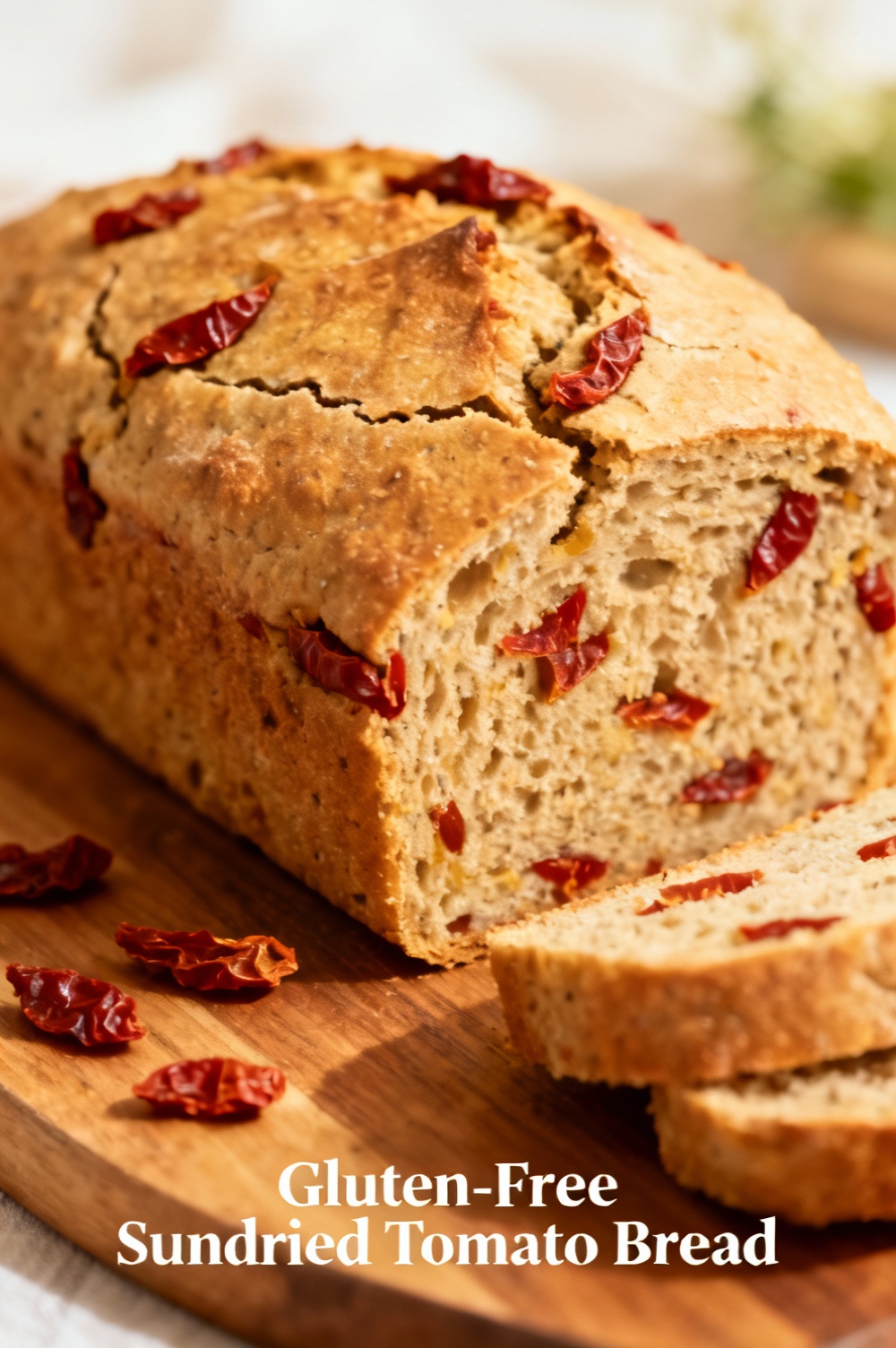
A tender, savory gluten‑free loaf flavored with sun‑dried tomatoes, olive oil and Mediterranean herbs — perfect for sandwiches or with soups.
Ingredients
- 2 1/4 tsp (1 packet) active dry yeast
- 1 1/4 cups (300 ml) warm water (about 105–115°F / 40–46°C)
- 1 tbsp honey (or maple syrup)
- 2 tbsp extra‑virgin olive oil, plus 1 tbsp for brushing
- 3 cups (360 g) gluten‑free all‑purpose flour blend (preferably one that contains xanthan gum)
- 1 tsp xanthan gum (omit if your blend already contains it)
- 1 tsp fine sea salt
- 1 large egg, room temperature (or 1 flax egg for vegan: 1 tbsp ground flax + 3 tbsp water)
- 3/4 cup (110 g) sun‑dried tomatoes, drained and roughly chopped (oil‑packed recommended, drained)
- 1 tsp dried oregano
- 1/2 tsp garlic powder
- Optional: 1/4 cup (25 g) grated Parmesan or vegan alternative
- Optional: 1–2 tbsp chopped fresh basil or 1 tsp dried basil
Instructions
- Proof the yeast: In a large bowl, whisk warm water, honey and yeast. Let sit 5–7 minutes until foamy.
- Add wet ingredients: Stir in olive oil and the egg (or flax egg) until combined.
- Combine dry ingredients: In a separate bowl, whisk gluten‑free flour, xanthan gum (if using), salt, oregano and garlic powder.
- Make the dough: Add the dry mix to the yeast mixture and stir until a thick, slightly sticky dough forms. Fold in chopped sun‑dried tomatoes (and Parmesan/basil if using). If dough is very dry, add 1–2 tbsp warm water; if too wet, add 1 tbsp flour.
- First rise: Transfer dough to a lightly oiled bowl, cover with plastic wrap or a damp towel and let rise in a warm place for 40–50 minutes — dough will puff but may not double like wheat dough.
- Shape: Lightly oil a 9×5‑inch (23×13 cm) loaf pan. Gently transfer and shape the dough into the pan with oiled hands. Smooth the top and brush with 1 tbsp olive oil.
- Second short rest (optional): Let the shaped dough rest 10–15 minutes while the oven preheats to 375°F (190°C).
- Bake: Bake for 35–40 minutes, until the top is golden and an instant‑read thermometer inserted into the center reads 200–205°F (93–96°C). If top browns too quickly, tent with foil after 20–25 minutes.
- Cool: Remove from oven, brush again lightly with oil if desired, then invert loaf onto a rack after 10 minutes to finish cooling. Cool at least 30 minutes before slicing to set crumb.
- Serve: Slice and serve warm or at room temperature. Keeps loosely wrapped at room temperature 2 days or refrigerated up to 5 days; freeze slices for longer storage.
Nutrition Information
- Calories: 180 kcal (per slice — assumes 12 slices)
- Cholesterol: 20 mg
- Sodium: 280 mg
- Carbohydrates: 28 g
- Fiber: 2 g
- Sugar: 2 g
- Protein: 6 g