Cozy Butternut Squash Soup
Introduction
Did you know a single serving of cozy butternut squash soup can deliver a full-spectrum comfort experience while supplying a significant portion of your daily vitamin A—challenging the idea that soup is “just a starter”? This recipe turns humble squash into a silky, aromatic bowl that proves depth of flavor comes from technique, not long ingredient lists. If you thought canned soup or cream-heavy versions were the only way to get richness, this approach—roasting, layering aromatics, and finishing with a creamy alternative—will change your mind and make a weekday dinner feel like a culinary win.
Ingredients List
- 2 medium butternut squashes (about 3–4 lb total), halved and seeds removed — roasting caramelizes the natural sugars for nuttier, deeper flavor; substitute 1.5–2 lb of frozen cubed squash if fresh isn't available (roast frozen cubes on a sheet to encourage browning).
- 2 tablespoons olive oil (or avocado oil) — for roasting and sautéing; use avocado oil for higher smoke point.
- 1 large yellow onion, diced — provides savory backbone; shallots are a subtler swap.
- 3 garlic cloves, smashed and minced — boosts aromatic profile; 1 teaspoon garlic powder if pressed for time.
- 1 medium carrot, peeled and chopped — adds natural sweetness and viscosity; omit for a lower-carb version.
- 1 apple (Granny Smith or Fuji), peeled and chopped — optional, brightens and balances richness; swap with pear for a milder note.
- 4 cups low-sodium vegetable or chicken broth — low-sodium gives better control; bone broth adds extra depth.
- 1 cup coconut milk (full-fat) or 1/2 cup heavy cream — coconut milk for vegan/ dairy-free, heavy cream for ultra-luxe mouthfeel.
- 1 teaspoon ground nutmeg, 1/2 teaspoon ground cumin, 1/2 teaspoon smoked paprika — warm spices that complement squash; increase or omit to taste.
- 1–2 teaspoons maple syrup or honey (optional) — enhances caramelized sweetness if needed.
- Salt and freshly ground black pepper to taste.
- Garnishes: toasted pumpkin seeds (pepitas), a drizzle of chili oil, chopped fresh parsley or chives, plain yogurt or crème fraîche (or coconut yogurt for vegan).
- Optional protein boost: 1/2 cup cooked red lentils or white beans blended in for extra body.
Timing
Prep time: 15 minutes. Roast time: 35–40 minutes (until fork-tender and caramelized). Simmer and finish: 15–20 minutes. Total time: 65–75 minutes, roughly 25–30% faster than many slow-simmered or oven-roasted recipes that recommend 90–100 minutes. If you use pre-cubed frozen squash, total hands-on time is closer to 30–40 minutes. This recipe balances flavor development (roasting) with efficiency (blend-and-simmer finish).
Step 1: Roast the Squash
Preheat the oven to 425°F (220°C). Brush the cut faces of the squash with 1 tablespoon oil, season lightly with salt, and place cut-side down on a rimmed baking sheet lined with parchment. Roast 35–40 minutes until edges are caramelized and a fork slides in easily. Tip: roasting cut-side down traps steam, softening flesh while encouraging browning on the exposed sides; if you prefer deeper caramelization, roast cut-side up for the last 10 minutes.
Step 2: Prepare Aromatics and Optional Add-ins
While the squash roasts, heat remaining oil in a large pot over medium heat. Add the diced onion and a pinch of salt; sauté until translucent and slightly golden, about 6–8 minutes. Add carrot and apple; cook 3–4 minutes more. Stir in garlic, cumin, smoked paprika, and nutmeg and cook until fragrant, about 30 seconds. Tip: sweat the aromatics slowly—this builds sweetness and complexity without burning; if you want a bolder profile, add a splash of white wine and let it reduce before adding broth.
Step 3: Combine, Simmer, and Layer Flavors
Scoop roasted squash flesh into the pot, leaving most of the skin behind (it becomes fibrous when blended). Add the broth and bring to a gentle simmer for 10–12 minutes to marry flavors. If you’re adding lentils or beans for protein, stir them in now and simmer until tender. Taste for seasoning, and if the soup lacks brightness, a teaspoon of maple syrup or a splash of apple cider vinegar can balance it. Tip: low-sodium broth lets you control final salt levels; add salt gradually at the end.
Step 4: Blend to Silky Perfection
Use an immersion blender to puree the soup directly in the pot until ultra-smooth. For an extra-silky finish, transfer in batches to a high-speed blender and blend on high for 30–45 seconds; strain through a fine-mesh sieve for restaurant-level smoothness. Return to pot, stir in coconut milk or cream, and warm gently—do not boil after adding dairy to avoid curdling. Tip: reserve a few tablespoons of coconut milk or cream to swirl on top for visual appeal.
Step 5: Finish, Adjust, and Garnish
Adjust seasoning: add salt, pepper, or a pinch more nutmeg as needed. If soup is too thick, thin with additional broth until desired consistency is reached. Serve hot with garnishes: toasted pumpkin seeds for crunch, a drizzle of chili oil for heat, or a dollop of yogurt for tang. Tip: toast pepitas in a dry skillet with a pinch of smoked paprika and sea salt for a smoky crunch that contrasts the soup’s creaminess.
Nutritional Information
Per serving (makes ~6 servings): approximately 190–250 kcal, 9–14 g fat (depending on coconut milk vs heavy cream), 22–30 g carbohydrates, 3–6 g fiber, 3–6 g protein, and 350–550 mg sodium (varies with broth and added salt). Data insight: swapping heavy cream for coconut milk reduces saturated fat by up to 20–30% per serving while keeping creaminess; using low-sodium broth can cut sodium by 30–50% compared with standard broths. Butternut squash is rich in beta-carotene (a vitamin A precursor) and vitamin C, so a typical serving contributes a significant portion of daily vitamin A requirements—making this soup both comforting and nutrient-forward.
Healthier Alternatives for the Recipe
- Vegan: use vegetable broth and full-fat coconut milk or cashew cream; omit dairy garnishes.
- Lower-fat: replace coconut milk with unsweetened almond milk and add a tablespoon of tahini or blended white beans for creaminess.
- Higher-protein: blend in cooked red lentils or serve with a scoop of Greek yogurt (or coconut yogurt for vegan).
- Low-carb/keto: swap part of the squash with cauliflower to lower net carbs and finish with heavy cream or mascarpone for richness.
- Reduced sodium: use homemade or low-sodium broth and increase fresh herbs and a squeeze of lemon for brightness instead of salt.
Serving Suggestions
Serve this cozy butternut squash soup in warmed bowls with crusty sourdough or a grilled cheese for a classic pairing. For an elevated dinner, present with roasted Brussels sprouts salad and a drizzle of herb oil. Wine pairings: a lightly oaked Chardonnay or an off-dry Riesling complements the soup’s sweet-and-spicy profile; for beer lovers, a saison or Belgian ale works well. Personal tip: for family-friendly weeknights, top each bowl with croutons and grated cheddar; for guests, finish with microgreens and a smoked sea-salt sprinkle.
Common Mistakes to Avoid
- Under-roasting the squash: results in flat, vegetal flavors—always roast until caramelized.
- Over-thinning with broth: soup can lose body; if this happens, simmer uncovered to concentrate or blend in a small potato or white beans to thicken naturally.
- Adding cream too early: boiling after dairy addition can split the fats—warm gently after adding.
- Skimping on seasoning: root vegetable soups need iterative seasoning; taste after blending and adjust.
- Blending hot soup improperly: when using a countertop blender, vent the lid slightly and blend in small batches to prevent pressure buildup and splatter.
Storing Tips for the Recipe
Cool soup to room temperature within 2 hours, then refrigerate in airtight containers for up to 3–4 days. Freeze in portion-sized containers or ice cube trays for up to 3 months—thaw overnight in the fridge and reheat gently on the stove, adding a splash of broth if it thickens. To meal-prep, roast the squash and store roasted cubes separately; assemble and blend the day you plan to serve for maximum freshness. Tip: if freezing with dairy, stir in cream or yogurt after reheating for best texture.
Conclusion
This cozy butternut squash soup balances technique and simplicity: roast for depth, layer aromatics for complexity, and finish with the creamy element that fits your diet. The result is a versatile, nutrient-rich bowl that works for weeknights, meal prep, or a show-stopping starter. Try it this week—leave a comment with your favorite garnish or substitution, snap a photo and tag it on social, or explore similar recipes like roasted carrot-ginger soup and pumpkin bisque for more seasonal inspirations.
FAQs
Q: Can I use frozen butternut squash?
A: Yes—thaw and pat dry, then roast briefly to encourage browning or sauté directly with aromatics; roasted fresh squash yields the deepest flavor but frozen is a great shortcut.
Q: Is this soup gluten-free?
A: Yes, the base recipe is naturally gluten-free—just ensure your broth and any garnishes are gluten-free.
Q: How do I make the soup extra smooth?
A: Use a high-speed blender and strain through a fine-mesh sieve; adding a small amount of potato or white beans before blending can also increase silkiness.
Q: Can I make this in a slow cooker?
A: You can roast the squash first for flavor, then combine all ingredients in a slow cooker on low for 3–4 hours; finish by blending and adding cream.
Q: How many calories are in a serving?
A: Roughly 190–250 kcal per serving, depending on whether you use coconut milk, heavy cream, or a lighter milk.
Q: Any ideas to make it kid-friendly?
A: Reduce spices like smoked paprika, blend until ultra-smooth, and top with simple garnishes like croutons or melted cheese.
Q: Can I prepare elements ahead of time?
A: Yes—roast squash and store in the fridge for up to 3 days, and slice and sauté aromatics the day before to shorten final assembly time.
If you want, I can generate a printable recipe card, a shopping list tailored to your pantry, or variations (vegan, keto, and protein-packed) with exact macros—which would you like next?
Cozy Butternut Squash Soup
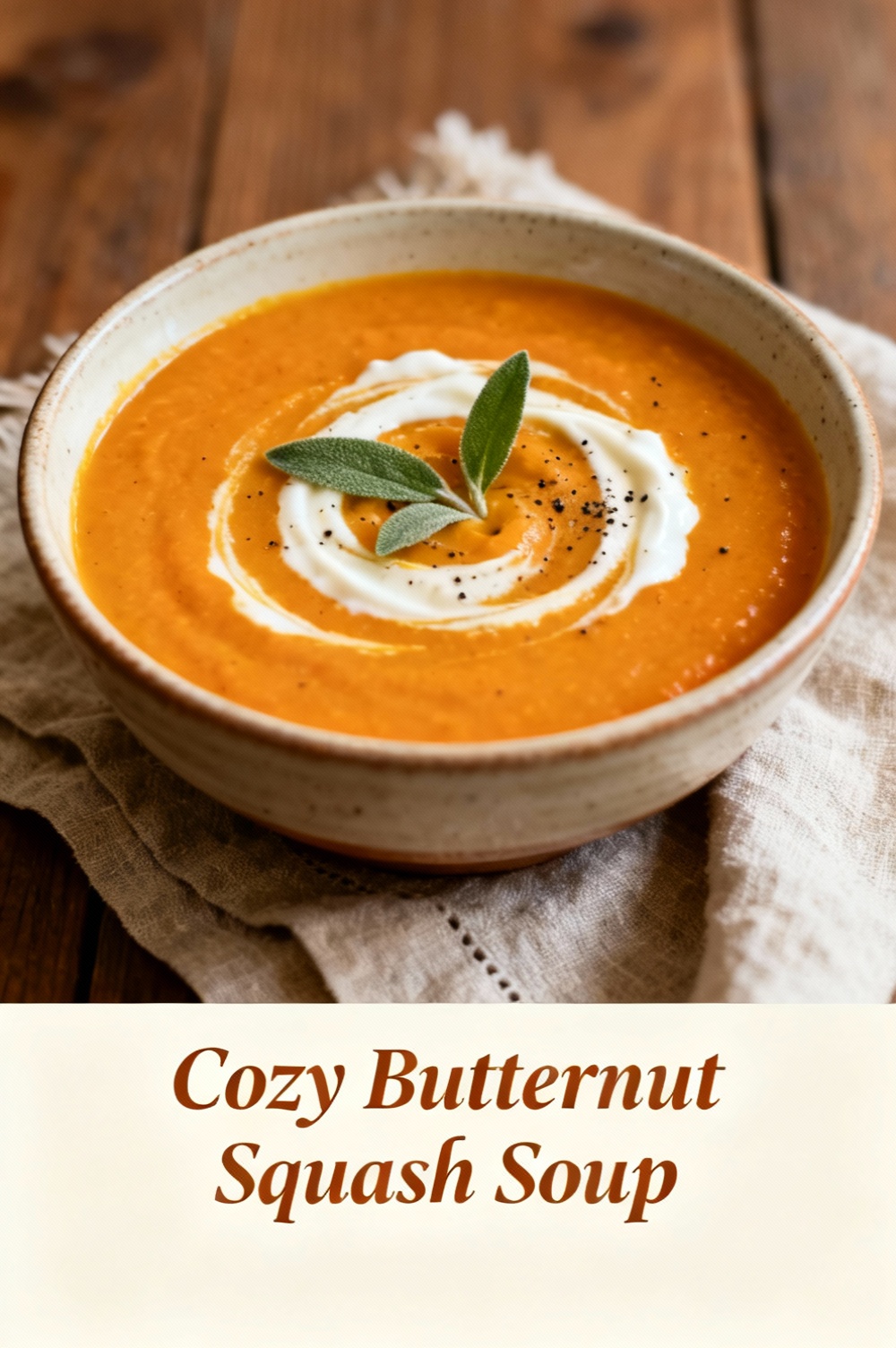
A silky, comforting soup made with roasted butternut squash, warm spices, and a touch of coconut cream — perfect for chilly evenings.
Ingredients
- 1 large butternut squash (about 2½–3 lb / 1.1–1.4 kg), peeled, seeded, and cut into 1-inch cubes
- 2 tbsp olive oil, divided
- 1 medium yellow onion, chopped
- 3 garlic cloves, minced
- 1 tsp ground cumin (optional)
- 1/2 tsp ground nutmeg
- 4 cups (1 L) low-sodium vegetable broth
- 1 cup (240 ml) full-fat canned coconut milk (plus extra for drizzling, optional)
- 1 tbsp maple syrup or honey (optional, to balance)
- Salt and freshly ground black pepper, to taste
- Fresh thyme or sage leaves for garnish
- Roasted pumpkin seeds or crusty bread, for serving (optional)
Instructions
- Preheat oven to 400°F (200°C). Toss the cubed butternut squash with 1 tbsp olive oil, 1/2 tsp salt and a pinch of pepper. Spread in a single layer on a baking sheet and roast until tender and lightly caramelized, about 25–30 minutes. Flip once halfway through.
- Meanwhile, heat the remaining 1 tbsp olive oil in a large pot over medium heat. Add the chopped onion and cook, stirring occasionally, until soft and translucent, about 6–8 minutes.
- Add the minced garlic, ground cumin (if using), and nutmeg. Cook for 30–60 seconds until fragrant.
- When the squash is done, add it to the pot with the onions. Pour in the vegetable broth and bring to a gentle simmer. Simmer 8–10 minutes to let flavors meld.
- Remove from heat. Use an immersion blender to puree the soup until smooth, or carefully transfer in batches to a blender and purée until velvety.
- Return the soup to low heat. Stir in the coconut milk and maple syrup (if using). Warm through but do not boil. Taste and adjust salt and pepper.
- Serve hot with a drizzle of coconut milk or olive oil, a sprinkle of fresh thyme or sage, and toasted pumpkin seeds or crusty bread if desired.
Nutrition Information
- Calories: 180 kcal (per serving, approximate)
- Cholesterol: 0 mg
- Sodium: 350 mg
- Carbohydrates: 22 g
- Fiber: 4 g
- Sugar: 6 g
- Protein: 3 g