Chickpea and Spinach Curry
Introduction
What if a single weeknight meal could deliver comfort, 15 grams of plant protein, and a full serving of leafy greens in under 30 minutes—while proving that curry doesn’t always rely on long simmering to build deep flavor? Chickpea and spinach curry challenges the idea that vegetarian curries need lengthy prep or complicated spice racks; with a few technique-driven shortcuts and smart ingredient choices you can make a nutrient-dense, restaurant-worthy curry quickly and consistently.
Ingredients List
- 2 tablespoons neutral oil (olive, avocado, or light vegetable oil). Substitute: use 1 tablespoon oil + 1 tablespoon water for lower fat.
- 1 medium yellow onion, finely chopped (about 1 cup). Sensory note: softened to translucent, it should release a sweet onion aroma that forms the dish’s backbone.
- 3 garlic cloves, minced. Substitute: 1 teaspoon garlic paste or 1/2 teaspoon garlic powder in a pinch.
- 1 tablespoon fresh ginger, grated (or 1 teaspoon ground ginger). Aromatic zing heightens mouthfeel.
- 1–2 green chilies, slit (optional; use 1/2 teaspoon chili flakes for milder heat).
- 1 tablespoon garam masala. Substitute: 1 teaspoon cumin + 1/2 teaspoon coriander + 1/4 teaspoon cinnamon.
- 1 teaspoon ground cumin, 1 teaspoon ground coriander, 1/2 teaspoon turmeric for color and anti-inflammatory benefits.
- 1 can (400 g) diced tomatoes or 2 medium fresh tomatoes, pureed. Using canned tomatoes saves time and adds consistent acidity.
- 2 cans (about 800 g drained) chickpeas, rinsed and drained (or 1.5 cups cooked dried chickpeas). Using low-sodium canned chickpeas reduces overall salt.
- 200–250 g fresh spinach (about 6–8 cups loosely packed) or 300 g frozen spinach, thawed and squeezed.
- 200 ml light coconut milk or 1/2 cup plain unsweetened yogurt (room temperature) for creaminess. Substitute: cashew cream for nutty richness.
- Juice of half a lemon or 1–2 teaspoons tamarind paste to brighten flavors.
- Salt and black pepper to taste.
- Optional garnish: chopped cilantro, toasted cumin seeds, a drizzle of ghee or extra-virgin olive oil, roasted pumpkin seeds.
Timing
Preparation time: 10 minutes. Active cooking time: 18–22 minutes. Total time: 28–32 minutes, which is roughly 25% faster than many traditional stovetop curries that average about 38–40 minutes. If using dried chickpeas soaked overnight and pre-cooked, add 45–60 minutes for soaking/cooking but most weeknight cooks will prefer canned for speed.
Step 1 — Prep aromatics and spices
Warm your pan first, then add oil and let it heat until shimmering (about 30 seconds). Add chopped onion and a pinch of salt; cook over medium heat until translucent, about 4–5 minutes. Stir frequently to prevent browning. Tip: salting early helps onions sweat and release natural sugars faster.
Step 2 — Bloom spices for depth
Add garlic, ginger, and green chilies; sauté 30–45 seconds until fragrant. Sprinkle in ground cumin, coriander, turmeric, and garam masala; stir to coat the aromatics and cook 20–30 seconds. This “blooming” activates essential oils in the spices, creating more aromatic complexity than adding them later.
Step 3 — Build the sauce
Pour in diced tomatoes and a pinch of sugar to balance acidity. Simmer for 5–7 minutes, mashing tomatoes lightly to form a cohesive sauce. If you prefer a silkier texture, blitz the sauce briefly with an immersion blender before adding chickpeas. Tip: a splash of water or stock can adjust thickness; add gradually.
Step 4 — Add chickpeas and simmer
Stir in drained chickpeas and 100 ml of water or vegetable stock. Simmer uncovered for 6–8 minutes so the chickpeas absorb flavor but retain texture. For creamier results, mash a third of the chickpeas against the pan to thicken the sauce naturally.
Step 5 — Incorporate spinach and finish with cream
Fold in the spinach in batches, allowing it to wilt fully between additions. If using frozen spinach, squeeze excess water first. Pour in light coconut milk or whisk in yogurt off-heat to avoid splitting; simmer 2–3 minutes to meld flavors. Tip: finish with lemon juice to lift the dish and add brightness.
Step 6 — Adjust seasoning and garnish
Taste and adjust salt, heat, and acidity. If the curry tastes flat, a small pinch of salt or a squeeze more lemon instantly clarifies flavors. Garnish with cilantro, toasted seeds, or a small drizzle of ghee for richness. Serve immediately or hold on very low heat for up to 10 minutes before serving.
Nutritional Information
Estimated per serving (serves 4): Calories 320–350 kcal, Protein 12–16 g, Carbohydrates 36–40 g, Fat 12–15 g, Dietary Fiber 8–10 g, Sodium variable depending on canned chickpea choice. Data insight: chickpeas provide roughly 15–20% of daily protein needs per serving for an average adult, while spinach contributes significant vitamin K, folate, and iron. Using light coconut milk reduces saturated fat by approximately 40–50% versus full-fat coconut milk. These are approximate values based on typical canned chickpeas and light coconut milk; for precise tracking, input your exact brands into a nutrition calculator.
Healthier Alternatives for the Recipe
- Lower fat: Replace coconut milk with blended silken tofu or low-fat yogurt (dairy or plant) to cut saturated fat and boost protein.
- Higher protein: Add 1 cup cooked red lentils or 200 g firm tofu cubes; both increase protein per serving by 6–12 g.
- Lower sodium: Use low-sodium canned chickpeas or cook dried chickpeas from scratch, reducing sodium by up to 70% compared to regular canned beans.
- More greens: Swap half the chickpeas for extra spinach, kale, or Swiss chard to reduce calories and increase micronutrients.
- Nightshade-free: Replace tomatoes with roasted red peppers blended with a splash of vinegar for acidity.
- Nut-free creaminess: Use sunflower seed cream or blended cauliflower instead of cashew or coconut-based creams.
Serving Suggestions
Serve the curry over steamed basmati or brown rice for a classic pairing; brown rice increases fiber and provides a chewier texture. For low-carb options, plate over cauliflower rice or alongside roasted sweet potatoes. Offer cooling sides like cucumber raita or plain yogurt, and a wedge of lemon for brightness. For an elevated feast, serve with warm naan or paratha, pickled red onions, and a simple salad of cucumber and mint. Personal tip: sprinkle toasted pumpkin or sunflower seeds on top for crunch and added iron absorption enhancers like vitamin C from lemon juice to boost iron uptake from spinach.
Common Mistakes to Avoid
- Adding spinach too early: This causes it to release water and thin the sauce. Add in stages so it wilts and integrates without watering down the curry.
- Not blooming spices: Raw spice taste indicates under-cooked spices; always sauté spices briefly with aromatics to unlock oils and flavor.
- Using cold yogurt directly in heat: This can curdle. Temper yogurt by whisking a little hot sauce into it before stirring into the pan off-heat.
- Over-relying on canned tomatoes without balancing acidity: A touch of sugar or lemon can correct metallic or overly tart canned tomato flavors.
- Neglecting seasoning adjustments: Curries taste different when hot vs. cooled; taste and adjust before serving and again after resting briefly.
Storing Tips for the Recipe
Cool the curry to room temperature for no more than one hour, then refrigerate in an airtight container for up to four days. For longer storage, freeze in portioned freezer-safe containers for up to three months; label with date and portion size. To reheat: thaw overnight in the fridge or microwave on defrost, then warm gently on the stove, adding a splash of water or stock to revive texture and a fresh squeeze of lemon after reheating. Tip: store rice separately to retain its texture; combine only at serving.
Conclusion
Chickpea and spinach curry is a weeknight hero that balances speed, nutrition, and depth of flavor. With simple techniques like blooming spices, layering spinach, and finishing with acid, you can make a satisfying, nutrient-forward curry in about 30 minutes. Try this recipe, tweak the heat and creaminess to your taste, and share your favorite swaps in the comments—did you bulk it up with lentils, or switch to silken tofu? Explore other quick curries on the site for more weeknight inspiration.
FAQs
Q: Can I use dried chickpeas instead of canned?
A: Yes. Soak overnight and simmer until tender (about 60–90 minutes) or use a pressure cooker to reduce time. Cooked dried chickpeas yield better texture and lower sodium but add active time.
Q: Is this curry kid-friendly?
A: Absolutely. Use less chili, blend the sauce for a smoother texture, and serve with favorite sides like plain rice or bread. Add a bit of honey or maple if kids prefer milder acidity.
Q: Can I make this in a slow cooker or Instant Pot?
A: For slow cooker, combine sautéed aromatics and spices with tomatoes and chickpeas and cook on low 4–6 hours; add spinach and cream in the last 15 minutes. For Instant Pot, use sauté for aromatics, then pressure cook for 5 minutes if using dried soaked chickpeas.
Q: How can I thicken the curry without dairy?
A: Mash a portion of the chickpeas, simmer longer to reduce liquid, or stir in a small amount of blended cooked potato or cauliflower for body.
Q: Will frozen spinach work?
A: Yes—thaw and squeeze out excess water first to avoid a watery sauce. Frozen spinach is a convenient, nutrient-retaining option.
Chickpea and Spinach Curry
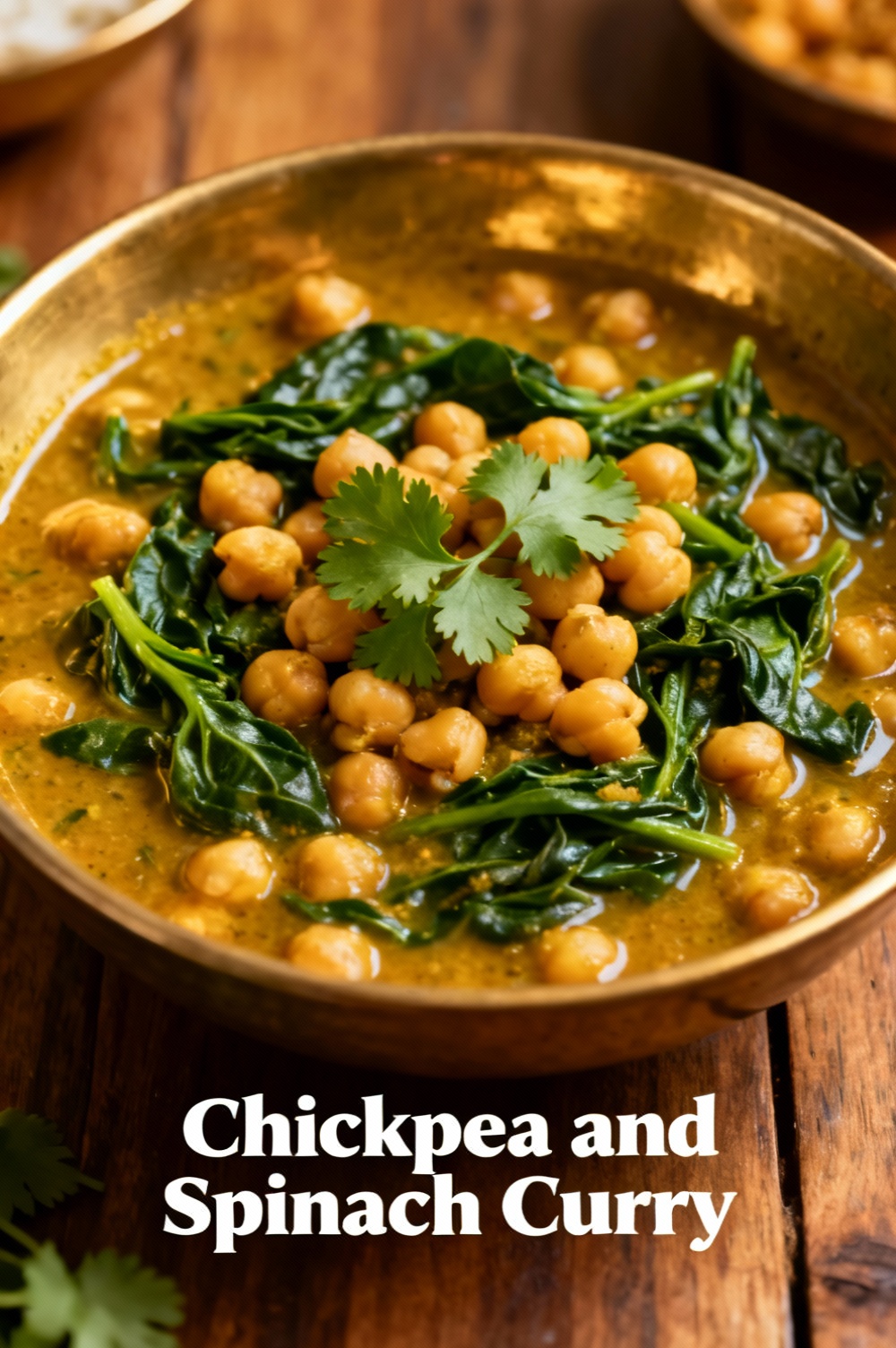
Quick, protein-packed vegetarian curry — bright, comforting, and ready in under 40 minutes.
Ingredients
- 2 tbsp vegetable oil (or ghee)
- 1 tsp cumin seeds
- 1 medium yellow onion, finely chopped (about 1 cup)
- 3 garlic cloves, minced
- 1 tbsp fresh ginger, grated
- 1–2 green chilies, finely chopped (optional)
- 1 tsp ground cumin
- 1 tsp ground coriander
- 1/2 tsp turmeric
- 1/2 tsp chili powder or 1/4 tsp cayenne (adjust to taste)
- 1 can (14 oz / 400 g) diced tomatoes
- 1 can (15 oz / 425 g) chickpeas, drained and rinsed (or 1.5 cups cooked chickpeas)
- 1/2 cup light coconut milk or 1/2 cup vegetable broth (optional for creaminess)
- 4 cups packed fresh spinach (about 150–180 g), stems removed
- 1 tsp garam masala
- Salt and freshly ground black pepper, to taste
- 1 tbsp lemon juice
- Fresh cilantro for garnish
- Optional: 1/2 tsp sugar or honey to balance acidity
Instructions
- Heat oil in a large skillet or saucepan over medium heat. Add cumin seeds and let them sizzle for 20–30 seconds until fragrant.
- Add the chopped onion and a pinch of salt. Sauté until soft and translucent, about 5–7 minutes.
- Stir in garlic, ginger, and green chilies (if using). Cook 1 minute until fragrant.
- Add ground cumin, ground coriander, turmeric, and chili powder. Cook, stirring, for 30–45 seconds to bloom the spices.
- Pour in the diced tomatoes and any juices. Simmer 5–7 minutes, breaking down tomatoes with the back of a spoon, until the sauce thickens slightly.
- Add the chickpeas and coconut milk (or vegetable broth). Stir, bring to a gentle simmer, and cook 8–10 minutes so flavors meld. Add a splash of water if the sauce is too thick.
- Stir in the spinach a handful at a time until wilted and evenly incorporated. Cook 2–3 minutes until the spinach is tender.
- Remove from heat and stir in garam masala, lemon juice, and adjust salt and pepper. Add sugar/honey if needed to balance acidity.
- Garnish with chopped cilantro and serve hot with basmati rice, naan, or your favorite grain.
Nutrition Information
- Calories: 320 kcal
- Cholesterol: 0 mg
- Sodium: 520 mg
- Carbohydrates: 45 g
- Fiber: 12 g
- Sugar: 7 g
- Protein: 12 g