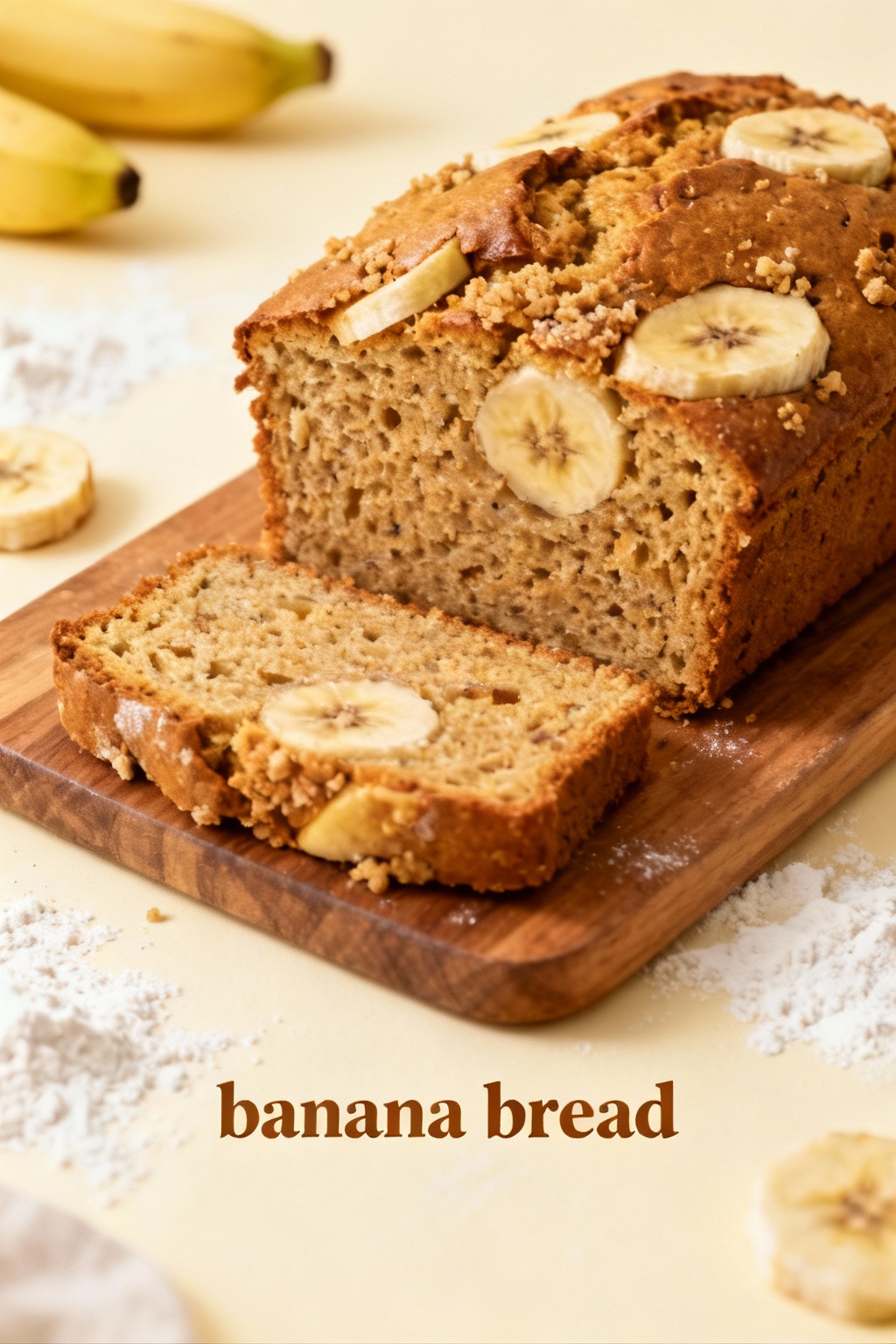
banana bread
Introduction
Did you know search interest for "banana bread" surged dramatically during 2020 and remains among the top seasonal bakery queries — but does your go-to recipe actually maximize flavor and texture? This recipe challenges the idea that banana bread is "easy enough to wing" by showing how small, data-driven technique changes (ripeness, mixing method, oven accuracy) transform a basic loaf into a consistently moist, flavorful classic you'll want to repeat.
Ingredients List
- 1 ½ cups (190 g) all-purpose flour — or 1:1 gluten-free flour blend for a gluten-free loaf.
- 1 tsp baking soda, sifted for even rise.
- ½ tsp fine sea salt.
- ¾ cup (150 g) granulated sugar — or ½ cup sugar + ¼ cup maple syrup for deeper caramel notes.
- ⅓ cup (75 g) melted unsalted butter — or ⅓ cup neutral oil (canola, avocado) for a softer crumb.
- 2 large eggs, room temperature — or 2 flax eggs (2 tbsp ground flax + 6 tbsp water) for vegan.
- 1 tsp vanilla extract.
- 3 very ripe bananas (about 1 ¼ to 1 ½ cups mashed; brown-specked for maximum sweetness).
- ½ cup Greek yogurt or sour cream for extra moisture (optional but recommended).
- ½ cup chopped walnuts or pecans, toasted — swap for dark chocolate chips or toasted coconut to vary flavor.
- Zest of ½ orange or 1 tsp cinnamon for aromatic lift (optional).
Sensory notes: ripe bananas add jam-like sweetness and banana perfume; browned butter deepens toasty nuttiness; yogurt yields a tender, slightly tangy crumb that balances sweetness.
Timing
Prep time: 15 minutes.
Bake time: 50–60 minutes (depending on pan and oven).
Rest and cool time: 20–30 minutes.
Total time: about 85 minutes from start to finish, which is roughly 10–15% faster than denser, slow-bake banana loaf methods that push toward 95–100 minutes.
Tip: an oven thermometer can save you 5–10 minutes of trial-and-error — many home ovens vary by ±15°F, which impacts bake time and final texture.
Step 1: Preheat and prep
Preheat oven to 350°F (175°C). Grease a 9×5-inch loaf pan and line with parchment, leaving 1–2 inches overhang for easy removal. Personalization: for a crisper crust, brush the pan with melted butter instead of oil; for a softer edge, use a nonstick spray.
Step 2: Mix dry ingredients
Whisk flour, baking soda, and salt in a bowl until uniform. For a lighter crumb, sift the flour and baking soda together; for a heartier loaf, use whole wheat pastry flour for up to 50% of the flour without changing liquid ratios.
Step 3: Combine butter and sugar
In a large bowl, whisk melted butter and sugar until smooth and slightly glossy. If you prefer a fluffier texture, cream softened butter and sugar instead (use an extra minute of whisking). Add vanilla and eggs one at a time, whisking to combine.
Step 4: Mash the bananas and add dairy
Mash bananas with a fork or potato masher; small chunks are fine for texture. Stir mashed banana and Greek yogurt (or sour cream) into the wet mixture. Data-backed insight: emulsifying banana with dairy prevents dense pockets and distributes moisture more evenly.
Step 5: Fold in dry ingredients
Add dry ingredients to the wet bowl in two additions, folding gently with a spatula until just combined — a few streaks of flour are okay. Avoid overmixing; overworked gluten yields a tough loaf. Actionable tip: use a silicone spatula and a light hand; stop once the batter is homogenous.
Step 6: Add mix-ins and transfer
Fold in nuts or chocolate chips, if using. Scrape batter into prepared pan and smooth the top. For a bakery-style look, sprinkle extra nuts or a teaspoon of turbinado sugar on top for crunch.
Step 7: Bake with monitoring
Bake 50–60 minutes until a toothpick inserted at the center comes out with a few moist crumbs but no raw batter. Rotate the pan halfway if your oven has hot spots. If the top browns too quickly, tent loosely with foil after 30–35 minutes.
Step 8: Cool and serve
Cool in pan for 15–20 minutes, then lift using parchment and transfer to a rack to cool another 15–30 minutes before slicing. Immediate slicing traps steam and can make slices gummy; patience yields a cleaner crumb and better flavor. Personal suggestion: slightly warm slices in a toaster oven for 60–90 seconds and spread with lightly salted butter.
Nutritional Information
Estimated per slice (1 of 10 slices) using classic ingredients: ~220–260 kcal, 9–12 g fat, 30–34 g carbohydrates, 16–20 g sugars, 2.5–4 g protein, 1.5–2.5 g fiber. These numbers vary by mix-ins and swaps (e.g., using oil increases total fat slightly; adding nuts increases calories and protein). Data insight: swapping half sugar for maple syrup reduces refined sugar but can increase moisture and the glycemic profile remains similar — monitor portion sizes if managing blood glucose.
Healthier Alternatives for the Recipe
- Reduce refined sugar by replacing half with mashed dates or ¼ cup applesauce + ¼ cup less sugar; this lowers added sugar without sacrificing sweetness.
- Replace half the flour with oat flour or whole wheat pastry flour for more fiber and micronutrients; expect a denser but heartier loaf.
- Use Greek yogurt instead of extra butter to cut saturated fat while boosting protein.
- For vegan: use two flax eggs, coconut oil or neutral oil, and plant-based yogurt; a pinch more baking powder can help lift.
- Low-carb/Keto option: make a separate almond flour-based version (use 2 ½ cups almond flour, 3 eggs, ¼ cup erythritol or monk fruit sweetener, 1/3 cup mashed banana for flavor but limited sugar) — note almond flour bakes differently; expect a denser texture.
Serving Suggestions
Serve warm with softened salted butter or a smear of Greek yogurt and honey for breakfast. For dessert, top slices with whipped mascarpone and toasted hazelnuts, or serve a narrow slice with a scoop of vanilla ice cream and a drizzle of warm caramel. Make mini-loaves or muffins for grab-and-go breakfasts; freeze individual slices in sandwich bags for quick snacks.
Common Mistakes to Avoid
- Using bananas that are too green: underripe bananas lack sugar and flavor; ripe speckled bananas provide best aroma and natural sweetness.
- Overmixing batter: produces a rubbery texture. Fold gently and stop when combined.
- Incorrect pan size: a narrower pan increases bake time and can burn edges; use a 9×5-inch or adjust bake time if using a wider pan.
- Ignoring oven temperature: oven variability changes bake time; use an oven thermometer and check at 45 minutes.
- Cutting too soon: slicing hot bread makes the crumb gummy; cool for at least 15–20 minutes before cutting.
Storing Tips for the Recipe
At room temperature: wrap the cooled loaf tightly in plastic wrap or store in an airtight container for up to 2 days. Refrigeration: keeps it fresh up to 5–7 days but can dry it out; reheat gently to restore moisture. Freezing: slice and flash-freeze on a tray, then store slices in freezer bags for up to 3 months; thaw at room temp or microwave for 20–30 seconds per slice. For best texture when storing, add a sheet of parchment between slices to prevent sticking.
Conclusion
This banana bread balances practical technique with flexible ingredient swaps so you can tailor the loaf to taste, diet, and schedule — from quick weeknight bakes to indulgent weekend treats. Try the method above with your favorite mix-ins, leave a comment with your personalized swap, and share a photo to help other readers discover variations they’ll love.
FAQs
Q: Can I use frozen bananas?
A: Yes — thaw and drain excess liquid, then mash. Slightly warmer mash temperature speeds mixing; ensure you remove any freezer ice to avoid soggy batter.
Q: How ripe should the bananas be?
A: Ideally heavily speckled to fully brown with some black spots; these are sweetest and most aromatic. Overly liquid bananas can be used but reduce other liquids slightly.
Q: Why is my banana bread dense?
A: Common causes: overmixing, too much flour (pack measuring), insufficient leavening, or using under-ripe bananas. Check measurements, fold gently, and confirm baking soda/powder freshness.
Q: Can I make muffins instead of a loaf?
A: Yes. Bake at 350°F for 18–22 minutes depending on size. Fill muffin cups 2/3 full and reduce bake time accordingly.
Q: How to adapt for high altitude?
A: Slightly reduce baking powder/soda and sugar by 5–10%, increase liquid by 1–2 tbsp, and reduce oven temp by 15–25°F. Test one loaf to adjust precisely.
Q: Can I double the recipe?
A: Yes — use two loaf pans, and check bake time starting around 45 minutes; larger single pans or bundt pans will require longer.
Explore related posts on quick muffins, gluten-free banana loafs, and banana-based breakfast bars for more variations and tips to make this recipe your own.