Cinnamon Honey Latte
Introduction
Could swapping refined sugar for honey and adding a sprinkle of cinnamon transform your daily latte into a lower-glycemic, antioxidant-rich ritual that tastes like a café favorite? Data-driven food science suggests yes: natural sweeteners and spices like honey and cinnamon can reduce reliance on refined sugar while contributing flavor complexity and potential health benefits, and making a Cinnamon Honey Latte at home typically costs a fraction of what you’d pay at a coffee shop—saving time and money without sacrificing taste.
Ingredients List
- 2 shots (60 ml) espresso or ¾ cup (180 ml) strong brewed coffee — for a richer body use espresso; for a gentler brew use dark drip coffee.
- 1 cup (240 ml) whole milk (or 1 cup oat, almond, or soy milk for dairy-free) — whole milk gives creaminess; oat milk delivers natural sweetness and foamability.
- 1 tablespoon honey (adjust ½–1½ tbsp to taste) — use local raw honey for floral notes; clover or wildflower varieties work well.
- ¼–½ teaspoon ground cinnamon, plus a pinch for garnish — use Ceylon cinnamon for a milder, sweeter profile; Cassia is bolder.
- Optional: ¼ teaspoon vanilla extract or a dash of cardamom for aromatic depth.
- Optional garnish: grated nutmeg, cinnamon stick, or a light drizzle of honey.
Substitutions and sensory notes: Swap honey for maple syrup if you want woodsy notes (use slightly more), or for a low-calorie option use a monk fruit or erythritol blend (flavor will be less complex). For a creamier latte, use 2% milk or barista-formulated plant milk; for a lighter beverage, choose skim or unsweetened almond milk.
Timing
Preparation time: 3 minutes for espresso/brew and mixing.
Frothing and assembly: 4–6 minutes depending on technique.
Total time: roughly 7–10 minutes — making this at home is often 10–20 minutes faster than café lines and travel, and cost per serving can be 60–80% lower than a store-bought latte depending on local prices.
Step 1 — Pull or Brew Your Coffee
Brew two shots of espresso (about 60 ml) or prepare ¾ cup strong coffee. Tip: if using drip coffee, brew at a slightly higher coffee-to-water ratio (about 1:15) to mimic espresso’s intensity. Use freshly ground beans roasted within a month for peak aroma. If you like a sweeter baseline, choose a medium roast.
Step 2 — Heat and Sweeten the Milk
Warm 1 cup milk in a small saucepan over medium-low heat until it reaches 140–150°F (60–65°C); avoid boiling. Stir in 1 tablespoon honey and ¼–½ teaspoon cinnamon while warming so flavors dissolve and infuse. Tip: dissolve honey in a tablespoon of hot milk first if the honey is thick; vanilla can be added here for extra depth.
Step 3 — Froth the Milk
Froth warmed milk using a steam wand, handheld frother, or mason jar method (shake vigorously for 30–45 seconds then microwave for 15–20 seconds to stabilize foam). For professional microfoam, angle the wand and create a whirlpool effect; aim for velvety texture without big bubbles. Tip: oat and whole milk create the best stable microfoam.
Step 4 — Combine Coffee and Milk
Pour espresso into your cup and slowly add the honey-cinnamon milk, holding back foam with a spoon, then spoon foam on top. For latte art, pour steadily from a few inches above the cup, then lower and finish with a gentle wiggle. Tip: pour with confidence—the thicker the milk, the smoother the surface for art.
Step 5 — Garnish and Adjust
Dust with a pinch of ground cinnamon or grate fresh nutmeg on top. If you want extra sweetness, drizzle a small honey ribbon. Taste, then adjust: add another ½ tsp honey if needed or a splash of cream for richness. Tip: for an iced version, dissolve honey in a small amount of hot water first to prevent clumping, then combine over ice.
Nutritional Information
Approximate nutrition per 12 oz serving (made with 1 cup whole milk and 1 tablespoon honey): Calories ~220–230 kcal; fat ~8–9 g; saturated fat ~4.5 g; carbohydrates ~28–32 g (sugars ~24–26 g); protein ~8 g; sodium ~100–130 mg. Coffee/espresso adds negligible calories but contributes antioxidants and trace minerals. Using 1 cup unsweetened oat milk lowers calories to ~170–180 kcal and increases fiber slightly; almond milk reduces calories to ~110–140 kcal but lowers protein. Nutrient values vary by brand and portion sizes—these are estimates to guide choices.
Healthier Alternatives for the Recipe
- Lower sugar: use ½ tablespoon honey or a honey-substitute blend (monk fruit + erythritol) to cut added sugar by up to 50% while preserving sweetness.
- Lower fat: swap whole milk for unsweetened almond or skim milk to reduce calories and fat.
- Increased protein: use high-protein milk (cow’s milk or pea-protein fortified plant milk) to boost satiety—protein rises from ~8 g to 10–14 g depending on product.
- Anti-inflammatory focus: increase cinnamon to ½ teaspoon for potential blood-sugar-supporting benefits (Ceylon cinnamon preferred in higher amounts).
- Vegan option: use barista oat milk + maple syrup or agave instead of honey.
Personalized tip: if you’re watching glycemic load, pair the latte with a small protein or fiber-rich snack (e.g., a handful of nuts or a Greek yogurt) to blunt glycemic response.
Serving Suggestions
Serve in a pre-warmed 10–12 oz mug to keep your latte hotter longer. Pair with biscotti, a slice of toasted banana bread, or a simple almond butter toast for balanced textures. For a seasonal twist, top with whipped coconut cream and a cinnamon stick for a festive presentation. Offer variations like an iced Cinnamon Honey Latte, blended frappé, or a cold-brew base for summer—each adjusts sweetness and texture uniquely.
Common Mistakes to Avoid
- Overheating milk: boiling destroys sweetness and texture; stop heating at 140–150°F (60–65°C).
- Adding honey to cold milk: honey can clump—dissolve it in warm milk first.
- Using low-quality cinnamon: Cassia can be bitter if overused; Ceylon is sweeter and better for larger quantities.
- Incorrect frothing: big bubbles indicate under- or over-aeration—aim for glossy microfoam.
- Too little coffee strength: a weak brew will taste watered down once milk is added; increase brew strength if necessary.
- Over-sweetening before tasting: add honey in stages and taste between additions.
Storing Tips for the Recipe
- Prepared milk mixture: store any leftover warmed milk-honey mixture in the refrigerator for up to 48 hours in a sealed container and reheat gently; do not re-froth aggressively after long refrigeration.
- Pre-make cinnamon-honey syrup: combine equal parts honey and hot water, whisk in cinnamon, cool, and store in a jar in the fridge for up to two weeks—use 1–2 tbsp per latte as needed.
- Coffee: brewed espresso or coffee is best used immediately; if storing, keep concentrated coffee in the fridge up to 24 hours and reheat gently or use cold-brew.
- Dry storage: keep cinnamon in an airtight container away from light to preserve aroma.
Conclusion
A Cinnamon Honey Latte is an easy, adaptable beverage that balances sweetness, spice, and creamy texture while letting you control ingredients, calories, and cost. With simple techniques—proper heating, dissolving honey, and careful frothing—you can consistently recreate café-quality results at home. Try the recipe today, adjust the honey and cinnamon to your taste, and share photos or comments about your favorite milk alternatives or garnishes; explore our related latte recipes to expand your home café repertoire.
FAQs
Q: Can I use raw honey in hot drinks?
A: Yes—raw honey dissolves in warm (not boiling) liquids. Avoid boiling to preserve delicate enzymes and flavor; stir into milk warmed to about 140–150°F (60–65°C).
Q: Is cinnamon safe every day?
A: Small culinary amounts (½–1 tsp daily) are generally safe for most people. If using large amounts of Cassia cinnamon regularly, consult a healthcare provider due to coumarin content—Ceylon cinnamon has much lower coumarin.
Q: How do I make this drink vegan?
A: Use barista-formulated oat or soy milk and swap honey for maple syrup or agave to maintain sweetness and texture while staying plant-based.
Q: Can I prepare this iced?
A: Yes—dissolve honey in a small amount of hot water, combine with cold-brewed coffee or chilled espresso, add milk over ice, and finish with a cinnamon dusting.
Q: What’s the best milk for frothing and latte art?
A: Whole milk and barista oat milk create the most stable, velvety microfoam for latte art. Almond and low-fat milks can be more challenging but work with practice.
Q: How can I reduce calories without losing creaminess?
A: Use unsweetened almond or oat milk and reduce honey amount; adding a tablespoon of cream or a splash of half-and-half can enhance perceived creaminess with a smaller calorie increase than full substitution—alternatively, choose a protein-rich milk to improve satiety.
Explore related posts like flavored latte guides, homemade syrups, and plant-based coffee options to customize your home café setup and flavor experiments.
Cinnamon Honey Latte
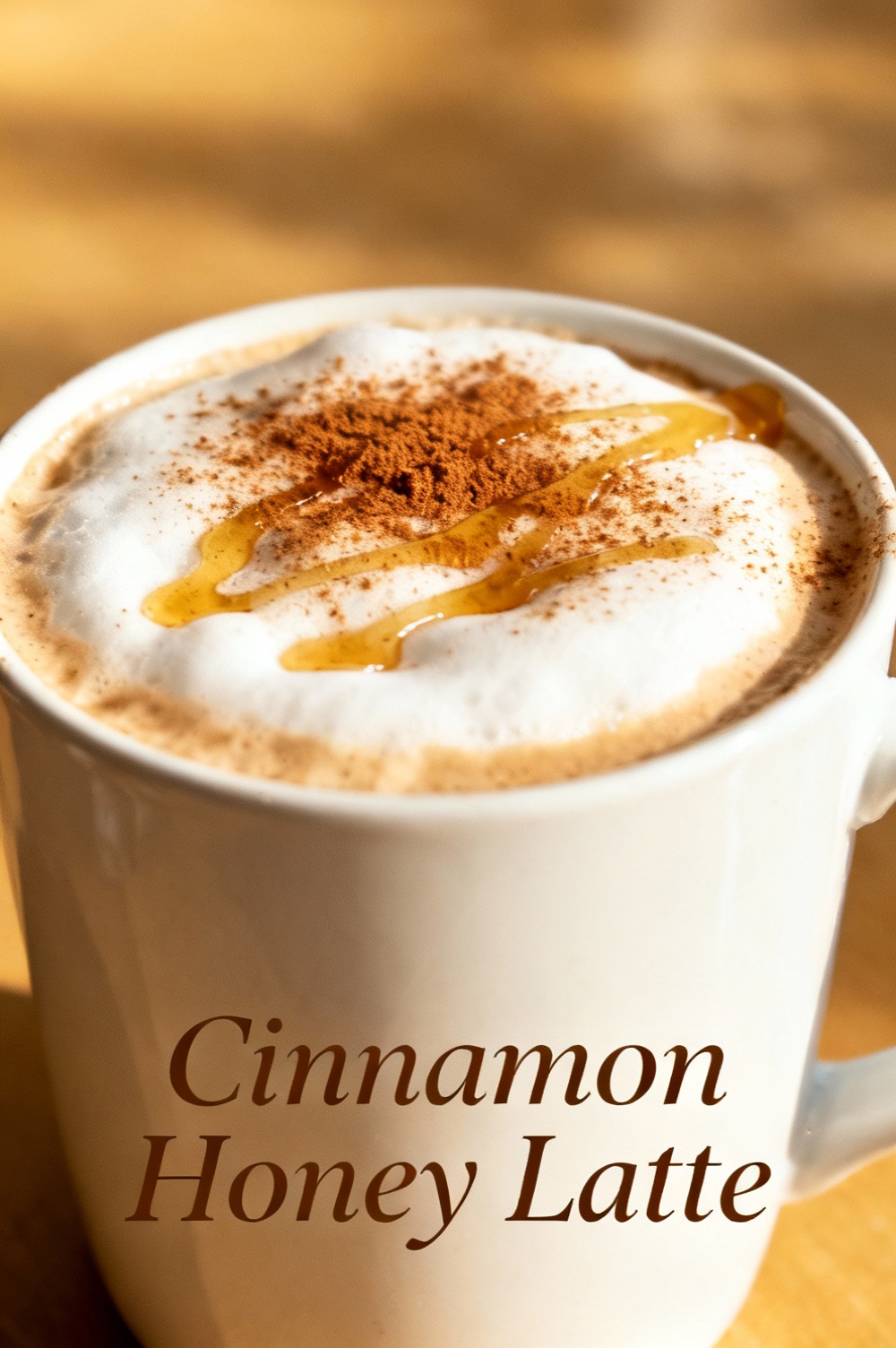
A warm, lightly spiced latte sweetened with honey — perfect for chilly mornings.
Ingredients
- 1 shot (30–60 ml) espresso or 1/2 cup (120 ml) strong brewed coffee
- 1 cup (240 ml) milk (whole, oat, almond, or milk of choice)
- 1 tablespoon honey (adjust to taste)
- 1/4 teaspoon ground cinnamon, plus extra for garnish
- 1/4 teaspoon vanilla extract (optional)
- Pinch of fine salt (optional, enhances flavor)
- Cinnamon stick (optional, for garnish)
Instructions
- Brew the espresso or strong coffee and pour it into your mug.
- In a small saucepan, combine the milk, ground cinnamon, and vanilla (if using). Heat over medium until steaming — do not boil.
- Froth the milk using a milk frother, handheld frother, or whisk vigorously until foamy.
- Stir the honey into the hot espresso until dissolved. Add a pinch of salt if desired to brighten flavors.
- Pour the steamed milk over the honey-espresso, holding back the foam with a spoon; then spoon the foam on top.
- Sprinkle a little ground cinnamon on top and add a cinnamon stick for garnish. Serve immediately.
Nutrition Information
- Calories: 210 kcal
- Cholesterol: 24 mg
- Sodium: 110 mg
- Carbohydrates: 29 g
- Fiber: 0 g
- Sugar: 29 g
- Protein: 8 g