Autumn Caesar Salad
Introduction
Can a classic Caesar salad survive an autumn makeover—keeping its savory, umami backbone while celebrating roasted squash, warm spices, and seasonal textures? Data shows search interest for "fall salads" spikes each September through November, and home cooks increasingly combine warm components with cool greens to satisfy both comfort and freshness; this Autumn Caesar Salad answers that trend by preserving the familiar tang of Caesar while introducing roasted autumn produce and crunchy, seasonal toppings for a balanced, craveable plate.
Ingredients List
- 1 medium small sugar pumpkin or butternut squash (about 1.5–2 lb), peeled, seeded, and cut into 1-inch cubes — substitute: sweet potato or kabocha for a nuttier profile.
- 8 oz sturdy romaine hearts (or chopped kale for a heartier autumn bite) — substitute: escarole or mixed greens for milder bitterness.
- 1 cup cauliflower or sourdough croutons, roughly chopped — substitute: gluten-free croutons, roasted chickpeas, or toasted pumpkin seeds for crunch.
- 1/3 cup freshly grated Parmesan (or Pecorino Romano) — substitute: nutritional yeast for a dairy-free option.
- 2 tbsp olive oil for dressing + 2 tbsp oil for roasting — substitute: avocado oil for higher smoke point.
- 1 large egg yolk (or 2 tbsp mayonnaise for shortcut) — substitute: pasteurized egg or vegan mayo for safety/vegan.
- 1 tsp Dijon mustard.
- 1–2 anchovy fillets, minced (optional) — substitute: 1 tsp caper brine + 1 tsp miso for vegan/anchovy-free umami.
- 1 garlic clove, smashed.
- 2 tbsp lemon juice, plus extra to taste.
- 1/4 cup plain Greek yogurt (optional, for creamier dressing) — substitute: silken tofu or cashew cream for vegan.
- 1 tsp maple syrup or honey (balances roasted squash sweetness) — substitute: agave for vegan.
- 1/4 tsp smoked paprika or a pinch of ground cinnamon (autumn accent).
- Salt and freshly ground pepper to taste.
Sensory notes: look for deep orange cubes with caramelized edges, a bright punch of lemon in the dressing, and the savory, salty finish from Parmesan or its substitutes.
Timing
Preparation: 15 minutes. Roasting: 25 minutes. Assembly: 5–10 minutes. Total: ~45–50 minutes, which is often 15–20 minutes faster than multi-component fall salads that roast several vegetables separately. If you prep squash ahead or use store-bought roasted squash, total active time can drop to 15–20 minutes.
Step 1 — Roast the squash for maximum flavor
Preheat oven to 425°F (220°C). Toss squash cubes with 1 tbsp olive oil, 1/4 tsp salt, smoked paprika or cinnamon, and a pinch of black pepper. Spread in a single layer on a rimmed baking sheet and roast 22–25 minutes, flipping once, until edges are caramelized and centers are tender. Tip: higher heat encourages caramelization without drying; avoid overcrowding the pan to ensure crisp edges.
Step 2 — Make the classic-style dressing (with an autumn twist)
In a bowl, whisk the egg yolk (or mayo), Dijon, lemon juice, minced anchovy or miso/caper brine, smashed garlic, and 2 tbsp olive oil until emulsified. Stir in Greek yogurt if using, add maple syrup to balance, and season to taste. Tip: for a silkier emulsification, add oil in a slow stream while whisking or use an immersion blender for consistent texture.
Step 3 — Toast the croutons or seeds
If using homemade croutons, toss 1 cup cubed sourdough with 1 tbsp olive oil, a pinch of salt, and roast on the same baking sheet for 8–10 minutes after squash is done (or pan-toast in a skillet). For pumpkin seeds, toast on medium until they pop and scent releases. Tip: to keep croutons super crispy, finish under the broiler 1–2 minutes but watch closely to avoid burning.
Step 4 — Prep the greens
If using romaine, rinse and spin dry thoroughly; chop into 1–1.5 inch pieces. If using kale, massage leaves with 1 tsp olive oil and a pinch of salt for 30–60 seconds to soften. Tip: dry greens = crisp salad; any excess water will dilute dressing and wilt components.
Step 5 — Assemble with layering logic
Place greens in a large bowl, add warm roasted squash (warming releases aroma and contrasts chilled greens), drizzle roughly half the dressing and toss gently to coat. Add croutons/seeds and toss again; finish with remaining dressing only if needed. Grate Parmesan over the top and lightly toss to integrate. Tip: adding warm elements first helps the dressing cling and meld flavors without wilting everything.
Step 6 — Finish and personalize
Garnish with additional lemon zest for brightness, a sprinkle of toasted pepitas for crunch, or thin apple or pear slices for a crisp, sweet contrast. For an extra savory note, add a few minced anchovy fillets or a sprinkle of chili flakes. Tip: reserve a few croutons and Parmesan shavings for topping at the last moment to maintain texture and visual appeal.
Nutritional Information
Estimated per serving (based on 4 servings): Calories ~420 kcal; Fat 28 g; Saturated Fat 7 g; Carbohydrates 28 g; Fiber 6 g; Sugars 8 g; Protein 14 g; Sodium 520 mg. Data insight: swapping sourdough croutons for toasted pepitas reduces refined carb content and increases plant-based protein and magnesium; using yogurt in the dressing lowers total fat by roughly 15–20% compared with a full-oil emulsion. For lower sodium, omit anchovies and reduce added salt—expect sodium reductions up to 40%.
Healthier Alternatives for the Recipe
- Vegan: replace egg and dairy with silken tofu or cashew cream, use nutritional yeast instead of Parmesan, and replace anchovy with miso + caper brine for umami.
- Lower-calorie: halve the oil in the dressing by using Greek yogurt as base and replace croutons with roasted chickpeas or toasted seeds.
- Low-carb: replace croutons with crunchy roasted nuts or seeds and use kale instead of croutons for bulk.
- Heart-healthy: use extra-virgin olive oil sparingly and increase lemon and mustard for flavor, add more leafy greens and roasted root vegetables for fiber and micronutrients.
Personalization tip: if you want more protein, add grilled chicken, baked salmon flakes, or warm lentils.
Serving Suggestions
Serve this Autumn Caesar alongside roasted apple and walnut bruschetta for a seasonal appetizer spread, or pair it with a simple grilled rosemary chicken for a complete meal. Wine pairing: a crisp unoaked Chardonnay or a light Pinot Noir complements roasted squash and the salad's savory notes. For entertaining, present the salad on a warmed platter and let guests add croutons and cheese themselves to preserve crunch and allow customization.
Common Mistakes to Avoid
- Adding dressing too early: leads to soggy greens. Tip: toss sparingly and serve immediately.
- Overcrowding the roasting pan: prevents caramelization. Tip: roast in a single layer or use two pans.
- Undercooking squash: results in chalky texture. Tip: roast until a fork slides in easily and edges show golden browning.
- Using wet greens: dilutes dressing and reduces adhesion. Tip: always dry greens thoroughly in a salad spinner.
- Relying on store-bought dressing labeled "Caesar" that’s high in sugar/sodium: make a simple dressing to control flavor and nutrients.
Storing Tips for the Recipe
Store leftover dressing in an airtight jar in the refrigerator for up to 4–5 days; if made with fresh egg, consume within 48 hours or use pasteurized eggs. Keep roasted squash in a sealed container for 3–4 days; reheat briefly in a skillet or oven to restore texture. Store croutons separately at room temperature in an airtight container for up to 5 days to maintain crunch. For meal prep: roast squash and prepare dressing ahead; assemble salad just before serving for best texture.
Conclusion
This Autumn Caesar Salad balances the beloved umami, tang, and crunch of a classic Caesar with roasted seasonal produce and warm spices—creating a versatile dish that works as a starter, side, or main. Try the recipe, tweak the dressing to match your salt and acidity preferences, and share your favorite swap in the comments. If you loved this approach, explore our roasted squash mains and vegan dressings for more seasonal inspiration.
FAQs
Q: Can I make the dressing ahead of time?
A: Yes—store in the fridge for 3–5 days (2 days if using raw egg). Whisk before serving; re-emulsify with a splash of water or lemon if it separates.
Q: Is this salad safe to serve to guests if I use raw egg?
A: Use pasteurized eggs to reduce risk or substitute with mayonnaise/pasteurized egg products for safety.
Q: Can I use romaine and kale together?
A: Absolutely—mixing romaine and massaged kale gives a nice balance of crispness and chewiness, and it’s a great way to stretch greens.
Q: How do I keep croutons crispy when serving a big group?
A: Store croutons separately and add them at the last minute. For large gatherings, set up a topping station so guests customize texture.
Q: Can I freeze roasted squash for future salads?
A: Yes—freeze roasted squash in a single layer on a tray, then transfer to freezer bags for up to 2 months. Thaw and reheat in a hot skillet to refresh texture before adding to the salad.
If you want, I can provide a printable recipe card, a shopping list for 2/4/6 servings, or a vegan step-by-step variant—which would you like?
Autumn Caesar Salad
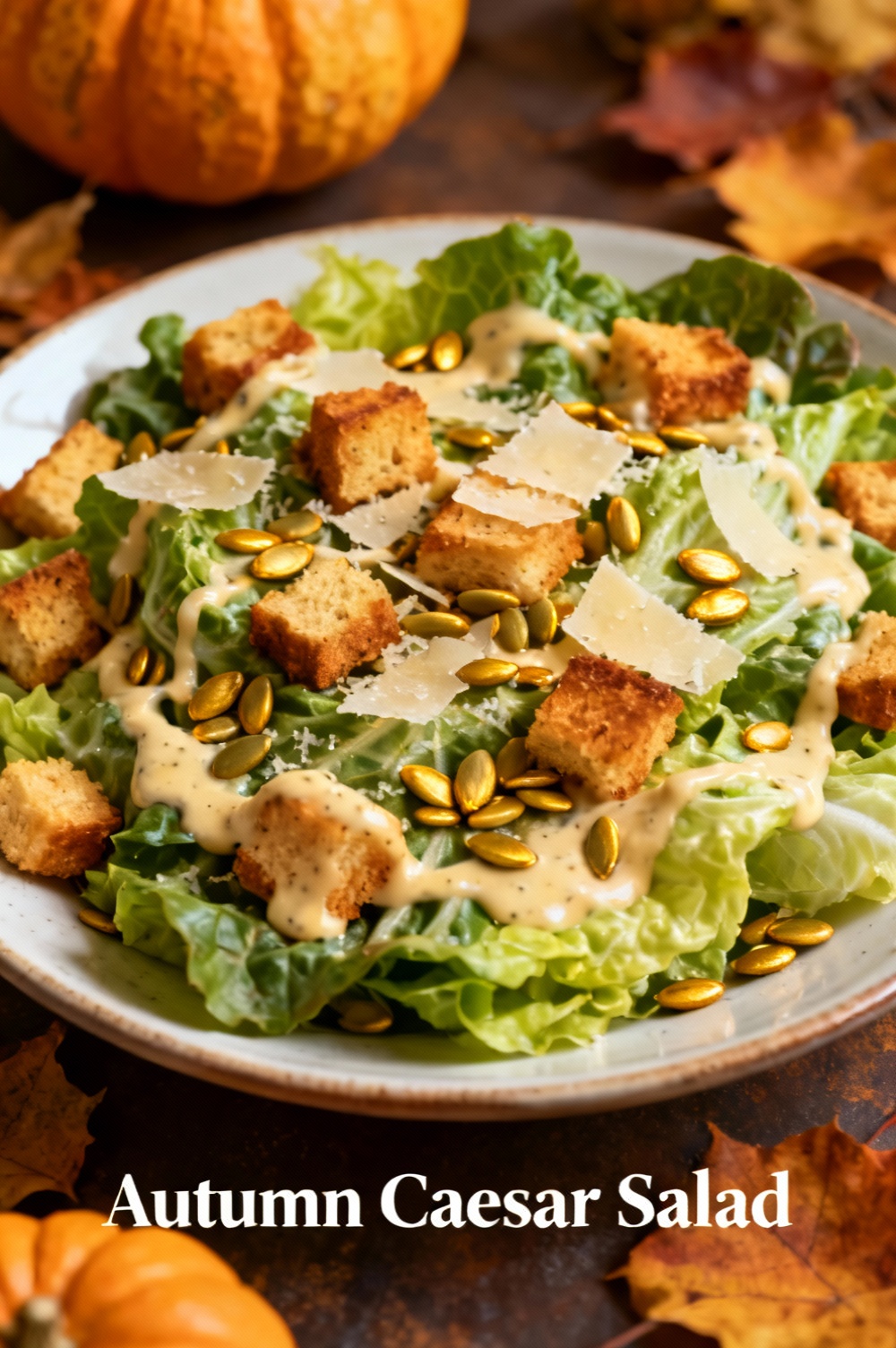
A seasonal twist on the classic Caesar: roasted butternut squash and crisp apples add sweetness and texture to creamy, anchovy-flecked dressing. Perfect for fall gatherings.
Ingredients
- 1 small butternut squash (about 1 lb / 450 g), peeled, seeded and cut into 1/2-inch cubes
- 2 tbsp olive oil, divided
- Salt and freshly ground black pepper
- 1 large head romaine lettuce, chopped (or 6 cups mixed romaine + baby kale)
- 1 medium Honeycrisp or Fuji apple, cored and thinly sliced
- 1/4 cup grated Parmesan cheese, plus extra shavings for serving
- 1 cup homemade or store-bought croutons
- 2 tbsp pumpkin seeds or toasted walnuts (optional)
- 2 oz (about 4 slices) prosciutto, baked crisp (optional)
- For the Caesar dressing:
- 1 large egg yolk (or 3 tbsp mayonnaise for a no-raw-egg version)
- 1-2 anchovy fillets (or 1 tsp anchovy paste)
- 1 small garlic clove, minced
- 1 tsp Dijon mustard
- 2 tbsp freshly squeezed lemon juice
- 2 tsp Worcestershire sauce
- 1/2 cup (120 ml) olive oil or neutral oil (can do 1/4 cup olive + 1/4 cup neutral oil)
- 2-3 tbsp grated Parmesan
- Freshly ground black pepper, to taste
Instructions
- Preheat the oven to 425°F (220°C). Toss the cubed butternut squash with 1 tbsp olive oil, 1/4 tsp salt and a few grinds of black pepper. Spread in a single layer on a baking sheet and roast 18–22 minutes, turning once, until golden and tender. Let cool slightly.
- If using prosciutto, lay slices on a parchment-lined baking sheet and bake at the same time for 8–10 minutes until crisp; drain on paper towels and break into pieces.
- Make the dressing: In a bowl or small blender, combine the egg yolk (or mayo), anchovy, minced garlic, Dijon, lemon juice, Worcestershire and 2 tbsp grated Parmesan. Whisk or blend while slowly streaming in the oil until emulsified and creamy. Season with pepper and more salt only if needed (anchovies and Parmesan are salty).
- Taste and adjust acidity with a little extra lemon if needed. If the dressing is very thick, thin with 1–2 tsp water or additional lemon juice.
- In a large bowl, combine chopped romaine (and kale if using), roasted squash, apple slices, croutons, pumpkin seeds or nuts, and most of the grated Parmesan. Drizzle with dressing and toss gently to coat. Add more dressing as desired.
- Plate the salad, top with prosciutto pieces (if using), extra Parmesan shavings and a grind of black pepper. Serve immediately.
Nutrition Information
- Calories: 470 kcal
- Cholesterol: 85 mg
- Sodium: 720 mg
- Carbohydrates: 28 g
- Fiber: 5 g
- Sugar: 8 g
- Protein: 12 g