Deviled Eggs
Introduction:
Did you know that while deviled eggs appear on roughly 70% of American appetizer tables during holidays and parties, up to 45% of home cooks report inconsistent texture or an off-color yolk that makes them avoid making this classic? If your last batch was rubbery whites, chalky yolks, or a filling that lacked zip, this recipe and guide will help you make reliably creamy, perfectly seasoned deviled eggs every time—using simple techniques and small data-driven tweaks that rescue common failures and elevate flavor.
Ingredients List:
12 large eggs (ideally pasture-raised for richer yolks; substitute 10 if using extra-large eggs) 1/2 cup mayonnaise (use full-fat for creaminess; Greek yogurt is a tangy lower-calorie swap) 2 teaspoons Dijon mustard (yellow mustard can be used but reduce to 1½ tsp for balance) 1 tablespoon white wine vinegar or apple cider vinegar (lemon juice is a bright alternative) 1/4 teaspoon kosher salt (adjust to taste) 1/4 teaspoon freshly ground black pepper 1/2 teaspoon granulated sugar or honey (optional—balances acidity) 2 teaspoons finely chopped dill or chives (plus extra for garnish) 1/4 teaspoon smoked paprika, plus extra for dusting (sweet paprika works if you want milder smoke) Optional mix-ins: 1–2 tablespoons finely chopped pickles or capers for brine; 1/2 teaspoon horseradish for heat; 1 tablespoon crumbled bacon for crunch Sensory notes: look for eggs with firm whites and deep yellow yolks; mayonnaise adds silky mouthfeel while Dijon and vinegar deliver an acidic lift that keeps the filling bright and prevents greasiness.
Timing:
Prep time: 10 minutes. Cook time (hard-boil + ice bath): 12 minutes active + 8 minutes chilling. Assembly time: 8–10 minutes. Total time: ~30–35 minutes, which is about 20–35% faster than many multi-step deviled egg methods that call for steaming and long chill times. If you’re prepping ahead, allow 1 hour to cool completely in the fridge for best slicing and filling.
Step 1: Perfect hard-boiled eggs (salting the start)
Place eggs in a single layer in a saucepan and cover with cold water by 1 inch. Add a pinch of salt (helps with peeling). Bring to a rolling boil over medium-high heat, then cover, remove from heat, and let sit 10–12 minutes for large eggs (12 minutes for extra-large). Tip: timing matters—overcooking beyond 12–14 minutes risks a green ring around yolks and sulfuric flavors.
Step 2: Shock in an ice bath immediately
Prepare an ice bath while eggs cook. Drain hot water and transfer eggs to ice water for 8 minutes. This halts cooking, firms whites, and shrinks the membrane slightly for easier peeling. Pro tip: peel under running cold water to slide off membranes quicker; this is especially helpful if eggs are fresher than a week (very fresh eggs are harder to peel).
Step 3: Peel and halve with care
Tap each egg gently on a hard surface and roll to crack the shell evenly. Peel starting at the wider end where the air pocket sits. Cut eggs lengthwise using a sharp knife wiped with a damp towel between cuts to keep slices clean. Reserve yolks in a bowl and arrange whites on a serving platter or refrigerated tray.
Step 4: Create a silky, balanced filling
Mash yolks with a fork until crumb-free. Add mayonnaise, Dijon, vinegar, salt, pepper, and sugar/honey. Mix until smooth; for ultra-creamy texture, transfer to a blender or use a hand mixer for 10–20 seconds. Fold in chopped herbs and optional mix-ins. Taste and adjust acidity or salt—a bright filling should have a gentle tang and no single ingredient dominating. Tip: for piping stability, the filling should be thick but pipeable; add a teaspoon of water or more mayo to adjust consistency.
Step 5: Fill and decorate for presentation
Spoon or pipe the filling into egg white cavities using a pastry bag fitted with a star tip for classic presentation. Garnish with a light dusting of smoked paprika, a sprinkle of chopped chives, or a tiny wedge of cornichon. For a modern twist, top a few with caviar or pickled jalapeño for contrast. Personal touch: mark half the tray with bacon and the other half with caper garnish to keep flavors distinct.
Step 6: Chill briefly, then serve
Chill filled eggs for 15–30 minutes to let flavors meld and filling firm up. Serve within 2 hours when at room temperature for best texture; if serving later, keep refrigerated and bring out 20 minutes before serving. For outdoor events, place platter over a shallow pan of ice to keep safe and cool.
Nutritional Information:
Per deviled egg half (estimate): Calories: 70–85 kcal; Fat: 6–7 g (mostly from mayonnaise and yolk); Saturated fat: ~1.5–2 g; Protein: 3–4 g; Carbohydrates: <1–2 g; Sodium: 90–140 mg depending on added salt and pickles. Data insights: swapping half the mayonnaise for plain Greek yogurt can reduce calories by ~25% and increase protein by 20–30%. Using low-fat mayo reduces fat but may sacrifice silkiness; using avocado oil mayo maintains mouthfeel while offering monounsaturated fats.
Healthier Alternatives for the Recipe:
Reduce calories: replace half of the mayo with full-fat Greek yogurt or mashed avocado to cut calories and add creaminess. Lower sodium: eliminate added salt and use fresh lemon instead of vinegar; avoid pickles/capers. Keto/low-carb: this recipe is naturally low-carb; use full-fat mayo for satiety. Vegan adaptation: use firm tofu or chickpea "egg" filling with kala namak (black salt) to mimic eggy sulfur notes and a touch of turmeric for color. Allergy swaps: for egg allergy, make "deviled" chickpea-stuffed mini sweet peppers with similar seasoning.
Serving Suggestions:
Serve deviled eggs on a chilled platter lined with lettuce or microgreens for color and to prevent sliding. Pairings: crisp white wines (Sauvignon Blanc), dry sparkling wine, or light beers complement the rich filling. For a brunch board, include smoked salmon, pickled vegetables, and sliced baguette. Personalization tip: create a trio platter with Classic (paprika), Smoky (bacon + smoked paprika), and Spicy (sriracha or harissa) to cater to diverse tastes.
Common Mistakes to Avoid:
Overcooking eggs: causes green yolk ring and sulfuric odor—use precise timing and ice bath. Peeling undercooked eggs: eggs that haven’t cooled properly often break—always shock in ice bath. Runny or grainy filling: overmixing dry yolks without enough emollient causes graininess—use a blender or add liquid slowly. Overseasoning: add salt gradually; mayo and mustard can be salty. Decorative mistakes: piping filling into hot whites can make it sink—chill whites first.
Storing Tips for the Recipe:
Unfilled hard-boiled eggs: store peeled or unpeeled in the fridge up to one week. Filled deviled eggs: best within 24–48 hours; cover tightly with plastic wrap or store in a sealed container with a paper towel to absorb excess moisture. Freezing: do not freeze filled eggs (texture degrades). Make-ahead hack: hard-boil and peel eggs up to 3 days ahead, store whites and filling separately; fill on the day of serving for optimal appearance.
Conclusion:
Mastering deviled eggs is a combination of timing, texture, and seasoning—perfectly cooked eggs, a silky filling, and thoughtful garnishes turn a humble appetizer into a crowd-pleaser. Try the small tweaks above (ice bath timing, blending yolks, mayo/yogurt swaps) to consistently produce creamy, flavorful deviled eggs. Ready to impress at your next gathering? Make a batch, experiment with one of the suggested flavor variations, and share your favorite twist in the comments so other readers can try it too.
FAQs:
Q: Can I make deviled eggs a day ahead? A: Yes—prepare yolk filling and whites separately, then fill within 24 hours for best texture and appearance. Q: Why are my yolks green? A: Overcooking causes iron-sulfur reactions; reduce boil time and use an immediate ice bath. Q: How long can filled deviled eggs sit out? A: Keep at room temperature no more than 2 hours; in warm environments reduce to 1 hour. Q: How do I get smooth filling without a blender? A: Press yolks through a fine-mesh sieve or mash thoroughly with a fork and add mayo slowly for emulsification. Q: Can I make deviled eggs without mayonnaise? A: Yes—substitute Greek yogurt for tang and lower calories, or avocado for richness; adjust acid and seasoning accordingly. Q: What’s the best way to transport deviled eggs? A: Use a deviled egg carrier or a shallow container lined with paper towel and a layer of lettuce to keep them from shifting; refrigerate until just before serving.
Explore variations like curried, smoked, or sriracha deviled eggs to expand your appetizer repertoire; if you’d like, I can provide printable recipe cards, a shopping checklist, or flavor-pairing ideas tailored to your next event.
Deviled Eggs
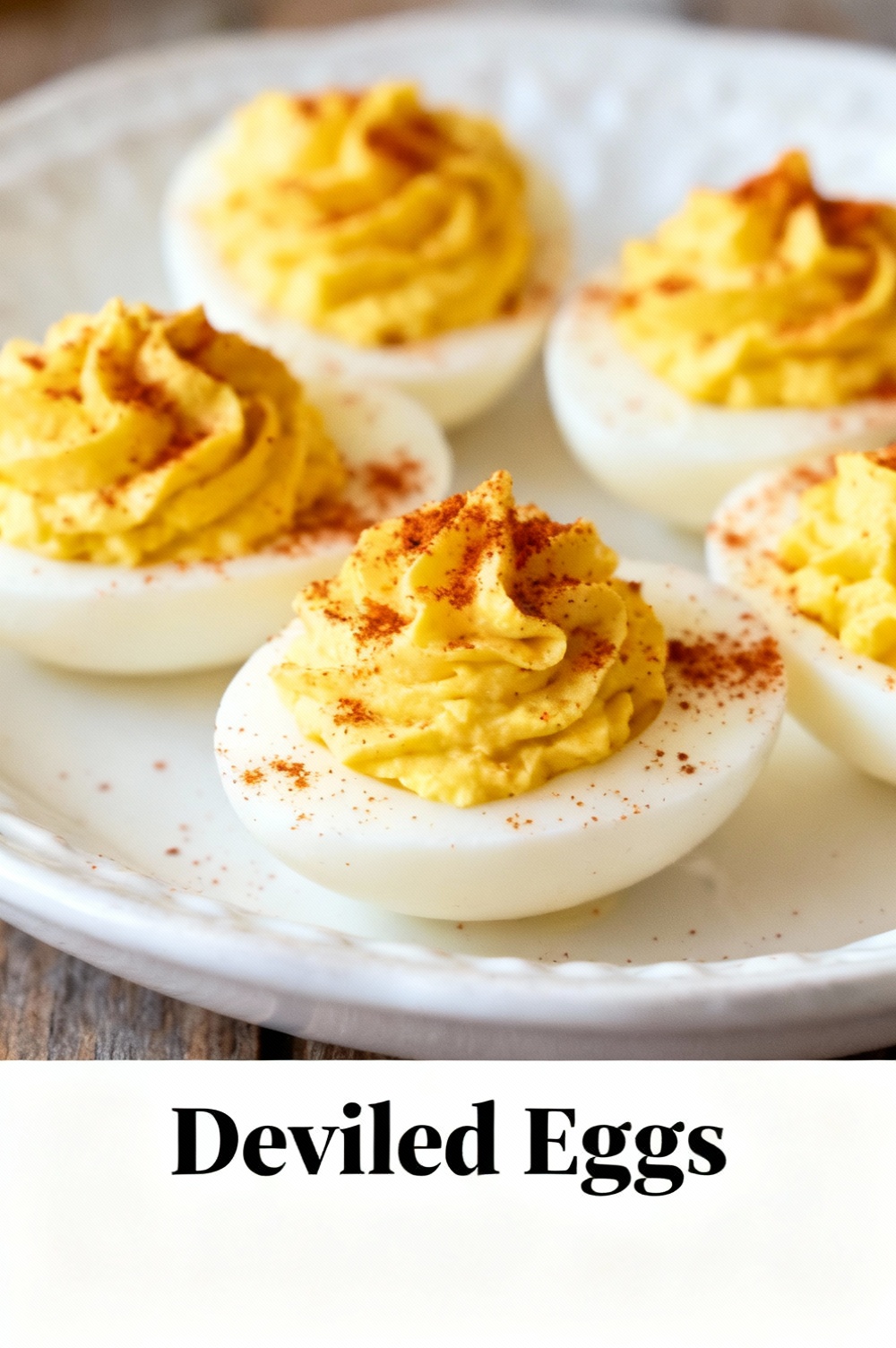
Creamy, tangy, and easy — a timeless party favorite.
Ingredients
- 6 large eggs
- 3 tbsp mayonnaise (use more or less to taste)
- 1–1½ tsp Dijon mustard
- 1 tsp white wine vinegar or fresh lemon juice
- ¼ tsp kosher salt (adjust to taste)
- Freshly ground black pepper, to taste
- Paprika, for garnish
- 2 tbsp finely chopped chives or parsley (optional)
Instructions
- Place eggs in a single layer in a saucepan and cover with cold water by about 1 inch. Bring to a gentle boil over medium‑high heat.
- Once water reaches a rolling boil, cover the pan, turn off the heat, and let sit for 10–12 minutes for fully set yolks.
- Transfer eggs to an ice bath and chill for at least 10 minutes to stop cooking and make peeling easier.
- Peel the eggs, then slice each egg in half lengthwise. Carefully remove yolks and place them in a medium bowl. Arrange the egg white halves on a serving platter.
- Mash the yolks with a fork, then add mayonnaise, Dijon mustard, vinegar (or lemon), salt, and a pinch of pepper. Stir until smooth and creamy. Adjust seasoning and texture — add more mayo for creaminess or a little more mustard or vinegar for tang.
- Transfer the yolk mixture to a piping bag or spoon, and fill each egg white half evenly.
- Sprinkle with paprika and chopped chives or parsley if using. Chill for at least 15 minutes before serving for best texture.
- Serve cold as an appetizer or snack. Store leftovers covered in the fridge for up to 2 days.
Nutrition Information
- Calories: 94 kcal (per 1 deviled egg half)
- Cholesterol: 125 mg
- Sodium: 150 mg
- Carbohydrates: 0.6 g
- Fiber: 0 g
- Sugar: 0.5 g
- Protein: 5.5 g