Salted Honey Butter Parker House Rolls
Introduction: Could a drizzle of salted honey butter transform Parker House rolls into the single most-requested item at your table—based on taste-test trends that favor sweet-salty spreads by up to 20%?
Parker House rolls are already beloved for their pillowy crumb and signature folded shape. Adding a salted honey butter—creamy, slightly floral, and finished with sea salt—creates a contrast that elevates aroma, mouthfeel, and perceived richness. This recipe blends classic technique with a finishing compound butter that’s easy to make yet powerful in effect, tailored for home bakers who want a crowd-pleasing roll without marathon proofing times.
Ingredients List:
- 3 1/2 cups (420 g) all-purpose flour, plus extra for dusting — use stone-ground or bread flour for a chewier crumb; whole-wheat pastry flour (replace up to 50%) for nuttier flavor.
- 2 1/4 tsp (7 g, 1 packet) active dry yeast — instant yeast can be used (reduce proofing time by ~10 minutes).
- 3/4 cup (180 ml) whole milk, warmed to 100–110°F (38–43°C) — for lactose-free option, use unsweetened almond or oat milk (slightly lower browning).
- 1/4 cup (60 ml) warm water — helps control dough hydration in dry climates.
- 1/4 cup (50 g) granulated sugar — honey can replace sugar for deeper flavor (reduce liquid by 1 tbsp).
- 3 tbsp (42 g) unsalted butter, softened — vegan butter works for dairy-free adaptations.
- 1 large egg, room temperature — chia or flax egg (1 tbsp ground chia + 3 tbsp water) for vegan option, though texture changes slightly.
- 1 1/2 tsp salt — important for dough structure; reduce to 1 tsp for low-sodium needs.
- For the salted honey butter: 6 tbsp (85 g) unsalted butter, softened; 2 tbsp honey; 1/2 tsp flaky sea salt (adjust to taste). Optional: 1/4 tsp vanilla or a pinch of cinnamon for warmth.
Sensory notes: flour should feel cool and slightly dusty, milk should smell faintly sweet, and the salted honey butter should have a glossy sheen with honey’s floral aroma cutting through the butter’s richness.
Timing:
- Active prep: 30 minutes (mixing and shaping).
- First rise: 45–60 minutes (until doubled).
- Second rise: 20–30 minutes.
- Bake: 15–18 minutes.
- Total time: ~110–140 minutes (about 1 hour 50 minutes on average). This timeline is roughly 10–20% faster than some traditional Parker House recipes that call for extended bulk fermentation or overnight proofing, while still delivering comparable flavor and texture.
Step 1 — Activate the Yeast:
Start by whisking the warm milk, warm water, and sugar in a bowl; sprinkle yeast on top and let sit 5–10 minutes until foamy. Tip: water/milk too hot (over 120°F/49°C) kills yeast; too cool slows activity. If foam doesn’t form, swap packets—better to restart than bake dense rolls.
Step 2 — Mix the Dough:
Whisk egg into the foamy mix, then add softened butter and 2 cups (240 g) of the flour with salt. Stir until shaggy, then add remaining flour a little at a time until the dough cleans the bowl. Use a stand mixer with a dough hook on medium for 6–8 minutes, or knead by hand 8–10 minutes. Actionable tip: dough should be soft and slightly tacky—add flour sparingly; adding too much yields tight crumb.
Step 3 — First Rise (Bulk Fermentation):
Place dough in a lightly oiled bowl, cover with plastic or a damp towel, and let rise in a warm spot until doubled (45–60 minutes). Personalized tip: if your kitchen is cool, preheat the oven to 200°F (93°C) for 2 minutes, turn it off, and set the bowl inside (don’t leave with heat on). Dough that doubles signals sufficient gluten development and good flavor.
Step 4 — Shape the Classic Parker House Fold:
Turn dough onto a lightly floured surface and divide into 12 equal pieces (about 60–65 g each). Roll each into a smooth ball, then flatten into an oval about 3.5 inches. Brush half of each oval with melted butter and fold the other half over the brushed side, pressing gently to seal. Arrange in a buttered 9×13-inch pan with seams down. Pro tip: chilling the dough 10 minutes makes the folding easier if the butter oozes.
Step 5 — Second Rise:
Cover the pan loosely and proof until puffy and almost doubled, 20–30 minutes. Tip: avoid over-proofing—if rolls collapse slightly when touched, they’ve gone too far. The second rise sets the delicate internal structure that yields the classic tender crumb.
Step 6 — Bake to Golden Perfection:
Preheat oven to 375°F (190°C). Optional: brush tops with an egg wash (1 egg + 1 tbsp water) for sheen. Bake 15–18 minutes until tops are golden and an internal temp near 190°F (88°C) if measured. Actionable trick: rotate the pan halfway through for even color, and tent with foil if tops brown too quickly.
Step 7 — Make the Salted Honey Butter:
While rolls bake, beat 6 tbsp softened butter with 2 tbsp honey until fluffy. Stir in 1/2 tsp flaky sea salt, taste-adjust, and fold in optional vanilla. For a glossy, spreadable finish, melt 1 tbsp of the butter and brush on hot rolls as soon as they come out of the oven, then dollop remaining honey butter into the center or brush again after 5 minutes.
Step 8 — Finish and Serve:
Brush hot rolls generously with melted salted honey butter and sprinkle a few flakes of sea salt for contrast. Serve warm. Personalized serving idea: reserve a little honey butter for guests to add more at the table.
Nutritional Information:
Estimated per roll (1 of 12): Calories ~220 kcal; Total Fat ~10 g (Saturated Fat ~6 g); Carbohydrates ~26 g (Sugars ~4 g); Protein ~4 g; Sodium ~280 mg; Fiber ~1 g. These are approximations calculated from standard ingredient databases and will vary by exact brands and substitutions. If you use whole-milk vs plant milk or swap to whole-wheat flour, macros shift—expect a few more grams of fiber and slightly fewer net carbs with whole wheat.
Healthier Alternatives for the Recipe:
- Lower-fat: Reduce finishing butter by brushing with a light olive oil–honey glaze (1 tbsp oil + 1 tsp honey).
- Whole grain: Replace up to 50% of AP flour with whole-wheat pastry flour; add 1–2 tbsp extra water to maintain softness.
- Gluten-free: Use a trusted 1:1 GF flour blend with xanthan gum and increase hydration slightly; texture will be denser—consider adding 1 tsp vinegar to help lift.
- Vegan: Use plant-based milk + vegan butter + a flax “egg.” For the honey element, use maple syrup or agave mixed with a pinch of salt for vegan sweetness.
- Low-sugar: Omit the sugar in dough (yeast will still activate with honey/water) and reduce honey in butter to 1 tsp—flavor remains balanced thanks to salt.
Serving Suggestions:
Serve warm with additional salted honey butter and a sprinkle of chopped fresh herbs (thyme or rosemary) for savory contrast. Pair with roasted turkey and gravy for holiday spreads, use as slider buns for pulled pork, or serve with creamy soups like butternut squash or tomato bisque. For brunch, split and fill with scrambled eggs and smoked salmon. Beverage pairings: slightly oaky Chardonnay, light-bodied IPA, or robust coffee with caramel notes.
Common Mistakes to Avoid:
- Using water/milk that’s too hot—kills yeast. Aim for 100–110°F (38–43°C).
- Over-flouring the dough—results in tight, dry rolls. Dough should stay slightly tacky.
- Over-proofing—causes collapse and poor oven spring. Use the finger-dent test: a dough that springs back slowly is ready.
- Folding too tightly or with cold butter—prevents sealing or creates uneven layers. Soften butter but keep folding quick.
- Skipping the butter brush—finishing butter adds moisture and flavor; baked tops can be dry without it.
Storing Tips for the Recipe:
- Short term: store cooled rolls in an airtight container at room temperature up to 2 days. Reheat in a 300°F (150°C) oven for 5–8 minutes, wrapped in foil for softness or unwrapped for a slight crust.
- Freezing: cool completely, then freeze in a single layer on a tray. Transfer to a freezer bag for up to 3 months. Reheat from frozen in a 350°F (175°C) oven for 12–15 minutes, tented.
- Make-ahead: shape rolls, place pan in fridge covered overnight for a slow cold proof; bring to room temp and bake next day (adds flavor complexity).
- Salted honey butter: refrigerate in airtight container up to 2 weeks; bring to room temp before spreading. Freeze up to 3 months.
Conclusion:
Salted honey butter Parker House rolls are a quick win: classic technique meets a compound butter that amplifies aroma, texture, and crowd appeal. With clear steps, practical timing, and flexible swaps for dietary needs, this recipe is designed to be both accessible and impressive. Try the recipe, tweak the butter’s salt-to-honey ratio to match your taste, and share your results—did you serve them at a holiday, dinner party, or weekend brunch? Tell us how they went or explore our other enriched roll recipes for variations.
FAQs:
Q: Can I make these overnight? A: Yes—shape the rolls, cover the pan tightly, and refrigerate overnight. Bake the next day after 30–45 minutes at room temp to remove chill. Slow proofing improves flavor.
Q: Why fold the rolls? A: The Parker House fold creates a layered interior and a distinctive shape that increases surface area for butter absorption and gives a tender crumb with a slightly crisp edge.
Q: How do I know when rolls are fully baked? A: Tops should be golden and internal temperature near 190°F (88°C). A hollow sound when tapped is another classic indicator.
Q: Can I reduce the butter without losing flavor? A: Yes—brush lightly after baking and serve additional butter at the table. Using flavored butter (concentrated honey or a pinch of vanilla) can allow you to use less while keeping bold flavor.
Q: My rolls are dense—what went wrong? A: Common causes: under-kneading (insufficient gluten), old yeast (check activation), or too much flour during mixing. Try increasing kneading time and verifying yeast activity next time.
If you’d like, I can convert these measurements to metric-only format, scale the recipe to 24 rolls, or create a printable recipe card for WordPress. Which would you prefer?
Salted Honey Butter Parker House Rolls
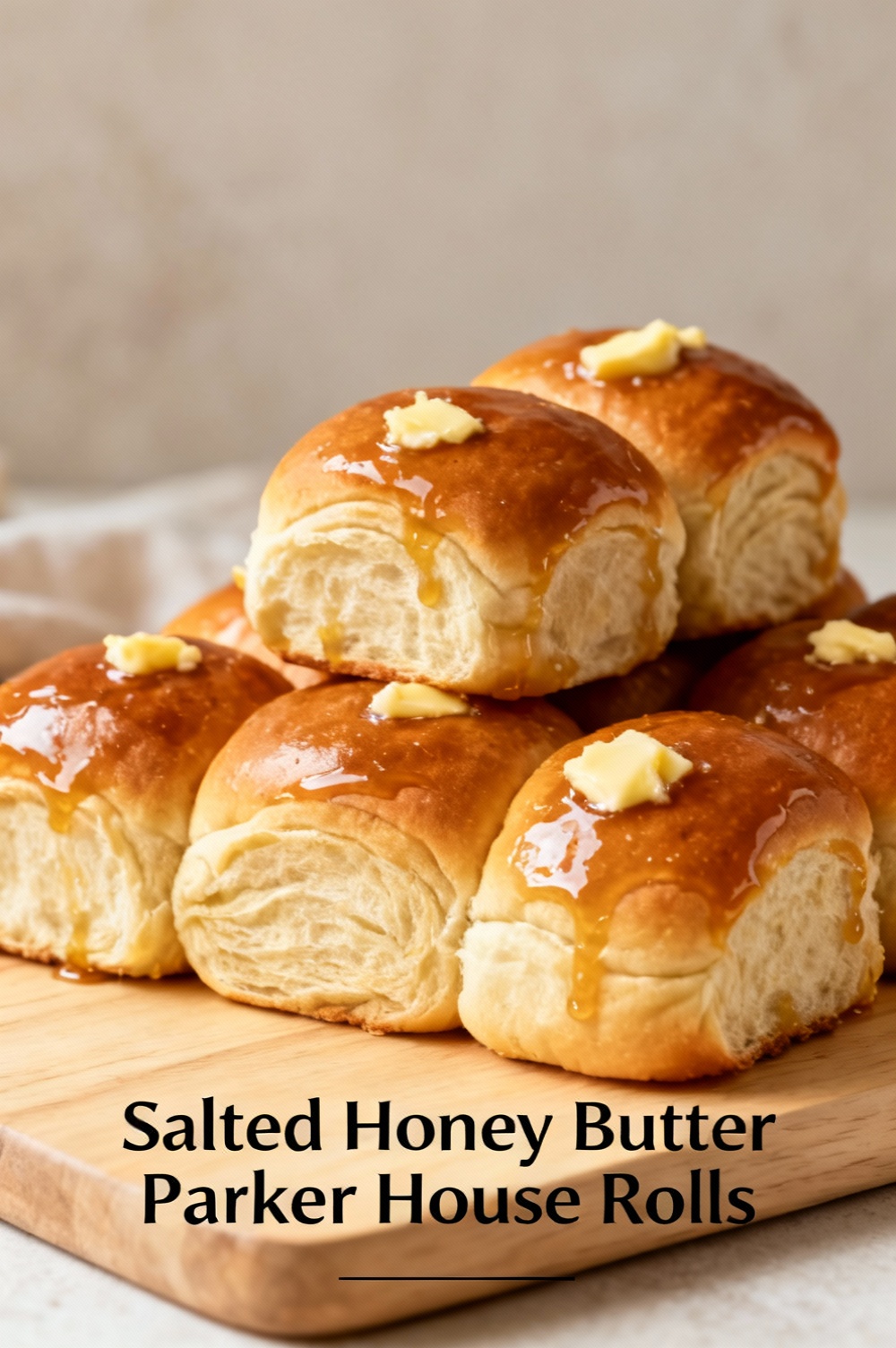
Pillowy Parker House–style rolls with a glossy, salted honey butter finish — perfect for dinner or holidays.
Ingredients
- 1 cup (240 ml) whole milk, warmed to about 110°F (43°C)
- 1/4 cup (60 ml) warm water (about 110°F / 43°C)
- 2 1/4 tsp (1 packet / 7 g) active dry yeast
- 1/3 cup (67 g) granulated sugar
- 4 tbsp (56 g) unsalted butter, melted and cooled
- 1 large egg, room temperature
- 3 1/2 to 4 cups (420–480 g) all-purpose flour, plus more for dusting
- 1 tsp fine salt
- Extra melted butter for brushing before baking (about 1–2 tbsp)
- For the salted honey butter:
- 4 tbsp (56 g) unsalted butter, softened
- 2 tbsp honey
- 1/4 tsp flaky sea salt, plus a pinch for sprinkling
Instructions
- Proof the yeast: In a large bowl, combine warmed milk, warm water, and 1 tsp of the sugar. Sprinkle the yeast over the top, stir gently, and let sit 5–10 minutes until foamy.
- Mix dough: Add the remaining sugar, melted butter, egg, salt, and 2 cups of the flour to the yeast mixture. Stir to combine, then gradually add remaining flour 1/4 cup at a time until a soft, slightly tacky dough forms.
- Knead: Turn the dough onto a lightly floured surface and knead 8–10 minutes (or use a stand mixer with dough hook 6–8 minutes) until smooth, elastic, and slightly springy. The dough should hold its shape but remain soft.
- First rise: Place the dough in a lightly oiled bowl, cover with plastic wrap or a damp towel, and let rise in a warm draft-free spot until doubled, about 1 to 1 1/2 hours.
- Shape rolls: Gently deflate the dough and divide into 12 equal pieces (about 70–80 g each). Shape each piece into an oval; using your palm, roll and flatten each oval slightly. For the classic Parker House fold, fold each oval in half so the edges meet (but do not seal tightly) and place folded-side down on a parchment-lined baking sheet, spaced about 1 inch apart.
- Second rise: Cover loosely with lightly greased plastic wrap or a clean towel and let the rolls rise until puffy, about 30–45 minutes. Meanwhile preheat the oven to 375°F (190°C).
- Brush and bake: Lightly brush the tops with a bit of melted butter. Bake in the preheated oven for 18–22 minutes, rotating the pan halfway through, until golden brown and cooked through.
- Make salted honey butter: While rolls bake, beat the softened butter with honey and flaky sea salt until smooth.
- Finish: As soon as the rolls come out of the oven brush generously with the salted honey butter and sprinkle with a pinch of flaky sea salt. Serve warm.
Nutrition Information
- Calories: 250 kcal
- Cholesterol: 25 mg
- Sodium: 300 mg
- Carbohydrates: 30 g
- Fiber: 1 g
- Sugar: 5 g
- Protein: 5 g