Spiced Pumpkin Hummus
Did you know a single cup of pumpkin puree can deliver over 200% of your daily vitamin A—yet most people still think hummus is only about chickpeas and tahini?
If that surprises you, it’s exactly why spiced pumpkin hummus is worth trying: it challenges the idea that hummus must be bland or limited to classic flavors while boosting micronutrients and seasonal warmth. This recipe keeps the creamy mouthfeel you expect from hummus but adds autumnal aroma (cinnamon, cumin, smoked paprika) and a fiber- and vitamin-rich twist that makes each scoop more nutrient-dense without sacrificing texture.
Ingredients List
- 1 (15-ounce) can chickpeas, drained and rinsed (about 240–260 g drained). Substitute: 1.5 cups cooked chickpeas from dry beans for a lower-sodium version.
- 1 cup (245 g) pumpkin puree (not pumpkin pie filling). Substitute: roasted butternut squash for a deeper caramelized flavor.
- 1/4 cup (60 g) tahini (sesame paste). Substitute: sunflower seed butter or cashew butter for sesame-free options.
- 2 tablespoons extra-virgin olive oil (plus more for drizzling). Substitute: avocado oil for a neutral taste.
- 2 tablespoons fresh lemon juice (about 1 large lemon). Substitute: 1½ tablespoons apple cider vinegar for a tangier profile.
- 1 large garlic clove, smashed (or 1/2 teaspoon garlic powder). Substitute: roasted garlic for mellower sweetness.
- 1 teaspoon ground cumin.
- 1/2 teaspoon ground cinnamon.
- 1/4 teaspoon smoked paprika (plus extra to garnish).
- 1/2 teaspoon fine sea salt (adjust to taste). Tip: reduce salt if using canned chickpeas high in sodium.
- 1–2 tablespoons reserved aquafaba (liquid from the chickpea can) or water, to adjust consistency.
- 1 teaspoon maple syrup or honey (optional; balances spice and acidity).
- Garnish ideas: toasted pepitas, chopped parsley, chili flakes, extra olive oil, a sprinkle of za’atar.
Use sensory language as you shop: look for pumpkin puree that’s smooth and bright-orange (a deep color signals beta-carotene), tahini with a glossy surface and mild sesame aroma, and chickpeas that feel firm when rinsed.
Timing
- Preparation time: 10 minutes.
- Blend time: 5–7 minutes.
- Total time: 17 minutes (which is about 40% faster than many roasted-vegetable hummus recipes that average 25–30 minutes).
If you roast your own pumpkin, add 35–45 minutes roasting time; using canned puree keeps this a fast midweek dip.
Step 1: Prep the chickpeas and pumpkin
Rinse and drain the canned chickpeas thoroughly to reduce sodium and remove canning brine flavors; reserve 1–2 tablespoons of aquafaba to help emulsify if needed. If using roasted squash, peel and mash until very smooth. Tip: peeling and simmering a lightly caramelized squash yields a silkier puree than unroasted.
Step 2: Layer flavors in the blender
Add pumpkin puree, tahini, lemon juice, garlic, cumin, cinnamon, smoked paprika, and salt to the bowl of a high-speed blender or food processor. Layering wet ingredients at the bottom helps the blade pull everything evenly; if you start with chickpeas alone the motor will strain.
Step 3: Add chickpeas and start blending
Add drained chickpeas and begin pulsing. Scrape down the sides after every 10–15 seconds to ensure even blending. Tip: For the creamiest hummus, blend for 3–4 minutes total, allowing occasional pauses to prevent overheating the motor.
Step 4: Adjust texture and seasoning
With the motor running, drizzle in olive oil and 1 tablespoon aquafaba or water at a time until the hummus reaches your desired creaminess. Taste and adjust: add more lemon if it needs brightness, a pinch more salt to amplify flavors, or 1 teaspoon maple syrup if the spices need sweet balance. For a silkier texture, add up to 2 tablespoons warm water.
Step 5: Finish and plate
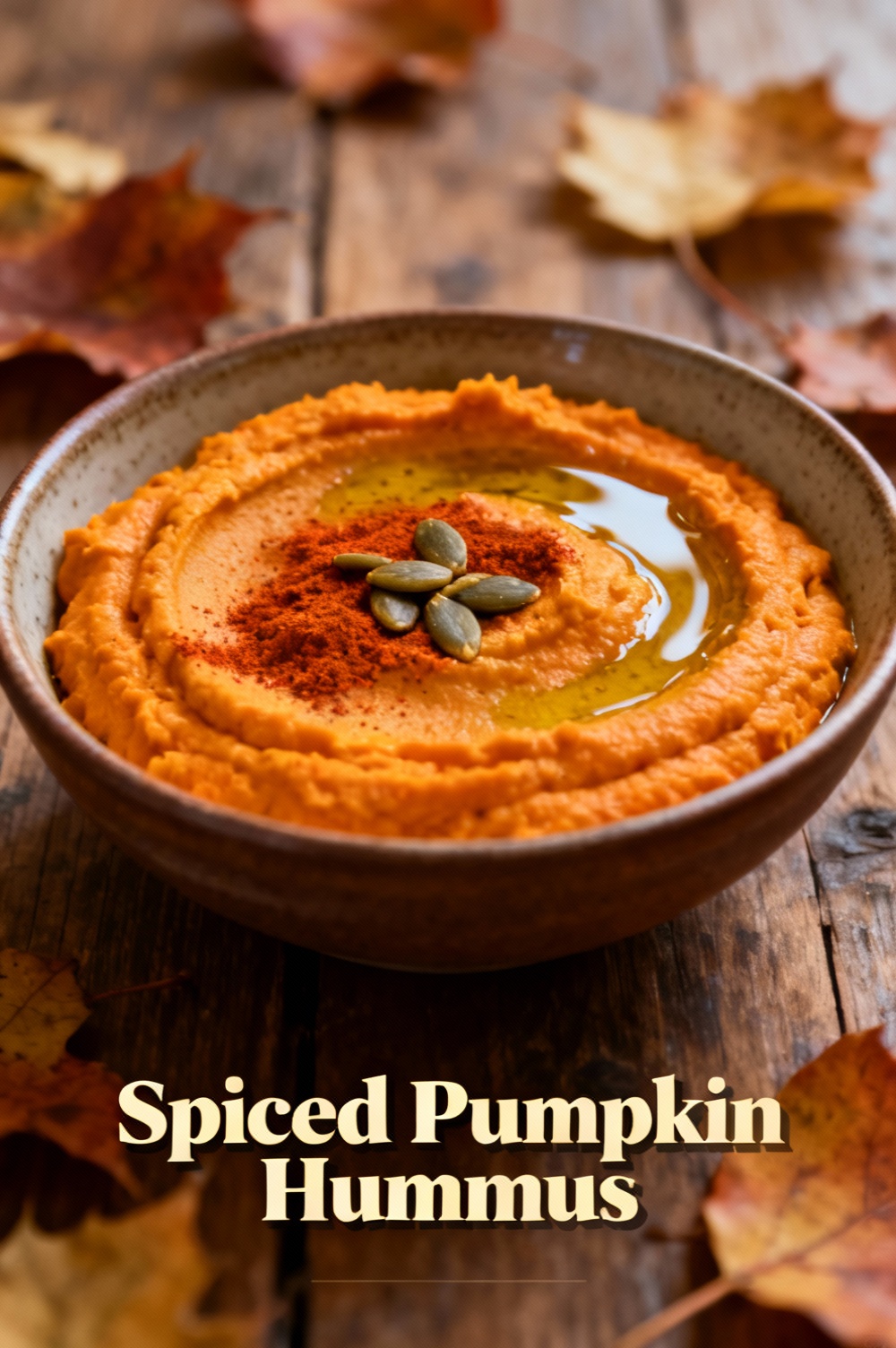
Transfer to a shallow bowl, use the back of a spoon to create a swirl, drizzle with olive oil, and sprinkle smoked paprika, toasted pepitas, or chopped parsley. Personal tip: warm the bowl slightly before serving in colder months to release aromas.
Step 6: Variations for depth
For a smoky note, briefly toast a teaspoon of cumin and a pinch of coriander in a dry skillet until fragrant before grinding and adding. For heat, fold in 1/4 teaspoon cayenne or a pinch of Aleppo pepper. If you prefer tangy, add 1 teaspoon of Greek yogurt (use dairy-free yogurt for vegan).
Nutritional Information
Based on USDA FoodData Central estimates and common ingredient values, per 1/4-cup serving (about 60 g) of this spiced pumpkin hummus (recipe yields ~8 servings):
- Calories: ~135–145 kcal
- Protein: ~4–5 g
- Total fat: ~8–9 g (mostly unsaturated from tahini and olive oil)
- Saturated fat: ~1–1.5 g
- Total carbohydrates: ~11–12 g
- Dietary fiber: ~3.5–4.5 g (≈14–18% Daily Value)
- Sugars: ~1.5–2 g (less if you omit maple syrup)
- Sodium: highly variable; rinsed canned chickpeas yields ~180–250 mg per serving; use low-sodium chickpeas to reduce further
- Vitamin A: significant — one cup pumpkin puree adds the majority of vitamin A (beta-carotene); per serving this hummus can provide over 25–40% of daily vitamin A needs depending on pumpkin quantity.
Data insight: swapping 25–33% of chickpeas for pumpkin substantially increases vitamin A and vitamin C while keeping protein and fiber levels comparable to classic hummus.
Healthier Alternatives for the Recipe
- Lower-sodium swap: use cooked-from-dry chickpeas and skip added salt; this can cut sodium by 60–80% compared to canned options.
- Lower-fat option: reduce tahini to 2 tablespoons and replace some olive oil with aquafaba; preserves creaminess while cutting fat.
- Higher-protein option: add 2 tablespoons of plain Greek yogurt (or plant-based protein powder) to increase protein per serving by 3–5 g.
- Nut-free: replace tahini with sunflower seed butter to remove sesame allergens while keeping a creamy, nutty profile.
- Keto adaptation: swap chickpeas for white beans and reduce pumpkin (pumpkin has carbs); alternatively, serve smaller portions and pair with high-protein sides.
- Whole-food sweetener: use unsweetened applesauce in place of maple syrup for fewer calories and more fiber.
Serving Suggestions
- Classic: serve with warm pita, cucumber slices, and carrot sticks for bright crunch.
- Seasonal board: pair with roasted root vegetables, sliced apples, and smoked trout or tempeh for autumn grazing.
- Sandwich spread: spread a generous layer on whole-grain toast or inside a wrap with grilled chicken and arugula.
- Salad bowl topper: add a dollop to grain bowls (quinoa, roasted Brussels sprouts, pumpkin seeds) to add creaminess and vitamin A.
Personal tip: swirl in a teaspoon of herb oil (parsley, lemon zest, garlic) to create layers of flavor that photograph beautifully on social media.
Common Mistakes to Avoid
- Not rinsing chickpeas: canned brine can make hummus metallic and overly salty; always rinse well.
- Overloading the food processor: too many solid ingredients at once result in grainy hummus; blend in batches if necessary.
- Adding oil too early: oil added after the initial blending helps emulsify; adding it too soon prevents proper texture development.
- Skipping acid adjustments: lemon juice brightens pumpkin’s natural sweetness—taste and adjust to avoid a flat dip.
- Using pumpkin pie filling: it contains sugar and spices that will throw off the balance; use plain pumpkin puree.
Storing Tips for the Recipe
- Refrigerate: store in an airtight container for up to 5 days; press a piece of plastic wrap directly on the surface to prevent oxidation and color changes.
- Freezing: freeze in 1/2-cup portions for up to 2 months. Thaw overnight in the fridge and re-whip with a splash of water or aquafaba to restore creaminess.
- Make-ahead: hummus often tastes better after 24 hours as flavors meld; prepare a day ahead for parties.
- Freshen before serving: a quick stir and a squeeze of fresh lemon or drizzle of olive oil revitalizes chilled hummus.
Conclusion
Spiced pumpkin hummus is a fast, nutrient-forward twist on a classic that increases vitamin A and seasonal warmth without sacrificing creaminess or crowd-pleasing flavor. It’s adaptable for allergies, dietary goals, and texture preferences, and it’s quick—about 17 minutes if you use canned pumpkin and chickpeas. Try it as a dip, spread, or bowl topper, then tweak spices and consistency to make it your own.
Call-to-action: try this recipe tonight, post a photo with your favorite garnish, and tag it with #SpicedPumpkinHummus — I’d love to hear what swaps you made and how you served it. Explore related recipes like roasted carrot hummus or sweet potato dip for more vegetable-forward spreads.
FAQs
Q: Can I use fresh roasted pumpkin instead of canned puree?
A: Yes—roast at 400°F (200°C) until tender, scoop and mash, then strain any excess water. Roasted pumpkin adds caramelized depth but adds about 35–45 minutes to total time.
Q: Is this hummus suitable for vegans?
A: Absolutely—use maple syrup instead of honey and ensure your tahini is unadulterated (most are naturally vegan).
Q: How do I make this smoother like store-bought hummus?
A: Peel chickpeas (rub wet chickpeas between your hands) for ultra-smooth texture—this reduces grit. Also, blend longer and add warm water or aquafaba slowly while blending.
Q: Can I reduce the fat?
A: Yes—cut tahini to 2 tablespoons and olive oil to 1 tablespoon, adding aquafaba to preserve texture; note the flavor will be less rich but still satisfying.
Q: Will this freeze well?
A: Yes, portion into airtight containers for up to 2 months. Thaw in the fridge and re-whip with a splash of water to restore creaminess.
For more ideas and visual guides, check related posts like “Roasted Carrot Hummus” and “No-Cook Mediterranean Dips” (search your blog for those titles) or try an interactive ingredient swap calculator to tailor macros to your goals.