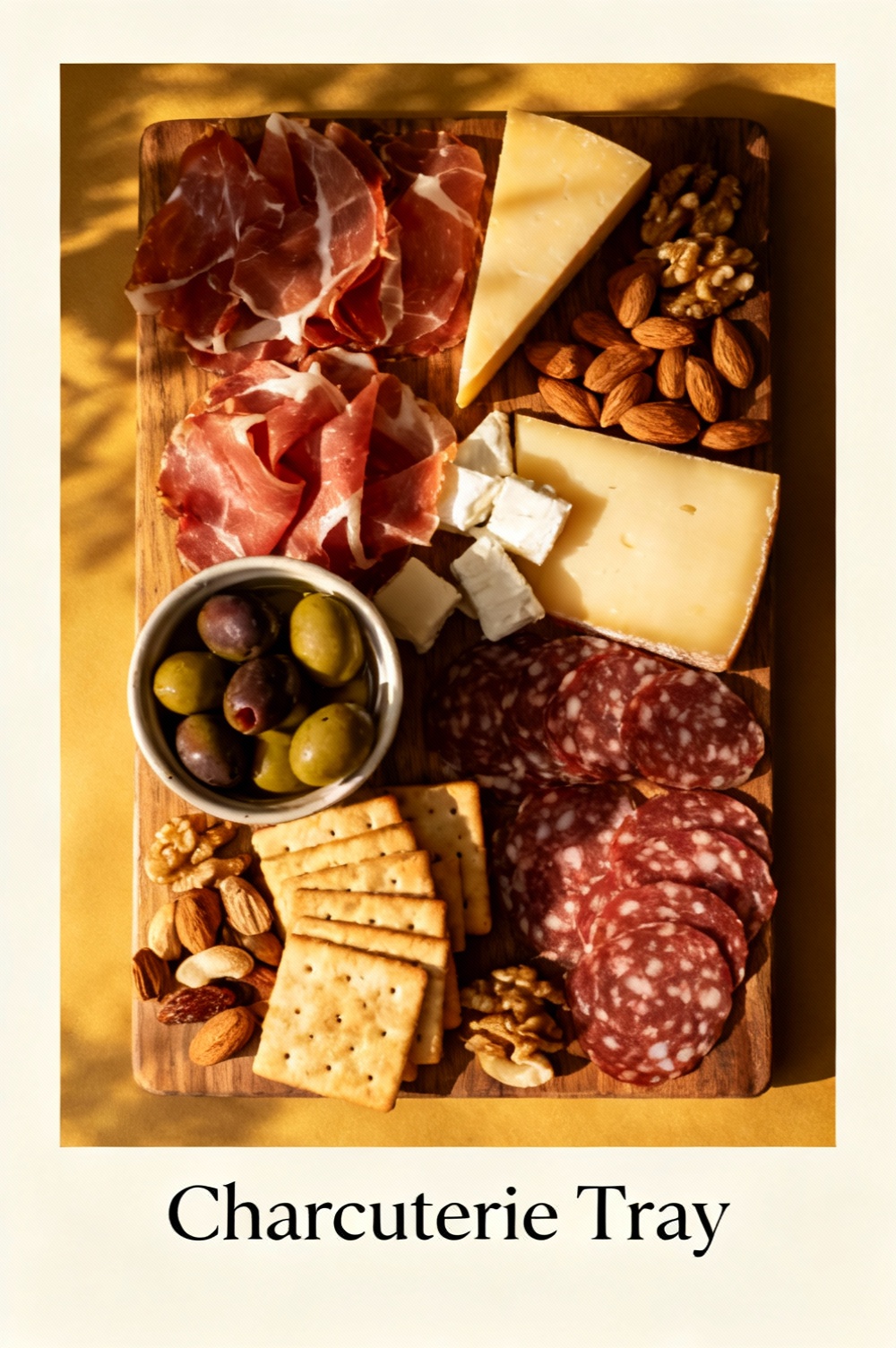
Charcuterie Tray
Can a single, well‑portioned charcuterie tray—built using the industry guideline of 3–4 oz of cured meat and 2–3 oz of cheese per person—turn an ordinary gathering into an unforgettable one?
Crafting a charcuterie tray is less about luck and more about proportion, contrast, and a few strategic choices that balance flavor, texture, and visual appeal. Whether you’re feeding a quiet dinner party of six or designing a grazing table for 30, using proven portioning rules and simple composition principles helps you deliver a tray that looks abundant but doesn’t waste food. Below you’ll find a practical, data-informed plan, ingredient options with smart substitutions, stepwise assembly guidance, nutrition context, and storage best practices to make your next charcuterie tray efficient, delicious, and guest-friendly.
Ingredients List
– Cured meats (choose 2–3 types): prosciutto (silky, salty), soppressata (spicy, chewy), and smoked turkey or chicken (leaner option). Substitutions: for lower sodium, use roasted turkey slices or thinly sliced roast beef; for vegan, try marinated smoked tofu or plant-based deli slices.
– Cheeses (choose 3–4 textures): a soft cheese (brie or camembert), a semi‑soft (munster or havarti), a hard cheese (aged cheddar or manchego), and a blue or washed-rind for punch. Substitutions: plant-based cheeses (for dairy-free) and low-fat versions if needed.
– Crackers & bread: water crackers, whole-grain crackers, sliced baguette (toasted for crunch). Substitutions: gluten‑free crackers or sliced apple for a grain-free option.
– Fresh fruit: grapes, figs (seasonal), sliced pears or apples (toss apples in lemon water to prevent browning). Substitutions: dried apricots or berries for longer shelf life.
– Pickles & fermented items: cornichons, pickled onions, olives (mix of green and black). Substitutions: quick-pickled cucumbers or kimchi for funk.
– Sweet components: honey, fig jam, or quince paste (pairing with aged cheeses). Substitutions: sugar‑free preserves or balsamic reduction.
– Crunch & garnish: roasted nuts (marcona almonds, walnuts), fresh herbs (rosemary, thyme), edible flowers for visual pop. Substitutions: seeds or spiced chickpeas for crunchier, plant-forward trays.
– Condiments and utensils: grainy mustard, tiny spreader knives, cocktail picks, small bowls for wet items.
Timing
Preparation time: 15–30 minutes (ingredient prep and slicing).
Assembly time: 10–20 minutes (arranging on the board).
Total time: 25–50 minutes.
Context: For a typical party-sized tray serving 8–12 guests, total active time averages around 35 minutes—roughly 20–40% faster than preparing several plated appetizers because charcuterie relies on ready-to-eat elements rather than cooking. If you’re making homemade pickles or roasted nuts, add 30–60 minutes of passive time.
Step 1 — Plan by guest count and dietary needs
Decide portion size: plan 3–4 oz cured meat + 2–3 oz cheese per adult; reduce by ~30% for a multi-course event. Ask about allergies (nuts, dairy, gluten) before finalizing items, and set aside dedicated sections for vegan/gluten-free components to avoid cross-contact. Tip: create a simple checklist: proteins, cheeses, carbs, acids, sweets, crunch, garnish.
Step 2 — Prep smart: slice, chill, and portion
Slice hard cheeses into biteable chunks and crumble or pre-slice soft cheeses for easy serving. Fan prosciutto and fold slices to create height. Keep perishable items chilled until 10–15 minutes before serving—cheese flavors bloom near room temperature. Tip: if prepping more than 90 minutes ahead, refrigerate assembled items loosely covered and finish garnishing before guests arrive.
Step 3 — Select and stage your board
Choose a board that fits your guest count (18–24″ board for 8–12 people). Start with dishes for wet items (olives, honey) spread across the board to anchor flow. Tip: place stronger cheeses and meats apart to create visual balance and prevent flavor bleed.
Step 4 — Build layers: texture, color, and flow
Place largest items first (cheese wedges, bowls), then create meat “roses” or fans, tuck crackers and bread in loose clusters, and fill gaps with fruits and nuts for color contrast. Aim for three flavor trajectories—salty, sweet, acidic—so guests can assemble balanced bites. Tip: use herbs and edible flowers for small bursts of color and scent.
Step 5 — Label and serve with guidance
Small labels or notecards help guests with allergies and create conversation around pairings. Offer pairing suggestions (e.g., “manchego + quince paste + marcona almond”) on a simple card. Tip: provide toothpicks, spreaders, and small plates to keep things neat.
Step 6 — Clean up and store leftovers properly
Scrape and transfer leftovers to airtight containers within two hours. Remove and refrigerate perishable items separately (meats, cheeses). Tip: plan leftover recipes—tossing thinly sliced meats into pasta, melting cheeses on toast, or making a quick salad with leftover fruit.
Nutritional Information
Charcuterie trays vary widely, so present values are estimates for a typical mixed serving (about 150 g total per person): Calories: ~400–550 kcal; Total fat: 28–42 g; Saturated fat: 10–18 g; Protein: 20–30 g; Carbohydrates: 12–25 g; Fiber: 1–4 g; Sodium: 800–1,500 mg. Data insight: cured meats and aged cheeses are the biggest sodium contributors; for people tracking sodium or saturated fat, focus on portion control and leaner substitutions. If you need exact values, weigh each component and use a nutrition calculator to sum macro and micronutrients for precise tracking.
Healthier Alternatives for the Recipe
– Replace half the cured meats with lean proteins: smoked chicken, turkey breast, or grilled shrimp to cut saturated fat and sodium.
– Swap one or two cheeses for lower-sodium or cultured plant-based cheeses; include ricotta or fresh mozzarella which are milder and often lower in sodium than aged cheeses.
– Increase fresh produce: add sliced cucumbers, bell peppers, and carrot ribbons to boost fiber and vitamins.
– Choose whole-grain crackers or seeded crisps to add fiber and promote satiety.
– Reduce portion sizes slightly if other heavy courses are planned—small shifts reduce total calories without compromising presentation.
– For vegan/gluten-free diets, create a dedicated quadrant with marinated tempeh, herb-roasted chickpeas, fruit, nuts, and gluten-free crackers.
Serving Suggestions
– Pairings: Light-bodied white wines (sauvignon blanc) and sparkling wines complement soft cheeses and salty meats; full-bodied reds (tempranillo, grenache) stand up to aged cheeses and spicier meats. Offer a non-alcoholic sparkling option like a dry apple cider.
– Occasion ideas: brunch boards with smoked salmon, capers, and cream cheese; picnic trays with portable bite-skewers; dessert-style boards featuring chocolate, sweet dips, and mascarpone.
– Presentation: vary heights using small bowls and ramekins; leave small gaps for guests to build bites; rotate colors to keep the eye moving across the board.
– Personalization: include a “build-your-own” card with suggested combinations for guests with dietary preferences.
Common Mistakes to Avoid
– Overcrowding the board: crowding reduces access and visual appeal—leave space for guests to reach items.
– Serving cheese too cold: flavors are muted when chilled; remove cheeses 30–60 minutes before serving for optimal flavor.
– No knife or utensil for soft cheeses: this forces messy serving—always provide spreaders.
– Ignoring allergies: always label nuts, dairy, and gluten items and provide separate sections for allergen-free choices.
– Skipping contrast: too many similar textures (all soft cheeses, all salty meats) makes the tray monotonous—balance with crisp, sweet, and acidic elements.
Storing Tips for the Recipe
– Short-term: wrap soft cheeses in parchment and store in an airtight container in the fridge for 3–5 days; hard cheeses keep 2–3 weeks when well wrapped.
– Meats: cured meats last 3–5 days once sliced; vacuum-pack or tightly wrap to reduce oxidation.
– Wet items: olives, pickles, and spreads should be refrigerated in their brine or sealed jars for up to 2 weeks.
– Make-ahead: chop fruits, roast nuts, and pre-slice hard cheeses 24 hours ahead; assemble the board within 2 hours of serving for best texture.
– Transport: use shallow containers and stabilize bowls with napkins to prevent sliding; store cold items in an insulated cooler until serving.
Conclusion
A well-designed charcuterie tray is equal parts planning and personality: using simple portion rules, mixing textures and flavors, and accommodating dietary needs will help you create a tray that’s both beautiful and practical. Try the guideline of 3–4 oz meat and 2–3 oz cheese per person, choose at least three textures (soft, semi‑soft, hard), and include acidic elements and crunch for balance. Ready to build your tray? Share a photo or comment with your favorite combination—I’ll reply with pairing tips and a quick checklist to replicate your success.
FAQs
Q: How long can a charcuterie tray sit out at a party?
A: Perishable items (cheese, sliced meats) should not be left out more than two hours at room temperature; reduce to one hour in hot environments above 90°F/32°C. Keep extras refrigerated and refill small serving dishes as needed.
Q: How do I scale a tray for large crowds?
A: Scale linearly by guest count using the portion guidelines, then diversify: for 30+ people, create several smaller stations to prevent crowding and allow for varied dietary sections (vegan, gluten-free, nut-free).
Q: What are the best cheeses for beginners?
A: Brie (soft), aged cheddar (hard), manchego (firm), and a blue (or gorgonzola) offer a balanced starter set that covers mild to bold flavors.
Q: Can I freeze leftovers?
A: Freezing changes texture—not recommended for cheeses you plan to enjoy fresh. Hard cheeses can be frozen for cooking later; cured meats may become crumbly. Best to consume refrigerated within 3–5 days.
Q: How can I make a low-sodium version?
A: Prioritize fresh proteins (roast chicken, smoked salmon with lower sodium), use fresh instead of brined vegetables, choose low-sodium or fresh cheeses, and reduce cured meat portioning while increasing fruit and veg.
If you want, I can generate a printable shopping checklist or a labeled board template sized for 8, 12, or 24 guests—tell me your guest count and dietary constraints and I’ll tailor a shopping list and assembly map.