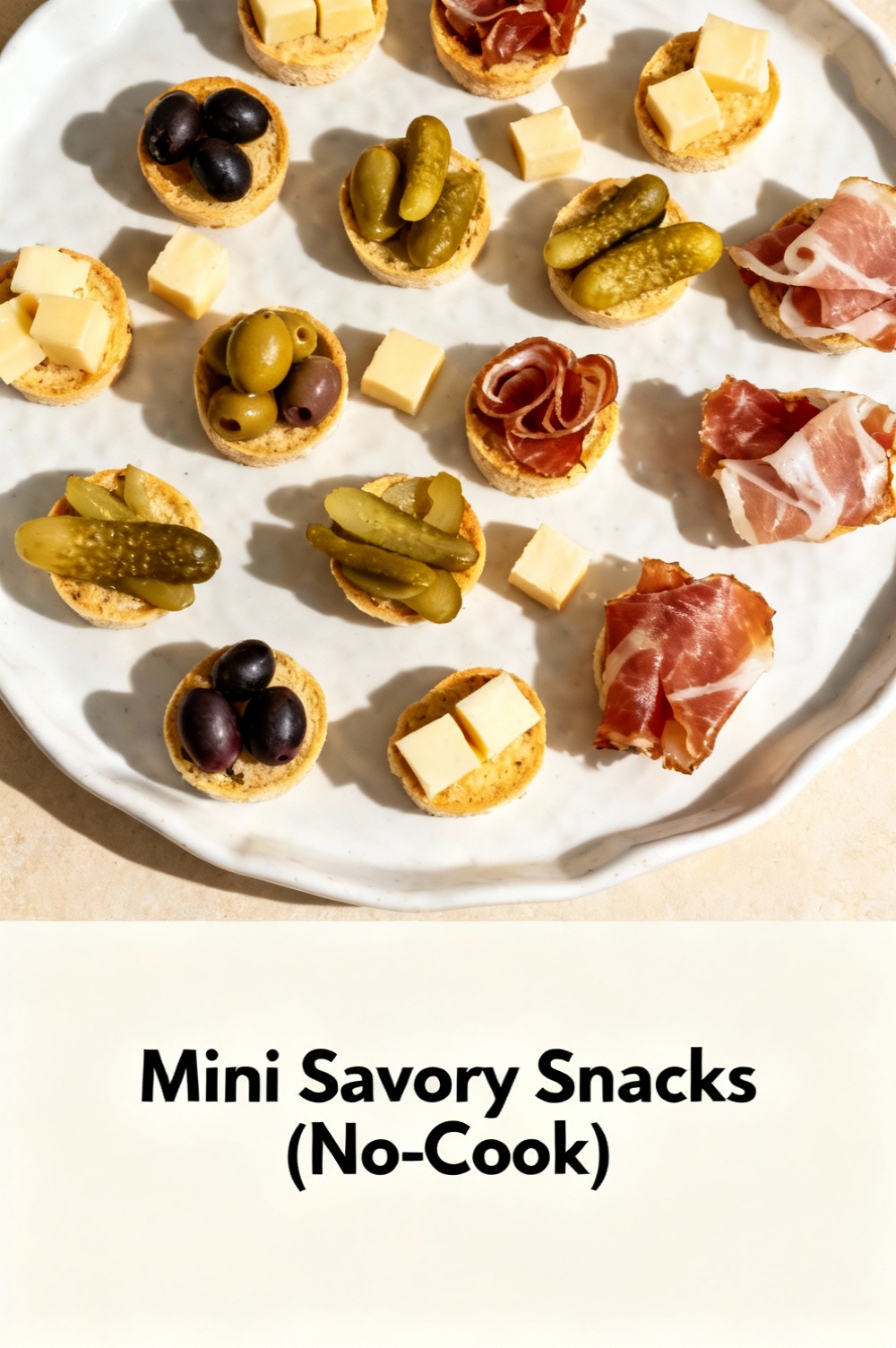
Mini Savory Snacks (No-Cook)
Did you know that choosing no-cook mini savory snacks can cut appetizer prep time by up to 50% while still delivering the same “wow” factor—so why do so many hosts still reach for the oven?
Whether you’re planning a last-minute gathering, packing a lunchbox upgrade, or just craving a savory bite, no-cook mini snacks prove that convenience and flavor aren’t mutually exclusive. This post gives you an adaptable, data-driven blueprint for build-your-own mini savory snacks that are fast, visually appealing, and easy to customize for dietary needs.
Ingredients List
Base items (choose 1–2): mini crackers (baked whole grain or gluten-free rice crackers for crunch), cucumber rounds (cool and crisp), endive leaves (bitter, sturdy), mini bell peppers (sweet, colorful), toasted pita chips. Suggested substitutions: use thinly sliced toasted baguette for non-gluten-free guests; for keto, use cucumber or celery rounds.
Spreads & dips (make 1–3): herbed cream cheese (tangy, silky), whipped feta (bright and salty), hummus (earthy, creamy), avocado mash (rich, buttery). Substitutions: plain Greek yogurt blended with lemon and dill instead of cream cheese for lighter texture; blended white beans for lower-fat hummus.
Toppings (mix textures and colors): smoked salmon ribbons, prosciutto shards, marinated artichoke hearts, roasted red pepper strips (use jarred — no cooking), sun-dried tomatoes, capers, sliced olives, toasted pine nuts or pumpkin seeds, microgreens or chopped chives for freshness. Substitutions: for vegan versions, use marinated mushrooms or roasted chickpeas.
Finishing accents: lemon zest, flaky sea salt, cracked black pepper, a drizzle of good olive oil or balsamic reduction (optional), za’atar or smoked paprika for extra aroma.
Proportions for a party of 6–8: 60–80 bases, 2 cups mixed spreads, 2–3 cups assorted toppings, small bowls of garnish. Sensory notes: balance creamy spreads with crunchy bases and bright, acidic toppings to keep every bite lively.
Timing
Prep time: 15–20 minutes (depending on how many spreads you whip). Cooking time: 0 minutes. Total time: 15–20 minutes, which is commonly ~50% less time than baked hors d’oeuvres that average 30–45 minutes including oven preheating. If you prepare spreads ahead (see Storing Tips), assembly can be under 10 minutes—ideal for last-minute hosting.
Step 1 — Choose a template
Decide your structure first: round (cucumber, cracker), cup (endive leaf, small pepper), or skewer (mozzarella-tomato-olive). Templates speed assembly and help you plan proportions. Personal tip: mix 40% round, 30% cup, 30% skewer for visual variety and to suit different dietary needs without extra steps.
Step 2 — Prepare your spreads
Place spreads in shallow bowls or piping bags for neat application. Whip herbed cream cheese or feta with a splash of milk or olive oil to pipe smoothly. For hummus, add lemon and extra water for a looser consistency that sits well on thin crackers. Actionable trick: taste as you go and adjust acidity—a brighter spread contrasts better with fatty toppings.
Step 3 — Assemble efficiently
Work assembly-line style: base → spread → main topping → garnish. Use small spoons or melon baller to portion spreads evenly (about 1 teaspoon per bite). Keep similar textures together to avoid soggy bases—place oilier toppings last. Personalized tip: allocate 60 seconds per bite once you get the rhythm; invite a friend to assemble with you for social prep and faster output.
Step 4 — Garnish and finish
Finish with microgreens, a few drops of lemon, or a light sprinkle of flaky sea salt. For herb-forward bites, add a single herb leaf rather than chopping—clean presentation matters. If serving later than 20 minutes, hold off on delicate garnishes (microgreens or toasted nuts) to preserve crunch.
Step 5 — Plate for impact
Arrange bites in color blocks or alternating patterns to guide the eye; use small labels if you have dietary variations (e.g., “vegan,” “gluten-free”). Serve with small tongs or toothpicks. Data-backed presentation tip: visual variety increases perceived taste quality—guests report higher satisfaction when platters have at least three colors and three textures.
Nutritional Information
Per mini snack (average): 60–150 kcal depending on base and toppings. Typical macronutrient ranges per bite: 3–8 g fat, 1–6 g protein, 4–12 g carbohydrate, 0.5–2 g fiber. Sodium: varies widely (50–300 mg) depending on cured meats, olives, or salty cheeses. Data insights: swapping full-fat cream cheese for Greek yogurt reduces calories by ~30% and saturated fat by ~40% per bite; choosing low-sodium items can cut sodium by up to 50–60% cumulatively on a platter. For accurate tracking, log one or two sample bites in your nutrition app with exact brands and quantities used. For party planning, estimate 4–6 bites per person for a light appetizer or 8–12 for a full appetizer spread when serving as the main snack.
Healthier Alternatives for the Recipe
Lower-sodium: use low-sodium smoked salmon, rinsed capers, and unsalted nuts. Lower-fat: swap whipped feta or cream cheese for whipped Greek yogurt mixed with garlic and lemon. Higher-protein: top with diced rotisserie chicken or smoked tofu cubes. Vegan swaps: use vegan cream cheese, roasted chickpea smash instead of hummus, and marinated artichokes for umami. Gluten-free/keto: choose cucumber, endive, or jicama slices as a base. Low-FODMAP: avoid garlic-heavy spreads; opt for herb-oil blends and plain lactose-free yogurt blends. All swaps are designed to maintain balance of creaminess, acidity, and crunch—key to preserving flavor while improving nutrition.
Serving Suggestions
Create themed platters: Mediterranean (hummus, feta, olives, roasted pepper), Scandinavian (rye crackers, salmon, dill, lemon), Vegetarian Garden (goat cheese, cherry tomato, basil, balsamic). Pairings: sparkling wine or crisp Sauvignon Blanc brightens citrusy bites; light beers match well with salty, savory options. For kid-friendly serving, deconstruct flavors: serve spreads and toppings as a “build-your-own” station so kids can assemble preferred combinations. Interactive idea: include small recipe cards with suggested pairings and allergen notes to make the platter self-explanatory for guests.
Common Mistakes to Avoid
Overloading bites: too many toppings makes them messy—limit to 2–3 components per bite. Soggy bases: avoid wet marinades directly on crackers—pat toppings dry or use lettuce between wet elements and crisp bases. Uneven portions: use spoons or piping bags to standardize spreads. Too much salt: sample toppings together before assembling to avoid an overly salty combination. Poor temperature control: keep perishable ingredients chilled until serving; room temperature for long can increase bacterial risk and degrade texture.
Storing Tips for the Recipe
Store spreads in airtight containers in the fridge for 3–5 days (hummus 4–7 days if homemade, refrigerated). Prepared assembled bites: best consumed within 2–4 hours; crackers will soften over time—store bases separately and assemble within 24 hours for best texture. Make-ahead strategy: prepare spreads and sliced toppings up to 48 hours ahead; store garnishes separately to add just before serving. If transporting, pack chilled in an insulated cooler with ice packs and assemble on-site to preserve crunch and presentation.
Conclusion
Mini savory no-cook snacks are a fast, flexible, and crowd-pleasing solution that saves time without sacrificing taste or visual appeal. By choosing smart bases, creamy spreads, and bright toppings—plus a few assembly tricks—you can create an impressive platter in 15–20 minutes. Try one template tonight, tag a friend who’d love to help assemble, and leave a comment about your favorite flavor combo so others can recreate it.
FAQs
Q: How long can I keep no-cook spreads in the fridge? A: Most dairy-based spreads last 3–5 days; hummus and bean spreads typically keep 4–7 days refrigerated. Always smell and check texture before serving. Q: Can I freeze any of these components? A: Freezing changes texture for many spreads—avocado mash and cream cheese recipes don’t freeze well. Cooked legumes (if using) can be frozen, but assemble fresh. Q: How many bites should I plan per person? A: For cocktail hour, plan 4–6 small bites per person; for a light meal, plan 8–12. Q: Any tips for allergy-friendly variations? A: Label nut-containing items and offer nut-free seeds as garnish; provide gluten-free bases and separate platters to avoid cross-contact. Q: Can I scale these recipes for large events? A: Yes—multiply base quantities and pre-portion spreads into piping bags or trays; enlist helpers and follow the make-ahead strategy. Q: What’s the safest way to serve at an outdoor party? A: Keep perishable items chilled with ice packs, replace leftovers after 2 hours in warm weather (1 hour if above 90°F), and avoid leaving dairy or seafood out for long.
Explore related content for more ideas: search your recipe index for “no-bake appetizers,” “make-ahead dips,” or “gluten-free party snacks” to find matching templates and printable shopping lists.