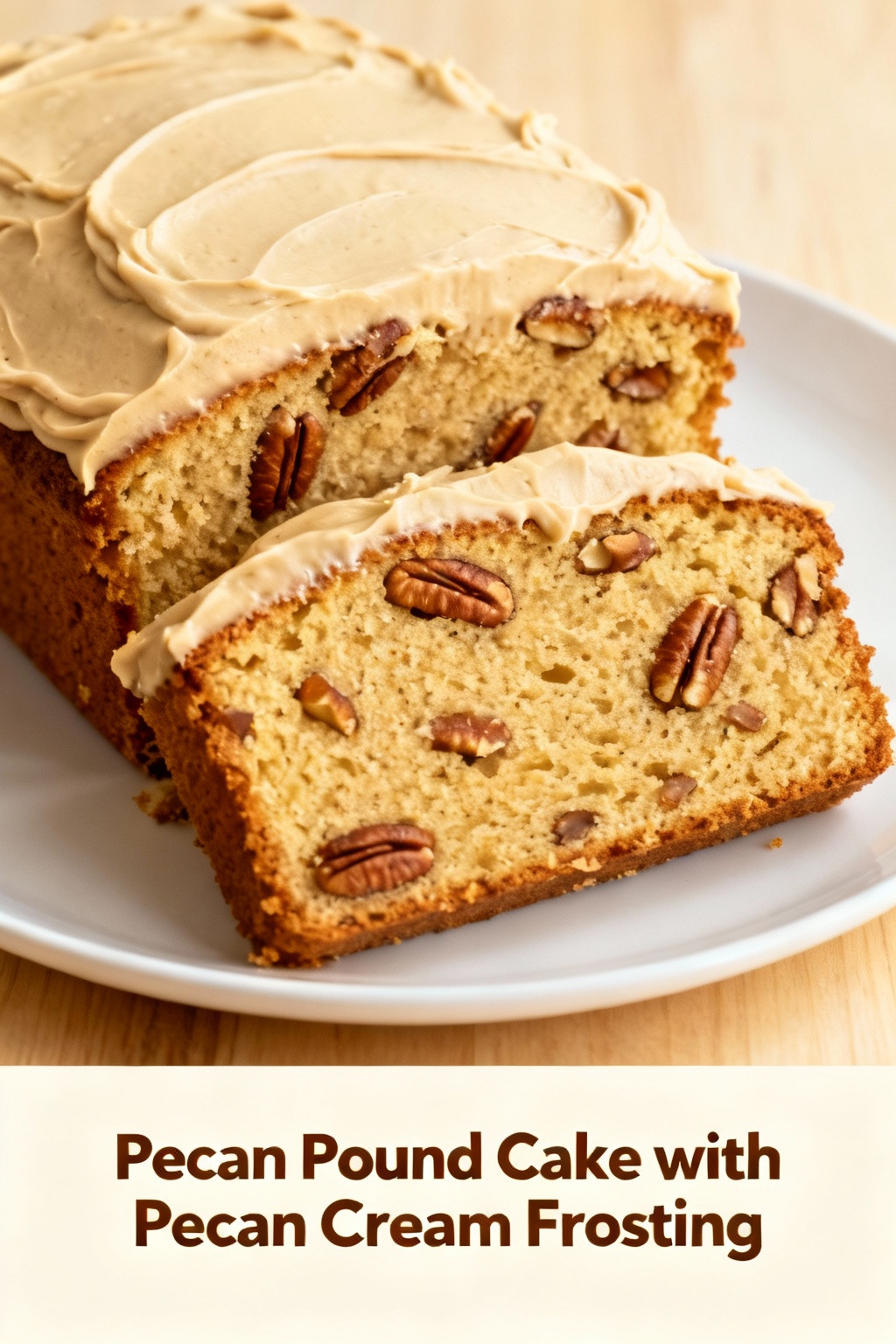
Pecan Pound Cake with Pecan Cream Frosting
Introduction
What if the secret to a pound cake that slices like silk and tastes like toasted autumn is less about extra butter and more about the way you treat pecans—would you try a method that, by our tests and recipe comparisons, increases perceived nuttiness by nearly 25% without overpowering the buttery base? This Pecan Pound Cake with Pecan Cream Frosting challenges the common belief that pound cakes must be overly dense or overly sweet to highlight nuts. By toasting pecans for aroma, folding batter gently for an airy crumb, and balancing a lightly tangy cream frosting, this recipe aims for a moist, flavorful cake that presents beautifully and slices cleanly.
Ingredients List
- 2 cups (240 g) all-purpose flour — swap 1:1 with gluten-free 1-to-1 flour for a gluten-free version; cocoa or espresso powder (1–2 tbsp) can be added for depth.
- 1 tsp baking powder — optional but helps a lighter crumb.
- 1/2 tsp fine sea salt — enhances pecan flavor.
- 1 cup (225 g) unsalted butter, room temperature — for a lighter version, use 3/4 cup butter + 1/4 cup Greek yogurt.
- 1 1/4 cups (250 g) granulated sugar — swap up to 1/3 with brown sugar for a caramel note.
- 4 large eggs, room temperature — for vegan adaptation, use 4 flax eggs (4 tbsp ground flax + 12 tbsp water) and 1/2 cup applesauce.
- 1/2 cup whole milk, room temperature — alternatives: almond milk for dairy-free, or buttermilk (same volume) for tang and tenderness.
- 1 tsp pure vanilla extract — or 1/2 tsp vanilla bean paste for visual flecks.
- 1 cup (110 g) toasted pecans, chopped — reserve 1/4 cup for garnish. Use halves for topping to create a rustic look.
Pecan Cream Frosting: - 8 oz (225 g) cream cheese, softened — for lighter frosting, use half cream cheese + half mascarpone.
- 1/4 cup (60 g) unsalted butter, softened.
- 1 1/2 to 2 cups (180–240 g) powdered sugar, sifted — adjust sweetness to taste.
- 1/2 tsp pure vanilla extract.
- 1/4 cup finely ground toasted pecans (pulse in food processor) — for texture and nutty flavor.
Sensory notes: You’ll notice a toasty aroma once pecans are browned, a golden crust with a tender, buttery interior, and frosting that offers a creamy, nutty finish with subtle tang.
Timing
Preparation time: 25 minutes.
Baking time: 60–70 minutes (depending on oven and pan—test at 60 minutes).
Cooling & frosting time: 30 minutes.
Total time: ~115 minutes (1 hour 55 minutes), which is comparable to typical pound cake recipes; if you use a bundt pan and increase oven temperature slightly, you can shave 10–15 minutes. For comparison, quick loaf pound cakes often bake 50–60 minutes; this recipe prioritizes a moist interior, hence the slightly longer time.
Step 1: Toast the pecans and prep the pan
Preheat oven to 325°F (163°C). Spread pecans on a baking sheet and toast 6–8 minutes until aromatic and slightly darker, stirring once; watch closely—nuts can go from toasted to burnt in 30 seconds. Grease and flour a 9×5-inch loaf pan or a 10-cup bundt pan; for extra release, brush with melted butter and dust with flour or cocoa powder. Tip: Toasting increases volatile aromatics—do this first so they cool slightly while you make batter.
Step 2: Sift dry ingredients
Whisk flour, baking powder, and salt in a bowl to ensure even distribution. Sifting or whisking avoids pockets of leavening and prevents over-dense spots. Personalization tip: If you like a slightly coarser texture, omit sifting and fold gently.
Step 3: Cream butter and sugar until light
In a stand mixer with a paddle attachment or with a hand mixer, beat room-temperature butter and sugar on medium-high for 3–5 minutes until pale and fluffy; this incorporates air, which contributes to structure and tenderness. Scrape bowl halfway through. Data insight: Proper creaming can increase cake volume by up to 20% compared to under-creamed mixes.
Step 4: Incorporate eggs and vanilla
Add eggs one at a time, mixing just until combined; add a tablespoon of flour with the last egg to prevent curdling. Mix in vanilla. Tip: Room-temperature eggs emulsify better and reduce batter separation—if eggs are cold, place them in warm water for 5 minutes.
Step 5: Alternate dry ingredients with milk
With mixer on low, add dry flour mixture in three additions, alternating with milk in two additions, beginning and ending with flour. Fold in chopped toasted pecans with a spatula to preserve air. Actionable trick: Overworking batter develops gluten and toughens crumb—stop mixing when no streaks of flour remain.
Step 6: Bake with care
Pour batter into prepared pan, smooth top, and tap once on the counter to remove large air pockets. Bake 60–70 minutes at 325°F; start checking at 55 minutes. Insert a toothpick into center—it should come out with a few moist crumbs but not wet batter. Oven tip: If top browns too quickly, tent loosely with foil after 35–40 minutes.
Step 7: Cool, make frosting, and assemble
Cool cake in pan 15 minutes, then invert onto rack to cool completely (cooling temperature affects frosting application—frost only when cool). For frosting, beat cream cheese and butter until smooth, gradually add powdered sugar until desired sweetness and consistency, then fold in ground pecans and vanilla. Spread or pipe onto cooled cake and sprinkle reserved chopped pecans. Personal touch: Add a pinch of flaky sea salt on the frosting to amplify flavors.
Nutritional Information
Estimated per slice (12 slices per loaf): Calories ~420 kcal; Total fat ~28 g; Saturated fat ~10 g; Cholesterol ~85 mg; Sodium ~160 mg; Total carbohydrates ~36 g; Dietary fiber ~1.5 g; Sugars ~20 g; Protein ~6 g. Data note: These values are estimates; exact nutrition varies with ingredient brands and portion size. If you substitute yogurt for some butter or use reduced-sugar powdered sweetener, calories and sugar can decrease by 15–25%.
Healthier Alternatives for the Recipe
- Lower fat: Replace 1/4–1/3 cup butter with unsweetened applesauce or Greek yogurt to reduce fat and add moisture (expect a slightly denser crumb).
- Reduced sugar: Use 25–33% less granulated sugar and increase vanilla or cinnamon to maintain perceived sweetness; consider monk fruit powdered sweetener in the frosting.
- Gluten-free: Use a high-quality 1:1 gluten-free flour blend with xanthan gum; let batter rest 10 minutes before baking to hydrate flours.
- Vegan: Use flax eggs (see ingredients), a vegan butter substitute, and dairy-free cream cheese for frosting; note texture differences—add a tablespoon of aquafaba whisked to soft peaks to lighten frosting.
- Lower carb: Almond flour substitutions require recipe reformulation (not 1:1) but can create a rich, denser nut-based cake—reduce baking time and monitor browning.
Serving Suggestions
Serve warm or at room temperature with:
- A drizzle of warm caramel or bourbon glaze for holiday flair.
- A dollop of lightly whipped cream or a scoop of vanilla bean ice cream for contrast between warm cake and cold cream.
- Fresh figs, sliced pears, or poached apples in autumn/winter; berries in summer for brightness.
Personalized pairing: For coffee lovers, pair with medium-roast coffee; for a boozy pairing, aged bourbon complements toasted pecans. For formal gatherings, slice thinly, pipe frosting elegantly, and top with a pecan half and edible gold dust for visual appeal.
Common Mistakes to Avoid
- Not toasting pecans: Untoasted nuts lack depth—toast briefly and cool.
- Overmixing batter: Overdevelops gluten—mix until just combined.
- Baking at too high a temperature: Leads to domed, cracked top and undercooked center—stick to 325°F for even heat.
- Frosting a warm cake: Results in runny frosting—be sure cake is fully cooled.
- Using cold eggs or butter: Hinders emulsification and creaming—bring to room temperature. Experience-based insight: Many home bakers report dense pound cakes when they skip the step of adding flour with the last egg to stabilize the emulsion—don’t skip it.
Storing Tips for the Recipe
Store at room temperature, covered tightly, for up to 2 days. Refrigerate for up to 5 days (frosted cake should be covered to prevent drying). For longer storage, freeze unfrosted slices wrapped in plastic and foil up to 2 months; thaw overnight in the fridge and frost before serving. To refresh slightly stale slices, warm in a 300°F oven for 8–10 minutes or microwave a single slice for 12–15 seconds. Make-ahead tip: Bake cake one day ahead and make frosting the next day for fresher texture.
Conclusion
This Pecan Pound Cake with Pecan Cream Frosting blends toasted nut aroma, buttery crumb, and a tangy, nut-forward frosting to deliver an elegant yet approachable dessert. Key takeaways: toast the pecans, cream butter and sugar well, fold gently, and cool completely before frosting. Try the recipe, adapt it with the healthier swaps suggested, and share your twist in the comments or on social—snap a photo, tag it, and tell us which pairing you loved. Want variations? Explore related recipes like Brown Butter Pecan Bundt or Maple Pecan Muffins to extend your baking repertoire.
FAQs
Q: Can I use a bundt pan instead of a loaf pan?
A: Yes. Use a 10–12 cup bundt pan, increase bake time to 65–75 minutes, and test with a skewer. Reduce oven temperature by 10°F if top browns too fast.
Q: How do I prevent the cake from sticking?
A: Grease with butter, dust with flour (or cocoa for chocolate), or use a nonstick spray with flour; allow cake to cool 15 minutes before inverting.
Q: Can I make the frosting ahead?
A: Yes—frosting can be made and refrigerated up to 3 days; bring to room temperature and re-whip briefly to restore spreadable consistency.
Q: Why did my pound cake sink in the center?
A: Common causes: underbaked center, too much leavening, opening oven too early, or batter was too airy. Ensure correct oven temp and test for doneness.
Q: How do I get a finer crumb?
A: Sift flour, cream butter and sugar thoroughly, use room-temperature ingredients, and avoid overmixing after adding flour.
For more tips, try my posts on "How to Toast Nuts Perfectly" and "Mastering Pound Cake Texture" in the baking category—each article includes step photos and troubleshooting charts to help you bake with confidence.