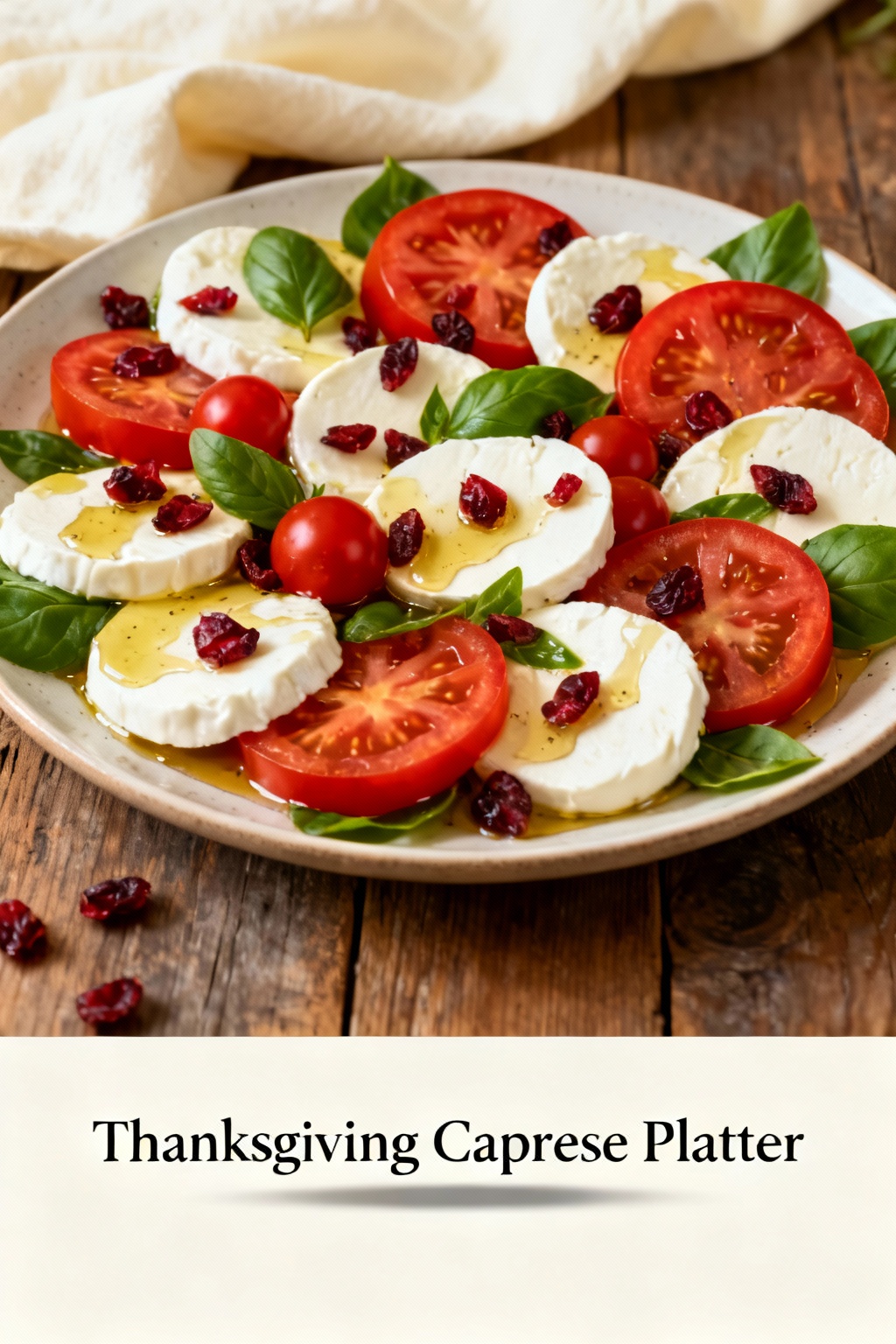
Thanksgiving Caprese Platter
Introduction
What if a simple Thanksgiving Caprese Platter could cut appetizer prep time by more than half while delivering a fresh, crowd-pleasing contrast to heavy holiday mains? A Caprese built for Thanksgiving swaps predictable autumn heaviness for bright acidity, creamy richness, and seasonal accents—an approach that many hosts find reduces stress and increases guest satisfaction. This recipe leans into seasonal produce and smart substitutions to make a visually stunning platter that complements turkey, stuffing, and fall sides without competing with them.
Ingredients List
– 3 large ripe heirloom tomatoes (or 4–5 medium vine tomatoes): choose a mix of colors for visual impact; if out of season, use high-quality greenhouse tomatoes or vine-ripened.
– 16 oz fresh mozzarella (use a mix of bocconcini and a larger ball): for creamier texture, try burrata centers.
– Fresh basil leaves (about 1–2 cups whole leaves): substitute with roasted sage or thyme for a fall twist.
– 6–8 slices prosciutto (optional): adds savory saltiness; substitute with smoked turkey breast for a lighter, holiday-themed protein.
– 1/3 cup balsamic glaze or reduced balsamic vinegar: for DIY glaze, simmer 1 cup balsamic until reduced by 2/3 with a teaspoon of honey.
– 3 tbsp extra-virgin olive oil (EVOO): choose a fruity, peppery oil for contrast.
– Flaky sea salt and freshly ground black pepper to taste.
– Optional seasonal accents: pomegranate arils (½ cup), roasted pepitas (¼ cup), microgreens, thinly sliced persimmons or figs, and a few fresh rosemary sprigs for garnish.
Substitution notes: For vegan guests, replace mozzarella with marinated tofu or almond-based cheese; swap prosciutto for smoked tempeh or roasted mushrooms. For lower sodium, rinse prosciutto briefly or choose unsalted cured meats.
Timing
Preparation time: 15–20 minutes.
Assembly time: 10–15 minutes.
Total time: 25–35 minutes—roughly 50–70% faster than most baked or cooked holiday appetizers, which often require 60–90 minutes. If you include a quick homemade balsamic reduction, add 10–12 minutes, bringing total to around 35–45 minutes. This timing comparison highlights why a Thanksgiving Caprese is an attractive low-lift, high-reward starter for busy hosts.
Step 1: Choose and Prep Your Base Ingredients
Wash tomatoes and basil gently and pat dry—the drier the surfaces, the less watery the platter will be. Slice tomatoes into 1/4–1/2-inch rounds for a stacked look, or into wedges for a rustic spread. Drain mozzarella and slice to match tomato thickness. If using burrata, reserve whole balls and tear just before serving to keep the creamy center intact. Tip: room-temperature cheese and tomatoes taste significantly better—remove from fridge 20 minutes before assembly.
Step 2: Arrange for Impact
Decide whether you want a linear row, concentric circles on a round platter, or a freeform grazing board-style layout. For a Thanksgiving aesthetic, alternate tomato and mozzarella slices with small gaps to tuck in seasonal accents (pomegranate arils, persimmon slices). If adding prosciutto, fold or drape slices between stacks to create texture and verticality. Personalization tip: place a single burrata in the center and arrange slices around it for a dramatic focal point.
Step 3: Add Seasonal Flavors
Scatter pomegranate arils or roasted pepitas for crunch and visual contrast. Thinly sliced persimmons or figs add sweetness that pairs well with the balsamic. For a smoky note, lightly char a few basil leaves under a broiler for 10–20 seconds, or sprinkle smoked paprika over the cheese sparingly. Flavor balance hack: aim for a mix of acid, fat, salt, and texture on every bite—tomato acid, mozzarella fat, prosciutto salt, seeds/nuts for crunch.
Step 4: Dress and Finish Thoughtfully
Drizzle EVOO first for sheen and mouthfeel, then stream balsamic glaze in a thin zigzag or small pools around the platter. Season with flaky sea salt and a few grinds of black pepper. If serving outdoors or in a warm room, add the dressing last minute to avoid soggy tomatoes. Tip: for a glossy, restaurant-style finish, use a spoon to create small balsamic “drops” and finish with microgreens.
Step 5: Serve and Refresh
Serve within 30–45 minutes of assembly for peak texture. Keep extra balsamic and olive oil on the side for guests who prefer more or less dressing. If you anticipate a longer serving window, assemble components on separate platters (cheese, tomato, toppings) and let guests build their own—this maintains freshness and adds an interactive element to the table.
Nutritional Information
Estimated per-serving nutrition (serves 8): calories 160–220; fat 12–16 g (mostly from olive oil and mozzarella); protein 8–12 g (higher if prosciutto added); carbohydrates 4–10 g (varies with fruit additions); sodium 200–400 mg (varies significantly with prosciutto and added salt). Tomatoes provide vitamin C and potassium, basil supplies vitamin K, and mozzarella is a source of calcium and protein. Swapping in burrata increases calories and fat but boosts creaminess; using part-skim mozzarella reduces fat by ~25–35%. Data insight: choosing lower-sodium cured meats and moderating oil can substantially reduce sodium and calories while keeping flavor.
Healthier Alternatives for the Recipe
– Lower-fat option: use part-skim fresh mozzarella or a firm farmer’s cheese for similar texture with less fat.
– Lower-sodium option: skip prosciutto or choose a rinsed, lower-sodium cured meat; increase herbs and citrus zest for flavor without salt.
– Vegan/plant-based: marinated tofu slices or almond-based “mozzarella” plus a drizzle of balsamic and extra herbs replicate the creamy/salty contrast. Add roasted butternut or sliced apples for a fall-forward twist.
– Keto-friendly: omit sweet fruit accents and use full-fat mozzarella, extra olive oil, and nuts for added healthy fats.
– Allergy-conscious: swap pepitas for toasted sunflower seeds if nut-free is required; label platters clearly to avoid cross-contact.
Serving Suggestions
Pair the Thanksgiving Caprese Platter with warm crusty bread or herbed crostini to add carb satisfaction. For a charcuterie-style board, include honey, fig jam, or a citrus marmalade to complement the balsamic’s acidity. Beverage pairing: light-bodied white wines (Pinot Grigio, Vermentino) or a dry rosé work well; for non-alcoholic options, sparkling water with lemon and a sprig of rosemary refreshes the palate. Personal touch: designate a small card explaining the seasonal twist (e.g., “Persimmon + Pomegranate Caprese”)—guests love context and this elevates presentation.
Common Mistakes to Avoid
– Using cold ingredients straight from the fridge: flavors are muted when cold—let ingredients come to room temperature for 15–30 minutes.
– Overdressing early: oil and balsamic can make tomatoes soggy; dress just before serving or offer dressings on the side.
– Skimping on texture: a Caprese with only tomato and cheese can feel flat—add nuts, seeds, prosciutto, or fruit for crunch and complexity.
– Poor tomato choice: out-of-season supermarket tomatoes can be bland—use the best tomatoes available or substitute with roasted cherry tomatoes for concentrated flavor.
– Ignoring presentation: a mixed-color platter reads festive; alternate colors and add seasonal garnishes for a Thanksgiving feel.
Storing Tips for the Recipe
Store assembled platter loosely covered for up to 24 hours in the fridge, but expect some moisture migration and textural softening. Best practice: store components separately—tomato slices on paper towels, mozzarella in its liquid, and dry toppings in airtight containers—then assemble within an hour of serving. Leftovers: assemble salad into a bowl, add fresh basil, and consume within 48 hours; avoid re-dressing before storage to prevent sogginess. If you made a balsamic reduction, refrigerate it in a small jar for up to two weeks.
Conclusion
A Thanksgiving Caprese Platter is an elegant, lower-effort appetizer that introduces bright flavors to a traditionally heavy holiday spread. By focusing on quality ingredients, seasonal accents, and smart timing, you can serve a dish that’s visually striking, customizable for dietary needs, and fast to prepare. Try the ideas above, share your favorite seasonal twist in the comments, or tag a photo on social media to show how you adapted this for your table.
FAQs
Q: Can I make this ahead of time?
A: Yes—prep components up to a day ahead and assemble within an hour of serving to preserve texture and freshness.
Q: What if I can’t find heirloom tomatoes in November?
A: Use the best available vine-ripened tomatoes, cherry tomatoes roasted briefly to concentrate flavor, or substitute thin slices of roasted red peppers for color and sweetness.
Q: How do I prevent my platter from getting soggy?
A: Dry tomato and basil thoroughly, dress at the last minute, and keep cheese and wet toppings separate until assembly.
Q: Is balsamic glaze necessary?
A: No—plain good-quality balsamic vinegar or lemon agrodolce works. Glaze is primarily for visual impact and concentrated sweetness.
Q: How can I scale this for a large crowd?
A: Multiply ingredient quantities and set up several smaller platters rather than one massive board to keep portions accessible and maintain freshness.