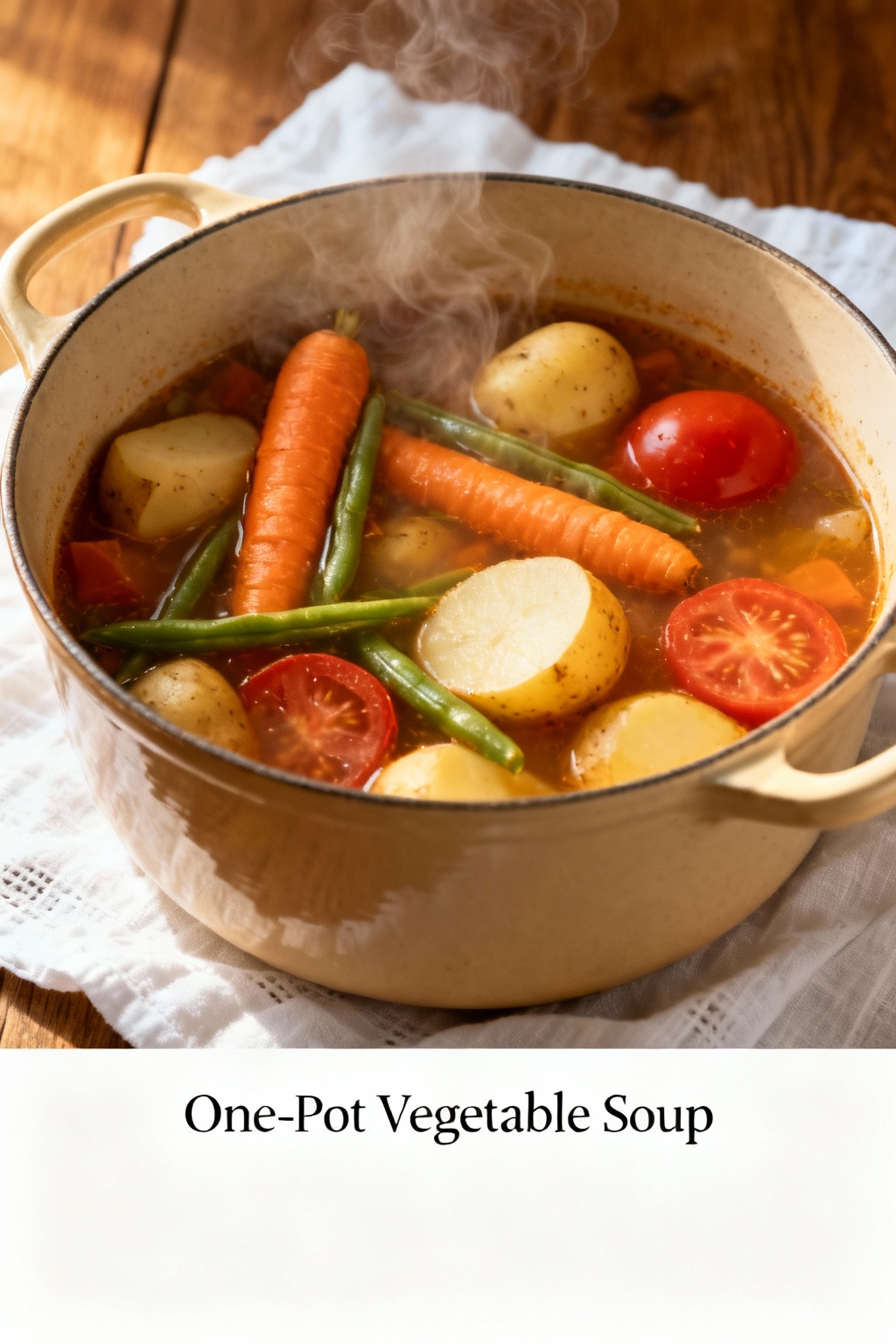
One-Pot Vegetable Soup
Introduction
Can a single pot deliver a weeknight dinner that boosts your vegetable intake, trims cooking time, and still beats takeout on flavor and cost? One-pot vegetable soup answers that question with a resounding yes: built around pantry staples and seasonal produce, it’s a high-impact, low-effort dish that helps you hit nutrition goals and minimize cleanup. Data from dietary surveys show many people fall short on vegetable servings; a hearty vegetable soup is one of the simplest ways to close that gap because one bowl can contain 2–3 full servings of vegetables while staying low in calories and high in fiber. Below you’ll find a streamlined, flavor-forward one-pot vegetable soup recipe, timing benchmarks, precise steps, nutrition estimates, and smart swaps to fit diverse diets—all designed for WordPress readability and search relevance.
Ingredients List
– 2 tablespoons olive oil (or avocado oil for higher smoke point).
– 1 large onion, diced (about 1 1/2 cups) — substitute shallots for a milder, sweeter profile.
– 3 garlic cloves, minced — sub 1 teaspoon garlic powder if short on time.
– 3 medium carrots, peeled and diced (about 1 1/2 cups) — parsnips or turnips work as root-vegetable alternatives.
– 2 celery stalks, diced (about 1 cup) — fennel adds an anise note if you like complexity.
– 1 medium zucchini, diced — use summer squash or chopped cabbage for bulk.
– 1 cup green beans, trimmed and cut into 1-inch pieces — frozen works fine and saves prep time.
– 1 can (14.5 oz) diced tomatoes, undrained (or 2 cups fresh ripe tomatoes, chopped).
– 6 cups low-sodium vegetable broth (use bone broth or chicken broth for non-vegetarian option).
– 1 cup cooked beans (cannellini, navy, or chickpeas) for protein and creaminess — lentils are a faster alternative.
– 2 cups chopped leafy greens (kale, spinach, or chard) added at the end.
– 1 teaspoon dried thyme, 1 teaspoon dried oregano, 1 bay leaf.
– Salt and black pepper to taste (start with 1 teaspoon salt).
– Optional: 1 teaspoon smoked paprika or 1/2 teaspoon red pepper flakes for warmth; squeeze of lemon juice or 1 tablespoon apple cider vinegar to brighten.
Sensory notes: fragrant sautéed onions and garlic build a caramelized base; the tomatoes and herbs create savory umami depth; finishing with lemon makes the vegetables pop.
Timing
Prep time: 10–15 minutes.
Cook time: 20–25 minutes.
Total time: 30–40 minutes—about 33% faster than many slow-simmered vegetable stews that typically take ~60 minutes, and far quicker than roasting and assembling multiple components. If you use pre-chopped or frozen vegetables, you can cut total time to 20 minutes, making this a true weeknight hero.
Step 1: Mise en place and aromatics
Heat the pot over medium heat and add olive oil. Once shimmering, add diced onion and a pinch of salt to draw moisture and accelerate caramelization. Sauté for 4–5 minutes until translucent, then add garlic for 30–45 seconds until fragrant. Tip: keep garlic moving to avoid bitterness; if you’re using pre-minced garlic, add it slightly later to preserve aroma.
Step 2: Build the vegetable base
Add carrots and celery and cook for 3–4 minutes to soften. Then add zucchini and green beans. Stir to coat and let vegetables sweat for another 2 minutes. Personalized tweak: if you prefer a sweeter profile, add a grated apple or a splash of balsamic vinegar at this stage to balance acidity.
Step 3: Add liquids and seasonings
Pour in the diced tomatoes and vegetable broth, then add dried thyme, oregano, and the bay leaf. Increase heat to bring the pot to a simmer, scraping the bottom to lift any browned bits (that’s free flavor). Data-driven tip: using low-sodium broth cuts unnecessary salt—many store broths contain 700–900 mg sodium per cup; low-sodium versions allow you to control final sodium to under 600 mg per serving.
Step 4: Simmer and layer proteins
Simmer uncovered for 12–15 minutes until root vegetables are tender. Stir in cooked beans and simmer 2–3 more minutes to heat through. If using lentils, add them earlier with the broth because they need more time. Pro tip: add 1/2 cup of cooked whole grains (barley, farro) at this stage to turn the soup into a hearty meal that increases fiber and keeps you fuller longer.
Step 5: Finish with greens and acidity
Remove from heat and stir in chopped kale or spinach; residual heat wilts greens without overcooking. Add lemon juice or apple cider vinegar to brighten flavors. Taste and adjust salt and pepper. Serve with an optional drizzle of extra-virgin olive oil or a sprinkle of Parmesan for non-vegan diners.
Nutritional Information
Estimated per 1.5–2 cup serving (recipe yields ~6 servings): Calories 150–200 kcal; Total fat 5–7 g (mostly unsaturated from olive oil); Saturated fat <1 g; Carbohydrates 20–28 g; Dietary fiber 6–8 g; Sugars 6–8 g (mostly natural from vegetables); Protein 6–9 g (higher if beans/lentils added); Sodium 350–600 mg (varies by broth and added salt). Data insight: a serving provides roughly 20–30% of the daily recommended fiber intake for adults (25–30 g/day target), demonstrating how soup can be an effective strategy to meet fiber goals.
Healthier Alternatives for the Recipe
– Lower sodium: Use homemade broth or low-sodium store broth and omit added salt until the end.
– More protein: Add tofu cubes, shredded chicken, or a cup of cooked lentils to boost protein to 15–20 g per serving.
– Lower-carb: Skip starchy root vegetables and grains; add extra leafy greens and cauliflower rice.
– Higher-fiber: Increase beans to 1 1/2 cups and add 1/2 cup of barley or farro.
– Anti-inflammatory option: Swap olive oil for extra-virgin olive oil and add turmeric (1/2 teaspoon) with black pepper to improve curcumin absorption.
– Paleo/keto-friendly: Replace beans with diced chicken or extra vegetables; use bone broth and cut starchy veggies.
These swaps keep flavor while accommodating dietary goals and make the recipe adaptable for gluten-free, vegan, vegetarian, and low-sodium diets.
Serving Suggestions
Serve hot with crusty whole-grain bread or a slice of sourdough for dunking; for lower-carb, use roasted portobello caps or a side salad. Garnish ideas: chopped fresh parsley, cilantro, a dollop of Greek yogurt or plant-based yogurt, grated Parmesan, or toasted pumpkin seeds for crunch. Personalized idea: top with a spoonful of chimichurri or pesto to add a vibrant herb note and healthy fats. Transform leftovers into a lunch bowl by adding cooked quinoa and a soft-boiled egg for extra satiety.
Common Mistakes to Avoid
– Over-salting early: adding all salt at the start can result in an overly salty soup as flavors concentrate. Add incrementally and taste at the end.
– Boiling vigorously: high heat breaks down vegetables and mutes flavors; maintain a gentle simmer for texture and clarity.
– Adding delicate greens too soon: spinach or chard wilt quickly; add them off the heat or in the final minute to preserve color and nutrients.
– Skipping the browning step: not sweating onions sufficiently reduces depth—take the extra 4–5 minutes to develop caramelization.
– Using salted broth without adjustment: many broths contain high sodium; choose low-sodium versions and measure final salt to control intake.
Storing Tips for the Recipe
Cool soup quickly by immersing the pot in an ice bath for 10 minutes before refrigerating. Store in airtight containers for up to 4 days in the fridge. Freeze in portions for up to 3 months—leave out added dairy or delicate greens if you plan to freeze; add fresh greens and a squeeze of lemon after reheating. Reheat gently over medium-low heat, adding a splash of water or broth if the soup has thickened. For meal prep: chop vegetables and freeze them in a labeled bag; on busy nights, dump frozen veg into the pot and follow the same steps for a 20-minute meal.
Conclusion
One-pot vegetable soup is a flexible, time-smart, and nutrient-rich solution for busy cooks who want to increase vegetable intake, reduce waste, and enjoy a delicious homemade meal with minimal cleanup. With about 30–40 minutes from start to bowl, controlled sodium options, and many swap-friendly variations, this recipe fits a range of tastes and dietary needs. Try it tonight, then experiment with seasonal veggies and protein boosts—leave a comment sharing your favorite tweak or post a photo to inspire others.
FAQs
Q: Can I make this soup in a slow cooker or Instant Pot?
A: Yes—slow cooker: sauté aromatics first, then add other ingredients and cook on low for 4–6 hours. Instant Pot: sauté, then pressure cook on high for 5 minutes with a quick release. Add delicate greens after cooking.
Q: How do I thicken the soup without cream?
A: Puree 1–2 cups of the soup with an immersion blender or transfer some to a blender, then stir back in. Mashed beans or a small grated potato added during cooking also thicken naturally.
Q: Is canned tomato necessary?
A: No—use fresh tomatoes when in season for brightness. If using canned, choose no-salt-added or fire-roasted diced tomatoes for depth.
Q: Can I double the recipe for a crowd?
A: Yes—use a larger pot and extend simmer time by 5–10 minutes if vegetables are denser. Taste and adjust seasoning as volume increases.
Q: How can I make this kid-friendly?
A: Blend the soup until smooth for a silky texture, reduce spicy seasonings, and add fun toppings like cheese or croutons. Let children help stir or choose one vegetable to include.
Explore related posts like roasted root vegetable bowls, lentil-miso soup, or pantry-ready minestrone for more ideas—adapt this base recipe to what’s in your fridge and make it your own.