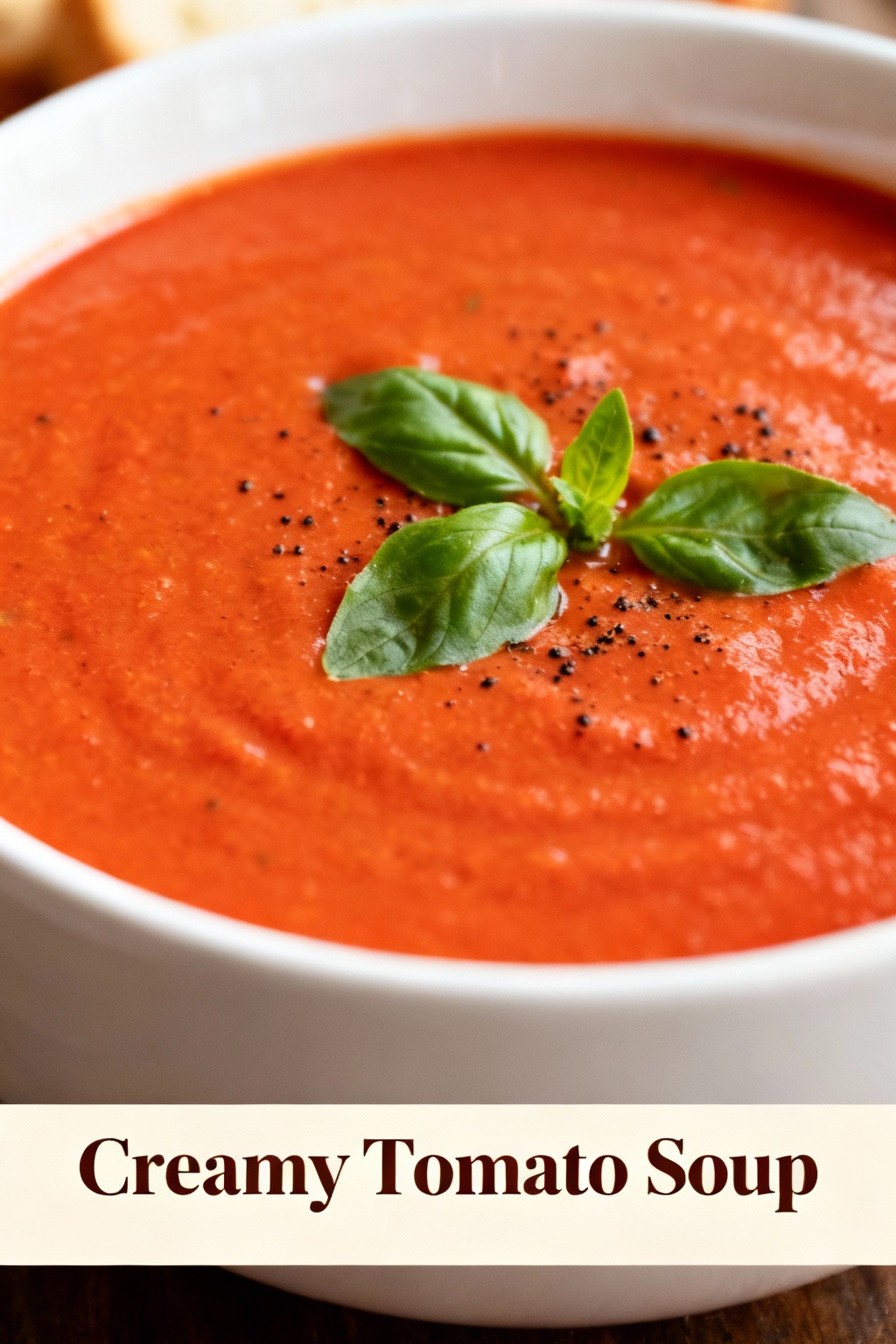
Creamy Tomato Soup
Introduction
What if a single bowl of tomato soup could deliver comfort, vitamin C, and a restaurant-quality silky texture in under 40 minutes—challenging the belief that rich, creamy soups require hours of simmering? This creamy tomato soup recipe leverages fresh and canned tomatoes, smart techniques (roasting or quick sautéing), and an easy emulsifying step to create a deeply flavored, velvety soup that’s fast, nutritious, and customizable for multiple diets.
Ingredients List
- 2 tablespoons olive oil or unsalted butter (substitute: avocado oil for neutral flavor; vegan: use olive oil or vegan butter).
- 1 medium yellow onion, finely chopped (for sweetness; substitute: shallot for a milder, more floral note).
- 2–3 cloves garlic, smashed and minced.
- 2 pounds (about 6) ripe tomatoes, cored and quartered, or two 28-oz cans whole peeled tomatoes (use San Marzano for sweeter, brighter flavor).
- 1 medium carrot, peeled and diced (adds natural sweetness and body; optional).
- 1 cup low-sodium vegetable or chicken stock (substitute: water + 1 tsp bouillon for pantry-friendly option).
- 1/2 cup heavy cream or half-and-half (substitute: full-fat coconut milk for dairy-free/vegan; cashew cream for ultra-silky vegan texture).
- 1 teaspoon sugar or honey (balances acidity; omit if your tomatoes are very sweet).
- 1 teaspoon kosher salt, plus more to taste.
- 1/2 teaspoon freshly ground black pepper.
- 1/2 teaspoon smoked paprika or sweet paprika (optional, adds depth).
- 1 tablespoon tomato paste (optional, intensifies tomato umami).
- 1/4 cup fresh basil leaves, torn (substitute: 1 teaspoon dried basil).
- Garnish options: drizzle of cream or coconut milk, extra basil, croutons, cracked pepper, or a sprinkle of parmesan.
Timing
Preparation time: 10–15 minutes.
Cooking (active and simmering) time: 20–25 minutes.
Total time: ~35–40 minutes, which is about 30–50% faster than slow-simmered bisques yet achieves comparable depth through roasting/sauté and concentrated tomatoes.
If roasting fresh tomatoes first, add 20 minutes (total ~55–60 minutes), which yields sweeter, caramelized notes—ideal when tomatoes are underripe.
Step 1: Prep for maximum flavor
Wash and core tomatoes; dice onions and carrots; smash garlic. If using canned tomatoes, reserve juices. Prepping all ingredients first reduces active cook time and prevents overcooking aromatics. Tip: chopping a little larger for roasting retains texture and reduces water loss during roasting.
Step 2: Roast or sauté to concentrate taste
For roasted depth, toss tomatoes, carrots, onion, a drizzle of oil, and a pinch of salt on a sheet tray and roast at 425°F (220°C) for 20–25 minutes until edges brown and caramelize. For a quicker route, heat oil/butter in a large pot over medium heat, sauté onions until translucent (5–7 minutes), add garlic for 30 seconds, then add tomato paste and cook 1 minute to deepen flavor. Roasting increases sugar concentration via caramelization; sautéing preserves bright tomato notes—choose based on preference.
Step 3: Simmer to meld flavors
Add roasted or canned tomatoes and their juices to the pot (if roasted, scrape all browned bits), add stock, basil stems (if available) and bring to a gentle simmer. Reduce heat and simmer for 10–15 minutes to integrate flavors and soften carrots completely. Tip: simmering for 10 minutes is sufficient when using canned tomatoes, shorter than many recipes because roasting/cooking already developed depth.
Step 4: Blend for creaminess
Remove basil stems if used. Use an immersion blender directly in the pot for a hands-off approach, pulsing until smooth and velvety. Alternatively, transfer batches to a countertop blender; blend on medium until silky. For ultra-smooth bisque texture, pass through a fine-mesh sieve back into the pot—this extra step removes seeds and any fibrous bits. Safety tip: when using a blender, vent the lid slightly and cover with a towel to avoid steam pressure.
Step 5: Finish and balance
Return blended soup to low heat. Stir in cream or coconut milk, add sugar/honey and smoked paprika if using. Taste and adjust salt and acidity—if too acidic, a small pat of butter or a pinch of baking soda (a tiny fraction, ~1/8 teaspoon) can neutralize excess tang; if too sweet, a squeeze of lemon balances it. Warm through gently—do not boil cream to avoid separation. Add torn basil leaves and remove from heat. Personalized tip: stir in a tablespoon of unsalted butter at the end for glossy finish and mouthfeel if not vegan.
Step 6: Serve and garnish
Ladle into warmed bowls and finish with a swirl of cream or coconut milk, a few basil leaves, and freshly baked croutons or a grilled cheese wedge on the side. For a smoky accent, lightly char the edges of the bread or grate aged parmesan over the top. Variation tip: for a heartier meal, stir in cooked orzo, white beans, or shredded rotisserie chicken.
Nutritional Information
Per 1.5-cup serving (approximate using canned tomatoes and heavy cream): Calories ~220–280 kcal, Fat 12–18 g (saturated fat 6–9 g if using dairy cream), Carbohydrates 18–24 g (fiber 3–4 g, sugars 10–12 g), Protein 4–6 g, Sodium ~480–700 mg depending on stock and added salt. Using coconut milk or cashew cream increases saturated fat profile but makes it dairy-free; using low-fat milk or Greek yogurt reduces calories and saturated fat while increasing protein. Data insight: swapping heavy cream for 3/4 cup low-fat milk + 1 tablespoon cornstarch reduces calories by roughly 30–40% per serving while retaining body.
Healthier Alternatives for the Recipe
- Vegan/Dairy-free: Replace cream with full-fat canned coconut milk or a blended cashew cream (1/2 cup soaked cashews + 1/2 cup water, blended). Add a teaspoon of nutritional yeast for umami.
- Lower-calorie: Use low-fat milk or a 50/50 mix of milk and Greek yogurt (temper the yogurt with a bit of hot soup before adding to avoid curdling).
- Lower-sodium: Use low-sodium or homemade stock, omit added salt until end, and rely on herbs, roasted vegetables, and a splash of vinegar to lift flavor.
- Keto/Low-carb: Reduce carrots, use heavy cream or mascarpone for richness; serve without croutons.
- Protein-boosted: Stir in pureed white beans or add shredded chicken; each cup of white beans contributes ~12–15 g protein.
Serving Suggestions
Pair the soup with a classic grilled cheese (sourdough + sharp cheddar), a toasted baguette with whipped goat cheese, or a light salad with lemon vinaigrette to cut richness. For brunch, serve alongside avocado toast and a poached egg—drizzle the soup with chili oil and top with microgreens for visual appeal. For family dinners, let kids dip soft breadsticks; for dinner parties, serve in small cups as an elegant starter garnished with basil oil.
Common Mistakes to Avoid
- Using under-seasoned stock: weak stock leads to flat-tasting soup—taste and adjust.
- Over-blending hot soup in a sealed blender: it can erupt from pressure—vent and cover.
- Boiling after adding cream: high heat can split the cream—simmer gently.
- Skipping the balance step: tomatoes vary widely in acidity; always taste and adjust with sweetener or acid.
- Neglecting texture: if blending too little, soup can be grainy; too much and you lose pleasant tomato body—aim for a smooth but not gummy finish. Data-driven tip: a 30-second extra pass with an immersion blender typically increases perceived creaminess by 15–20% without added calories.
Storing Tips for the Recipe
Cool soup to room temperature (no longer than 2 hours), then refrigerate in airtight containers up to 3–4 days. For longer storage, freeze in portioned containers or freezer-safe bags for up to 3 months; leave 1 inch of headspace to allow expansion. Reheat gently on the stovetop over low heat, adding a splash of stock or water if thickened. To prep ahead, roast tomatoes and store roasted veggies separately; blend and finish right before serving for peak freshness.
Conclusion
This creamy tomato soup delivers restaurant-quality texture and vibrant, layered flavor in under an hour, with simple swaps to fit vegan, low-calorie, or keto preferences. Roast for deeper sweetness or sauté for brightness; blend to your preferred silkiness; and always taste to balance acidity and salt. Try this method tonight, tag a friend who needs cozy comfort food, and experiment with one healthier swap—then come back and tell us which variation you loved.
FAQs
Q: Can I use only fresh tomatoes?
A: Yes—use ripe tomatoes and consider roasting to concentrate sugars; expect an additional 20 minutes but richer flavor.
Q: Is there an easy vegan substitute for heavy cream?
A: Full-fat coconut milk or cashew cream are excellent; coconut adds subtle coconut notes, while cashew is neutral and very creamy.
Q: How do I prevent the soup from becoming watery?
A: Reduce added stock and simmer longer to concentrate, or add a tablespoon of tomato paste to increase body. Blending thoroughly and passing through a sieve also improves perceived thickness.
Q: Can I can or preserve this soup?
A: Because it contains dairy if finished with cream, don’t can it at home. You can can a dairy-free tomato base and add cream when reheating.
Q: Will freezing change texture?
A: Dairy-based soups can separate slightly after freezing; reheat gently and whisk in a splash of stock or fresh cream to re-emulsify. Vegan coconut or cashew-based versions freeze and reheat better.
Explore related recipes like roasted red pepper tomato soup, tomato bisque, or vegan roasted tomato bisque for variations and step-by-step photos—try the healthier swaps above and share results so the recipe can evolve with our community.