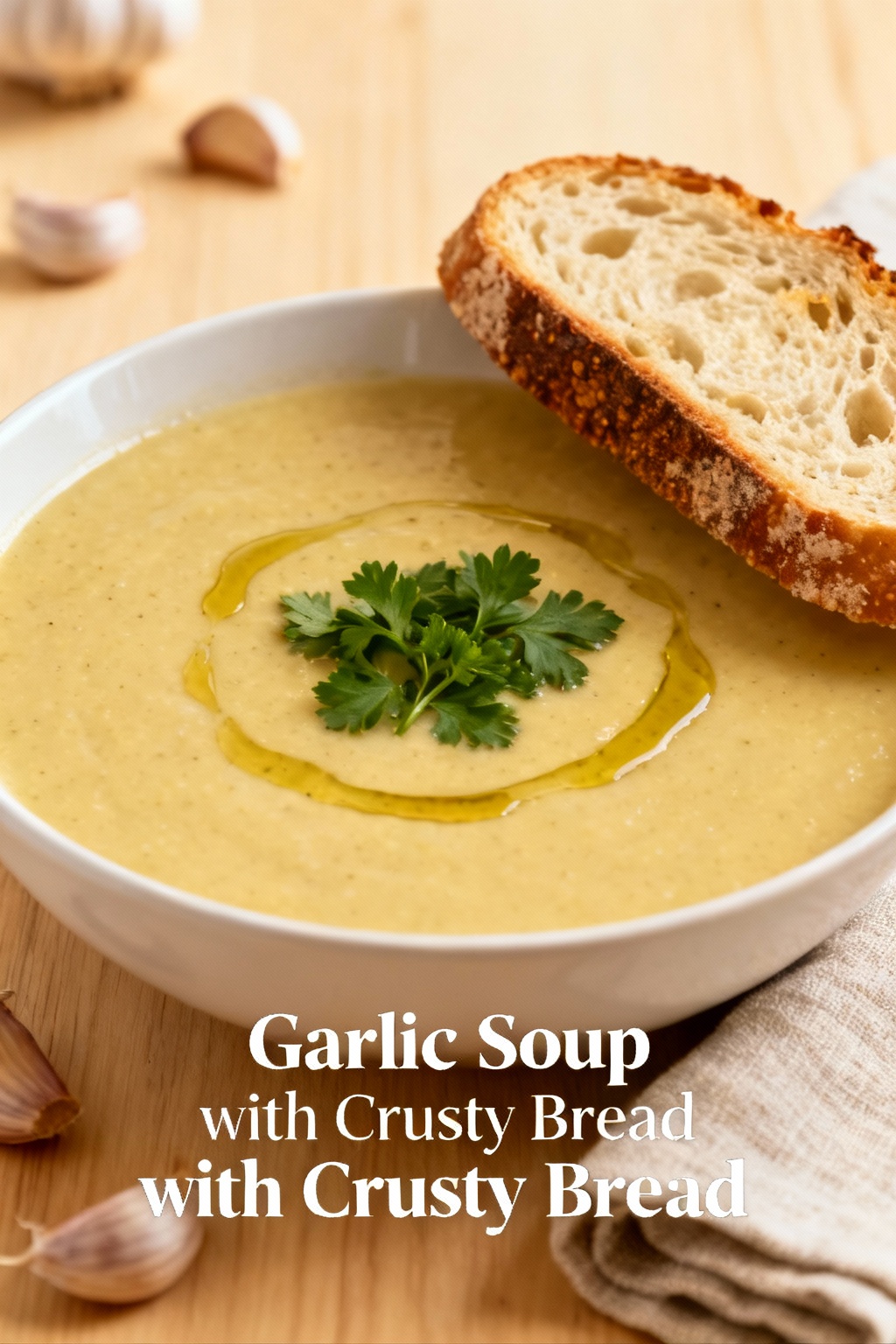
Garlic Soup with Crusty Bread
Have you ever wondered why a simple bowl of garlic soup with crusty bread can feel more restorative than a complex gourmet meal, and what small technique changes could transform it into a nutrient-dense weeknight hero?
Ingredients List
- 2 tablespoons extra-virgin olive oil (substitute: avocado oil or light olive oil for lower flavor intensity). Aromatic, shimmering oil that carries the garlic’s perfume.
- 1 medium yellow onion, finely diced (substitute: shallot for a sweeter, more delicate note).
- 8–10 large garlic cloves, thinly sliced or smashed (substitute: roasted garlic for mellower, caramelized flavor).
- 4 cups low-sodium chicken or vegetable broth (substitute: homemade bone broth for richness or water + bouillon for convenience).
- 1 large russet or Yukon gold potato, peeled and cubed (optional for body; substitute: 1 cup cooked white beans or 1 cup cauliflower florets for vegan thickness).
- 1/2 cup whole milk, half-and-half, or coconut milk (substitute: plain yogurt or silken tofu blended for creaminess and protein).
- 1 bay leaf and 1 sprig fresh thyme or 1/2 teaspoon dried thyme.
- Sea salt and freshly ground black pepper to taste.
- 4 slices crusty bread (baguette or sourdough recommended). For gluten-free option: gluten-free baguette or toasted polenta slices.
- 2 tablespoons butter (or olive oil for vegan).
- Optional finish: freshly chopped parsley, a drizzle of extra-virgin olive oil, grated Pecorino or Parmesan, or toasted almond flakes for crunch.
Timing
Preparation time: 15 minutes. Active cooking time: 35–40 minutes. Total time: 50–55 minutes, which is roughly 20–30% faster than many braised or cream-based soups that require longer simmering or roasting steps. If you roast the garlic first for a mellower profile, add 20–25 minutes to the total. Many weeknight soups average 60–75 minutes when including prep; this recipe is optimized for speed without sacrificing depth.
Step 1 — Build the aromatic base
Heat the oil in a heavy-bottomed pot over medium heat. Add the diced onion and a pinch of salt; sauté until translucent, 5–7 minutes. Stir frequently. Add sliced garlic and cook gently for 2–3 minutes until fragrant but not browned.
Tip: Keep the heat moderate — garlic becomes bitter when scorched. Use a wide pan so garlic cooks evenly and releases its natural sugars.
Step 2 — Add the body
Add cubed potato (or your chosen thickener) and stir to coat with oil and aromatics for 1–2 minutes. Pour in the broth, add bay leaf and thyme, and bring to a simmer. Reduce heat and simmer until potatoes are very tender, about 15–20 minutes.
Tip: If using beans, add them with broth to infuse flavor; if using cauliflower, simmer 10–12 minutes until very soft.
Step 3 — Purée and emulsify
Remove bay leaf and thyme sprig. Use an immersion blender to purée the soup until silky, or transfer in batches to a blender and return to the pot. Stir in milk or chosen creamy element off the heat, then warm gently. Adjust seasoning.
Tip: For a luxuriously silky texture, finish with a small knob of butter or a tablespoon of olive oil while blending to emulsify and round mouthfeel.
Step 4 — Prepare the crusty bread
While the soup simmers, slice your bread, brush with olive oil or butter, and toast under a broiler or in a hot pan until golden and crisp — about 2–3 minutes per side. For garlic-forward toast, rub a cut clove over the hot toasts for instant aroma.
Tip: Toasting enhances flavor and prevents sogginess when serving a bowl topped with bread; reserve some crumbs for garnish to add texture contrast.
Step 5 — Final seasoning and layering flavors
Taste and season carefully with salt and pepper. If the garlic flavor is too sharp, a squeeze of lemon or a pinch of sugar can balance acidity and brightness. For depth, add a teaspoon of soy sauce or fish sauce — a small amount intensifies umami without changing the profile.
Tip: Season in stages — initial seasoning before blending and a final adjustment after adding dairy ensures balanced flavor.
Step 6 — Serve with flair
Ladle hot soup into bowls, drizzle with olive oil, scatter chopped parsley, and float the crispy bread on top or serve on the side. Sprinkle grated cheese or toasted almonds if desired.
Tip: Serve one bowl with a rustic presentation; a charred bread corner tucked into the bowl creates inviting textural interplay.
Nutritional Information
Estimated per serving (serves 4): Calories ~280 kcal; Protein 8–10 g; Carbohydrates 34–38 g; Fat 11–13 g (mostly from olive oil and optional butter); Fiber 3–5 g; Sodium 600–800 mg (variable based on broth). Data insight: swapping whole milk for unsweetened almond milk reduces calories by ~60 kcal per serving; substituting potato with white beans increases protein by ~4–6 g per serving. For a lower-sodium dish, use homemade broth or a low-sodium store brand to reduce sodium by up to 50%.
Healthier Alternatives for the Recipe
- Vegan/Plant-based: Use vegetable broth, replace dairy with unsweetened coconut milk or blended silken tofu, swap butter for olive oil. Add white beans for creaminess and protein.
- Lower-calorie: Use cauliflower instead of potato and almond milk instead of dairy to cut ~80–100 kcal per serving.
- Higher-protein: Stir in 1 cup of cooked lentils or white beans before blending; this adds 10–15 g protein per serving and boosts fiber.
- Low-sodium: Build flavor with roasted garlic, fresh herbs, and a splash of lemon instead of relying on salt-heavy broth. Use low-sodium or DIY broth to control sodium intake.
- Paleo/Keto: Replace bread with roasted zucchini rounds or grilled portobello caps; use heavy cream or coconut cream and omit potatoes.
Serving Suggestions
Serve this garlic soup as a restorative starter, a light lunch, or a cozy solo dinner. Pairings that work well: a crisp white wine (Sauvignon Blanc) or a light-bodied red (Pinot Noir). Complement with a simple salad of bitter greens and lemon vinaigrette to cut richness. For a more substantial meal, top with roasted chicken, shredded duck confit, or a poached egg for extra protein. Personal tip: serve in warmed bowls to keep the bread crunchy longer and add a small dish of chili oil for guests who enjoy heat.
Common Mistakes to Avoid
- Overcooking or burning garlic: garlic burns quickly and becomes bitter; cook gently and watch the color.
- Adding dairy while boiling: high heat can cause separation; add milk or cream off the heat and warm gently.
- Using soft, fresh bread without toasting: it will become mushy quickly — toast or char the bread for texture.
- Underseasoning after blending: purees often need a second round of seasoning; taste and adjust.
- Relying solely on salt: use acidity (lemon), umami (a dash of soy/fish sauce), and fat to create complexity without excessive salt.
Storing Tips for the Recipe
Cool soup to room temperature within two hours and refrigerate in airtight containers for up to 4 days. For longer storage, freeze in portioned containers for up to 3 months; label with date and thaw overnight in the fridge. Reheat gently on low heat; avoid rapid boiling to prevent separation. Store toasted bread separately at room temperature for up to 1 day, or freeze slices and re-toast when needed. Prepped aromatics (peeled garlic, diced onions) can be stored in airtight containers in the fridge for 2–3 days for quick assembly.
Conclusion
This garlic soup with crusty bread marries simplicity with depth: a handful of pantry staples, a few technique tweaks, and you have a comforting, adaptable dish ready in under an hour. Try the variations suggested to meet dietary needs, and remember the small steps — gentle garlic cooking, careful seasoning, and well-toasted bread — make the biggest difference. Try it tonight, share a photo or tip in the comments, and explore related recipes like roasted garlic aioli, garlic chickpea stew, or simple bone broth to expand your home-cooking repertoire.
FAQs
Q: How many garlic cloves should I use for a mild vs. bold flavor?
A: Mild: 4–5 cloves; Bold: 8–10 cloves. Roasting garlic mellows intensity if you prefer subtlety.
Q: Can I make this soup gluten-free?
A: Yes — use gluten-free bread or serve with toasted polenta slices, rice cakes, or gluten-free crackers.
Q: Is it okay to freeze the soup with dairy in it?
A: Creamy soups can sometimes separate when frozen; for best texture, freeze before adding dairy and stir in milk or cream after reheating, or use full-fat dairy which freezes more stably.
Q: How can I avoid bitter garlic flavor?
A: Keep heat moderate, avoid browning the garlic, and consider roasting garlic whole in foil for 20–30 minutes at 375°F (190°C) for a sweet, mellow profile.
Q: Can I pulse instead of fully pureeing for a chunkier version?
A: Absolutely — pulse to your desired texture. A partially blended soup offers rustic texture and is equally delicious.
Q: What bread types work best?
A: Rustic baguette, sourdough, or country loaf for chew and crust. For a richer finish, brush with butter and grill; for a lighter option, use whole-grain sourdough.
Q: How do I scale this recipe for meal prep?
A: Multiply ingredients by 2–3x and store in individual portions for quick lunches. Freeze extra servings for up to 3 months and reheat gently.
Interactive suggestion: Try a quick flavor experiment — make two small batches, one with roasted garlic and one with raw-sautéed garlic, and compare. Note the aroma, sweetness, and perceived saltiness; this practice will sharpen your palate and improve future versions.