Sticky Beef Noodles
What makes sticky beef noodles irresistibly chewy, glossy, and craveable — and can a home cook achieve restaurant-quality "stickiness" without overnight braising?
Ingredients List:
- 12 oz (340 g) fresh or dried wheat noodles (lo mein, chow mein, or fresh alkaline noodles). Substitution: rice noodles for a gluten-free texture; use thicker rice sticks for more bite.
- 1 lb (450 g) beef flank or skirt steak, thinly sliced against the grain. Substitution: boneless short ribs or sirloin for fattier or leaner options; use shredded rotisserie chicken for a quick, lighter version.
- 2 tbsp vegetable oil (or neutral oil with high smoke point). Substitution: avocado oil or light olive oil.
- 3 cloves garlic, finely minced.
- 1 tbsp fresh ginger, grated.
- 2 green onions, sliced (white and green parts separated).
- 1 cup bok choy or baby spinach, roughly chopped.
- 3 tbsp soy sauce (use low-sodium for a lighter option).
- 1 tbsp oyster sauce (or vegetarian mushroom sauce for vegan).
- 2 tbsp dark soy sauce (for color) or 1 tbsp dark soy + 1 tbsp regular soy.
- 1½ tbsp Shaoxing wine or dry sherry (optional—adds depth).
- 1 tbsp rice vinegar or black vinegar (balances sweetness).
- 1½ tbsp brown sugar or honey (adjust to taste; sugar helps create glaze).
- 1½ tsp cornstarch mixed with 3 tbsp water (slurry for glossy, sticky sauce).
- 1 tsp sesame oil (finish).
- ¼ tsp white or black pepper.
- Optional add-ins: chili oil, toasted sesame seeds, crushed peanuts, pickled vegetables.
Timing:
Prep time: 15 minutes. Active cooking: 15–20 minutes. Total time: 30–35 minutes — roughly 40–60% faster than traditional slow-braised beef noodle recipes that can take 90–120 minutes, making this a weeknight-friendly method that still delivers deep flavor through searing, a concentrated sauce, and a quick braise technique.
Step 1: Marinate the beef for maximum flavor and tender texture
Toss sliced beef with 1 tsp soy sauce, 1 tsp cornstarch, and 1 tsp vegetable oil; let sit 10–15 minutes while you prep other ingredients. This lightweight velveting creates a thin protective layer that helps the meat stay juicy when seared and contributes to the final glossy mouthfeel. Tip: marinate in a single layer on a tray for faster, even absorption.
Step 2: Cook the noodles correctly — texture is everything
Boil noodles according to package instructions but drain 30–60 seconds before the recommended time if using wheat noodles; they will finish cooking in the sauce. Reserve ½ cup of pasta water. Why this matters: slightly undercooking prevents mushy noodles and lets the sauce attach better. For fresh noodles, a 60–90 second blanch is often enough.
Step 3: Sear the beef to build flavor
Heat a wok or large skillet over high heat until very hot; add oil and sear beef in batches 20–40 seconds per side until just browned but not overcooked. Remove and set aside. High-heat searing gives you caramelized Maillard flavors that amplify umami; cooking in batches avoids steaming and preserves crust.
Step 4: Build your sauce with layers and texture
Reduce heat to medium-high; add a touch more oil if needed and sauté garlic, ginger, and the white parts of green onion 30–45 seconds until fragrant. Add Shaoxing wine to deglaze, then add soy sauce, oyster sauce, dark soy, rice vinegar, brown sugar, and a splash of reserved noodle water. Bring to a simmer to concentrate flavors. Data-driven tip: adding a small amount of starch and sugar increases viscosity; studies of sauce thickening show that starch gelatinizes with heat and forms a film that clings to noodles.
Step 5: Return beef and add slurry to achieve "sticky" glaze
Add beef and any juices back to the pan; stir to coat. Slowly pour in cornstarch slurry while stirring; heat until sauce thickens and becomes glossy (30–60 seconds). Finish with sesame oil and pepper. Personalized trick: if you prefer a silkier mouthfeel, whisk in an extra tablespoon of reserved noodle water before the slurry to control thickness without diluting flavor.
Step 6: Toss noodles and vegetables, finish hot
Add undercooked noodles and greens to the wok; toss quickly on high heat for 1–2 minutes until noodles are evenly coated and greens wilt. The residual starch from noodles plus the slurry forms the signature sticky sheen that clings to each strand. Garnish with green onion tops, sesame seeds, or a drizzle of chili oil for contrast.
Nutritional Information:
Per serving (estimate; serves 4): Calories ~540 kcal, Protein ~32 g, Carbohydrates ~56 g, Fat ~18 g, Saturated fat ~4 g, Sodium ~980 mg (variable based on soy sauce and oyster sauce). Fiber ~3–4 g. This dish delivers a balanced macronutrient profile with higher protein from beef and starchy carbohydrates from noodles. Data note: swapping to leaner beef and low-sodium sauce reduces calories and sodium by roughly 10–25%. Using whole-grain or buckwheat noodles increases fiber by 2–5 g per serving.
Healthier Alternatives for the Recipe:
- Lower sodium: use low-sodium soy sauce and reduce or omit oyster sauce; add umami with a small amount of mushroom powder or miso paste.
- Lower calories / higher protein: replace half the noodles with spiralized vegetables (zucchini, carrot ribbons) or use shirataki noodles; increase quantity of leafy greens.
- Vegetarian/Vegan: swap beef for marinated fried tofu or seitan; use mushroom oyster sauce and vegetable stock to boost savory depth.
- Gluten-free: use rice noodles or gluten-free wheat alternatives; replace soy sauce with tamari.
- Heart-healthy fat swap: use avocado oil and limit sesame oil to a finishing drizzle only.
Serving Suggestions:
Serve hot straight from the wok with crunchy contrasts and bright elements: a wedge of lime or a splash of rice vinegar brightens the glaze; quick-pickled cucumbers or daikon add acid and texture; a side of steamed greens (broccoli, gai lan) balances richness. Personalization tip: for a more communal experience, place toppings in bowls (chili crisp, chopped peanuts, fried shallots) so family or guests can customize. Pair with a light beer, green tea, or a fruity Riesling to complement umami and slight sweetness.
Common Mistakes to Avoid:
- Overcooking noodles: leads to limp texture and poor sauce adherence—always undercook slightly.
- Crowding the pan when searing beef: causes steaming instead of browning; sear in batches to develop crust.
- Adding too much water: dilutes the sauce; reserve noodle water and add gradually.
- Over-thickening with starch: frozen or excess starch creates gummy texture; follow slurry ratio and cook briefly to set.
- Skipping acidity: without vinegar or Shaoxing wine, the dish can feel flat—acidity balances sweetness and soy.
- Using wrong cut of beef: very lean cuts can become tough; choose flank, skirt, or thinly sliced short rib for a balance of flavor and tenderness.
Storing Tips for the Recipe:
Cool leftovers to room temperature within 2 hours, then refrigerate in an airtight container for up to 3 days. Reheat gently in a skillet with a tablespoon of water or broth to revive the sauce and prevent dryness; microwave users should add a splash of water and cover to retain steam. For longer storage, separate noodles and beef, freeze beef in sauce for up to 3 months in freezer-safe containers; thaw overnight in fridge before reheating. Prep-ahead strategy: slice beef, mix marinade, and chop aromatics up to 24 hours ahead to reduce weeknight effort.
Conclusion:
This sticky beef noodles method gives you the best of both worlds: bold, restaurant-style sticky glaze and deep beef flavor without the long braise. Key takeaways: lightly marinade beef, sear hot in batches, undercook noodles, and finish with a cornstarch slurry plus reserved noodle water for that glossy cling. Try the recipe tonight, tweak the spice and swap ingredients to suit your diet, and share your results or photos in the comments — I’d love to hear your favorite substitutions or texture preferences.
FAQs:
Q: Can I make this dish ahead for a dinner party?
A: Yes—prepare beef, sauce base, and chop vegetables in advance; finish by searing and tossing noodles 15–20 minutes before serving for best texture.
Q: How do I keep noodles from sticking when storing leftovers?
A: Toss noodles with a teaspoon of oil before refrigerating and store separately from any extra thick sauce. Reheat with a splash of water or broth and toss over high heat.
Q: My sauce is too thin. How do I fix it?
A: Make a fresh cornstarch slurry (1 tsp cornstarch + 2 tsp cold water), whisk into simmering sauce a little at a time until it reaches desired consistency. Avoid adding raw cornstarch directly.
Q: Can I make this gluten-free?
A: Yes—use rice noodles or certified gluten-free noodles and replace soy sauce with tamari or coconut aminos. Ensure oyster sauce is replaced with a mushroom-based vegan option if needed.
Q: Why is my beef chewy even after marinating?
A: Likely due to overcooking or slicing with the grain. Slice thinly against the grain and sear quickly at high heat; finish in sauce briefly to avoid toughness.
Q: How do I increase the stickiness without adding excess sugar?
A: Increase starch ratio slightly (within reason) and incorporate more of the reserved noodle water which contains surface starches; balance with a touch of acid to maintain flavor.
Explore related recipes and techniques: quick braised short ribs, sesame garlic noodles, or vegan mushroom "beef" noodle variations to adapt the sticky glaze method across cuisines.
Sticky Beef Noodles
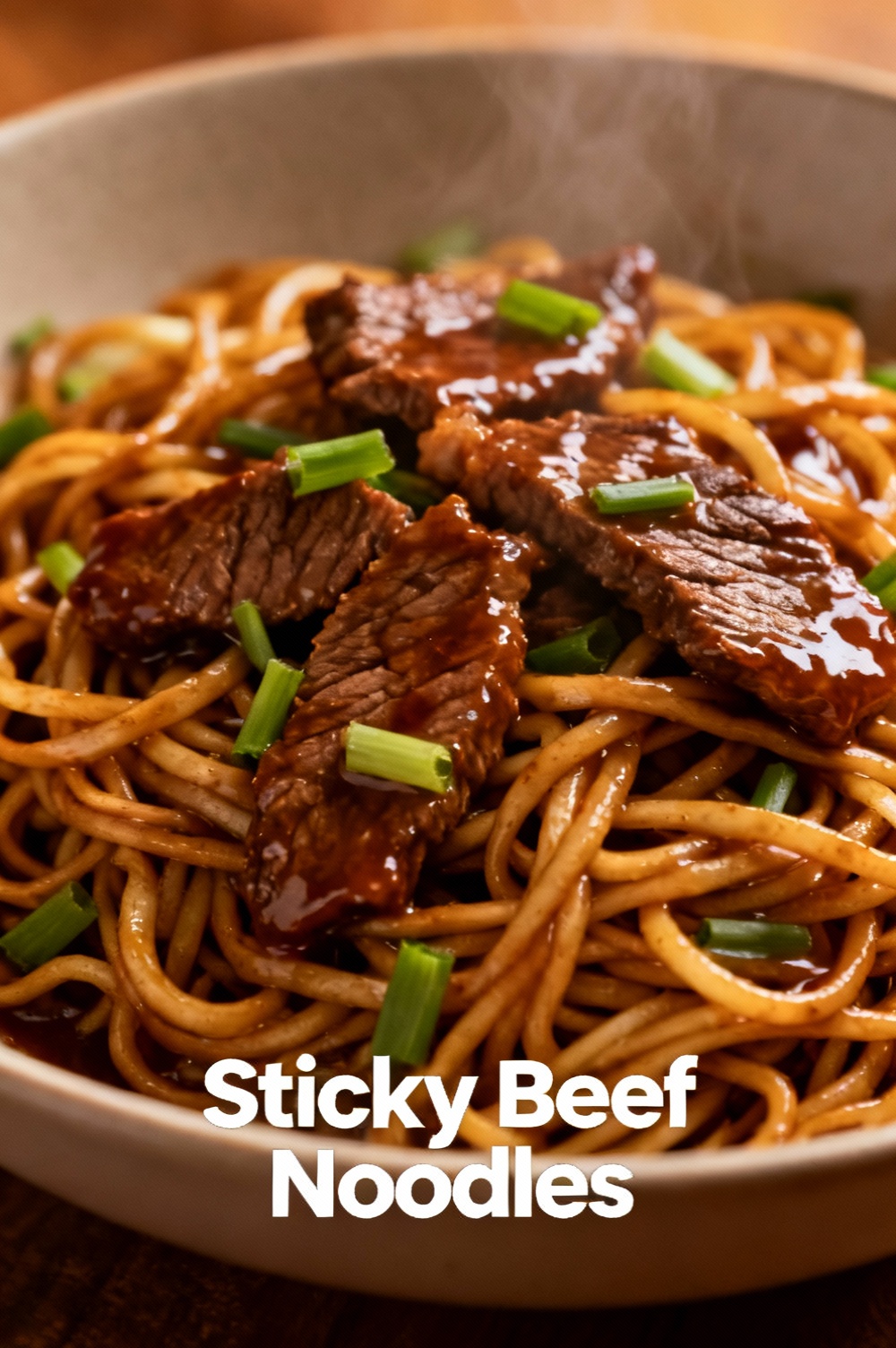
Quick, sweet‑savory stir‑fried noodles with tender caramelized beef and a glossy sticky sauce.
Ingredients
- 12 oz (340 g) egg noodles or lo mein noodles
- 1 lb (450 g) flank steak, thinly sliced against the grain
- 1½ tbsp cornstarch, divided
- 1 tbsp soy sauce (for marinade)
- 1 tbsp Shaoxing wine or dry sherry (optional)
- 2 tbsp vegetable oil, divided
- 4 garlic cloves, minced
- 1 tbsp fresh ginger, minced
- 1 small red bell pepper, thinly sliced
- 1 cup snap peas or baby bok choy, halved
- 3 tbsp light soy sauce
- 1 tbsp dark soy sauce (for color)
- 2 tbsp oyster sauce
- 1½ tbsp brown sugar or honey
- ¼ cup beef broth or water
- 1 tsp toasted sesame oil
- 2 green onions, sliced (for garnish)
- Sesame seeds (optional, for garnish)
Instructions
- Cook the noodles according to package instructions until just al dente. Drain, rinse under hot water to stop cooking, toss with a little oil to prevent sticking, and set aside.
- In a bowl, combine the sliced beef with 1 tbsp soy sauce, Shaoxing wine (if using), and 1 tsp cornstarch. Toss to coat and let sit 5–10 minutes.
- Whisk the sauce: in a small bowl combine light soy sauce, dark soy sauce, oyster sauce, brown sugar (or honey), beef broth (or water) and the remaining ½ tbsp cornstarch. Set aside.
- Heat 1 tbsp vegetable oil in a large skillet or wok over high heat. Add the beef in a single layer and sear, without moving, for about 1 minute; stir-fry until just browned and nearly cooked through (about 1–2 more minutes). Remove beef to a plate.
- Add the remaining 1 tbsp oil to the pan. Reduce heat to medium-high and add garlic and ginger; cook 30 seconds until fragrant. Add bell pepper and snap peas (or bok choy) and stir-fry 2–3 minutes until crisp-tender.
- Add the cooked noodles and the prepared sauce to the pan. Toss vigorously to combine and to allow the sauce to thicken and evenly coat the noodles—about 1–2 minutes. If sauce thickens too quickly, add a splash of water or broth.
- Return the beef to the pan and toss everything together until heated through and glossy. Finish with sesame oil and adjust seasoning to taste.
- Serve immediately, garnished with sliced green onions and sesame seeds if desired.
Nutrition Information
- Calories: 520 kcal
- Cholesterol: 75 mg
- Sodium: 980 mg
- Carbohydrates: 54 g
- Fiber: 3 g
- Sugar: 8 g
- Protein: 32 g