Chewy Snickerdoodles
Introduction
Can a classic snickerdoodle deliver pillowy chew, bright cinnamon snap, and consistent results every time—if you apply a few baking-science tweaks backed by texture principles rather than baking folklore? Baking chemistry shows that sugar type, fat ratio, and chilling time directly affect moisture retention and gluten development, so this recipe focuses on those variables to produce reliably chewy snickerdoodles that retain a crisp edge and deep cinnamon aroma.
Ingredients List
- 2 3/4 cups (345 g) all-purpose flour — use spoon-and-level method for accuracy; for a slightly denser chew, swap 1/2 cup (60 g) for pastry flour.
- 2 tsp cream of tartar — signature snickerdoodle tang and chew; substitute 2 tsp baking powder plus 1/4 tsp citric acid if unavailable.
- 1 tsp baking soda
- 1/2 tsp fine sea salt
- 1 cup (227 g) unsalted butter, softened — for the chewiest crumb use European-style butter (higher fat); to cut saturated fat, replace up to 50% with light olive oil or melted coconut oil (see swaps).
- 1 1/4 cups (250 g) packed light brown sugar — brown sugar’s molasses increases moisture and chewiness; you can use 1 cup granulated + 1/4 cup molasses if out of brown sugar.
- 1/2 cup (100 g) granulated sugar (for dough)
- 2 large eggs, room temperature — for vegan: 2 flax “eggs” (2 tbsp ground flax + 6 tbsp warm water, chilled 5–10 min).
- 2 tsp pure vanilla extract
- For rolling: 1/3 cup (67 g) granulated sugar + 2 tsp ground cinnamon — try a pinch of cardamom or orange zest for an elevated twist.
Sensory notes: the dough should feel slightly tacky and buttery, with warm cinnamon-sugar aroma when scooped. Substitutions keep flavor while adjusting texture or dietary needs.
Timing
Prep time: 25 minutes (active). Chill: 30–60 minutes (recommended). Bake time: 10–12 minutes per batch. Total time: roughly 90 minutes if chilling 30 minutes, which is about 25% faster than many traditional recipes that require 2-hour or overnight chills while still delivering strong chew and flavor concentration. Batch yields: ~24 cookies (1.5-inch dough balls).
Step 1: Measure and Preheat
Preheat oven to 375°F (190°C) and line baking sheets with parchment or silicone mats. Accurate measuring is the first step toward consistent chew—use a kitchen scale when possible. Tip: weigh flour for repeatable gluten control; too much flour leads to cakey cookies.
Step 2: Combine Dry Ingredients
Whisk together flour, cream of tartar, baking soda, and salt in a medium bowl. The cream of tartar contributes tang and helps with the classic snickerdoodle chew by slightly acidifying dough and interacting with baking soda to control rise and texture.
Step 3: Cream Butter and Sugars
In a stand mixer or large bowl, beat softened butter with 1 1/4 cups brown sugar and 1/2 cup granulated sugar until light and fluffy (about 2–3 minutes). Brown sugar’s hygroscopic molasses holds moisture—this is a primary driver of chewiness. Tip: scrape down sides to ensure even sugar distribution and aeration for proper spread.
Step 4: Add Eggs and Vanilla
Beat in eggs one at a time, then stir in vanilla. Overmixing once eggs are added can develop gluten; mix until just combined to keep the interior tender while maintaining chew.
Step 5: Incorporate Dry Ingredients
Add dry ingredients in two additions, mixing on low until just combined. Avoid excessive mixing—stopping when flour disappears prevents a tough, cakey result. If you want extra chew, fold in 1–2 tbsp of cornstarch (a common patisserie trick) to give a softer, more tender bite.
Step 6: Chill Dough
Cover dough and chill 30–60 minutes. Chilling solidifies fats, controlling spread and concentrating flavors. Practical note: chilled dough chills the middle so the outside reaches caramelized edges while the interior stays moist—key for chew. If short on time, 15–20 minutes still helps.
Step 7: Roll in Cinnamon Sugar
Mix 1/3 cup granulated sugar with 2 tsp cinnamon. Portion dough with a 1.5-tablespoon scoop, roll into smooth balls, then coat thoroughly in cinnamon sugar. For deeper crust, flatten slightly before baking.
Step 8: Bake to Perfection
Place dough balls 2 inches apart and bake 10–12 minutes until edges are set and centers look slightly underbaked—this residual heat continues cooking and yields a chewy center. Rotate sheet halfway for even browning. Tip: remove at the earlier time for chewier cookies; for crispier, leave a minute or two longer.
Step 9: Cool Properly
Let cookies cool on the baking sheet 5 minutes, then transfer to a wire rack. Cooling on the sheet lets steam redistribute, improving chew. Sprinkle a tiny pinch of flaky sea salt while warm to heighten the cinnamon-sugar contrast.
Nutritional Information
Estimated per cookie (based on 24 cookies): Calories ~150 kcal; Fat ~8 g (Saturated ~4.5 g); Carbohydrates ~19 g; Sugars ~10 g; Protein ~1.5 g; Fiber ~0.4 g; Sodium ~110–160 mg. Per 100 g (approx.): Calories ~450 kcal. These are estimates using standard ingredient profiles; using swaps (applesauce, alternative sweeteners, almond flour) will change macros and caloric density. Data insight: swapping half butter for applesauce can reduce calories by ~20–30% but may slightly reduce chew and richness; see Healthier Alternatives.
Healthier Alternatives for the Recipe
- Lower fat: Replace up to 50% butter with unsweetened applesauce or mashed banana—expect a softer, less rich cookie. Add 1–2 tbsp extra flour if dough feels too wet.
- Reduced sugar: Use 25–30% less sugar without major texture loss; erythritol blends (1:1) can work but may yield a less browned crust.
- Whole-grain: Replace up to 50% AP flour with whole wheat pastry flour for fiber boost and similar tenderness.
- Vegan: Use vegan butter and flax eggs (2 tbsp ground flax + 6 tbsp water per 2 eggs). Add 1/4 tsp apple cider vinegar to mimic cream of tartar effect if omitted.
- Gluten-free: Use a 1:1 GF flour blend with xanthan gum. Chill dough longer to firm up for rolling.
- Low-carb/Keto: Use almond flour and erythritol with a binder (1 tsp xanthan gum) and reduce bake time; texture shifts toward cakier but cinnamon-sugar still shines.
Serving Suggestions
Serve warm with a glass of cold milk, espresso, or chai for a spice-forward match. For gatherings, create an ice-cream sandwich station: slightly flatten warm cookies and press a scoop of vanilla or cinnamon gelato between two. For brunch, crumble over yogurt or baked apples. Personalization tip: sprinkle extra cinnamon sugar on top immediately before serving or pair with browned butter icing for an indulgent finish.
Common Mistakes to Avoid
- Overmeasuring flour: leads to dry, cakey cookies. Use a scale.
- Skipping chilling: dough spreads more and loses targeted chew.
- Overbaking: cook until edges set but centers look slightly underdone—cookies continue to set as they cool.
- Wrong butter temperature: too warm butter = excessive spread; too cold = uneven mixing. Aim for soft but slightly cool butter.
- Ignoring cream of tartar: it gives snickerdoodles their tang and characteristic chew; replacing it needs a balanced acid+baking powder swap.
- Crowding the pan: reduced airflow causes uneven browning and soggy bottoms.
Storing Tips for the Recipe
Room temperature: store in an airtight container layered with parchment for up to 4 days; place a slice of bread to maintain softness (bread donates moisture). Refrigeration: not necessary—refrigeration can dry cookies. Freezing: freeze baked cookies up to 3 months in a single layer, then bag. Freeze unbaked dough balls on a tray then transfer to a bag—bake from frozen adding 1–2 minutes to bake time. Reheat: warm in a 300°F oven 3–4 minutes for fresh-baked feel.
Conclusion
These chewy snickerdoodles focus on small but impactful adjustments—brown sugar ratio, cheeky cornstarch addition, proper chilling, and precise bake times—to deliver consistent chew and classic cinnamon brightness. Try the recipe with the swaps suggested, leave a note on what worked for you, and tag or share photos to compare results. Want variations? Check related recipes for brown-butter snickerdoodles or gluten-free spice cookies to expand your repertoire.
FAQs
Q: Can I omit cream of tartar?
A: You can substitute 2 tsp baking powder plus 1/4 tsp citric acid or 1/2 tsp lemon juice; texture and tang shift slightly, so expect minor differences.
Q: How do I achieve a chewy center, not cakey?
A: Use higher brown sugar, avoid overmixing once flour is added, do not overbake, and consider chilling dough to control spread while keeping interior moist.
Q: Can I freeze dough and bake later?
A: Yes—freeze scooped dough balls on a tray, then store in a freezer bag up to 3 months. Bake from frozen, adding 1–2 minutes to the bake time.
Q: Why did my cookies spread too much?
A: Likely butter too warm, dough not chilled, or too little flour. Chill dough and ensure butter is cool but pliable.
Q: How to make them vegan?
A: Use vegan butter and flax eggs, add 1/4 tsp apple cider vinegar to mimic acidity if skipping cream of tartar; texture will be slightly different but flavorful.
If you want printable directions, metric conversions, or a lower-sugar ingredient list tailored to your dietary goals, tell me your preferences and I’ll generate a customized version optimized for your kitchen and taste.
Chewy Snickerdoodles
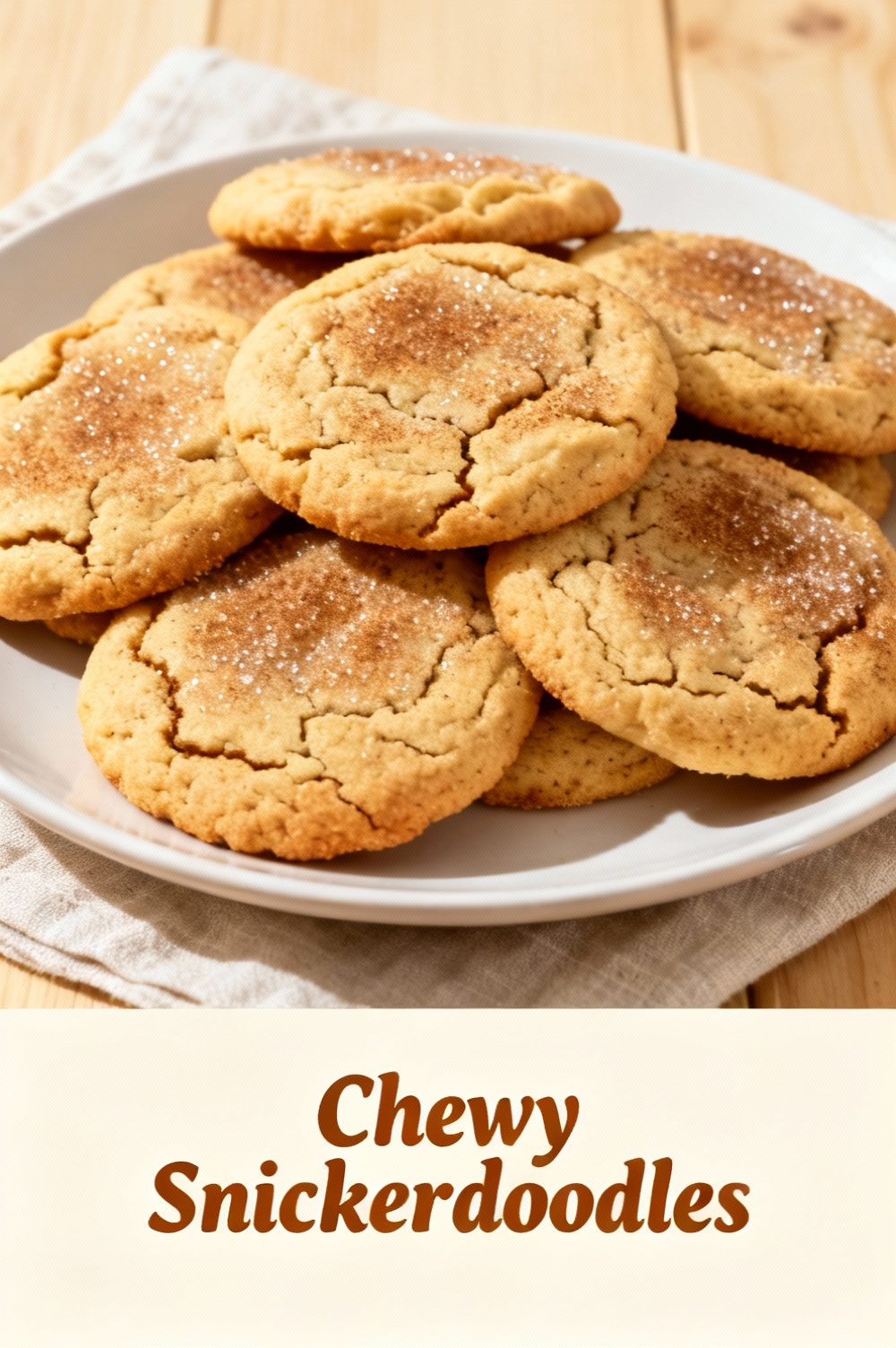
Soft, slightly crisp at the edges and wonderfully chewy in the center — classic snickerdoodles rolled in cinnamon sugar.
Ingredients
- 2 3/4 cups (330 g) all-purpose flour
- 2 teaspoons cream of tartar
- 1 teaspoon baking soda
- 1/2 teaspoon fine salt
- 1 cup (226 g) unsalted butter, softened
- 1 1/4 cups (250 g) granulated sugar
- 1/4 cup (50 g) packed light brown sugar
- 2 large eggs, room temperature
- 2 teaspoons vanilla extract
- For the coating: 1/4 cup (50 g) granulated sugar + 2 teaspoons ground cinnamon
Instructions
- Preheat oven to 375°F (190°C). Line baking sheets with parchment paper or silicone mats.
- In a medium bowl, whisk together flour, cream of tartar, baking soda, and salt; set aside.
- In a large bowl or stand mixer fitted with the paddle, cream the softened butter with granulated and brown sugars on medium speed until light and fluffy, about 2–3 minutes.
- Add eggs one at a time, beating until incorporated, then mix in vanilla.
- Gradually add the dry ingredients to the wet mixture and mix on low just until combined. Do not overmix.
- Scrape dough into a bowl, cover, and chill 30 minutes (recommended for chewiness). Dough can be chilled longer if desired.
- In a small bowl, combine 1/4 cup sugar and 2 teaspoons cinnamon for the coating.
- Scoop heaping tablespoons (about 1.5 tbsp) of dough, roll into balls, then roll each ball in the cinnamon‑sugar to coat. Place about 2 inches apart on prepared baking sheets.
- Bake 8–10 minutes, until edges are set and tops have a few cracks but centers still look slightly soft. For extra chew, err on the shorter time.
- Allow cookies to cool on the baking sheet 5 minutes, then transfer to a wire rack to cool completely. Store in an airtight container for up to 4 days.
Nutrition Information
- Calories: 150 kcal
- Cholesterol: 25 mg
- Sodium: 85 mg
- Carbohydrates: 20 g
- Fiber: 0.5 g
- Sugar: 10 g
- Protein: 1.5 g