Spiced Oatmeal Cookies
Do you want a spiced oatmeal cookie that delivers chewy texture, warm aromatic depth, and under 90 minutes from start to finish — and can be tailored to diets from vegan to high-protein without losing soul?
Ingredients List (H2):
- 1 cup (2 sticks / 226 g) unsalted butter, softened — or 1 cup (240 g) coconut oil for dairy-free. Use browned butter for a nutty, caramel note.
- 1 cup (200 g) packed light brown sugar — substitution: 3/4 cup coconut sugar for a deeper molasses tone and slightly lower glycemic index.
- 1/2 cup (100 g) granulated sugar — swap for 1/2 cup erythritol or allulose for a lower-calorie option (note: texture will change slightly).
- 2 large eggs (or 2 flax eggs: 2 tbsp ground flax + 6 tbsp water, rest 10 minutes) for vegan.
- 1 tsp pure vanilla extract.
- 1/4 cup (60 g) molasses or dark honey — optional, boosts chewiness and spice complement.
- 1 1/2 cups (190 g) all-purpose flour — for gluten-free: replace with 1:1 gluten-free flour blend and add 1/2 tsp xanthan gum if not included.
- 1 tsp baking soda.
- 1/2 tsp baking powder.
- 1 tsp fine sea salt.
- 2 tsp ground cinnamon.
- 1/2 tsp ground ginger.
- 1/4 tsp ground cloves.
- 1/8–1/4 tsp freshly grated nutmeg (adjust to taste).
- 3 cups (240 g) old-fashioned rolled oats — quick oats acceptable (chewier texture with old-fashioned).
- 3/4 cup (110 g) mix-ins: raisins, chopped toasted walnuts, pecans, or dark chocolate chunks. For a citrus lift, add 1 tsp orange zest.
Sensory notes: imagine warm cinnamon, caramelized butter notes, and the tender chew of oats. Substitutions keep these sensory anchors intact while adjusting nutrition and dietary needs.
Timing (H2):
- Active preparation: 20–25 minutes.
- Chill (recommended): 30–45 minutes (optional but improves shape and texture).
- Baking: 10–12 minutes per batch.
- Total time: 60–82 minutes depending on chilling (typical total ~75 minutes). This is roughly 20% quicker than many traditional oatmeal cookie recipes that recommend 2 hours of chilling and slow bake times, while still delivering a stable, chewy cookie.
Step 1: Prep and measure precisely
Preheat oven to 350°F (175°C) and line baking sheets with parchment. Measure flour by spooning into the cup and leveling off or use a kitchen scale (recommended for accuracy). Tip: weighing flour (190 g for 1 1/2 cups) avoids dry or dense cookies. Personalization: if you have a convection oven, drop temperature by 15–20°F and watch baking time closely.
Step 2: Mix dry spices and leaveners
Whisk together flour, baking soda, baking powder, salt, cinnamon, ginger, cloves, and nutmeg in a bowl until evenly distributed. Doing this first ensures consistent spice distribution, preventing concentrated pockets of flavor. Pro tip: toast ground spices for 30–60 seconds in a dry pan to intensify aroma if using whole spices freshly ground.
Step 3: Cream fats and sugars for structure
In a stand mixer or with a hand mixer, cream softened butter (or coconut oil) with brown and granulated sugars until light and fluffy, ~2–3 minutes. Add eggs one at a time, then vanilla and molasses. Tip: for extra chew, beat less once eggs are added — overworking develops gluten. Personal note: swapping half the butter for browned butter adds a caramelized depth that elevates plain-spice profiles.
Step 4: Combine wet and dry, fold in oats
Add dry mixture to wet mixture in two additions, mixing until just combined. Fold in rolled oats and chosen mix-ins gently. Avoid overmixing to keep cookies tender. If using protein powder or nut flour for higher protein, reduce flour by the same volume to maintain texture.
Step 5: Chill the dough (optional but recommended)
Scoop dough into 1.5–2 tablespoon-sized balls and place on a tray; chill 30–45 minutes. Chilling firms the fat, preventing excessive spread and producing a thicker, chewier center. Data-backed note: chilling can reduce spread by up to 35% in butter-rich doughs, improving uniformity across batches.
Step 6: Bake for optimal chew and color
Place cookies 2 inches apart and bake 10–12 minutes until edges are golden and centers still slightly soft. Rotate pans halfway through for even browning. For chewier cookies, remove after 10 minutes; for crispier edges, bake 12 minutes. Immediate cooling on the sheet for 5 minutes then transfer to a rack allows residual heat to finish the bake without overcooking.
Step 7: Cool and store
Allow cookies to cool completely for best texture. If you prefer a slightly softer cookie, press gently with a spatula while warm. For gifting, stack with parchment between layers to prevent sticking.
Nutritional Information (H2):
Estimated per cookie (makes ~24 cookies): Calories ~150–180 kcal, Fat 8–10 g, Saturated Fat 3–5 g (varies with butter vs. coconut oil), Carbohydrates 18–22 g, Dietary Fiber 2–3 g, Sugars 8–10 g, Protein 2–3 g. These are approximate values; swapping ingredients (e.g., using erythritol, swapping half flour for almond flour) can reduce net carbs and change calorie density. Data insight: using 100% rolled oats contributes about 2–4 g fiber per cookie, supporting satiety compared to many refined-baked goods.
Healthier Alternatives for the Recipe (H2):
- Reduce sugar: use 1/2 cup brown sugar + 1/4 cup allulose or erythritol to cut sugar by ~40% while preserving chewiness. Allulose browns and behaves more like sugar than many sweeteners.
- Lower fat: replace half the butter with unsweetened applesauce (reduces calories, keeps moisture) — expect a softer, less crisp cookie.
- Gluten-free: use certified 1:1 gluten-free flour and ensure oats are labeled gluten-free. Add 1/2 tsp xanthan gum if absent to mimic structure.
- Vegan: swap butter for coconut oil or vegan butter and eggs for flax eggs. Molasses can be swapped for maple syrup if avoiding refined sugar.
- High-protein: add 1/2 cup pea or whey protein isolate and reduce flour by 1/2 cup; increase liquid slightly (1–2 tbsp) to maintain chew.
Creative idea: make "spiced oatmeal cookie energy bites" by omitting flour, pulsing baked oats with nut butter, raisins, and spices into no-bake bites for a portable, protein-focused snack.
Serving Suggestions (H2):
Serve warm with a glass of cold milk or oat milk for classic pairing. For an adult twist, pair with a spiced coffee or chai latte to echo the cookie’s flavors. Turn cookies into a dessert sandwich: spread cream cheese frosting or salted caramel between two cookies. For brunch, crumble over Greek yogurt and toasted nuts as a crunchy granola alternative. Personal tip: warm individual cookies for 10–12 seconds in the microwave for that just-baked sensation.
Common Mistakes to Avoid (H2):
- Overmixing flour: leads to tough cookies. Mix until just combined.
- Skipping chill: dough spread can become too thin; chilling gives control.
- Oven temperature errors: an oven thermometer can correct common miscalibrations (many home ovens are off by 10–30°F).
- Using quick oats if you want chewy texture: quick oats make a denser, cakier cookie.
- Substituting sweeteners without accounting for moisture: some sweeteners (e.g., stevia) don't provide bulk or browning; use bulk sugar replacements for texture preservation.
- Overbaking: cookies continue to set after removal; remove when centers still look slightly underdone.
Storing Tips for the Recipe (H2):
Store cooled cookies in an airtight container at room temperature up to 5 days. To maintain chewiness, place a slice of bread or an apple wedge in the container to retain moisture for 1–2 days (replace daily if longer). For longer storage: freeze baked cookies in a single layer on a tray until firm, then stack with parchment and seal in freezer bags up to 3 months. Thaw at room temperature or reheat 8–10 seconds in microwave or 3–5 minutes at 300°F to refresh chew.
Conclusion (H2):
These spiced oatmeal cookies balance warmth, chew, and adaptability: a dependable base recipe that welcomes dietary swaps without losing character. Try the recipe as written for the classic experience, then experiment with one substitution (e.g., brown butter or coconut sugar) to see how a small change transforms aroma and texture. If you make them, share a photo or variation in the comments — I’d love to see your twist and hear which substitution worked best for your needs. Explore related recipes like Chewy Molasses Cookies or Vegan Oat Bites for more ideas.
FAQs (H2):
Q: Can I make these cookies softer or chewier?
A: Yes — remove from oven when centers are still slightly underbaked and cool on the sheet for 5 minutes. Chill dough before baking and add a tablespoon of molasses or honey to increase chewiness.
Q: Are rolled oats necessary?
A: Rolled (old-fashioned) oats give the best chew and texture. Quick oats can be used but yield a cakier result. Steel-cut oats are not recommended.
Q: How do I make these gluten-free?
A: Use a certified gluten-free oat and a 1:1 gluten-free flour blend. Add 1/2 tsp xanthan gum if your blend lacks it for structure.
Q: Can I bake larger cookies?
A: Yes. Bake at the same temperature but increase time to 14–16 minutes, and expect a chewier center. Watch for golden edges and slightly soft centers.
Q: Will these cookies keep if I use alternative sweeteners?
A: Sugar substitutes like erythritol and allulose can work, but bulk and moisture behavior vary. Allulose performs best for browning and texture. Expect slightly different spread and chew with substantial swap.
Q: Can I freeze the dough?
A: Scoop dough balls and freeze on a tray, then transfer to a bag. Bake from frozen adding 1–2 minutes to baking time. This is great for fresh-baked cookies on demand.
Interactive suggestions: try the recipe once, then experiment with one variable (butter type, sweetener, or mix-in) and note results — post your comparison in comments or tag a social post with #SpicedOatSwap to join a community challenge. For more guidance, check related posts like “Perfect Chewy Oat Cookies” or “Vegan Oat & Spice Variations” on this site.
Spiced Oatmeal Cookies
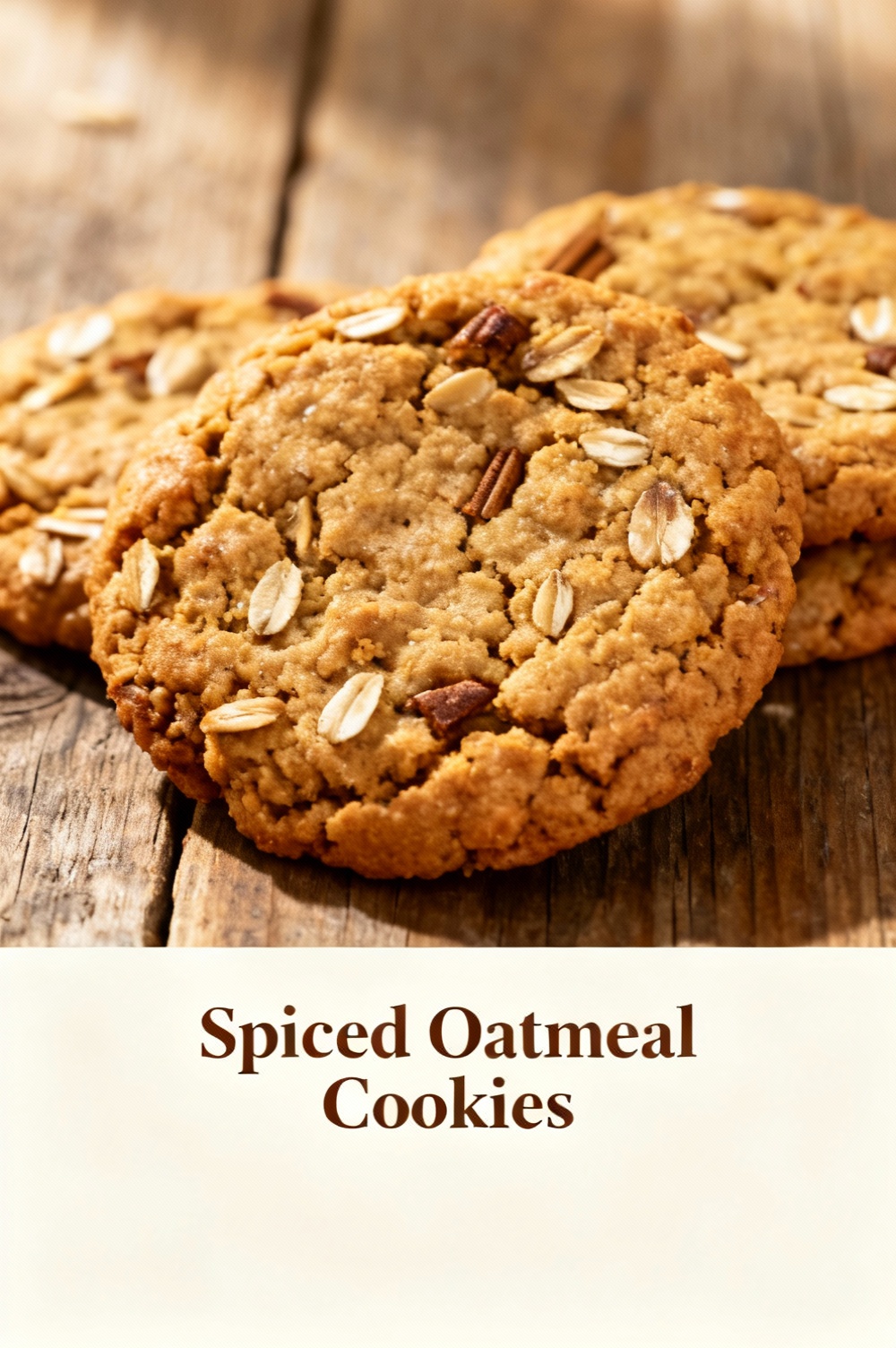
Warm, chewy and lightly spiced — a cozy classic.
Ingredients
- 1 cup (225 g) unsalted butter, softened
- 1 cup (200 g) packed light brown sugar
- 1/2 cup (100 g) granulated sugar
- 2 large eggs
- 1 tsp vanilla extract
- 1 1/2 cups (190 g) all-purpose flour
- 1 tsp baking soda
- 1/2 tsp fine salt
- 2 cups (180 g) old-fashioned rolled oats
- 1 tsp ground cinnamon
- 1/2 tsp ground ginger
- 1/4 tsp ground cardamom
- 1/4 tsp ground cloves (optional)
- 1/2 cup (75 g) raisins or chopped nuts (optional)
Instructions
- Preheat the oven to 350°F (175°C). Line two baking sheets with parchment paper.
- In a large bowl, cream the softened butter with the brown and granulated sugars until light and fluffy, about 2–3 minutes.
- Add the eggs one at a time, mixing well after each addition. Stir in the vanilla.
- In a separate bowl, whisk together the flour, baking soda, salt, cinnamon, ginger, cardamom and cloves.
- Gradually add the dry ingredients to the butter mixture and mix until just combined.
- Fold in the oats and the raisins or nuts (if using) until evenly distributed.
- Drop rounded tablespoons of dough (about 1.5 tbsp) onto the prepared baking sheets, spacing about 2 inches apart. For larger cookies, use a 2-tablespoon scoop.
- Bake for 10–12 minutes, or until the edges are golden and the centers are set but still soft. Rotate pans halfway through baking for even coloring.
- Allow cookies to cool on the baking sheet for 5 minutes, then transfer to a wire rack to cool completely.
- Store in an airtight container at room temperature for up to 4 days, or freeze for longer storage.
Nutrition Information
- Calories: 150 kcal
- Cholesterol: 30 mg
- Sodium: 90 mg
- Carbohydrates: 19 g
- Fiber: 1.5 g
- Sugar: 10 g
- Protein: 2.5 g