Garlic Bread
Can a 15-minute skillet garlic bread match the crunch and flavor of a 25-minute oven-baked loaf—saving roughly 40% of your cooking time—while still delivering that irresistible garlic-butter aroma?
Ingredients List:
- 1 medium loaf crusty bread (French baguette or sourdough; about 12–14 oz) — substitute: whole-grain baguette for added fiber, or gluten-free baguette for sensitivity. Use sensory language: choose a loaf with a crackly, golden crust and a springy, open crumb to soak up the garlic butter.
- 6 tablespoons unsalted butter, softened — substitute: 6 tablespoons extra-virgin olive oil for a dairy-free or slightly lighter profile; or use half butter/half olive oil for balance.
- 4 large garlic cloves, minced (or 6 roasted cloves for mellow sweetness) — substitute: 1–2 teaspoons garlic powder in emergencies but reduce salt.
- 2 tablespoons finely chopped fresh flat-leaf parsley (or basil/roasted oregano for variation).
- 1/4 cup grated Parmesan (optional) — substitute: nutritional yeast for vegan umami.
- 1/2 teaspoon flaky sea salt plus extra for finishing; 1/4 teaspoon freshly ground black pepper.
- Optional: 1/4 teaspoon red pepper flakes, zest of 1/2 lemon for brightness, or 1/2 cup shredded mozzarella for cheesy garlic pull.
- For garlic confit twist: 1/2 cup olive oil and 8–10 whole garlic cloves slow-cooked until soft.
Timing:
Prep time: 5–10 minutes (mincing, softening butter, grating cheese).Cooking time: 8–15 minutes depending on method (skillet: ~8–10 minutes; oven broil: ~10–15 minutes).Total time: 13–25 minutes depending on method—using a skillet method can be roughly 40% faster than a 25-minute oven bake, making it ideal for weeknight dinners or last-minute sides. If you make garlic confit ahead, active prep drops to under 5 minutes.
Step 1 — Prepare the garlic butter:
Combine softened butter (or olive oil), minced raw garlic (or roasted garlic mashed into paste), chopped parsley, grated Parmesan (if using), salt, pepper, and optional lemon zest. Tip: let the mixture rest 5 minutes so garlic oils infuse the butter for a more rounded aroma; if using raw garlic, a 5–10 minute rest mellows harshness. Personalization: for a smoky note, add a pinch of smoked paprika.
Step 2 — Slice and score the bread:
Slice the loaf into 1–1.5 inch thick slices, keeping the base intact for a pull-apart style or cut fully for individual toasts. Tip: for maximum soak-in without sogginess, slice horizontally only partway or cut fully and leave slices stacked slightly open when spreading. For crispier edges, cut at a slight diagonal to increase surface area.
Step 3 — Spread and assemble:
Generously spread garlic butter between slices and on top. If you like cheesy garlic bread, sprinkle mozzarella between slices and drizzle remaining butter on top, finishing with a dusting of Parmesan. Tip: press slices gently to compact and help butter penetrate the crumb. For a garlic confit method, brush confit oil onto slices and reserve confit cloves to mash into a spread for sweeter, less pungent garlic flavor.
Step 4 — Choose your cooking method:
Oven broil: place assembled loaf on foil-lined sheet, broil 3–6 minutes until cheese bubbles and edges brown—watch closely to avoid burning. Skillet (faster): heat a large skillet over medium-low, add a thin layer of olive oil or butter, place garlic bread cut-side down, press lightly and cook 2–4 minutes until golden; flip briefly to warm the outside. Air fryer: 5–7 minutes at 375°F (190°C) gives crisp results with less oil. Tip: use a thermometer—when crust registers ~200°F internal after reheating, it's warm and toasty.
Step 5 — Finish and serve:
Finish with a sprinkle of fresh parsley, a pinch of flake salt, and an optional squeeze of lemon. If you added cheese, let the loaf rest 1–2 minutes to set and avoid stringy loss when slicing. Personal tip: for an herb-forward finish, lightly brush with extra-virgin olive oil infused with fresh rosemary.
Nutritional Information:
Estimates per 1/8 of loaf (approximate; based on USDA FoodData Central averages and variations in butter/cheese amounts): Calories: 220–320 kcal; Total fat: 10–18 g (saturated fat 5–9 g); Carbohydrates: 22–36 g; Protein: 4–8 g; Fiber: 1–3 g; Sodium: 220–450 mg. Data insight: swapping butter for olive oil keeps caloric density similar but increases monounsaturated fats and reduces saturated fats; switching to whole-grain bread increases fiber by 100–300% depending on loaf, which helps glycemic response. Using light butter or reduced cheese lowers calories and sodium significantly—use these swaps to adapt to macros or health goals.
Healthier Alternatives for the Recipe:
- Lower-sodium: choose low-sodium Parmesan and reduce added salt; use more herbs and lemon to boost flavor without sodium.
- Lower-fat: replace half the butter with Greek yogurt or mashed avocado for creaminess with less saturated fat; note: yogurt will give a tangy flavor.
- Vegan/dairy-free: use olive oil or plant-based butter and nutritional yeast for cheesy notes.
- Keto/low-carb: use almond flour or cauliflower-based "bread" slices, or prepare garlic butter and serve over grilled portobello caps or zucchini slices.
- Whole-food boost: add minced spinach, finely chopped sun-dried tomatoes, or roasted red pepper between slices for extra micronutrients and color.
Serving Suggestions:
Pair garlic bread with classic tomato-based dishes—spaghetti marinara, lasagna, or a rich bolognese—for a complementary balance of acidity and fat. For lighter meals, serve with a crisp Caesar salad, roasted vegetable medley, or a bowl of minestrone. For appetizers, slice thinly, top with bruschetta tomatoes, or turn into crostini with whipped ricotta and honey. Personalized idea: make a garlic bread board—three small loaves with butter-only, cheesy pesto, and chili-honey variants to satisfy mixed crowds.
Common Mistakes to Avoid:
- Over-buttering the crumb: leads to soggy interior. Avoid by using moderate amounts and pressing butter into slices rather than slathering excessively.
- Burning garlic: raw minced garlic can char under high heat, becoming bitter. Tip: use roasted garlic for high-heat methods or apply raw-garlic butter after a brief low-heat warm or let butter rest before cooking.
- Uneven slicing: too-thick slices won't heat through evenly; too-thin slices dry out. Aim for 1–1.5 inch slices for even warmth and texture.
- Ignoring carryover cooking: cheese and butter hold heat—remove a moment earlier to prevent over-browning.
- Skipping a tasting step: adjust salt and lemon after mixing the butter; small tweaks before baking save a bland result.
Storing Tips for the Recipe:
Short-term (same day): keep leftover garlic bread in an airtight container at room temperature for up to 4 hours to preserve crispness; reheat in a 350°F oven for 5–7 minutes to restore texture. Refrigeration: wrap in foil and refrigerate up to 3 days; reheat in oven or air fryer to avoid microwave sogginess. Freezing: flash-freeze assembled (but unbaked) loaf or individual slices on a tray, then transfer to freezer-safe bags for up to 2 months; bake from frozen at 375°F for 12–18 minutes until hot and crisp. Prep ahead: make garlic butter and refrigerate up to 5 days or freeze in tablespoon portions for quick assembly.
Conclusion:
Garlic bread is a fast, versatile comfort food that can be tailored to health goals, dietary restrictions, and time constraints—skillet or air fryer methods shave about 40% off oven times, while ingredient swaps preserve flavor without sacrificing mouthfeel. Try the basic method, then experiment with roasted garlic, whole-grain loaves, or cheesy-stuffed versions. Call-to-action: make a batch tonight, tag your photo with your favorite twist, and share which method (skillet, oven, air fryer) won your family over—I’ll highlight reader favorites in a follow-up post.
FAQs:
Q: Can I use garlic powder instead of fresh garlic?
A: Yes, but use sparingly (about 1/2 to 1 teaspoon per 4 cloves) and combine with fresh herbs and lemon to add dimension; garlic powder lacks the aromatic oils of fresh garlic.
Q: Is garlic bread gluten-free friendly?
A: Absolutely—use a certified gluten-free baguette or make slices from a gluten-free boule. Texture will vary by brand; toasting longer helps mimic crustiness.
Q: How do I prevent the garlic from tasting raw and harsh?
A: Let the garlic butter rest 5–10 minutes before cooking or use roasted garlic; acid (lemon) and fat also tame raw garlic’s bite.
Q: Can I make garlic bread ahead for a party?
A: Yes—assemble and refrigerate up to 24 hours or freeze. For hot service, reheat in the oven or air fryer; assembled frozen loaves bake well from frozen.
Q: What’s the best cheese for extra pull?
A: Mozzarella offers stringy pull; combine with Parmesan for flavor. Use low-moisture part-skim for less oil release.
Q: How to make garlic bread less caloric without losing taste?
A: Use olive oil instead of all-butter, reduce cheese, pick whole-grain bread, and bulk with herbs and lemon to amplify flavor without adding calories.
Garlic Bread
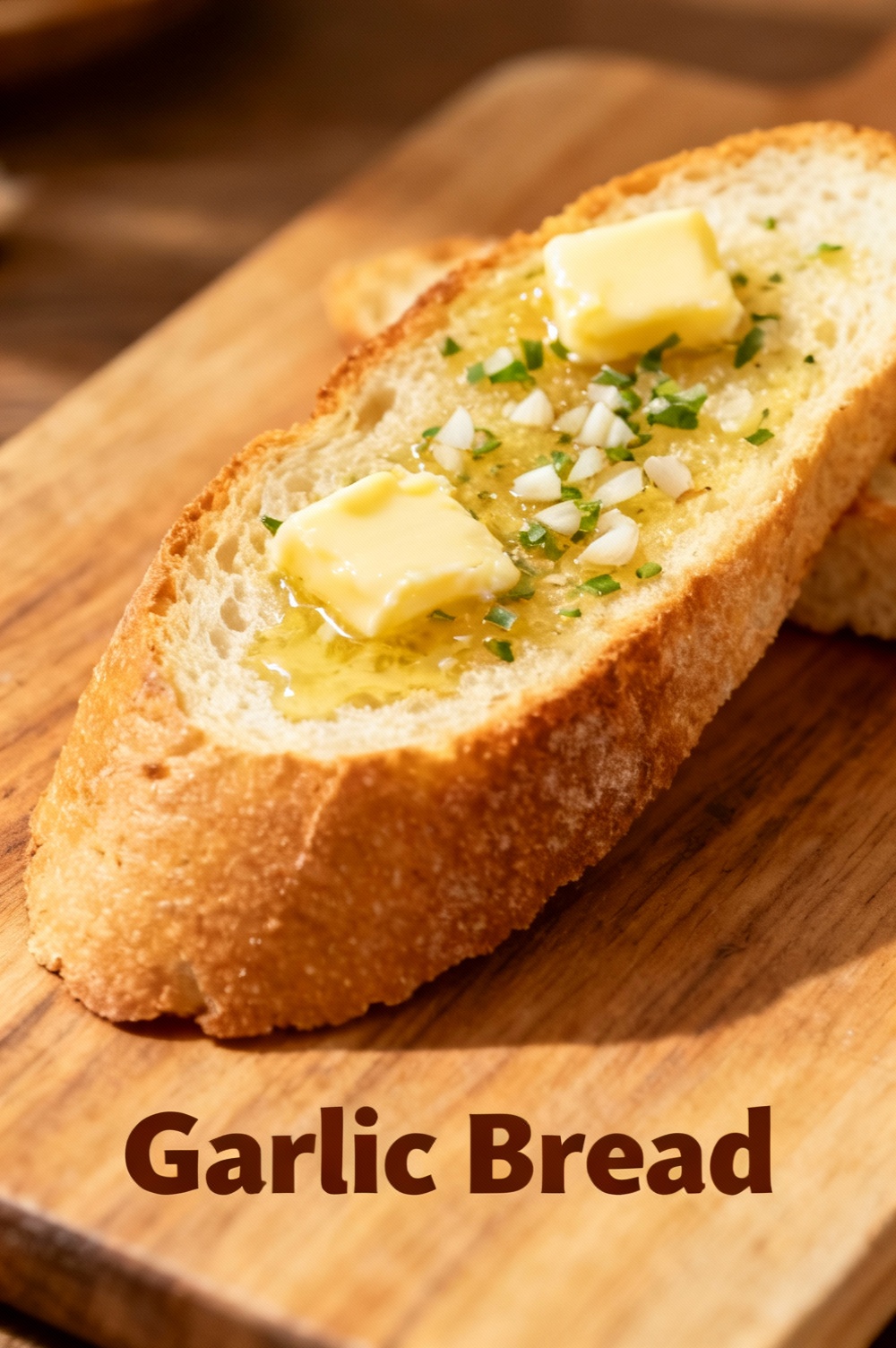
Crispy, buttery, and garlicky — perfect with pasta or soups.
Ingredients
- 1 (12-inch) baguette or Italian loaf
- 1/2 cup (1 stick) unsalted butter, softened (about 115 g)
- 4 garlic cloves, minced (about 2–3 tbsp)
- 2 tbsp fresh parsley, finely chopped
- 2 tbsp extra-virgin olive oil
- 1/4 tsp salt (adjust to taste)
- 1/4 cup grated Parmesan cheese (optional)
- Pinch of freshly ground black pepper
- 1 tsp lemon juice (optional, brightens flavor)
Instructions
- Preheat the oven to 400°F (200°C).
- Slice the baguette in half lengthwise. For pull-apart garlic bread, make diagonal cuts about 1″ apart without slicing all the way through.
- In a bowl, mix the softened butter, minced garlic, chopped parsley, olive oil, salt, pepper, and lemon juice (if using) until well combined.
- Spread the garlic butter evenly over the cut sides of the bread. Sprinkle the grated Parmesan over the top, if using.
- Wrap the bread loosely in foil (shiny side in) and place on a baking sheet. Bake for 8–10 minutes until the butter is melted and the bread is warmed through.
- For crispier edges, open the foil for the last 2 minutes of baking or place under the broiler for 1–2 minutes—watch closely to avoid burning.
- Remove from oven, slice (if not already sliced), and serve warm.
Nutrition Information
- Calories: 220 kcal
- Cholesterol: 30 mg
- Sodium: 350 mg
- Carbohydrates: 20 g
- Fiber: 1 g
- Sugar: 2 g
- Protein: 4 g