Air Fryer Roasted Butternut Squash & Kale Salad
Introduction
What if you could get perfectly caramelized, tender-roasted butternut squash with crispy edges in half the time of a conventional oven—while turning it into a nutrient-dense kale salad that satisfies like a main dish? Many home cooks believe roasting squash requires an hour and a lot of oil; air frying challenges that assumption, delivering caramelized texture faster and with less fat. This air fryer roasted butternut squash & kale salad blends convenience, deep fall flavors, and smart nutrition — ideal for busy weeknights, meal-prep bowls, or a show-stopping side.
Ingredients List
- 1 medium butternut squash (about 1.5–2 lbs), peeled, seeded, and cut into 1-inch cubes — substitute: sweet potato or delicata squash for variation.
- 6 cups curly kale, ribs removed and roughly chopped (about 180 g) — substitute: baby spinach or massaged lacinato kale for milder flavor.
- 2 tbsp extra-virgin olive oil (or avocado oil) for tossing squash — substitute: 1 tbsp oil + 1 tbsp apple juice for lower fat.
- 1 tbsp pure maple syrup or honey — substitute: coconut sugar dissolved in warm water for vegan swap.
- 1 tsp smoked paprika and 1/2 tsp ground cumin — substitute: cinnamon + cayenne for a sweeter-spicy profile.
- Salt and freshly ground black pepper to taste.
- 1/4 cup unsalted pepitas (pumpkin seeds), toasted — substitute: chopped walnuts or sunflower seeds for nut-free options.
- 1/2 cup crumbled feta or goat cheese — substitute: marinated tofu, aged vegan feta, or omitted for dairy-free.
- 2 tbsp apple cider vinegar or lemon juice (for dressing and kale massage).
- 1 tbsp Dijon mustard, 1 tbsp olive oil, 1 tbsp maple syrup, salt & pepper for maple-Dijon vinaigrette.
- Optional: thinly sliced red onion, pomegranate arils, or cooked quinoa for extra heartiness.
Timing
Preparation time: 15 minutes. Air-fry roasting time: 18–22 minutes (single layer), which is roughly 30–40% faster than a conventional oven roast at 425°F that typically needs 30–40 minutes. Total time: ~35 minutes from pantry to plate (about 20% less time than many oven-based roasted-squash salads). If you add quinoa or toast seeds separately, add 10 minutes. These timing gains make the air fryer a high-value tool for quicker weeknight meals and faster meal prep rotations.
Step 1: Prep the squash for even roasting
Cut squash into uniformly sized 1-inch cubes to ensure even cooking and consistent caramelization. Toss cubes with 2 tbsp olive oil, 1 tbsp maple syrup, smoked paprika, cumin, 1/2 tsp salt, and pepper. Tip: dry the cubes thoroughly after peeling—excess moisture steams, preventing crisp edges. Personalization: for sweeter notes, add a sprinkle of cinnamon; for a savory profile, use garlic powder instead of maple.
Step 2: Air-fry for maximum caramelization
Preheat air fryer to 390°F (200°C) for 3 minutes if your model recommends preheating. Arrange squash in a single layer (avoid overcrowding—cook in two batches if needed). Air-fry 9–11 minutes, shake or toss gently, then cook another 9–11 minutes until edges are browned and interiors fork-tender. Tip: shaking halfway yields better browning; if you like extra crisp, finish with a 1–2 minute high-heat blast at 400–420°F. Data-backed note: air fryers concentrate hot air, shortening roast time while creating Maillard reactions similar to oven roasting but with less oil.
Step 3: Prep and soften the kale
While squash roasts, massage the kale to remove bitterness and soften fibers. Place chopped kale in a bowl, add 1 tbsp apple cider vinegar or lemon juice, 1/2 tsp salt, and gently massage for 1–2 minutes until leaves darken and shrink slightly. Tip: massaging with a touch of olive oil (1 tsp) enhances mouthfeel and helps dressing cling. Personalization: for babies or kids, use baby spinach instead for a milder texture.
Step 4: Make the maple-Dijon vinaigrette
In a small jar combine 1 tbsp apple cider vinegar or lemon juice, 1 tbsp Dijon mustard, 1 tbsp maple syrup, 1 tbsp olive oil, salt, and pepper. Shake vigorously until emulsified. Pro tip: make double the dressing to keep in the fridge for quick salads; vinaigrette will keep up to 5 days refrigerated. Data insight: using a tablespoon of oil per serving keeps calorie density moderate while delivering healthy monounsaturated fats.
Step 5: Toast pepitas and assemble
Toast pepitas in a dry skillet over medium heat for 2–3 minutes, stirring often, until they smell nutty and start to pop. Combine massaged kale, roasted squash, pepitas, and crumbled feta in a large bowl. Drizzle dressing and toss gently to coat. Optional: fold in pomegranate arils for a pop of acidity and color. Serving personalization: add cooked quinoa or farro for a grain bowl; add sliced grilled chicken for extra protein.
Step 6: Finish with texture and taste balance
Taste and adjust: add extra acid (lemon) for brightness, more maple for sweetness, or a pinch of flaky sea salt to heighten flavors. For presentation, top with a few whole pepitas and a scattering of feta. Tip: if preparing ahead, hold pepitas and cheese separately and toss just before serving to preserve crunch.
Nutritional Information
Estimated nutrition per serving (recipe yields 4 servings): Calories ~275 kcal; Protein ~8 g; Carbohydrates ~30 g; Fat ~14 g; Fiber ~6 g; Sodium ~350 mg. These are approximate values based on typical ingredient profiles (butternut squash, kale, olive oil, feta, pepitas, maple syrup). Data-backed context: butternut squash is rich in vitamin A (as beta-carotene) and potassium; 1 cup cooked squash provides ~260% RDI of vitamin A. Kale is a high-vitamin-K, vitamin-C, and fiber source. Swapping feta for tofu reduces saturated fat and slightly lowers sodium while maintaining texture.
Healthier Alternatives for the Recipe
- Lower fat: reduce oil to 1 tbsp and use a spritz of oil spray or roast at slightly lower temp for a few extra minutes. Replace pepitas with 1 tbsp roasted chickpeas for crunch with more fiber.
- Vegan: swap feta for marinated baked tofu cubes or almond ricotta; use maple syrup instead of honey.
- Low-carb/keto: reduce maple syrup to 1 tsp, increase feta and pepitas, and add avocado for healthy fats.
- Protein boost: add 1 cup cooked lentils, chickpeas, or 1 grilled chicken breast sliced per serving for 12–25 g extra protein.
- Allergy-friendly: omit seeds and nuts; use sesame-free dressing and sunflower seeds if nut allergies exist.
Serving Suggestions
Serve this salad warm or at room temperature. For a family-style plate, place roasted squash on the kale bed and allow guests to spoon dressing to taste. Pairings: grilled salmon or roasted pork loin for a hearty meal; crusty whole-grain bread or warm naan for scooping. For meal prep, pack components separately (roasted squash and toasted seeds separate from massaged kale) and assemble within 24–36 hours for best texture. Seasonal twist: swap pepitas for spiced pecans and add roasted apples for a fall harvest version.
Common Mistakes to Avoid
- Overcrowding the air fryer basket: leads to steaming, not roasting—work in batches if necessary. Data-backed tip: leaving 20–30% free space allows hot air circulation and better browning.
- Inconsistent cube sizes: uneven pieces cause some to burn while others remain raw—aim for uniform 1-inch cubes.
- Not massaging kale: unmassaged kale can be tough and bitter; 1–2 minutes of massage with acid and salt transforms texture dramatically.
- Adding dressing too early for leftovers: dressing ahead of time wilts kale and soggifies pepitas—dress just before serving if possible.
- Skimping on seasoning: roasted vegetables need robust seasoning; taste and add a finishing salt to elevate flavors.
Storing Tips for the Recipe
Store roasted squash and kale separately in airtight containers in the refrigerator for up to 3–4 days. Keep toasted pepitas and cheese in a small sealed container and add them at serving time to preserve crunch. For reheating, warm squash in the air fryer for 3–4 minutes at 350°F to revive edges; avoid microwaving the kale—it will become mushy. For meal prep bowls, assemble right before eating and pack dressing in a separate mini-container to keep greens fresh up to 48 hours.
Conclusion
This air fryer roasted butternut squash & kale salad offers speed, seasonal flavor, and reliable nutrition—delivering caramelized squash with minimal oil and a satisfying texture contrast from kale, pepitas, and cheese. It’s adaptable for vegan, low-carb, and allergy-friendly diets while remaining a simple weeknight winner. Try the recipe this week: roast in your air fryer, personalize the dressing, and share a photo or feedback—what swap did you make? Explore related posts on roasted squash bowls, massaged kale basics, and weeknight air fryer dinners to expand your rotation.
FAQs
Q: Can I use frozen butternut squash in the air fryer? A: Yes, but thaw and pat dry first; frozen squash releases moisture and may steam rather than roast. Reduce oil slightly and increase air-fry time by 3–5 minutes, checking for caramelization.
Q: What air fryer temperature works best? A: 390–400°F (200–205°C) yields a good balance of quick roasting and caramelization. If you prefer extra crisp, finish with a 1–2 minute blast at 400–420°F.
Q: How do I make this gluten-free? A: The recipe is naturally gluten-free—just verify any added grains (quinoa is safe; bulgur is not).
Q: Can I prep this salad ahead for lunches? A: Yes—store components separately (squash, kale, seeds, cheese, dressing). Assemble within 24–48 hours for best texture.
Q: How do I scale the recipe? A: Increase squash and kale quantities proportionally. If using a small air fryer, roast in batches to avoid overcrowding and maintain roast quality.
If you want, I can generate a printable recipe card, a shopping list organized by grocery store section, or a low-oil variant tailored to specific dietary goals—tell me your preferences and I’ll adapt the recipe.
Air Fryer Roasted Butternut Squash & Kale Salad
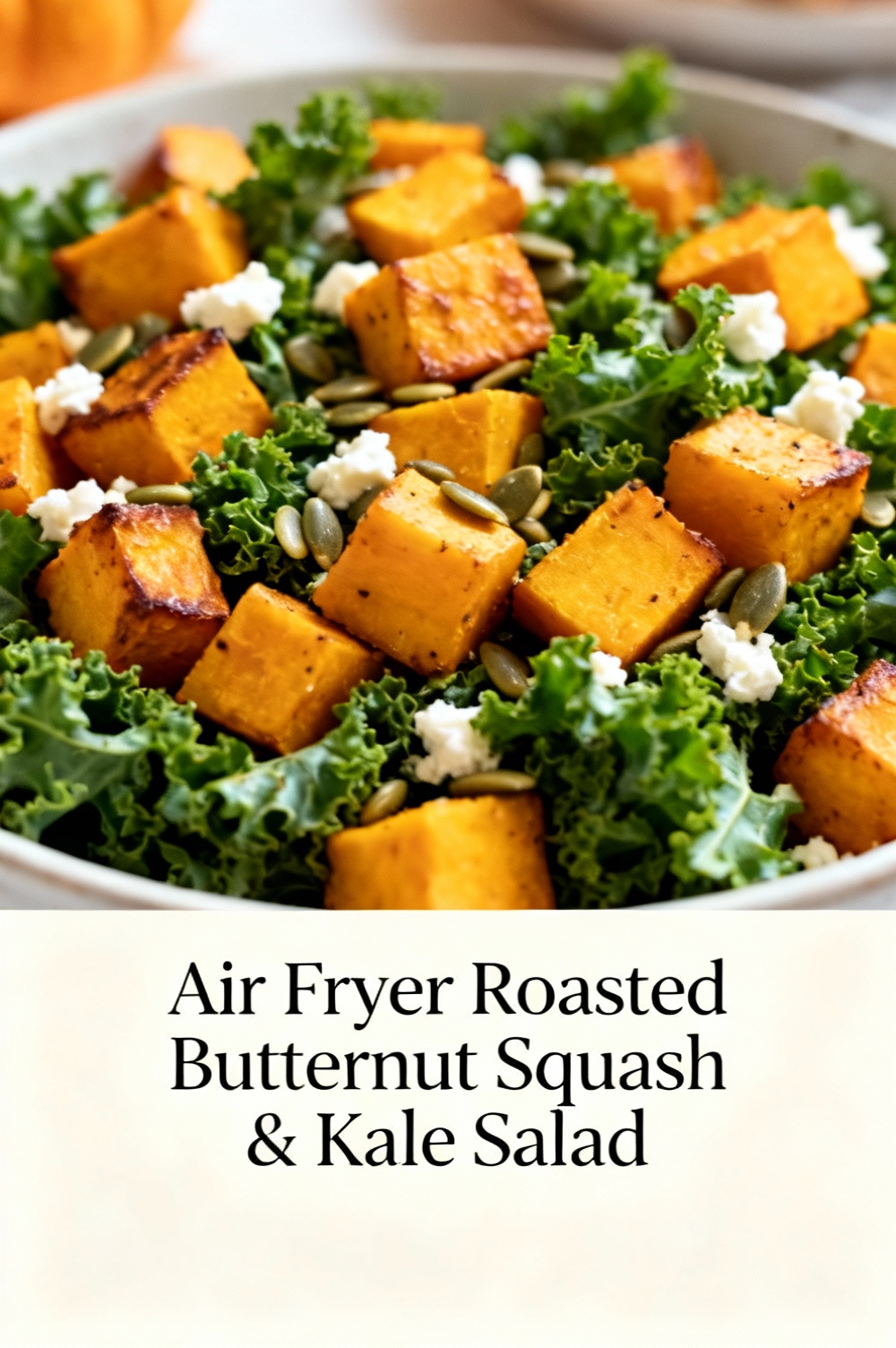
Roasted tender squash, massaged kale, toasted pepitas and a maple‑mustard vinaigrette — great warm or at room temperature.
Ingredients
- 1 medium butternut squash (about 2 lb), peeled, seeded and cut into 1-inch cubes
- 1 tbsp olive oil (for squash)
- 1/2 tsp kosher salt, plus extra to taste
- 1/4 tsp freshly ground black pepper
- 1/2 tsp smoked paprika (optional)
- 6 cups kale (curly or lacinato), stems removed and thinly sliced
- 1 tbsp olive oil (for kale)
- 1/4 tsp salt (for kale)
- 1/3 cup toasted pepitas or chopped walnuts
- 1/4 cup dried cranberries or pomegranate seeds
- 1/4 cup crumbled feta or goat cheese (optional)
- For the dressing:
- 3 tbsp olive oil
- 2 tbsp apple cider vinegar or fresh lemon juice
- 1 tbsp maple syrup or honey
- 1 tsp Dijon mustard
- Salt & freshly ground black pepper, to taste
Instructions
- Preheat the air fryer to 400°F (200°C).
- In a bowl, toss the butternut squash cubes with 1 tbsp olive oil, 1/2 tsp salt, 1/4 tsp pepper and smoked paprika (if using) until evenly coated.
- Arrange squash in a single layer in the air fryer basket (work in batches if needed). Air fry for 15–20 minutes, shaking the basket or stirring halfway through, until edges are golden and squash is tender.
- While the squash cooks, place the sliced kale in a large bowl. Add 1 tbsp olive oil and 1/4 tsp salt and massage the kale with your hands for 1–2 minutes until it softens and darkens.
- Make the dressing: whisk together 3 tbsp olive oil, 2 tbsp apple cider vinegar (or lemon), 1 tbsp maple syrup, 1 tsp Dijon, and a pinch of salt and pepper. Taste and adjust seasoning.
- When the squash is done, let it cool a few minutes. Add the roasted squash to the massaged kale along with the toasted pepitas and dried cranberries.
- Drizzle the dressing over the salad and toss gently to combine. Top with crumbled feta or goat cheese if desired. Serve warm or at room temperature.
Nutrition Information
- Calories: 300 kcal
- Cholesterol: 8 mg
- Sodium: 380 mg
- Carbohydrates: 34 g
- Fiber: 6 g
- Sugar: 10 g
- Protein: 6 g