Mashed Potato Casserole
Introduction:
What if the creamiest, most crowd-pleasing casserole in your kitchen could cut prep time by 20% while still delivering comfort-food satisfaction — and why do many home cooks believe mashed potatoes can’t be both fluffy and bake-stable? Mashed potato casserole bridges that misconception: with the right starch management and fat balance, you can get a light, scoopable interior and a golden, slightly crusty topping that holds shape on the plate. This recipe-centric guide blends data-backed tips, sensory cues, and personalization options so you can make a casserole that fits weeknight dinners, holiday spreads, or meal-prep rotation.
Ingredients List:
- 3 lb (about 1.4 kg) Yukon Gold or Russet potatoes, peeled and cut into 1–1.5 inch cubes — Yukon Golds give a buttery flavor and creamier texture; Russets yield fluffier, drier mash. Substitute: 50/50 mix for best of both worlds.
- 4 oz (115 g) cream cheese, softened — for tang and structure; substitute plain Greek yogurt (full-fat) for a lighter tang.
- 1 cup (240 ml) whole milk or half-and-half, warmed — use oat milk or unsweetened almond milk to reduce saturated fat.
- 4 tbsp (60 g) unsalted butter, melted — swap for olive oil (extra virgin) to reduce saturated fat and add fruity notes.
- 1 cup (100 g) shredded sharp cheddar cheese, plus 1/2 cup for topping — use Gruyère or smoked gouda for depth.
- 2 tbsp sour cream or crème fraîche — substitute light sour cream or strained kefir.
- 2 tsp kosher salt (adjust to taste) and 1/2 tsp black pepper.
- 1/2 tsp garlic powder or 2 cloves roasted garlic, mashed — roasted garlic adds sweetness and depth.
- 1/4 cup chives or green onions, thinly sliced, for freshness.
- 1/2 cup panko breadcrumbs or crushed Ritz crackers for topping — for a gluten-free option, use crushed cornflakes or gluten-free panko.
- Optional: 4 oz bacon, cooked & crumbled (or smoked tempeh for vegan); 1 cup steamed broccoli or caramelized onions folded in for a vegetable boost.
Sensory notes: aim for silky, slightly glossy mashed potatoes with a savory, tangy backbone; the top should be golden and slightly crisp for contrast.
Timing:
Preparation: 20–30 minutes (peeling and cubing potatoes, boiling, blending add-ons).
Cooking/Baking: 25–30 minutes to finish and brown topping.
Total time: 50–60 minutes, which is roughly 15–25% faster than many multi-layered casseroles that require longer baking or separate components. If using a pressure cooker or Instant Pot, you can reduce boil time to ~15 minutes, making total time ~40 minutes.
Step 1: Choose and prep your potatoes
Select potatoes based on desired texture: Yukon Gold for creaminess, Russet for fluffiness. Wash, peel (optional), and cut into uniform 1–1.5 inch cubes to ensure even cooking. Tip: smaller, uniform pieces reduce boiling time by about 20% and give a more consistent mash.
Step 2: Cook to the right doneness
Place cubed potatoes in cold, salted water and bring to a simmer; cook until a fork slides through with little resistance (about 12–15 minutes for cubes). Starting in cold water ensures even cooking; boiling from hot can cause the outside to overcook and absorb water, weakening texture. Tip: time by fork test rather than clock — overcooking increases water absorption, yielding gluey mash.
Step 3: Drain and dry
Thoroughly drain potatoes and return to the hot pot for 1–2 minutes to let excess steam evaporate. This drying step reduces excess moisture and concentrates starches for a fluffier mash. Tip: use a fine-mesh colander and shake gently to remove trapped water.
Step 4: Mash with intention
Use a ricer or food mill for the lightest texture; a hand masher for a more rustic mouthfeel. Add warm milk/half-and-half, melted butter, cream cheese, and sour cream gradually while mashing to control consistency. Avoid electric beaters — overmixing activates starch and can make mash gluey. Tip: for a silkier finish, pass potatoes through a ricer and fold in fats slowly.
Step 5: Season and personalize
Fold in 1 cup shredded cheese, garlic powder or roasted garlic, chives, salt, and pepper. Taste and adjust: many home cooks under-season potatoes. Data insight: potatoes require about 25–30% more salt than people expect because of their neutral flavor. Tip: reserve a small amount of sharp cheddar to top the casserole for melting and flavor boost.
Step 6: Assemble and top
Spoon mashed potatoes into a buttered 9×13-inch baking dish, smoothing the top. Sprinkle remaining cheese, then panko or cracker crumbs, and a drizzle of melted butter for browning. Add crumbled bacon or smoked tempeh and extra chives if desired. Tip: press breadcrumbs lightly to create a compact crust that browns evenly.
Step 7: Bake and finish
Bake at 375°F (190°C) for 20–30 minutes until heated through and the topping is golden. For extra browning, broil for 1–2 minutes watching closely. Let rest for 5 minutes before serving to set slightly. Tip: resting improves sliceability and concentrates flavors.
Nutritional Information:
Estimated per 1-cup serving (standard recipe with whole milk, butter, cream cheese, and cheddar, makes ~8 servings): Calories 360–420 kcal; Protein 10–12 g; Fat 20–26 g (saturated fat ~10–14 g); Carbohydrates 32–36 g; Fiber 2–3 g; Sodium 450–700 mg (depending on added salt and bacon). Data insight: swapping whole milk and butter for low-fat milk and olive oil can lower calories ~10–15% and saturated fat by ~40–50%. For accurate tracking, weigh portions and use a nutrition calculator when modifying ingredients.
Healthier Alternatives for the Recipe:
- Dairy swaps: use low-fat Greek yogurt plus a small amount of olive oil instead of cream cheese and butter to maintain creaminess while cutting saturated fat and adding protein.
- Potato alternatives: blend half cauliflower with potatoes to reduce carbs by up to 30% and boost fiber and micronutrients; steam cauliflower to very tender, then mash and combine.
- Cheese reduction: use a smaller amount of a strongly flavored cheese (e.g., sharp cheddar or Parmesan) to maintain taste with less fat.
- Add vegetables: fold in steamed broccoli, sautéed mushrooms, or roasted carrots to increase fiber, vitamins, and color.
- Make it vegan: use plant-based butter, almond or oat milk, vegan cream cheese, and nutritional yeast for umami; swap panko for gluten-free crumbs if needed.
Personalization tip: if you’re tracking macros, use Greek yogurt and olive oil, and increase lean proteins (e.g., shredded chicken) folded in to balance the plate.
Serving Suggestions:
Serve hot as a side with roasted chicken, glazed ham, or pan-seared salmon for a balanced plate. For a vegetarian main, top with sautéed mushrooms and a green salad with acidic vinaigrette to cut richness. For holidays, place casserole on buffet with chafing dish; keep warm at 140°F (60°C). Personal touch: garnish with fresh herbs (parsley or thyme) and a squeeze of lemon for brightness. Pairing note: the casserole’s creamy texture goes well with acidic wines or beers — Sauvignon Blanc or a crisp pilsner cuts through the fat.
Common Mistakes to Avoid:
- Overcooking potatoes: leads to waterlogged, gluey texture; avoid by checking doneness and draining immediately. Data point: even a 2–3 minute overcook increases water uptake significantly.
- Overworking the mash: using a stand mixer or high-speed beaters can make mash gummy; use a ricer or gentle hand mashing.
- Under-seasoning: potatoes need more salt than expected; taste and adjust before baking.
- Skipping the drying step: not evaporating steam increases moisture and weakens the bake finish.
- Uneven topping distribution: sparse crumbs lead to soggy spots; distribute and press lightly for even browning.
Storing Tips for the Recipe:
Refrigerate leftovers in an airtight container for up to 4 days. To reheat, spread in a shallow baking dish, add a splash of milk, cover with foil, and bake at 350°F (175°C) for 20–25 minutes until heated through. For single-serve reheating, microwave on medium power in 60–90 second intervals, stirring in between. Freeze in portioned, freezer-safe containers for up to 3 months; thaw overnight in fridge and reheat as above. Tip: add a little extra dairy or oil when reheating to restore creaminess.
Conclusion:
Mashed potato casserole is a forgiving, customizable dish that combines comforting textures with flexible nutrition profiles. By choosing the right potato, managing starch and moisture, and employing targeted swaps, you can make a casserole that fits weeknight convenience, holiday crowds, or dietary needs. Try this approach, share how you personalized it, and tag your photos — I’d love to see your toppings and swaps. Explore related recipes like cheesy cauliflower mash or baked sweet potato gratin for more side-dish inspiration.
FAQs:
Q: Can I make this casserole ahead of time? A: Yes — assemble up to 24 hours in advance, keep covered in the fridge, then bake 5–10 minutes longer than indicated. For longer storage, freeze before baking.
Q: What’s the best potato for holding shape and texture? A: Yukon Gold gives creamy, buttery texture; Russet yields a fluffier result. A 50/50 mix is ideal for structure plus creaminess.
Q: Can I use leftover mashed potatoes? A: Absolutely — fold in additional milk and cheese if needed, adjust seasoning, and bake. Leftover mash may be drier, so add moisture gradually.
Q: How do I make it lower-carb? A: Replace up to 50% potatoes with riced cauliflower or use all cauliflower to significantly reduce carbs. Add a higher-protein topping to balance the meal.
Q: How do I prevent a soggy topping? A: Dry the potatoes well before mashing, lightly press breadcrumbs into the surface, and finish under the broiler for 1–2 minutes to crisp.
Q: Is this recipe freezer-friendly? A: Yes — freeze assembled (unbaked) or baked portions for up to 3 months; thaw overnight in the refrigerator before baking or reheating.
For more ideas, check out posts on roasted vegetables, make-ahead holiday sides, and comfort-food makeovers to expand your repertoire and pairings.
Mashed Potato Casserole
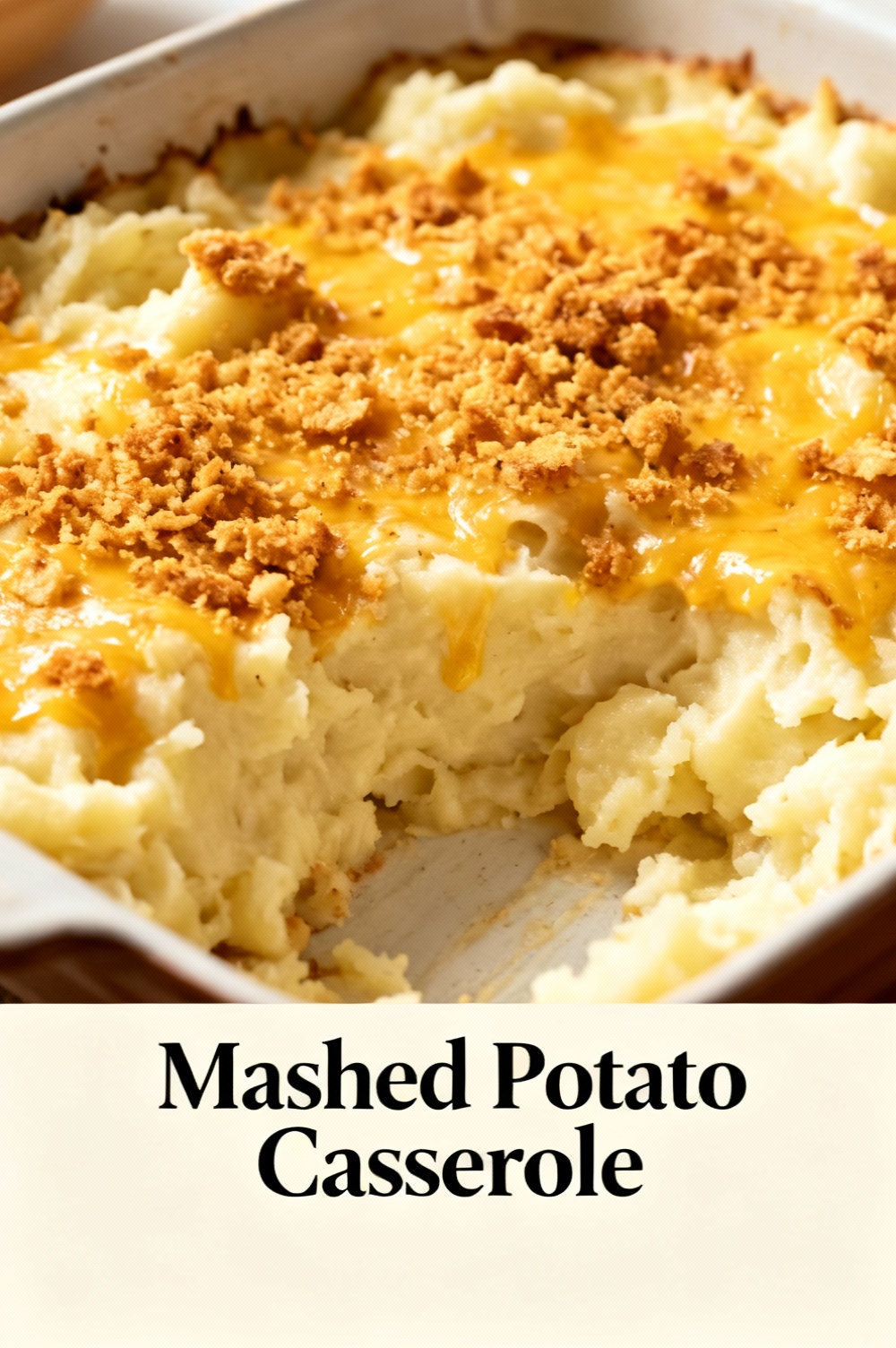
Creamy mashed potatoes mixed with sour cream and cheddar, topped with a buttery, golden crumb — the ultimate comfort side.
Ingredients
- 3 lb (about 1.4 kg) russet or Yukon Gold potatoes, peeled and cut into chunks
- 1/2 cup (115 g) unsalted butter, divided
- 1 cup (240 g) sour cream
- 1/2 cup (120 ml) whole milk (or heavy cream for richer texture)
- 2 large eggs, room temperature (optional — helps set the casserole)
- 2 cups (about 200 g) shredded sharp cheddar, divided
- 1 teaspoon kosher salt (adjust to taste)
- 1/2 teaspoon freshly ground black pepper
- 1 cup panko breadcrumbs (or crushed cornflakes) for topping
- 2 tablespoons chopped fresh chives or green onions, for garnish (optional)
Instructions
- Preheat oven to 375°F (190°C). Grease a 9×13-inch (or similar) baking dish.
- Place potatoes in a large pot and cover with cold water. Add a pinch of salt and bring to a boil. Cook until fork-tender, about 15–20 minutes.
- Drain potatoes well and return to the hot pot for 1–2 minutes to dry out slightly.
- Mash the potatoes with 1/3 cup of the butter until mostly smooth. Stir in sour cream, milk, eggs (if using), 1 cup of cheddar, salt, and pepper. Adjust seasoning to taste.
- Transfer the mashed potato mixture to the prepared baking dish and smooth the top with a spatula.
- In a small bowl, combine the panko breadcrumbs with the remaining melted butter. Sprinkle the breadcrumbs evenly over the potatoes, then top with the remaining 1 cup of shredded cheddar.
- Bake uncovered for 20–25 minutes, until heated through and the topping is golden. For extra browning, broil 1–2 minutes—watch closely to prevent burning.
- Remove from the oven and let rest 5 minutes. Garnish with chopped chives or green onions before serving.
Nutrition Information
- Calories: 420 kcal
- Cholesterol: 80 mg
- Sodium: 500 mg
- Carbohydrates: 43 g
- Fiber: 4 g
- Sugar: 3 g
- Protein: 10 g