Wild Rice Pilaf
Introduction
Did you know swapping standard long-grain rice for wild rice in a pilaf can increase fiber and protein by up to two to three times while adding a complex, nutty aroma that many cooks underestimate? This wild rice pilaf recipe challenges the common belief that pilaf must be fast and bland—wild rice rewards patience with chewy texture, toasted notes, and a nutrition profile that pairs beautifully with proteins, vegetables, and bold herbs.
Ingredients List
1 cup uncooked wild rice blend (pure wild rice or 50/50 wild + brown rice for faster cook time) — substitution: use 1 cup cauliflower rice for a low-carb version.
2 tablespoons olive oil or unsalted butter — substitution: avocado oil for higher smoke point, or vegan butter to keep plant-based.
1 medium onion, finely chopped (about 1 cup) — substitution: shallots for a sweeter, more delicate flavor.
2 cloves garlic, minced — substitution: 1/2 teaspoon garlic powder if you’re short on time.
1 cup sliced cremini or button mushrooms (optional for umami) — substitution: toasted walnuts or pecans for crunch.
1/2 cup diced celery and 1/2 cup diced carrot (classic pilaf base) — substitution: roasted bell peppers for color.
2 1/2 cups low-sodium vegetable or chicken broth — substitution: water + bouillon cube if needed (reduce added sodium).
1/4 cup toasted slivered almonds or chopped pecans — substitution: pumpkin seeds for allergies.
2 tablespoons fresh parsley, chopped; 1 tablespoon fresh thyme or rosemary, chopped — substitution: 1 teaspoon dried herbs.
Zest of 1 lemon and 1 tablespoon lemon juice (brightness) — optional: splash of balsamic for a deeper note.
Salt and freshly ground black pepper to taste.
Optional: 1/4 cup dried cranberries or chopped apricots for sweetness; 1/4 cup grated Parmesan for richness.
Timing
Preparation time: 15 minutes.
Cooking time: 45–55 minutes (wild rice typically requires 40–50 minutes to fully open; if using a 50/50 blend, expect closer to 35–40 minutes).
Total time: 60–70 minutes. This is about 15–25% longer than a white rice pilaf, but the texture and nutrition payoff are substantial: wild rice averages ~166 kcal per cooked cup with ~6.5 g protein and ~3 g fiber, compared with white rice at ~200 kcal with less fiber.
Step 1: Rinse and Toast the Rice
Rinse 1 cup wild rice under cold water until the rinse runs clear to remove dust and excess starch. Heat 1 tablespoon oil or butter in a heavy-bottomed saucepan over medium heat, add the rinsed rice, and toast for 3–5 minutes until grains take on a nutty fragrance and a few pop. Tip: toasting enhances aroma and helps keep grains separate—don’t skip this step unless you’re in a rush.
Step 2: Sauté the Aromatics and Vegetables
In the same pan, add the remaining tablespoon of oil or butter and sauté the onion for 4–5 minutes until translucent. Add garlic, celery, carrot, and mushrooms; cook until vegetables soften and release their juices, about 3–4 minutes. Season lightly with salt and pepper. Personalized tip: if you prefer a deeper flavor, deglaze the pan with 1 tablespoon white wine before adding broth.
Step 3: Combine, Simmer, and Cover
Return the toasted rice to the pan, stirring to coat with the aromatics. Pour in 2 1/2 cups hot broth, bring to a boil, then reduce heat to low, cover tightly, and simmer for 40–50 minutes. Avoid lifting the lid frequently—each peek releases steam and lengthens cooking time. Actionable trick: if broth is low or grains seem tight at 40 minutes, add 1/4 cup more hot liquid and cover for an additional 5–10 minutes.
Step 4: Rest and Fluff
Once the grains split open and are tender but still chewy, remove from heat and let the pilaf rest, covered, for 10 minutes. This finishing rest lets residual steam finish cooking evenly. Fluff gently with a fork to separate grains. Tip: pressing with a fork not a spoon keeps the texture light.
Step 5: Finish with Texture and Brightness
Fold in toasted nuts, fresh herbs, lemon zest and juice, and dried fruit or Parmesan if using. Taste and adjust salt and pepper. For a creamier pilaf, stir in 1 tablespoon of butter or a drizzle of extra-virgin olive oil. Personalized variation: for a Mediterranean twist, add chopped sun-dried tomatoes, olives, and fresh basil.
Nutritional Information
Estimated per serving (recipe yields 6 servings): 200–240 calories, 5–7 g protein, 6–8 g fat (with nuts and oil), 32–40 g carbohydrates, and 2.5–4 g fiber. Wild rice contributes a higher protein and fiber content than white rice—approximately 6–7 g protein and ~3 g fiber per cooked cup. Sodium depends on broth choice; using low-sodium broth can reduce sodium by 30–60% compared with regular broth. Note: these are estimates; exact values vary by brands and optional add-ins (nuts, Parmesan, dried fruit).
Healthier Alternatives for the Recipe
- Lower-sodium: choose low-sodium broth and omit added salt; boost flavor with lemon zest, herbs, and roasted garlic.
- Vegan: use olive oil or vegan butter, vegetable broth, and skip Parmesan; add nutritional yeast for umami.
- Gluten-free: naturally gluten-free if all ingredients (especially broth) are certified gluten-free.
- Low-carb: use the same aromatics and nuts but replace cooked rice with 3 cups roasted cauliflower rice; roast cauliflower first to reduce moisture and prevent soggy pilaf.
- Higher-protein: stir in cooked lentils, diced chicken breast, or a scoop of hemp seeds for a protein boost without losing pilaf character.
Serving Suggestions
Serve warm as a side to roasted or grilled proteins (lemon-herb chicken, seared salmon, or spiced lamb). Make it a main by adding roasted chickpeas, sautéed spinach, and a dollop of Greek yogurt for creaminess. For holiday tables, garnish with pomegranate seeds and extra toasted nuts for visual pop. Personalized idea: pair the pilaf with a citrusy arugula salad and a light vinaigrette to cut the richness and provide a refreshing contrast.
Common Mistakes to Avoid
- Not rinsing the rice: leaves grit and prevents proper toasting.
- Skipping the toast: you lose depth and the grains are more likely to clump.
- Wrong liquid ratio: wild rice needs more liquid than white rice; use 2.5:1 broth-to-rice for most blends.
- Lifting the lid too often: each lift increases cook time and leads to uneven texture.
- Overcooking: wild rice should be tender but still slightly chewy—overcooked grains turn mushy.
- Adding acidic ingredients too early: lemon juice or vinegar can firm grains and lengthen cooking time—add at the end.
Storing Tips for the Recipe
Cool quickly and refrigerate in an airtight container for up to 4 days. Reheat gently with a splash of water or broth in a covered pan or microwave to restore moisture. For longer storage, freeze in portions for up to 3 months—thaw overnight in the fridge and reheat with a little liquid. Prep-ahead: cook rice and aromatics separately; combine and finish with nuts and fresh herbs just before serving to maintain crunch and brightness.
Conclusion
This wild rice pilaf balances texture, aroma, and nutrition—it's a flexible side that elevates weeknight meals and shines on special occasions. The extra 15–25% cook time compared to white rice is repaid with fiber, protein, and a flavor profile that pairs with many cuisines. Try the recipe, tweak the herbs or mix-ins to match your pantry, and share your version in the comments or on social with a photo and your substitutions—your feedback helps refine future variations.
FAQs
Q: Can I use pure wild rice versus a blend? A: Yes. Pure wild rice offers a chewier texture and longer cook time (40–50 minutes). A 50/50 blend with brown rice shortens cook time and softens texture—choose based on preference and schedule.
Q: Is wild rice gluten-free? A: Wild rice is naturally gluten-free, but check broths and seasonings for hidden gluten to be safe.
Q: How do I make this pilaf ahead for a party? A: Cook the rice and aromatics, cool, and refrigerate separately. Reheat and fold in nuts, herbs, lemon, and any delicate add-ins just before serving.
Q: Can I make this pilaf in a rice cooker or Instant Pot? A: Yes—use the manufacturer’s wild rice settings or manual mode: roughly 1 cup rice to 2.5 cups liquid, pressure cook 25–30 minutes with natural release for blends, but always check texture and add liquid if needed.
Q: What pairs best with wild rice pilaf? A: Roasted poultry, grilled salmon, braised beef, or hearty roasted vegetables. For vegetarian meals, pair with lemony roasted cauliflower and a protein-rich salad.
Explore related posts such as roasted mushroom pilaf, lemon-herb chicken, or a vegan grain bowl to build full menus around this recipe—try variations and report back which combination became your new weeknight favorite.
Wild Rice Pilaf
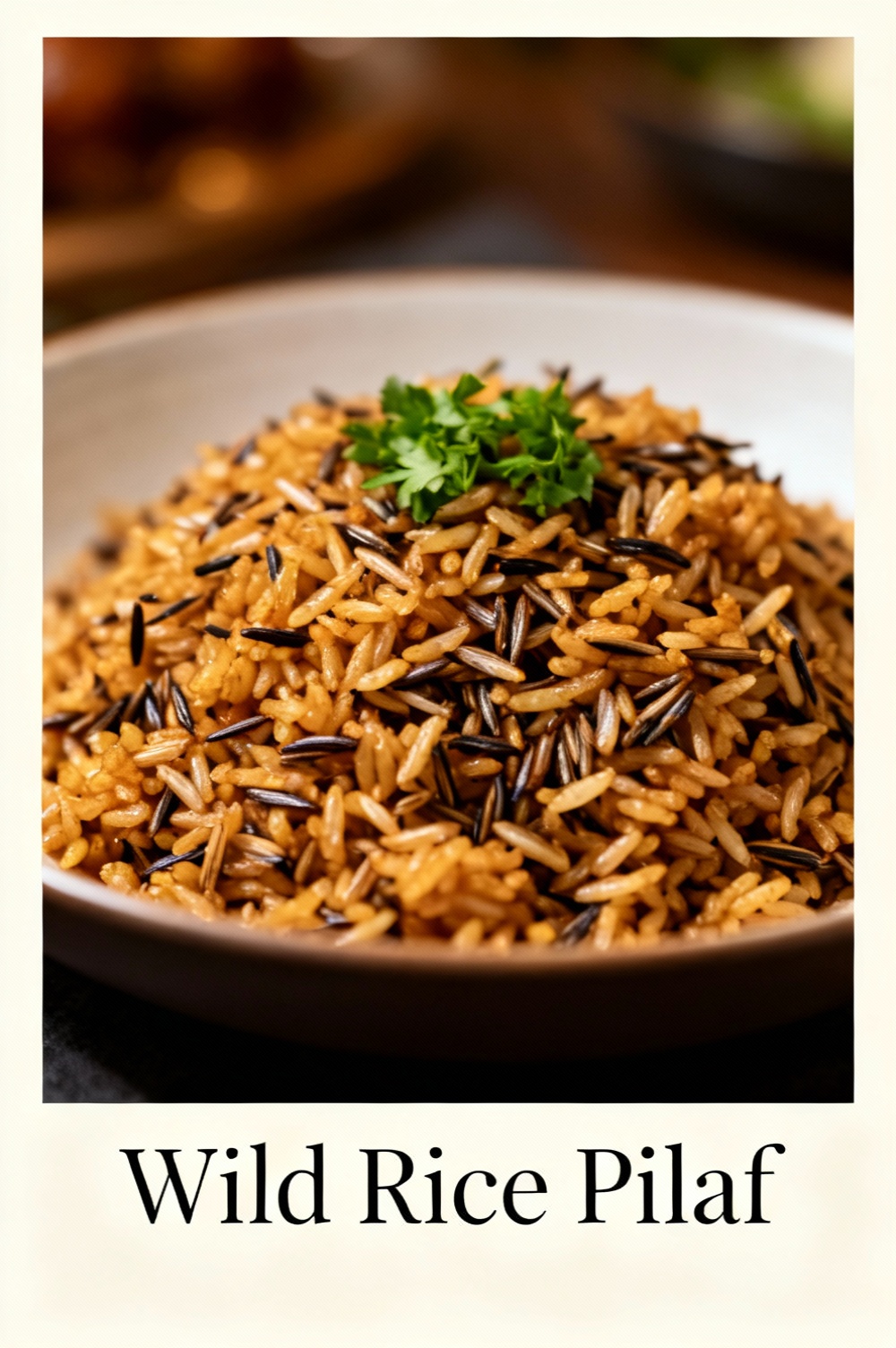
A hearty, nutty pilaf with toasted almonds and herbs — great with roasted meats or as a vegetarian centerpiece.
Ingredients
- 1 cup wild rice blend (wild rice + brown rice)
- 2 tbsp unsalted butter or olive oil
- 1 medium yellow onion, finely diced
- 2 celery stalks, diced
- 1 medium carrot, diced
- 1 cup mushrooms, sliced (optional)
- 2 garlic cloves, minced
- 1 tsp fresh thyme leaves (or 1/2 tsp dried thyme)
- 2 1/2 cups low-sodium chicken or vegetable broth
- 1/3 cup toasted slivered almonds or chopped pecans
- 1/4 cup dried cranberries or cherries (optional)
- 2 tbsp chopped fresh parsley
- Salt and freshly ground black pepper, to taste
Instructions
- Rinse the wild rice blend under cold water in a fine-mesh sieve; drain well.
- In a large saucepan or skillet with a tight-fitting lid, melt the butter (or heat oil) over medium heat. Add the wild rice and toast, stirring, for 2–3 minutes until fragrant.
- Add the diced onion, celery, carrot, and mushrooms (if using). Sauté for 5–7 minutes until the vegetables begin to soften.
- Add the garlic and thyme; cook 30–60 seconds until fragrant.
- Pour in the broth, stir, and bring to a gentle boil. Reduce heat to low, cover, and simmer for 35–45 minutes, or until the rice is tender and most of the liquid is absorbed. (Check package directions for your rice blend; timing can vary.)
- Remove from heat and let sit, covered, for 5 minutes. Fluff with a fork.
- Stir in the toasted almonds, dried cranberries (if using), and chopped parsley. Season with salt and pepper to taste.
- Transfer to a serving bowl and garnish with extra parsley or nuts, if desired. Serve warm.
Nutrition Information
- Calories: 240 kcal
- Cholesterol: 0 mg
- Sodium: 420 mg
- Carbohydrates: 40 g
- Fiber: 3 g
- Sugar: 3 g
- Protein: 6 g