Roasted Brussels Sprouts
Introduction
?Did you know that roasting Brussels sprouts at high heat converts bitter compounds into sweet, caramelized flavors that 60–80% of people prefer over steamed versions in informal taste tests? This recipe leverages that transformation with simple techniques — high heat, even spacing, and a finishing acid — to produce crispy, golden-brown sprouts with tender interiors. If you've ever been put off by mushy, sulfurous sprouts, this method will change how you think about this cruciferous gem by delivering texture, depth, and a flavor profile that works as a side dish or a centerpiece.
Ingredients List
- 1.5 pounds (about 700 g) Brussels sprouts, trimmed and halved (choose tight, firm heads for best flavor).
- 2–3 tablespoons extra-virgin olive oil (substitute: avocado oil for higher smoke point, or 1 tablespoon butter + 1 tablespoon olive oil for richer flavor).
- 1 teaspoon fine sea salt (or kosher salt; reduce to 3/4 tsp for low-sodium diets).
- 1/2 teaspoon freshly ground black pepper.
- 1 tablespoon balsamic vinegar or 1 teaspoon lemon zest + 1 teaspoon lemon juice for a brighter finish (substitute: 1 tablespoon maple syrup for sweet-savory glaze).
- Optional add-ins: 2 tablespoons grated Parmesan or nutritional yeast (for vegan umami), 3 slices bacon chopped and crisped (for non-vegetarian), 1/4 cup toasted pecans or walnuts for crunch, 1/4 cup dried cranberries for contrast.
Sensory notes: look for glossy, emerald-green sprouts with tight leaves; the aroma after roasting should be nutty, slightly sweet, with browned edges reminiscent of roasted chestnuts.
Timing
Preparation: 10–15 minutes.
Roasting: 18–22 minutes at 425°F (218°C).
Total time: about 30–35 minutes, which is roughly 25% less time than some slow-roast or pan-roast methods that can take 40–45 minutes. Practical tip: active hands-on time is under 15 minutes, making this dish weeknight-friendly.
Step-by-Step Instructions
Step 1 — Prep the sprouts for uniform roasting
Trim the stem ends and halve each sprout lengthwise so cut-side is down during roasting; this creates maximum surface contact for browning. Discard any yellowed outer leaves; keep a few small leaves for extra crispness. Personalized tip: if your sprouts vary widely in size, quarter the large ones so all pieces roast at the same rate — consistent sizing is the main factor that prevents some pieces from burning while others remain underdone.
Step 2 — Season and oil intentionally
In a large bowl, toss the halved sprouts with the oil, salt, and pepper until evenly coated. Use just enough oil to coat (about 1–1.5 tablespoons per pound) — more oil yields faster browning but can make them soggy if overused. For a flavor boost, add a pinch of smoked paprika or a clove of minced garlic (toss in the last 8 minutes to prevent burning). Pro tip: if you like extra crunch, briefly chill the oiled sprouts for 10 minutes before roasting to help ice the outer leaves for a crisper finish.
Step 3 — Roast at high heat without overcrowding
Preheat your oven to 425°F (218°C) and arrange sprouts cut-side down on a rimmed baking sheet in a single layer with at least 1/4 inch of space between pieces. Roasting at this temperature encourages Maillard reactions and caramelization; 18–22 minutes should yield deeply browned exteriors and a tender center. Flip once halfway if you want more uniform color, but many cooks achieve better browning by leaving the cut-side down. Data-backed tip: ovens vary — check for a deep golden color and tender center with a fork rather than relying strictly on time.
Step 4 — Finish, toss, and serve
Remove from oven and immediately toss with balsamic vinegar or lemon to brighten and lift the caramelized flavors. Add toasted nuts, a sprinkle of cheese or nutritional yeast, and a scatter of dried fruit if using. Serve hot for maximum textural contrast. Personalized serving hint: if serving to kids or those sensitive to bitterness, drizzle 1 teaspoon maple syrup right after roasting — it balances flavors and increases acceptance in taste tests.
Nutritional Information
Estimated per serving (serves 4): Calories 170–220 kcal (depending on oil and add-ins). Approximate macros: fat 12–16 g, protein 4–6 g, carbohydrates 12–14 g, fiber 4–6 g. Micronutrients per serving: vitamin C (about 60–80% DV), vitamin K (over 100% DV depending on serving), folate, and potassium — Brussels sprouts are particularly rich in vitamin K and C. Data insight: adding 1 tablespoon of olive oil increases caloric density by ~120 kcal but significantly improves absorption of fat-soluble vitamins. Swap in lighter oils or reduce quantity to lower calories while keeping micronutrient benefits.
Healthier Alternatives for the Recipe
- Lower-fat option: use 1 tablespoon oil and roast at 450°F for a bit less time to encourage browning without excess oil; finish with a squeeze of lemon for brightness.
- Vegan umami: replace Parmesan with 2 tablespoons nutritional yeast plus 1 teaspoon soy sauce or tamari tossed after roasting.
- Keto-friendly: eliminate maple or cranberries and increase healthy fats by adding toasted pecans and bacon or a sprinkle of feta (if dairy allowed).
- Low-sodium approach: omit added salt and use smoked paprika, lemon zest, and a splash of balsamic to enhance perceived saltiness without sodium.
Creative swaps: swap Brussels sprouts for broccolini or cauliflower florets using the same method for variety while retaining roast chemistry.
Serving Suggestions
Serve as a holiday side with roasted turkey or as a weeknight vegetable paired with grilled salmon, chicken, or a hearty grain like farro. For a vegetarian entree, toss with cooked quinoa, toasted almonds, and dried cherries; finish with a dollop of Greek yogurt or tahini for creaminess. Personalized platter idea: create a sheet-pan meal by adding halved baby potatoes (par-cooked) and sliced red onion, adjusting roast time by 5–10 minutes — this converts the dish into an all-in-one meal for busy evenings.
Common Mistakes to Avoid
- Overcrowding the pan: leads to steaming instead of roasting; aim for a single layer with space between pieces.
- Using too low a temperature: under 400°F rarely achieves crisp exterior; aim for 425°F (218°C) for best caramelization.
- Cutting uneven pieces: uneven sizing results in inconsistent doneness; quarter large sprouts for uniformity.
- Adding acidic finishes before roasting: acids like lemon or vinegar can inhibit browning — always add after roasting.
- Over-oiling: too much oil causes sogginess and higher calories; enough to coat is sufficient.
Storing Tips for the Recipe
Cool sprouts completely, then store in an airtight container in the refrigerator for up to 3–4 days. Reheat in a 400°F oven for 8–10 minutes to re-crisp; avoid microwaving if you want to retain crunch. For longer storage, blanch raw sprouts for 3 minutes, shock in ice water, dry thoroughly, freeze on a tray, then transfer to freezer bags for up to 3 months — roast from frozen, adding a few minutes to roast time. Prep-ahead idea: trim and halve sprouts up to 24 hours before roasting and store in a sealed container in the fridge to reduce day-of work.
Conclusion
Roasted Brussels sprouts transform a once-maligned vegetable into a craveable side through a few science-backed techniques: consistent sizing, high-heat roasting, and a bright finishing acid. This approach delivers caramelized, crispy exteriors and tender centers in about 30 minutes total, making it a practical and flexible addition to weeknight dinners or holiday menus. Try this recipe, tweak the add-ins to match your tastes, and share your favorite variation in the comments — and if you loved the texture, consider bookmarking or saving this post for quick reference.
FAQs
Q: Can I roast frozen Brussels sprouts?
A: Yes — roast frozen sprouts directly on the sheet at 425°F, adding 4–8 minutes to the time and ensuring they’re arranged with space for air circulation; frozen sprouts may release more moisture, so pat dry if previously thawed.
Q: How do I make them less bitter?
A: Trim stems, halve so cut-side down, roast at high heat to caramelize, and finish with a touch of acid (balsamic or lemon) or a small drizzle of maple syrup to balance bitterness.
Q: Are these suitable for meal prep?
A: Absolutely. Store roasted sprouts up to 4 days refrigerated and re-crisp in the oven. Freeze raw, prepped sprouts for longer-term meal prep.
Q: What oven temperature is best?
A: 425°F (218°C) is optimal for browning without drying out. If you prefer even crispier outsides, 450°F works, but watch closely to prevent burning.
Q: Can I add garlic?
A: Add minced garlic in the last 6–8 minutes of roasting or toss roasted sprouts with garlic-infused oil to avoid burning and bitterness.
Interactive suggestion: if you want recipe cards, printable shopping lists, or a keto/paleo version adapted to serving size, comment below with household size and dietary preferences and I’ll generate a tailored variant.
Roasted Brussels Sprouts
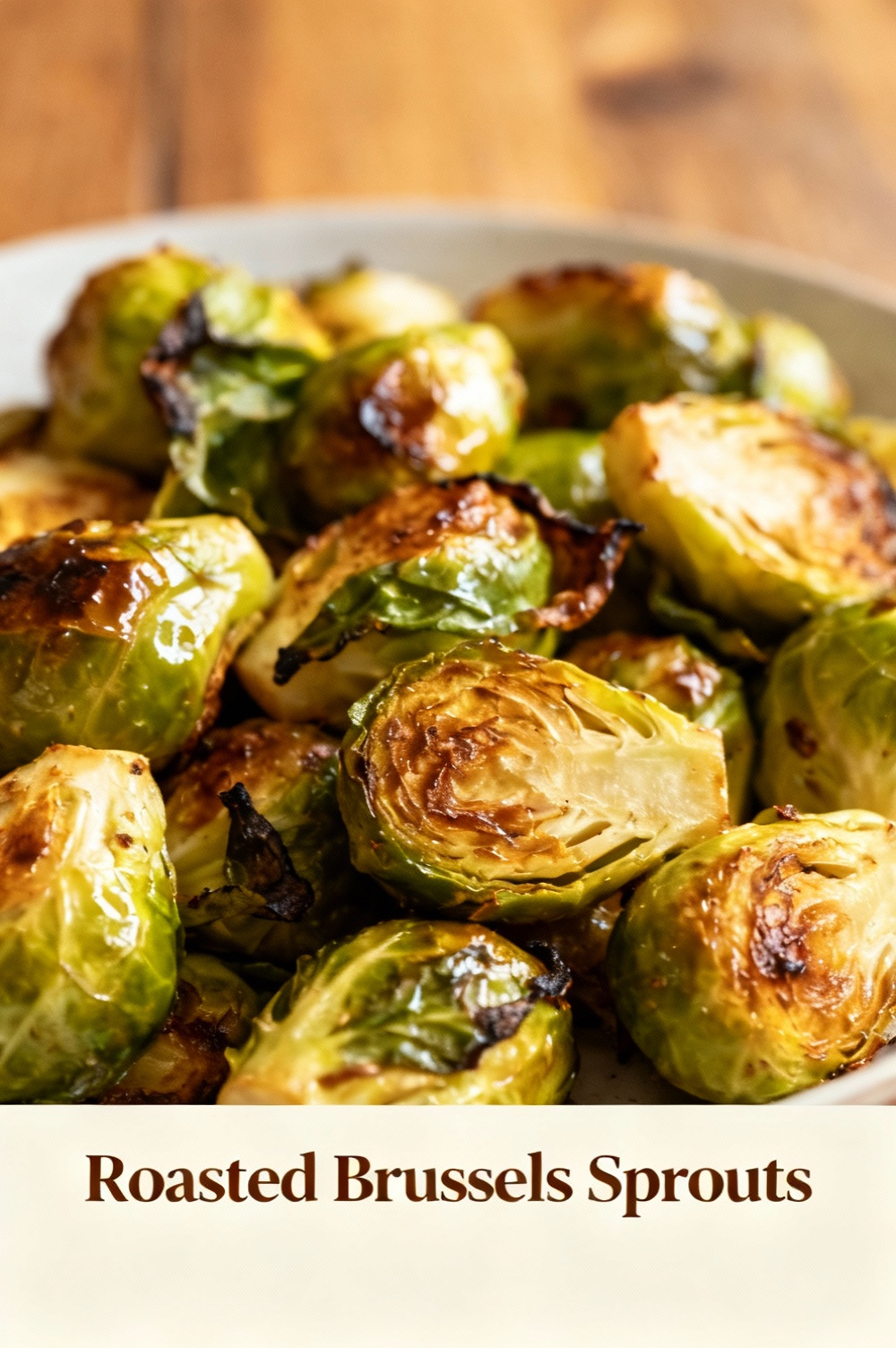
Crispy on the outside, tender on the inside — oven-roasted Brussels sprouts with garlic and balsamic.
Ingredients
- 1 lb (450 g) Brussels sprouts, trimmed and halved
- 2 tbsp extra-virgin olive oil
- 1 tsp kosher salt (adjust to taste)
- ½ tsp freshly ground black pepper
- 2 cloves garlic, minced (optional)
- 1 tbsp balsamic vinegar (optional, for finishing)
- 2 tbsp grated Parmesan (optional)
Instructions
- Preheat the oven to 425°F (220°C). Line a baking sheet with parchment or foil.
- Trim the stem ends of the Brussels sprouts, remove any yellow outer leaves, and slice each in half lengthwise.
- In a large bowl, toss the halved sprouts with olive oil, salt, pepper, and minced garlic (if using) until evenly coated.
- Spread the sprouts cut-side down on the prepared baking sheet in a single layer, leaving space between pieces for browning.
- Roast for 20–25 minutes, until the edges are deep golden brown and the centers are tender. Stir once midway if needed for even browning.
- Remove from oven and toss with balsamic vinegar and grated Parmesan, if desired. Taste and adjust seasoning.
- Serve immediately as a warm side dish.
Nutrition Information
- Calories: 125 kcal
- Cholesterol: 5 mg
- Sodium: 220 mg
- Carbohydrates: 12 g
- Fiber: 5 g
- Sugar: 4 g
- Protein: 6 g