Summer Vegetable Rolls
Introduction
Did you know swapping fried spring rolls for fresh summer vegetable rolls can cut your meal's calories by nearly half while boosting vitamin intake and fresh flavor? Summer vegetable rolls challenge the common belief that satisfying handheld snacks must be heavy or fried; instead they prove that crunchy raw vegetables, aromatic herbs, and a bright dipping sauce deliver a filling, nutrient-dense bite that works for lunches, picnics, and light dinners. This recipe leans on seasonal produce, fast assembly, and customizable components so you can tailor texture, heat, and nutrition to your needs.
Ingredients List
- 12 rice paper wrappers (round, 22–24 cm): soft, translucent, slightly chewy when rehydrated; can substitute with lettuce leaves for a low-carb wrap or gluten-free-certified rice paper if needed.
- 1 medium carrot, julienned: sweet, crisp texture; substitute with rainbow chard stems or daikon for a different bite.
- 1 medium cucumber, seeded and cut into matchsticks: cooling and hydrating; use zucchini in summer months.
- 1 red bell pepper, thinly sliced: adds sweetness and color; swap with yellow or orange peppers for visual variety.
- 1 cup red cabbage, thinly sliced: crunchy with a peppery snap; napa cabbage works if you prefer milder flavor.
- 1 cup cooked rice vermicelli or glass noodles, cooled (optional): for more substance; omit for lower carbs.
- 1 cup fresh herbs (mint, Thai basil, cilantro), mixed: a bright aromatic layer — experiment with chives or dill.
- 1 cup cooked tofu strips or shredded rotisserie chicken (optional): protein boost; use tempeh or shrimp for alternatives.
- 2 scallions, thinly sliced: gentle onion note.
- 1 avocado, sliced (optional): creamy contrast; use smashed edamame hummus if avoiding added fat.
- For the dipping sauce — Peanut Lime Sauce: 1/3 cup natural peanut butter, 2 tbsp soy sauce or tamari, 2 tbsp lime juice, 1–2 tbsp warm water to thin, 1 tbsp honey or maple syrup, 1 clove garlic grated, pinch red pepper flakes. Substitute almond or tahini for nut-free options; swap maple for agave to make it vegan.
- Salt and pepper to taste; toasted sesame seeds for garnish.
Timing
Preparation time: 15 minutes. Assembly time: 20–25 minutes for 12 rolls. Total time: 35–40 minutes, which is often 30–50% faster than multi-step recipes that require deep-frying or baking multiple components. If prepping vegetables in advance, active assembly time falls to about 10–15 minutes, making these ideal for quick weeknight meals or entertaining.
Step 1: Prep your workspace and ingredients
Arrange a wide shallow bowl of warm water, a clean damp towel or damp cutting board, and all prepped ingredients within arm’s reach. This mise en place reduces assembly time and prevents rice papers sticking together. Tip: keep a second towel ready to wipe hands — rice paper can get sticky.
Step 2: Soften the rice paper
Dip one rice paper wrapper into warm water for 6–8 seconds, turning once until it’s pliable but not over-softened; lay it flat on the damp towel. Overdipped wrappers tear easily and become gummy; underdipped wrappers won’t seal. If you’re new, practice with one wrapper to find your ideal timing for your kitchen’s water temperature.
Step 3: Layer the fillings strategically
Place a small handful of herbs and greens near the bottom third of the wrapper, then add noodles (if using), vegetables, protein, and avocado. Order matters: herbs closest to the wrapper create aroma in each bite, while sturdier vegetables (carrot, pepper) provide structure and prevent sogginess from wetter items like cucumber. Tip: keep fillings concentrated — about 2–3 inches wide — to make rolling snug.
Step 4: Roll and seal
Fold the bottom edge up over the filling, tuck the sides in toward the center, then roll tightly away from you, finishing seam-side down on the towel. Press gently along the seam to seal. If the wrapper won’t stick, lightly dampen the edge with water. Tip: a tight roll holds shape better and slices more cleanly.
Step 5: Make the dipping sauce
Whisk peanut butter, soy sauce, lime juice, honey, grated garlic, and warm water until smooth. Adjust consistency so it coats the back of a spoon. For a thinner sauce, add more warm water 1 tsp at a time. Garnish with sesame seeds and chopped peanuts if desired. Alternate sauces: try a tangy hoisin-chili or a toasted sesame-ginger vinaigrette for a lighter option.
Step 6: Slice and serve (or store)
If serving immediately, slice rolls diagonally to showcase layers and make them easy to pick up. For parties, arrange on a platter with small bowls of sauce. If storing, place rolls seam-side down in an airtight container layered with damp paper towels to prevent drying (see storing tips).
Nutritional Information
Approximate nutrition per roll (based on 12 rolls using vermicelli, tofu, and avocado): 120–160 kcal, 15–20 g carbohydrates, 3–6 g fat, 3–5 g protein, 2–4 g fiber. These estimates vary with protein choice and whether you include noodles or avocado. Compared to fried alternatives, fresh summer rolls typically contain 40–60% fewer calories and substantially less saturated fat, while delivering more water and vitamin C from raw vegetables. If you remove noodles and use extra greens, calories can drop to 80–100 per roll.
Healthier Alternatives for the Recipe
- Lower-carb: replace rice paper with large butter lettuce leaves or thin collard greens; omit vermicelli.
- Higher-protein: use grilled chicken breast, shrimp, or marinated tempeh; a 3 oz protein portion increases protein to ~15–20 g per serving.
- Lower-fat: skip avocado and use a lighter dipping sauce like lime-fish-vinaigrette or low-fat yogurt-based dip.
- Nut-free: swap peanut butter for sunflower seed butter or tahini in the dipping sauce.
- Low-sodium: use low-sodium tamari and rinse canned ingredients; increase lime and fresh herbs to boost flavor without salt.
- For kids: finely shred fillings, omit raw herbs if preferred, and offer a mild honey-soy or plain yogurt dip.
Serving Suggestions
Serve at room temperature with small bowls of dipping sauces, a crisp green salad, and pickled vegetables for contrast. For a summer party, pair with cold noodle salad, grilled corn, or a chilled watermelon-feta salad. To make it a complete meal, plate 3–4 rolls per person with a side of steamed edamame or a quinoa salad. Personal tip: offer a build-your-own roll station with labeled bowls of fillings and sauces — it’s interactive and lets guests personalize heat and texture.
Common Mistakes to Avoid
- Over-soaking rice paper: makes wrappers flimsy and prone to tearing; aim for pliable but still slightly firm.
- Overfilling: leads to bursting rolls; keep fillings concentrated and modest in volume.
- Wet fillings too early: watery cucumbers or marinated proteins can make rolls soggy — pat dry or add them last.
- Rolling too loosely: loose rolls fall apart when served; keep a firm tuck and finish seam-side down.
- Serving straight from the fridge: cold rice paper becomes firm — bring rolls to room temperature for optimal texture and flavor.
Storing Tips for the Recipe
Store assembled rolls in an airtight container lined with a damp (not dripping) paper towel and place rolls seam-side down. Consume within 24 hours for best texture — rice paper firms and fillings can release water over time. For longer storage, individually wrap each roll in plastic wrap and freeze for up to 1 month; thaw in the refrigerator and refresh with a quick steam or brief dunk in warm water before serving. Prepping tip: pre-chop vegetables and store separately for up to 3 days; assemble rolls 10–15 minutes before eating for peak freshness.
Conclusion
Summer vegetable rolls are a fast, flexible way to enjoy seasonal produce, pack in fresh herbs, and keep meals light without sacrificing flavor. With simple assembly, adaptable fillings, and a bold dipping sauce, they fit weeknight dinners, meal prep, and entertaining alike. Try the recipe this week, leave a comment with your favorite swap, or tag your photos so we can see your colorful rolls — and explore more fresh-roll variations and dipping sauce ideas in related posts to expand your repertoire.
FAQs
Q: Can I make summer rolls ahead of time for a party?
A: Yes — assemble up to 3–4 hours ahead and store in an airtight container with damp paper towels. For larger advance prep, keep fillings separate and assemble closer to serving time to preserve texture.
Q: How do I prevent the rice paper from sticking to the work surface?
A: Use a clean damp towel beneath the wrapper; it provides traction and prevents sticking while keeping the rice paper moist.
Q: Are summer rolls gluten-free?
A: The rolls themselves are gluten-free if you use gluten-free rice paper and tamari for the sauce. Check labels for noodle and sauce ingredients to ensure they are certified gluten-free.
Q: What are the best herbs to use?
A: Mint, Thai basil, and cilantro are classic for their fragrance and brightness. Use one or a mix depending on your flavor preference; chives or dill can be interesting alternatives.
Q: Can I grill the vegetables first?
A: Absolutely — grilled zucchini, eggplant, or peppers add smoky depth. Pat grilled vegetables dry and cool slightly before assembling to prevent sogginess.
Summer Vegetable Rolls
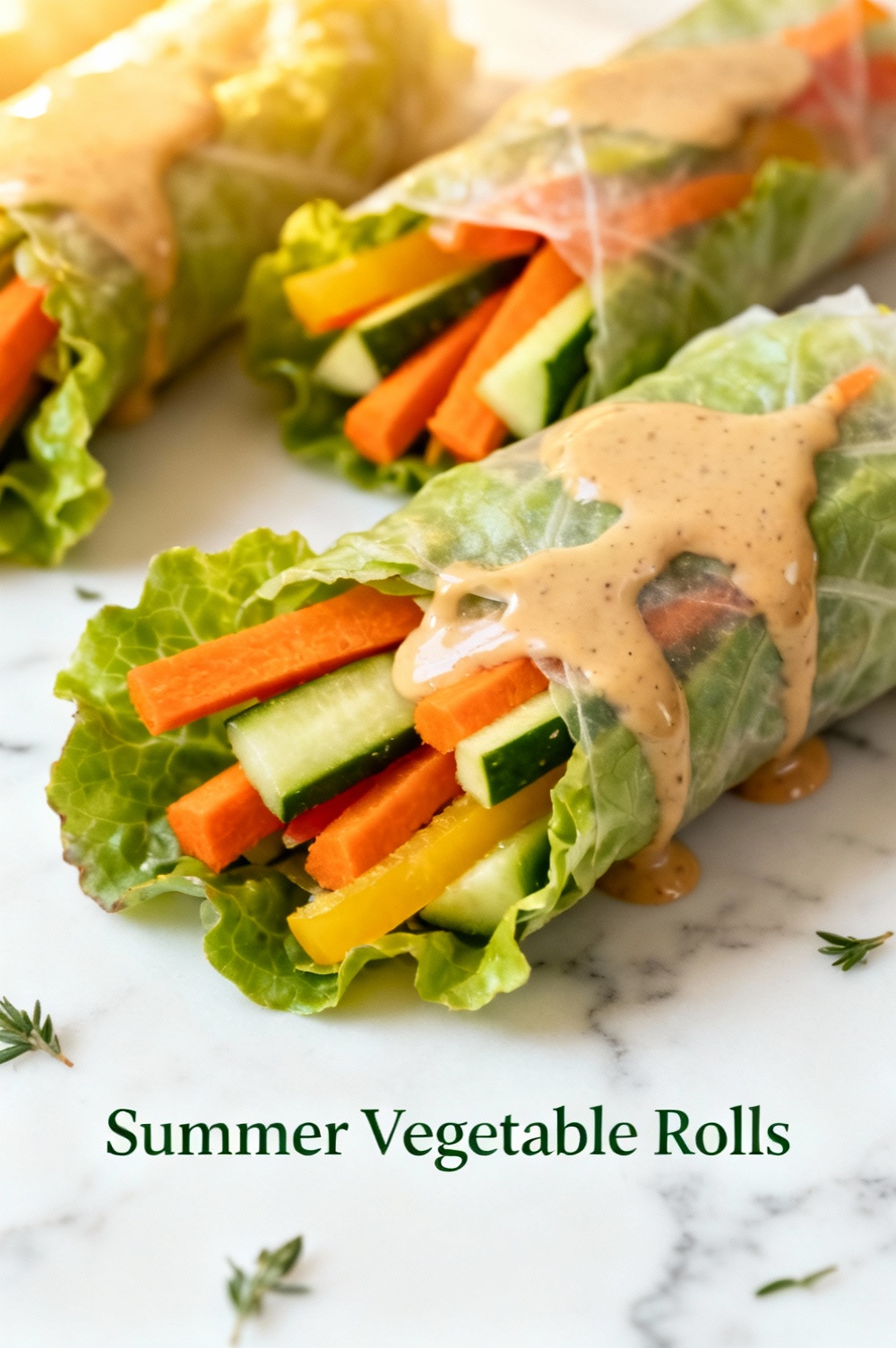
Crisp rice-paper rolls packed with colorful summer vegetables and fresh herbs, served with a tangy peanut-lime dipping sauce.
Ingredients
- 8–12 rice paper wrappers (8″ / 20 cm), depending on size
- 1 small zucchini, julienned
- 1 small yellow squash, julienned
- 1 large carrot, peeled and julienned
- 1/2 English cucumber, seeded and julienned
- 1 red bell pepper, thinly sliced
- 1 ripe avocado, thinly sliced (optional)
- 1 cup cooked rice vermicelli (optional), cooled
- 8–12 large lettuce leaves (butter or romaine), torn to size
- Handful fresh mint leaves
- Handful fresh basil leaves
- Handful fresh cilantro leaves
- 1 tbsp sesame seeds, toasted
- Peanut-Lime Dipping Sauce:
- 3 tbsp creamy peanut butter
- 1½ tbsp soy sauce (or tamari)
- 1 tbsp rice vinegar
- 1 tbsp lime juice
- 1 tsp honey or maple syrup
- 1 tsp sesame oil
- Warm water to thin (2–3 tbsp)
- Pinch red pepper flakes (optional)
Instructions
- Prepare the vegetables: wash and julienne zucchini, yellow squash, carrot, cucumber and bell pepper. Tear lettuce into pieces roughly the size of the rice papers. Pick herbs and set aside.
- If using rice vermicelli, cook according to package instructions, rinse under cold water, drain well and set aside.
- Make the dipping sauce: whisk together peanut butter, soy sauce, rice vinegar, lime juice, honey, sesame oil and a splash of warm water until smooth. Adjust thickness with more water and add red pepper flakes if using.
- Fill a shallow dish or large skillet with warm water. Dip one rice paper wrapper into the water for 6–12 seconds until pliable but not overly soft. Lay it flat on a clean work surface.
- Arrange a small amount of lettuce on the lower third of the wrapper. Layer a small handful of vegetables, a bit of vermicelli (if using), a few herb leaves and a slice of avocado. Sprinkle with sesame seeds.
- Fold the bottom edge up over the filling, fold the sides in, then roll tightly from bottom to top to seal. Place seam-side down on a plate. Repeat with remaining wrappers and filling.
- To serve, cut rolls in half on the diagonal (optional) and arrange on a platter with the peanut-lime dipping sauce.
- Store leftovers covered in the refrigerator for up to 1 day; place a damp paper towel over rolls to keep wrappers from drying out.
Nutrition Information
- Calories: 210 kcal
- Cholesterol: 0 mg
- Sodium: 210 mg
- Carbohydrates: 28 g
- Fiber: 6 g
- Sugar: 6 g
- Protein: 6 g