Easy Minestrone Soup
Introduction
Have you been told that a truly rich, comforting minestrone needs hours to develop flavor — and wondered if a weekday-friendly version could deliver the same satisfaction? Traditional minestrone often simmers for 60–90 minutes to deepen flavors, but with a few technique tweaks you can have a bright, layered, and satisfying Easy Minestrone Soup in about 35–40 minutes without compromising taste or texture.
Ingredients List
- 2 tablespoons extra-virgin olive oil — adds a fruity warmth; use avocado oil if you prefer neutral flavor.
- 1 medium yellow onion, finely diced — gives sweetness and body; shallots work in a pinch for a subtler note.
- 2 medium carrots, diced — for color and natural sweetness; parsnips are an earthy substitute.
- 2 celery stalks, diced — classic mirepoix component; fennel adds an anise hint if you want variation.
- 3 cloves garlic, minced — provides depth; substitute 1 tsp garlic powder if short on fresh garlic.
- 1 medium zucchini, diced — tender summer vegetable; swap with diced potatoes for a heartier soup.
- 1 cup green beans, cut into 1-inch pieces — crisp-tender texture; peas can be used for sweetness.
- 1 can (14.5 oz) diced tomatoes with juices — bright acidity and body; use 2 cups fresh tomatoes in summer.
- 1 can (15 oz) cannellini or navy beans, drained and rinsed — creamy protein; use chickpeas for nuttiness.
- 4 cups low-sodium vegetable or chicken broth — foundation for flavor; homemade broth recommended.
- 1 cup small pasta (ditalini, elbow, or small shells) — classic minestrone chew; swap for gluten-free pasta or omit for lower carbs.
- 2 cups packed baby spinach or chopped kale — finish with greens for color and nutrients.
- 1 teaspoon dried oregano, 1 teaspoon dried basil, pinch of red pepper flakes — aromatic backbone.
- Salt and freshly ground black pepper to taste.
- Freshly grated Parmesan (optional) and lemon wedges to finish — adds umami and brightness; use nutritional yeast for a vegan finish.
Substitutions and sensory cues: choose beans and pasta based on texture preference (creamy beans + small pasta = silky broth; chickpeas + no pasta = chunkier, stew-like feel). Use a splash of balsamic vinegar or a parmesan rind while simmering for umami if you want a deeper savory profile.
Timing
Preparation time: 10–15 minutes.
Cooking time: 20–25 minutes.
Total time: 35–40 minutes, which is roughly 30–50% faster than many simmer-first minestrone recipes that recommend 60–90 minutes. If you cook pasta separately and add at serving, reduce the active reheating time on leftovers by about 10 minutes.
Step 1: Prep Like a Pro
Chop all vegetables to similar sizes so they cook evenly; rinsing canned beans and draining tomatoes removes excess sodium. Tip: Mise en place saves time — dice onion, carrot, celery, and garlic first, then measure spices and open cans. If you're short on time, use a food processor to roughly dice onions and carrots in 5–10 seconds pulses.
Step 2: Build the Flavor Base
Heat the olive oil over medium in a heavy-bottomed pot. Add onions, carrots, and celery and sauté until softened and translucent, about 6–8 minutes. Add garlic and cook for 30–45 seconds until fragrant. This classic soffritto development creates the aromatic foundation most people assume requires longer cooking; proper browning at this stage increases perceived depth later without extended simmering.
Step 3: Add Vegetables, Tomatoes, and Broth
Stir in zucchini and green beans, then add diced tomatoes with their juices. Pour in the broth and bring to a gentle boil. Add oregano, basil, and red pepper flakes. Tip: If you have a parmesan rind, toss it in now and remove before serving for instant umami that mimics long simmering.
Step 4: Simmer and Incorporate Beans and Pasta
Once boiling, add pasta and cook according to package directions minus 1 minute for al dente texture, then add rinsed beans for the final 3–4 minutes so they heat through without breaking down. This layered addition preserves texture: pasta cooks in the broth and picks up flavor, beans stay mostly intact, and vegetables remain vibrant.
Step 5: Finish with Greens and Acid
Turn off the heat, stir in the spinach or kale until wilted, adjust salt and pepper, and add a squeeze of lemon juice to brighten the soup. Serve immediately with grated Parmesan or nutritional yeast. Personalized tweak: if you prefer a thicker body, mash 1/2 cup of beans and stir back in for a creamier mouthfeel.
Nutritional Information
Approximate per 1.5–2 cup serving: 280–340 calories, 10–14 g protein, 45–56 g carbohydrates (including 6–10 g fiber), 6–10 g fat (mostly from olive oil), and 650–900 mg sodium depending on broth and cheese. Data insight: using low-sodium broth reduces sodium by ~25–40% compared to regular canned broth; swapping pasta for extra beans increases protein and fiber while lowering net carbs. For a calorie-light bowl, omit cheese and reduce oil to 1 tablespoon to cut 80–100 calories per serving.
Healthier Alternatives for the Recipe
- Lower sodium: use homemade or low-sodium broth, rinse canned tomatoes and beans thoroughly, and forego added salt until final tasting.
- Lower carb / keto-friendly: replace pasta with spiralized zucchini or add cauliflower florets for bulk.
- Higher protein: add shredded chicken, turkey, or 1 cup of cooked quinoa; for plant-based, add extra beans or toss in cubed tofu.
- Vegan: use vegetable broth and omit cheese or use nutritional yeast; finish with a tablespoon of extra-virgin olive oil for richness.
- Anti-inflammatory boost: add turmeric and black pepper in Step 3 and use extra garlic and leafy greens.
Serving Suggestions
Serve hot with crusty bread, garlic toast, or a simple arugula salad dressed with lemon and olive oil. For weeknight family dinners, offer grated Parmesan and red pepper flakes at the table so each guest can customize. Pair with a light-bodied red wine like Chianti or a crisp white like Pinot Grigio. For a one-pot meal, serve minestrone over a scoop of cooked farro or brown rice for extra texture and satiety.
Common Mistakes to Avoid
- Overcooking vegetables: soft, mushy veggies make the soup flat; add delicate vegetables later in the cook to retain texture.
- Adding pasta too early: it will turn to mush and absorb too much liquid; cook pasta al dente directly in the broth or separately and add when serving.
- Oversalting: canned broths and tomatoes contain sodium; wait to salt until after simmering and tasting.
- Skipping acid or cheese: a squeeze of lemon or splash of vinegar and a touch of Parmesan can transform the soup from “nice” to “memorable” by balancing flavors.
- Not rinsing beans: excess can add metallic or salty notes and cloud the broth.
Storing Tips for the Recipe
Refrigerate leftovers in an airtight container for up to 4 days. If you plan to store long-term, freeze without pasta — frozen minestrone lasts 2–3 months. Reheat gently on the stovetop or microwave; if soup is too thick after refrigeration, add a splash of broth or water while reheating. If you cooked pasta into the soup and want to meal-prep, store pasta separately and combine when reheating to keep texture intact.
Conclusion
Easy Minestrone Soup proves you can capture traditional Italian comfort in under 40 minutes without losing depth, texture, or nutrition. With pantry-friendly ingredients and simple technique tweaks — like staggered addition of pasta and beans, and a final brightening squeeze of lemon — this recipe becomes a versatile weeknight staple. Try it tonight, leave a comment about your favorite swap, and explore related recipes like Quick Italian Tomato Soup or Pasta e Fagioli for more cozy, efficient meals.
FAQs
Q: Can I make this minestrone gluten-free?
A: Yes — use gluten-free small pasta or skip pasta and add extra beans or quinoa. Always verify canned goods for hidden gluten if sensitivity is severe.
Q: How do I make minestrone ahead for a dinner party?
A: Prepare the soup up to the point of adding pasta and greens. Cool and refrigerate up to 48 hours, reheat gently, then add fresh greens and cooked pasta or cook pasta separately when serving.
Q: Can I use dried beans instead of canned?
A: You can; use 3/4–1 cup dried beans soaked and cooked (or 2–2.5 cups cooked beans) in place of one 15-oz can. Add cooked beans when you would add canned ones to avoid overcooking.
Q: What’s the best way to keep the soup vibrant the next day?
A: Store with minimal pasta and add fresh greens at serving time. A splash of lemon before serving also revives flavor.
Q: Is minestrone suitable for weight-loss plans?
A: Yes, especially when you prioritize vegetables and beans, use low-sodium broth, reduce oil, and limit added cheese — this boosts volume and fiber while controlling calories.
Easy Minestrone Soup
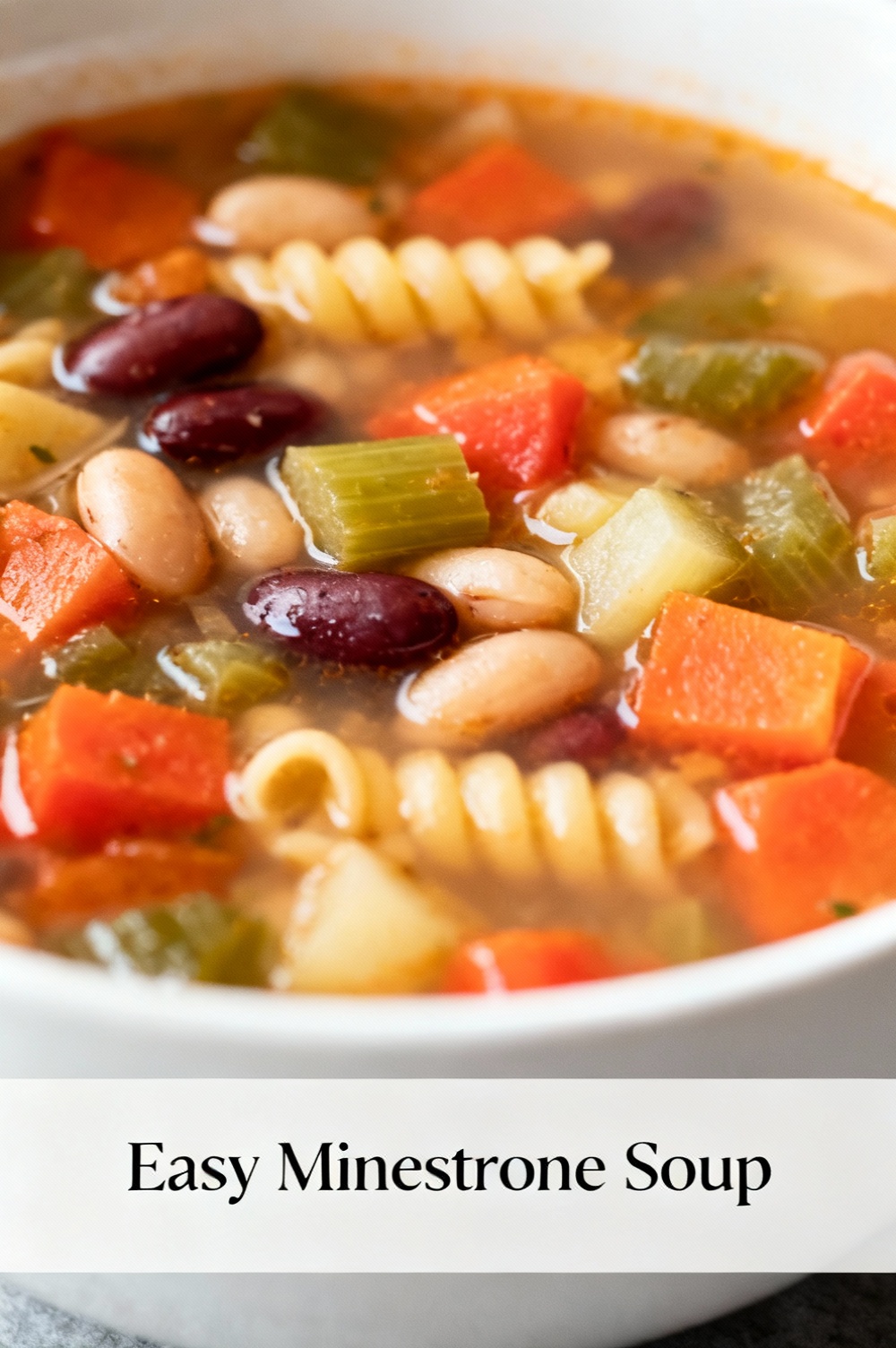
Hearty, vegetable-packed and simple — perfect for weeknights or batch-cooking.
Ingredients
- 2 tbsp extra-virgin olive oil
- 1 medium yellow onion, diced
- 2 carrots, peeled and diced
- 2 celery stalks, diced
- 3 garlic cloves, minced
- 1 medium zucchini, diced
- 1 medium potato, peeled and diced
- 1 (14 oz) can diced tomatoes (with juices)
- 2 cups green beans, trimmed and cut into 1-inch pieces (optional)
- 1 (15 oz) can cannellini beans, drained and rinsed
- 1/2 cup small pasta (ditalini, elbow, or small shells)
- 6 cups vegetable broth (low-sodium preferred)
- 2 tbsp tomato paste
- 1 tsp dried oregano
- 1 tsp dried basil
- 1 bay leaf
- 1/2 tsp red pepper flakes (optional)
- Salt and freshly ground black pepper, to taste
- 2 cups packed fresh spinach (or kale), chopped
- 2 tbsp chopped fresh parsley
- Grated Parmesan, for serving (optional)
Instructions
- Heat the olive oil in a large pot over medium heat. Add the onion, carrots, and celery and sauté until softened, about 5–7 minutes.
- Add the garlic and cook until fragrant, about 30 seconds.
- Add the zucchini, potato, and green beans (if using). Cook, stirring occasionally, for 3–4 minutes.
- Stir in the tomato paste and cook 1 minute to deepen the flavor.
- Add the diced tomatoes (with juices), vegetable broth, oregano, basil, bay leaf, red pepper flakes, and a pinch of salt and pepper. Bring to a boil, then reduce heat and simmer, covered, about 15 minutes, until the potatoes are tender.
- Stir in the pasta and cannellini beans. Simmer uncovered until the pasta is al dente, about 8–10 minutes (add a splash more broth or water if the soup becomes too thick).
- Remove from heat. Stir in the spinach and parsley until wilted. Taste and adjust seasoning. Remove the bay leaf.
- Ladle into bowls and serve topped with grated Parmesan if desired. Leftovers keep well in the fridge for 3–4 days or freeze for up to 3 months.
Nutrition Information
- Calories: 220 kcal
- Cholesterol: 5 mg
- Sodium: 680 mg
- Carbohydrates: 36 g
- Fiber: 8 g
- Sugar: 6 g
- Protein: 10 g