Healthy Veggie Platter with Hummus
Introduction
Did you know swapping a typical chip-and-cream-dip snack (often 350–450 kcal) for a vegetable platter with hummus can cut snack calories by roughly 25–45% while delivering more fiber and micronutrients? That calorie comparison may challenge the common belief that snacks must be indulgent to satisfy cravings. This healthy veggie platter with hummus proves simple, colorful, and scientifically smart eating can also feel indulgent. Below you’ll find a practical, data-informed guide to ingredients, timing, step-by-step prep, nutrition, swaps for dietary needs, serving tips, storage advice, common mistakes, and FAQs so you can make a platter that’s both crowd-pleasing and nutrient-dense.
Ingredients List
- 1 cup of classic hummus (store-bought or homemade) — creamy, nutty, and a protein-packed dip. Substitutions: white bean or edamame dip for lower fat; Greek yogurt-based tzatziki for extra tang (not vegan).
- 1 large red bell pepper, sliced into strips — sweet, crunchy, vitamin C boost.
- 1 large orange carrot, cut into sticks (or a handful of baby carrots) — crunchy, naturally sweet, high in beta-carotene.
- 1 medium cucumber, sliced into rounds or spears — hydrating and mild-flavored.
- 1 cup cherry tomatoes, halved — juicy, acidic contrast.
- 1 cup broccoli florets (lightly blanched or raw) — dense in fiber and vitamin K.
- 1 small bunch of radishes, halved — peppery bite and visual contrast.
- 1 small handful of sugar snap peas or green beans — sweet-crisp texture.
- Optional: 1/3 cup marinated olives or pickles for briny contrast.
- Garnish: drizzle of extra-virgin olive oil, smoked paprika, chopped parsley, toasted sesame seeds, lemon wedges.
- For homemade hummus (optional): 1 can (15 oz) chickpeas, 2–3 tablespoons tahini, 2 tablespoons lemon juice, 1 garlic clove, 2 tablespoons olive oil, 1/2 teaspoon cumin, pinch of salt. Substitutions: use roasted red pepper or sun-dried tomatoes to flavor hummus; swap tahini with almond butter for a different nutty profile.
Timing
Preparation time: 10–15 minutes. If making hummus from scratch: add 10–12 minutes to roast/prepare and blend — total ~25 minutes, which is about 40% faster than many multi-component appetizer recipes that require roasting multiple vegetables. Active cooking: minimal. Total time with homemade hummus: 25–30 minutes. Hands-off time: none significant unless you chill hummus (recommended 30 minutes for flavor melding).
Step 1: Prep your vegetables
Wash all produce thoroughly and dry with a clean towel to remove excess moisture, which dilutes flavor. Cut bell pepper into uniform strips, slice cucumber and carrots into even sticks or rounds to ensure consistent bite-size pieces. Tip: use a mandoline or a sharp chef’s knife for uniform slices; consistent sizing makes the platter look professional.
Step 2: Make or open your hummus
If using store-bought hummus, transfer to a shallow bowl for easy dipping and swirl the top for texture. If making hummus, drain and rinse chickpeas (reserve a tablespoon of aquafaba for texture if needed), blend chickpeas, tahini, lemon juice, garlic, olive oil, and cumin until silky. Tip: scrape down the sides of the food processor and add ice-cold water or a tablespoon of aquafaba while blending to achieve ultra-creamy hummus without extra oil.
Step 3: Season and customize your hummus
Adjust salt, lemon, and garlic to taste. Create two small bowls with flavored hummus variations to satisfy different palates — e.g., roasted red pepper hummus for smoky-sweet lovers and garlic-lemon hummus for bright tang. Drizzle with 1 teaspoon of olive oil and sprinkle smoked paprika or za’atar for visual and flavor depth.
Step 4: Arrange the platter
Use a large wooden board, shallow baking tray, or platter. Place the hummus bowl slightly off-center. Arrange veggies in groups by color and texture—think color wheel: red (peppers, tomatoes), orange (carrots), green (cucumber, broccoli, snap peas), white/pink (radishes). Tip: create height by stacking or fanning vegetables; add small bowls of olives or nuts for contrast. People eat with their eyes first—aim for balance and variety.
Step 5: Add finishing touches and serve
Garnish hummus with olive oil, chopped parsley, toasted sesame seeds, and a squeeze of lemon. Provide small plates and cocktail picks for easy grazing. Tip: label options if you offer gluten-free, nut-free, or spiced varieties so guests can choose confidently.
Nutritional Information
Approximate nutrition per serving (based on 1/6 of the platter: ~3 tbsp hummus + mixed vegetables totaling ~200–250g): Calories 220–280 kcal; Protein 6–8 g; Fat 10–14 g (largely unsaturated from olive oil and tahini); Carbohydrates 20–28 g; Fiber 6–9 g; Sodium highly variable depending on hummus salt content — typically 200–350 mg. Data insight: this snack offers more fiber per calorie than many processed options—fiber often ranges 6–9 g versus 1–2 g in chip-based dips—promoting satiety and steadier blood sugar. Micronutrients: excellent source of vitamin C (from peppers and tomatoes), vitamin A precursor beta-carotene (carrots), folate and iron (from chickpeas), and potassium (cucumber, tomatoes). If limiting sodium, choose low-sodium hummus or rinse canned chickpeas before making hummus to reduce sodium by ~20–30%.
Healthier Alternatives for the Recipe
- Lower-fat hummus: reduce tahini and olive oil in homemade recipes; add extra lemon and aquafaba for creaminess while cutting fat by up to 30%.
- Higher-protein variant: blend in edamame or add Greek yogurt (not vegan) to boost protein by 3–7 g per serving.
- Low-carb/keto swap: replace hummus with avocado-tahini dip (mashed avocado + tahini + lemon + garlic) and prioritize lower-carb veggies like cucumber, celery, and radishes.
- Nut-free: traditional hummus is nut-free, but if using almond butter substitutions, ensure allergy-free alternatives like sunflower seed butter.
- FODMAP-friendly: use canned chickpeas rinsed thoroughly and limit portion size, or try roast eggplant dip as an alternative for those sensitive to legumes.
- Paleo-friendly: replace hummus with baba ganoush (eggplant dip) to avoid legumes and maintain smoky, creamy texture.
Serving Suggestions
Serve as an appetizer, light lunch, or party grazing board. Pairing ideas: crisp white wine like Sauvignon Blanc, sparkling water with lemon, or a light IPA. For family meals, build individual mason jar servings—layer hummus at the bottom, vertical veggie sticks above for portable, portion-controlled snacks. Make it a meal: add whole-grain pita triangles, grilled chicken strips, or quinoa salad on the side for a balanced plate. For kids: create fun shapes with cookie cutters (cucumber stars, carrot hearts) and a small side of nut-free dip to make veggies more appealing.
Common Mistakes to Avoid
- Overcrowding the bowl with too much hummus: leaves less room for dipping and makes serving messy. Keep hummus in a shallow bowl and refresh as needed.
- Uneven vegetable sizing: large chunks vs tiny pieces lead to awkward bites; cut evenly for a harmonious experience.
- Skipping seasoning: raw veggies and hummus both benefit from a pinch of salt or squeeze of lemon; tasting as you go prevents blandness.
- Serving old hummus: hummus develops off-flavors if stored improperly; follow storage tips to avoid food safety issues.
- Not offering variety: monotone planks of one vegetable type lead to boredom—aim for at least 4-6 vegetable varieties for visual and flavor contrast.
Storing Tips for the Recipe
Store hummus in an airtight container in the refrigerator for up to 4–5 days; homemade hummus often stays best for 3–4 days. Cover the hummus surface with a thin layer of olive oil to reduce oxidation and drying. Pre-cut vegetables last 3–5 days when stored in airtight containers with a damp paper towel to maintain crunch—hardier veg (carrots, celery) last longer than delicate ones (cucumbers, tomatoes). For meal prep: wash and cut veggies up to 3 days ahead; keep hummus in a separate container and assemble within 24 hours for optimal freshness. Freeze homemade hummus in portions for up to 3 months, but note texture may change slightly after thawing—stir in a bit of olive oil or aquafaba to restore creaminess.
Conclusion
This healthy veggie platter with hummus combines simplicity, nutrition, and visual appeal to transform routine snacking into a satisfying, nutrient-dense choice. With minimal hands-on time and flexible ingredient swaps, it adapts easily to families, parties, and specific dietary needs. Try this platter this week—tweak the hummus flavor and veggie lineup, then share how it went in the comments or tag a friend to inspire healthier gatherings.
FAQs
Q: Can I make the platter vegan and gluten-free? A: Yes—use traditional chickpea hummus or a vegan bean dip and stick to naturally gluten-free vegetables. Ensure any added items (pita chips) are labeled gluten-free. Q: How long can leftovers sit out at a party? A: Per food safety guidelines, perishable foods should not sit out over 2 hours (1 hour if above 90°F/32°C). Keep extra hummus refrigerated and replenish the platter as needed. Q: Is hummus high in calories? A: Hummus contains healthy fats from tahini and olive oil but is moderate in calories; portion control (3 tablespoons per serving) balances flavor and calories. Q: Can I make this kid-friendly? A: Absolutely—use mild flavors, cut veggies into fun shapes, and offer small dipping portions. Q: What are quick flavor variations? A: Try lemon-garlic, roasted red pepper, smoky chipotle, or herb-cilantro hummus; sprinkle za’atar, sumac, or toasted sesame seeds for finishing notes. Q: Where can I learn more recipes and tips? A: Explore related posts like roasted vegetable hummus, quick homemade tzatziki, or healthy party boards for more inspiration and step-by-step photo guides.
Healthy Veggie Platter with Hummus
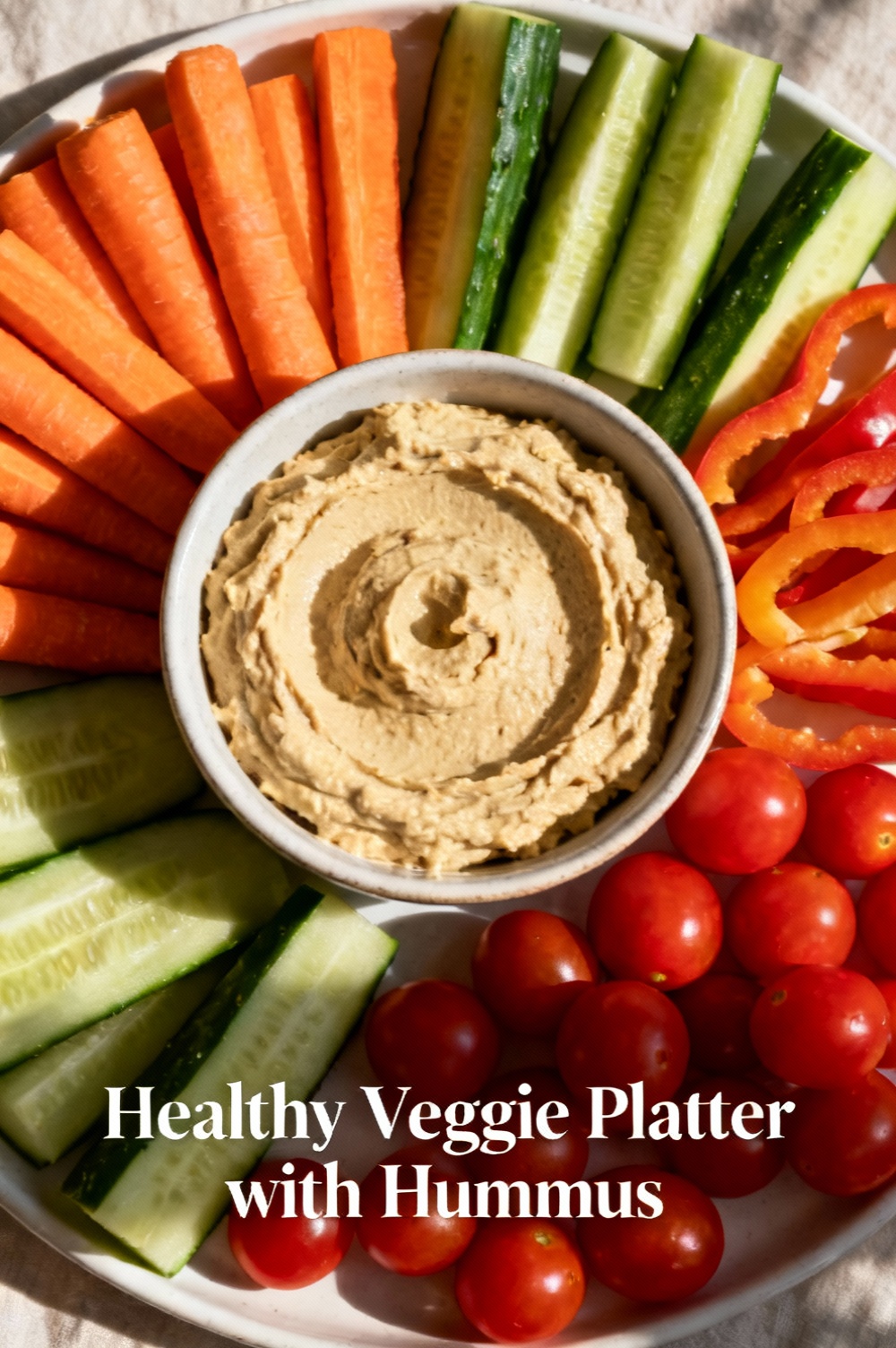
A colorful, shareable platter of fresh vegetables served with creamy homemade hummus.
Ingredients
- For the hummus:
- 1 (15 oz) can chickpeas, drained and rinsed (reserve 1–2 tbsp liquid)
- 1/4 cup tahini
- 3 tbsp fresh lemon juice (about 1 lemon)
- 1 garlic clove, minced
- 2 tbsp extra-virgin olive oil, plus more for serving
- 1/2 tsp ground cumin
- 1/2 tsp kosher salt (adjust to taste)
- 2–4 tbsp cold water or reserved chickpea liquid (to thin)
- Paprika and chopped parsley for garnish
- For the platter:
- 2 large carrots, peeled and cut into sticks
- 1 large cucumber, sliced into rounds or sticks
- 1 cup cherry tomatoes
- 2 bell peppers (mixed colors), seeded and sliced
- 2–3 celery stalks, cut into sticks
- 8–10 radishes, halved
- 1/2 cup pitted olives (optional)
- 4 small whole-wheat pita breads, cut into wedges (optional)
- Fresh parsley leaves for garnish (optional)
Instructions
- Make the hummus: In a food processor, combine the chickpeas, tahini, lemon juice, garlic, olive oil, cumin, and salt. Process until smooth.
- If the hummus is too thick, add 1 tablespoon of cold water or reserved chickpea liquid at a time and process until you reach a creamy consistency.
- Taste and adjust seasoning with more salt or lemon juice if needed.
- Transfer hummus to a serving bowl. Create a shallow well in the center, drizzle with olive oil, and sprinkle with paprika and chopped parsley.
- Prepare the vegetables: Wash and cut the carrots, cucumber, bell peppers, celery, and radishes. Arrange them on a large platter along with cherry tomatoes and olives.
- Add pita wedges around the hummus bowl if using. Place the hummus bowl in the center of the platter.
- Serve immediately at room temperature or chilled. Leftover hummus keeps up to 3–4 days refrigerated; keep veggies separate until serving for best texture.
Nutrition Information
- Calories: 210 kcal
- Cholesterol: 0 mg
- Sodium: 220 mg
- Carbohydrates: 20 g
- Fiber: 6 g
- Sugar: 4 g
- Protein: 6 g