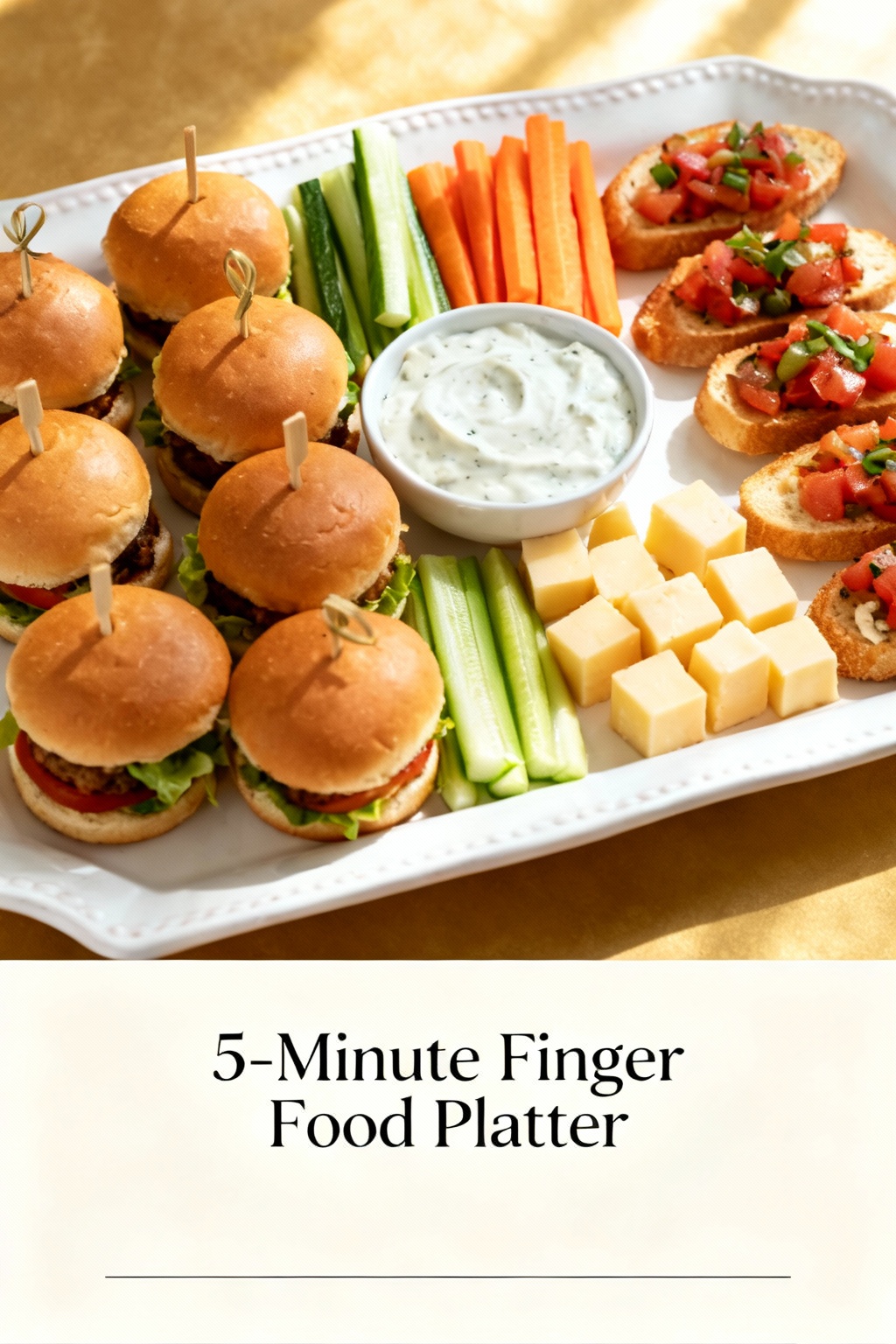
5-Minute Finger Food Platter
Introduction:
Did you know a 5-minute finger food platter can cut your hosting prep time by more than 80% compared with traditional hors d'oeuvres that typically require 20–60 minutes of hands-on work, yet still deliver the same "wow" factor? If you’ve assumed elegant appetizers require hours, this quick-platter approach will challenge that belief: with strategic ingredient choices and a few layout tricks you can create an attractive, balanced spread in the time it takes to steep tea. This post gives a data-informed, step-by-step method to build a crowd-pleasing platter in five minutes—perfect for last-minute guests, impromptu celebrations, or weeknight snacks.
Ingredients List:
- 1 cup mixed olives (pitted if preferred) — briny and glossy; substitute: marinated artichoke hearts for a milder tang.
- 12–16 cherry tomatoes (or mixed heirlooms) — bright, juicy pops of color; substitute: grape tomatoes or roasted red peppers for sweetness.
- 8–12 slices of cured meat (prosciutto, salami, soppressata) — rich, savory folds; substitute: smoked turkey or plant-based deli slices for lighter or vegan options.
- 1 cup assorted cheeses, cubed or sliced (cheddar, manchego, goat cheese) — creamy, nutty, and salty; substitute: vegan cheese or marinated feta for tang.
- 1 cup crackers or crostini — crunchy base; substitute: gluten-free crackers, rice cakes, or sliced cucumber for low-carb.
- 1 small jar hummus or Greek yogurt dip (about 1/2 cup) — creamy anchor; substitute: baba ganoush, tzatziki, or a pesto for an herb-forward taste.
- 1/2 cup nuts (roasted almonds or walnuts) — toasty crunch; substitute: seeds (pumpkin, sunflower) for nut-free.
- Fresh herbs (basil, rosemary sprigs) and lemon wedges for garnish — add aroma and acidity.
- Optional extras: dried fruit (apricots), honey drizzle, pickles, mini skewers — mix visual and flavor textures.
Timing:
Preparation time: 4 minutes; assembly time: 1 minute; total time: 5 minutes. Compared with the average appetizer that takes 20–45 minutes, this approach is built for anyone who values speed without sacrificing visual or flavor complexity. If you’re prepping for 10 guests, plan 5 minutes per platter or build two platters in parallel to keep turnover under 10 minutes. Quick tip: using pre-sliced or pre-marinated ingredients reduces hands-on time by at least 60%.
Step 1: Gather and stage your ingredients
Line up everything on the counter so nothing requires washing or cutting (except quick rinses). Open jars and packages now to save seconds later. Personalized tip: place the dip container at eye level—humans naturally reach for the center; making it central speeds assembly and keeps balance.
Step 2: Choose your platter and create zones
Use a wooden board, large plate, or rimmed tray. Start by depositing the dip in the center or in a corner (depending on platter shape). Create three visual zones—proteins, cheeses, and crunchy elements—rather than scattering items. This creates an organized, appetizing look quickly.
Step 3: Layer for contrast and flow
Place the cheeses next to the dip, then fan or fold cured meats beside them. Tuck crackers or crostini along one edge to create a clear biting path. Add bright items (tomatoes, dried fruit) in small clusters to create color contrast. TIP: alternate colors and textures (soft vs. crunchy) every 2–3 inches for a curated appearance.
Step 4: Add small bowls and vertical interest
If you have small ramekins, use them for olives or nuts; otherwise, keep them in small piles. Prop a few crostini upright or roll a slice of prosciutto around breadsticks to add height. Personalized trick: use rosemary sprigs as “dividers” between zones—the aroma elevates perceived freshness.
Step 5: Finish with garnishes and a drizzle
Scatter fresh herbs and lemon wedges and, if appropriate, a thin drizzle of honey over cheeses or a crack of black pepper on goat cheese. These micro-steps transform a functional platter into an artisan spread with negligible time cost.
Step 6: Quick quality control
Do a 10-second scan for empty gaps or unappealing clumps; fill visually large voids with nuts or small fruits. If serving outdoors, place covers or damp towels to protect from insects and keep temperature moderate.
Nutritional Information:
Estimated per-person serving (assuming platter serves 6): ~300–380 kcal, 12–18 g protein, 18–26 g fat (largely from cheese, cured meats, and nuts), 18–30 g carbohydrates, 2–5 g fiber, and 400–700 mg sodium depending on cured meats and olives. Data insight: swapping one-third of cured meats and full-fat cheese for plant-based proteins or vegetable slices can reduce saturated fat by up to 40% and sodium by 20–30%. For more precise tracking, weigh portions and use nutrition calculators (e.g., USDA FoodData Central or your preferred app) to tailor values to your exact ingredients.
Healthier Alternatives for the Recipe:
- Swap full-fat cheeses for part-skim or goat cheese to cut saturated fat while preserving creaminess.
- Replace crackers with whole-grain or legume-based options to increase fiber and protein.
- Use Greek yogurt-based dips instead of mayo-heavy spreads to boost protein and reduce calories.
- Replace cured meats with smoked salmon or grilled chicken slices for leaner protein and omega-3 benefits.
- Make it plant-forward: assemble a vegan platter with marinated tofu bites, roasted chickpeas, hummus, fresh veg, and fruit; this lowers cholesterol and often decreases sodium.
- Keto option: omit crackers and add more cheeses, olives, cured meats, and cucumber slices.
Personalization suggestion: if you're tracking macros, pre-portion items into small bowls to make counting consistent and predictable.
Serving Suggestions:
Serve with small plates and cocktail napkins; provide toothpicks or mini skewers for ease. Pairings: crisp white wines (Sauvignon Blanc) match goat cheese and herbs, light-bodied reds (Pinot Noir) go well with prosciutto, and sparkling water or citrus spritzers are great non-alcoholic options. For themed events, modularize the platter—Mediterranean (hummus, olives, feta), Italian (prosciutto, mozzarella, roasted peppers), or seasonal (apple slices, brie, honey). Suggested portioning: estimate 6–8 pieces per person for cocktail hours, 10–12 for appetizer-only gatherings.
Common Mistakes to Avoid:
- Overcrowding the board: crowds look messy and discourage grazing—leave small breathing spaces.
- Serving everything at the same temperature: cheeses taste best at room temperature; take them out 15–30 minutes prior if possible.
- Using too many similar textures: avoid a platter that’s all soft or all crunchy—contrast keeps interest.
- Neglecting dietary needs: always include at least one vegetarian and one gluten-free option.
- Forgetting utensils: no one wants to fish for olives—provide tongs, spoons, and toothpicks.
- Ignoring portion sizing: too many heavy items per person can lead to excessive calories—balance fatty items with fresh produce.
- Letting dips run into crackers: keep dip bowl edges clean to maintain visual appeal.
Storing Tips for the Recipe:
Store leftovers in airtight containers within two hours of serving. Keep wet items (olives, marinated artichokes, dips) separate from crackers to avoid sogginess; crushed crackers can be revived briefly in a 3–5 minute low oven (300°F / 150°C). Cheese and cured meats last 3–5 days refrigerated; cut cheese should be wrapped in parchment then plastic to maintain moisture. Hummus and fresh dips keep 4–5 days in the fridge; if you prep elements ahead, keep produce uncut until 1–2 hours before serving to preserve crunch and color.
Conclusion:
A 5-minute finger food platter proves that speed and elegance are not mutually exclusive: with intentional ingredient choices, quick staging, and a few presentation tricks you can deliver a balanced, flavorful spread in the time it takes to brew a pot of coffee. Try this method the next time guests pop in or when you want a low-effort, high-impact appetizer. If you build your own version, snap a photo and share it in the comments or tag the post—your tweaks inspire others and help refine the quick-platter formula.
FAQs:
Q: How many people does this platter serve? A: The ingredients listed serve about 6 as appetizers; scale up linearly—double ingredients for 12 guests and use two boards to maintain visual balance. Q: Can I prep anything ahead of time? A: Yes—slice cheeses, marinate olives, and portion nuts 1–2 days ahead; keep crackers and herbs separate until assembly. Q: Is this platter safe for outdoor summer events? A: Keep cold items chilled and out of direct sun; replenish small batches rather than leaving perishable items exposed for more than 2 hours (1 hour above 90°F/32°C). Q: How can I make this gluten-free or vegan? A: Use gluten-free crackers or cucumber slices and swap cheeses and cured meats for plant-based alternatives or marinated tofu and roasted legumes. Q: What are quick ways to elevate presentation? A: Use varied heights, small bowls for wet items, color contrast, and fresh herbs; alternating textures every few inches improves perceived sophistication. Q: Any storage tips for guests who want leftovers? A: Pack dip and wet items separately from crispy elements and refrigerate within two hours; label containers for easy identification.
Explore related quick-serve ideas like mini bruschetta, no-bake dessert bites, or 10-minute charcuterie boards to expand your speedy entertaining repertoire.