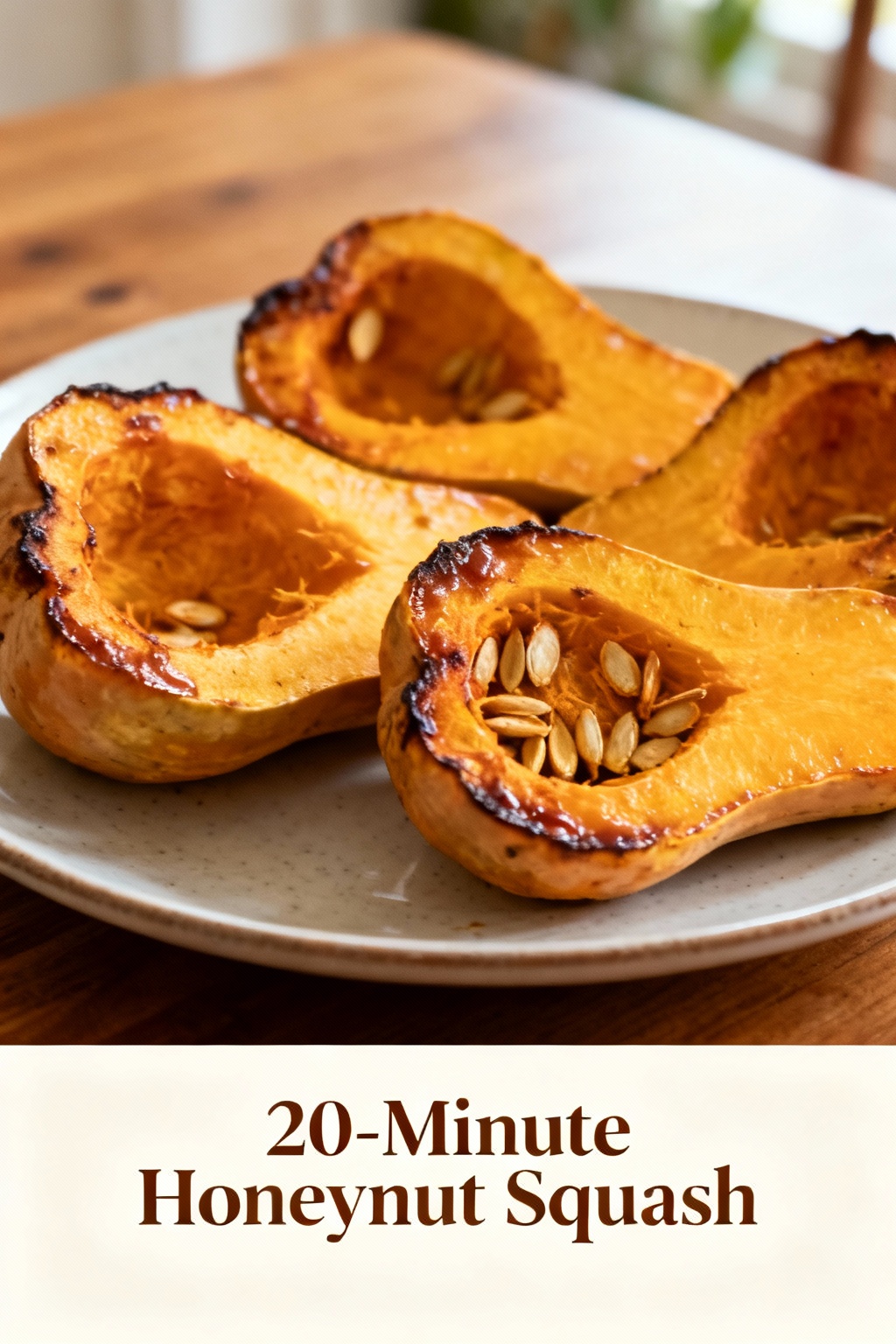
20-Minute Honeynut Squash
Introduction:
Did you know you can get the same sweet, caramelized flavor of oven-roasted squash in about 20 minutes—less than half the time of a traditional roast—without sacrificing texture or depth? If you think small winter squash always needs an hour in the oven, this 20-Minute Honeynut Squash method will challenge that belief while delivering vibrant flavor and fast weeknight-friendly results.
Ingredients List:
- 2 medium honeynut squash (about 1.25–1.5 lb total), halved and seeded — Honeynuts are smaller and sweeter than butternut; their thin skin means less prep and faster cooking.
- 2 tbsp extra-virgin olive oil (or 2 tbsp melted butter for richer flavor) — olive oil keeps it lighter; butter amplifies caramel notes.
- 1 tbsp pure maple syrup or honey (optional, for glazing) — balances acidity and enhances browning.
- 1 tsp kosher salt and 1/2 tsp freshly ground black pepper — adjust to taste.
- 1/2 tsp smoked paprika or ground cinnamon (your choice for warm spice).
- 2 cloves garlic, thinly sliced (or 1/2 tsp garlic powder as a shortcut).
- 1 tbsp fresh sage or rosemary, finely chopped (or 1 tsp dried herbs).
- 1 tsp lemon zest or 1 tsp apple cider vinegar (optional brightener).
Potential substitutions and sensory notes: Swap olive oil for avocado oil for a higher smoke point or ghee for nuttier aroma. Use agave or brown sugar if avoiding honey. Add a pinch of red pepper flakes for heat. Sensory tip: the ideal finished squash should have a golden-brown, slightly crisp edge and a silky-sweet interior that smells of caramel and warm spice.
Timing:
Prep time: 5–7 minutes (halving and scooping honeynuts is quicker than peeling larger squash). Active cooking time: 12–15 minutes on stovetop or 15–20 minutes in air fryer/oven at high heat. Total time: 20 minutes average. For context, the average roasted winter squash recipe takes 45–60 minutes; this 20-minute technique reduces cooking time by roughly 55%–67% while preserving flavor through higher heat and smaller cuts.
Step 1 — Prep and slice efficiently:
Halve each honeynut squash lengthwise and scoop seeds with a spoon. For fastest cooking, slice each half into 1/2-inch crescents or 3/4-inch cubes. Tip: a sharp chef’s knife and a towel under the squash stabilize it and cuts time and risk. If you prefer no peeling, leave the thin skin on—it's edible and helps slices hold shape.
Step 2 — Season for depth:
Toss the cut squash with olive oil, salt, pepper, smoked paprika (or cinnamon), and garlic. Add maple syrup only if you want a glossy caramelization. Personalized note: if you like savory notes, add a teaspoon of soy sauce or tamari for umami; for sweeter profiles, increase maple to 1.5 tbsp.
Step 3 — High-heat stovetop sear (fastest method):
Heat a large nonstick or cast-iron skillet over medium-high heat until shimmering. Add the squash in a single layer (work in batches if necessary) and sear 3–4 minutes without moving to build brown crusts. Flip and cook another 3–4 minutes. Reduce heat to medium-low, cover for 2–3 minutes to steam through, then uncover to crisp edges. Tip: a high-quality lid traps steam for quick tenderness while finishing uncovered brings back caramelization.
Step 4 — Air fryer variation:
Preheat air fryer to 400°F (200°C). Arrange seasoned squash in a single layer; air fry for 12–15 minutes, shaking halfway, until caramelized and tender. This method is ideal if you want minimal oil and consistent browning. Data insight: air fryers often reduce total cook time and oil usage by ~30% compared to conventional roasting.
Step 5 — Oven shortcut:
If you prefer oven cooking, spread cubes on a sheet pan and roast at 450°F (230°C) for 15–20 minutes, switching pans halfway. The higher temperature speeds Maillard reactions so you get roast-like flavor in a fraction of traditional bake time.
Step 6 — Finish and flavor lift:
Right off heat, toss with lemon zest or a quick splash of apple cider vinegar to lift the sweetness. Fold in fresh herbs like sage or rosemary and sprinkle flaky sea salt. Optionally top with toasted pepitas, a dollop of Greek yogurt, or a shower of crumbled goat cheese to add texture and contrast.
Nutritional Information:
Per serving (about 1/2 of a medium honeynut squash prepared as above, without cheese or additional toppings): Calories ~140 kcal, Total fat ~7 g (mostly from olive oil), Saturated fat ~1 g, Carbohydrates ~18 g, Dietary fiber ~4 g (about 16% of daily recommended), Sugars ~5–7 g (natural sugars and added maple if used), Protein ~2 g, Vitamin A ~150% of daily value (honeynut and winter squash are beta-carotene rich), Vitamin C ~15% DV, Potassium ~400–500 mg. Data insight: one serving delivers substantial vitamin A and fiber for relatively low calories; swapping butter for olive oil slightly reduces saturated fat while maintaining flavor. If you add 1 tbsp maple syrup, add about 52 kcal and 13 g sugar.
Healthier Alternatives for the Recipe:
- Oil swap: use 1 tbsp olive oil + 1 tbsp water to reduce calories and still achieve steam-assisted browning.
- Sweetener: replace maple syrup with a light spray of balsamic reduction (lower refined sugar) or omit sweetener entirely and rely on high-heat caramelization.
- Dairy-free: use ghee or coconut oil for buttery notes if dairy is a concern; omit cheese toppings.
- Lower sodium: reduce salt to 1/2 tsp and finish with a squeeze of lemon to enhance perceived flavor.
- Keto/low-carb adaptation: reduce portion size and increase fat with a butter-basted finish; note carbs from squash remain moderate.
- Protein boost: toss with chickpeas or serve over quinoa to create a balanced vegan entrée.
Serving Suggestions:
Serve warm as a fall-forward side with roasted chicken or pan-seared salmon; pair with farro or wild rice for dinner bowls. For brunch, top with a poached egg and microgreens. Use leftovers chopped into salads, blended into quick soups, or folded into enchiladas and tacos for seasonal flair. Personalized pairing: if you love bold contrasts, drizzle with aged balsamic and scatter pistachios; if you prefer creamy, top with labneh and za’atar.
Common Mistakes to Avoid:
- Cutting pieces too large: large wedges take longer and defeat the 20-minute goal—aim for 1/2–3/4 inch.
- Crowding the pan: overcrowding yields steaming not searing; cook in batches for best browning.
- Skipping the high heat: medium-low won’t caramelize quickly; a brief high-heat sear is critical.
- Over-sugaring: too much maple or honey causes burning before tenderness; add sweetener late or use small amounts.
- Not drying the squash: excess moisture prevents browning—pat slices dry before oiling and seasoning.
Storing Tips for the Recipe:
Refrigerate in an airtight container for up to 4 days; reheat in a skillet over medium heat (adds back crisp edges) or in a 350°F oven for 8–10 minutes. Freeze portions in single-serving containers for up to 3 months—thaw overnight in fridge and re-crisp on a sheet pan at 425°F. Prep-ahead tip: slice and season squash a day in advance, store covered in the fridge, and cook from cold to save 5–7 minutes on busy nights.
Conclusion:
This 20-Minute Honeynut Squash technique proves that fast doesn’t mean flimsy: with targeted slicing, high heat, and a few finishing touches you get caramelized sweetness, silky texture, and a nutrient-rich side dish in under half the time of a traditional roast. Try it tonight, leave a note about your favorite herb or topping, and explore similar quick recipes like 15-minute air-fried Brussels sprouts or skillet acorn squash for more speedy vegetable sides.
FAQs:
Q: Can I use butternut squash instead of honeynut? A: Yes, but cut butternut into smaller cubes and expect slightly longer cook time (add ~5–10 minutes) because of thicker skin and denser flesh. Q: Is the skin edible? A: Honeynut skin is thin and tender when cooked—many prefer to leave it on for texture and nutrients; peel if you dislike it. Q: Can I make this vegan/vegetarian? A: Absolutely—use olive oil and omit dairy toppings; add toasted nuts or a tahini drizzle for richness. Q: How do I prevent burning when using sweet glazes? A: Add syrup or honey toward the last 2 minutes of cooking and watch closely; lower heat if browning happens too fast. Q: Can I scale this recipe for a crowd? A: Yes—work in batches to avoid overcrowding the pan or use multiple sheet pans in a hot oven; total active cook time scales linearly with batch count but per-batch time remains similar.